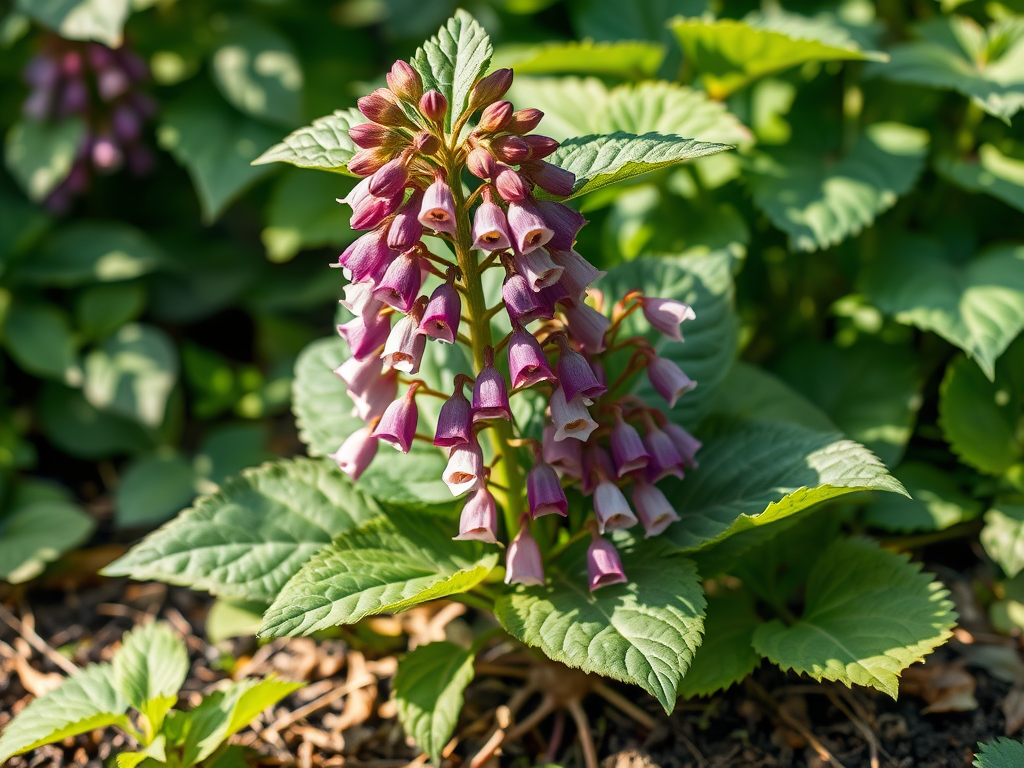
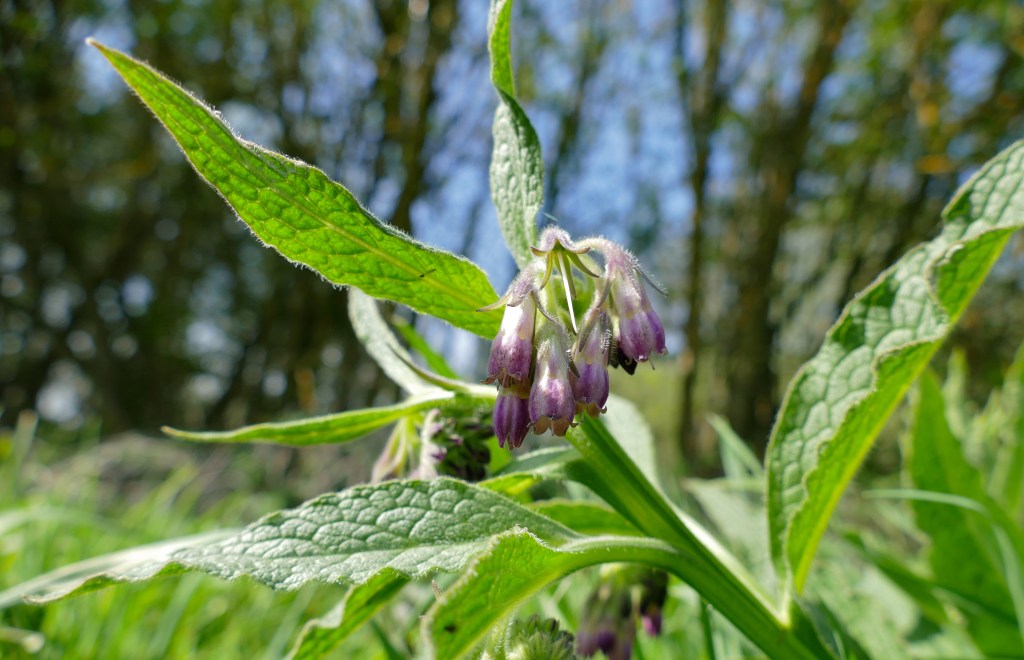
Comfrey (Symphytum officinale) is a perennial herb native to Europe and Asia. It was used for centuries in medieval medicine. Comfrey has broad, oval-shaped leaves with a coarse texture, and small, bell-shaped flowers that range from purple to white or pink. It grows up to 3 feet tall and has a deep taproot.
Medicinal Uses
- Wound healing: Comfrey has been used to treat wounds, cuts, and bruises due to its high content of allantoin, a compound that promotes cell growth and repair.
- Bone fractures: Medieval herbalists used comfrey to treat bone fractures and sprains, as it was believed to promote bone knitting and healing.
- Digestive issues: Comfrey tea or infusions have been used to soothe digestive problems, such as diarrhea, irritable bowel syndrome, and stomach ulcers.
- Skin conditions: Comfrey’s anti-inflammatory and antiseptic properties make it useful for treating skin conditions like eczema, acne, and psoriasis.
Other Uses
- Fertilizer: Comfrey’s deep taproot allows it to absorb nutrients from the soil, making it a valuable fertilizer plant. Its leaves can be added to compost piles or used as a mulch.
- Animal feed: Comfrey is a nutritious feed supplement for livestock, particularly poultry and pigs.
- Dye plant: Comfrey’s flowers and leaves can be used to create a range of colors, from yellow to purple, for natural dyeing.
Precautions
While comfrey has been used for centuries, it’s essential to note that:
- Pyrrolizidine alkaloids: Comfrey contains these toxic compounds, which can cause liver damage if ingested in large quantities or over an extended period.
- Pregnancy and breastfeeding: Comfrey should be avoided during pregnancy and breastfeeding due to the potential risks associated with pyrrolizidine alkaloids.
In summary, comfrey is a versatile herb with a rich history of medicinal and practical uses. However, it’s crucial to use it responsibly and be aware of its potential risks.


 The New Murrey and Blue blog
Leave a reply to sighthound6 Cancel reply