culture
-
Oh no! Not the return of the Tudors! Well, luckily, it’s not the actual Tudors who are returning – just their crown. The Tudor Crown has made a comeback since King Charles III’s accession to the British throne. Also known as the ‘King’s Crown’, ‘The Tudor Crown Imperial’ or ‘Henry VIII’s Crown,’ the Tudor Crown…
-
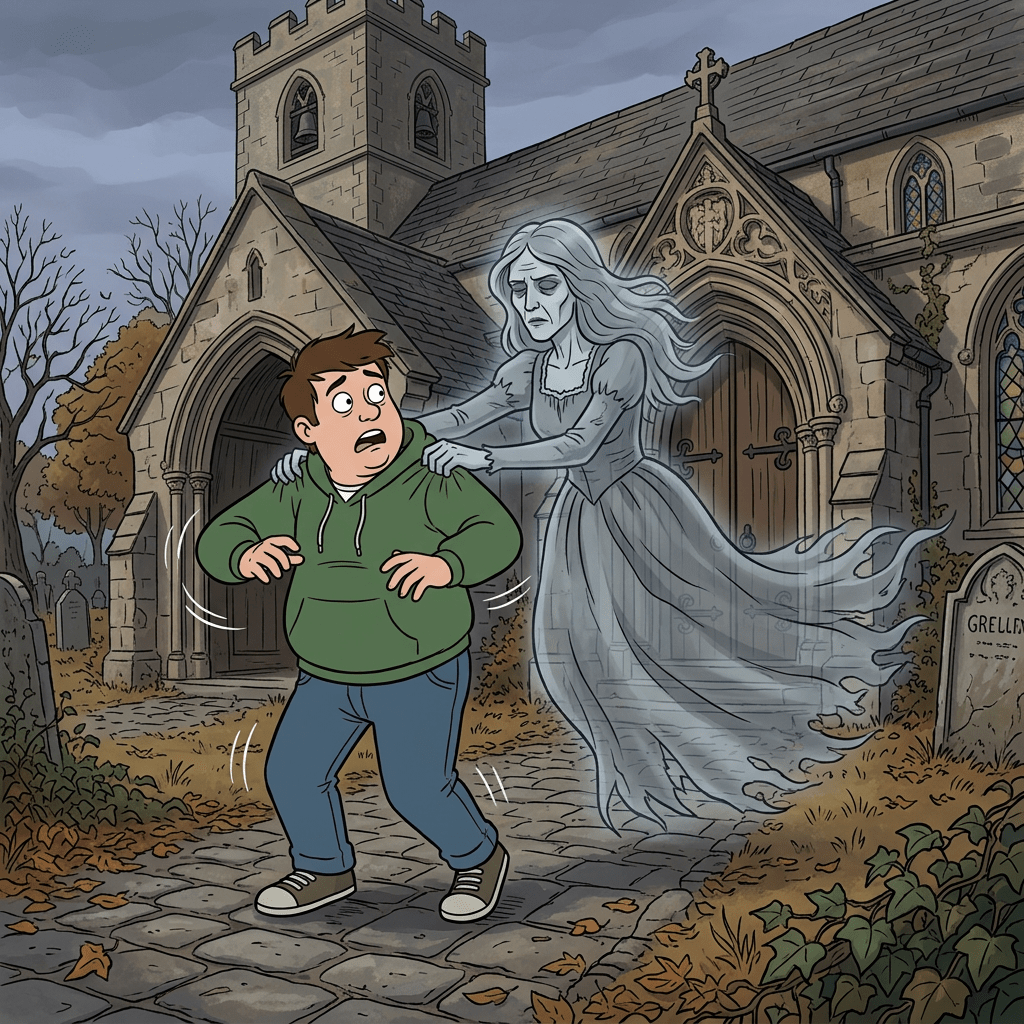
The 15th century tower of St Nicholas’s Church, Canewdon, rises on high ground. Legend has it that while the tower stands tall and firm, six witches will be found living in Canewdon village, three in silk and three in cotton (i.e. three rich and three poor). It is said that every time a stone falls…
-
By Susan Lamb. Richard was going for a nice quiet walk… until it was not. Richard slipped out of the peace of the cathedral for a rare moment of solitude. The gardens were quiet, the early spring air crisp, and his statue was standing in its usual heroic pose — the one he privately thought made…
-
There are actually very few ‘English’ names that originally arise from Old English / Anglo Saxon. My own comes from the bible, so Hebrew, and is the feminine form of John, which means ‘God is gracious’. What about Richard? As a name it has been popular here for centuries (if not in the Royal family),…
-
No, I’m not talking about the World Cup but something even more exciting! The Bayeux Tapestry is returning to the UK for the first time in almost a millennium – and the ancient artefact will be the centrepiece of what is anticipated to be the British Museum’s most popular exhibition ever. Possibly created as a…
-
The wonderful Richard III Middleham Festival is now approaching! The Yorkshire Branch is hosting all presentations on Saturday 4th July and tickets are still available for seats in Richard’s Collegiate Church of St Mary & St Alkelda. See poster below: All the presentations are ticketed and tickets may be obtained electronically from rgm@dockroyd.co.uk. The Richard III Society…
-
Well, it may be a version of Shakespeare’s Richard III, which is total fiction with very little fact, but it’s very interesting all the same. And as it’s also The Earliest Surviving American Feature Film, it’s not only important but also a great peek into those [not so!] far off days when films were in…
-
I for one had never heard of Sir Marrok, one of King Arthur’s knights, who it seems was turned into a werewolf. This isn’t a new story, but is apparently traced back to a line in Malory: “….’sir Marrok the good knight that was betrayed with his wyff, for he made hym seven yere a…
-
Heads up, ladies and gentlemen:- “….The Ancient High House in Stafford is the setting for the insight into the king’s life on Saturday, May 9, from 4.30pm to 5.30pm….Titled ‘Richard III & Shakespeare’, the event will be led by acclaimed historian and author Matt Lewis…..” To read more, please go to this link: https://www.pressreader.com/uk/the-sentinel/20260410/281891599838394 The…
-
Later this year, in 2026, the Bayeux Tapestry will be on loan from France to the UK and displayed at the British Museum. Did you know though that the UK has its very own, almost exact, replica created by an industrious group of Victorian women? It can be found in Reading Museum, only half an hour…
 The New Murrey and Blue blog