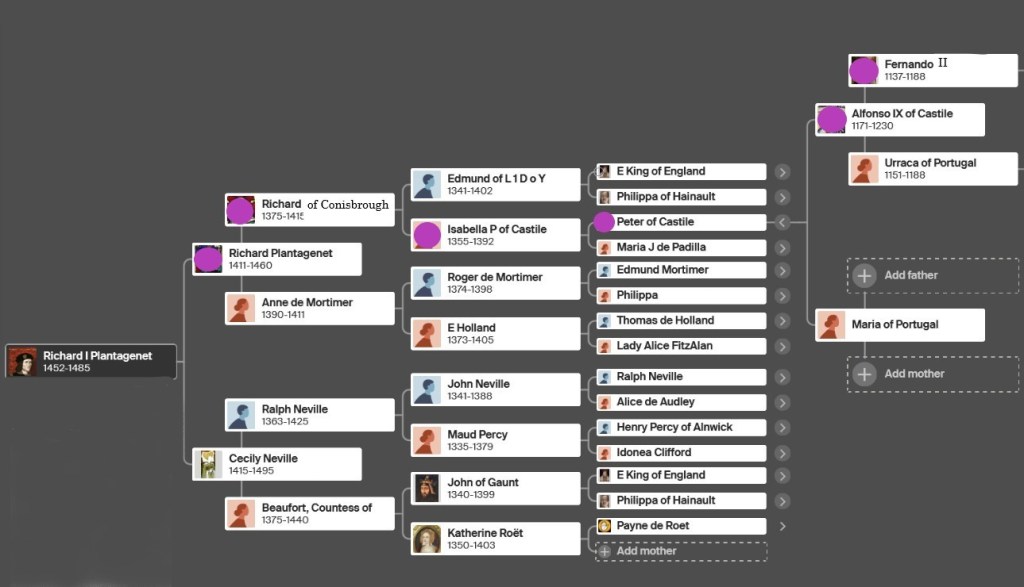
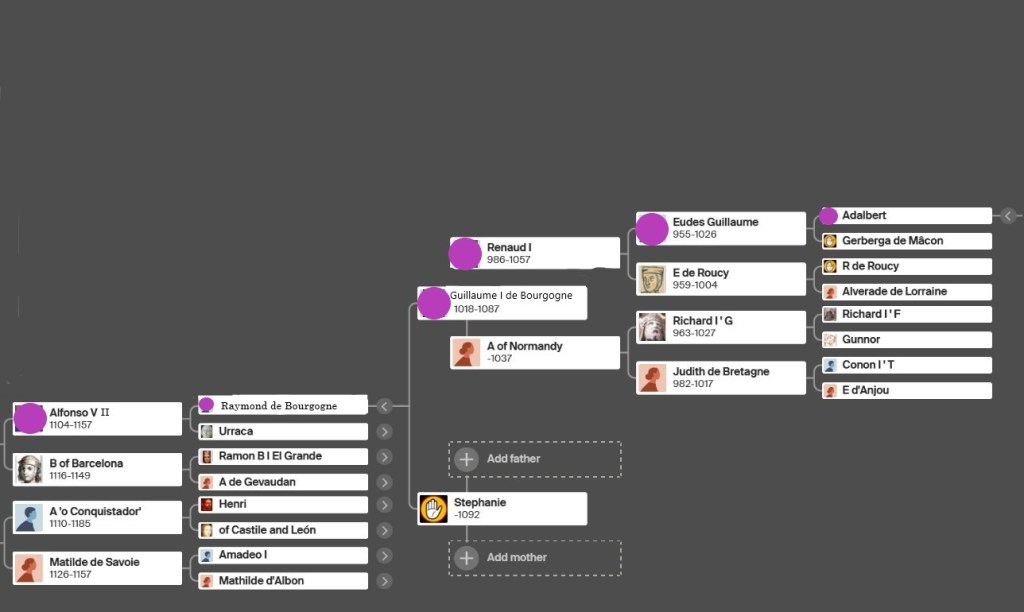
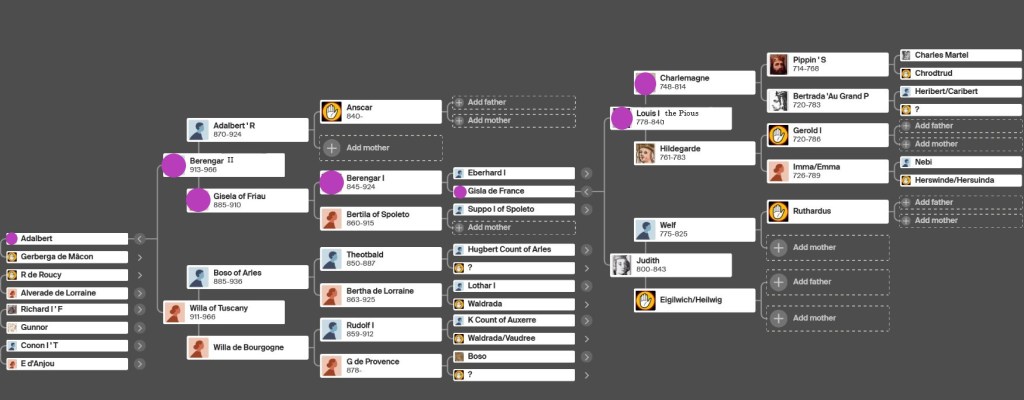
It is said that almost every European, statistically, is descended from Charlemagne, and one of his descendants was Richard III. Here is one of the possible pedigrees from Richard to Charlemagne (as Charlemagne had many children via numerous women, there are likely to be several routes from Richard to him). It’s in three parts – follow the purple dots:
Please note this pedigree is taken from the Genealogics website.
Who Was Charlemagne?
Charlemagne (2 April 748 – 28 January 814) was King of the Franks from 768, King of the Lombards from 774, and Emperor of what became known as the Carolingian Empire from 800, all until his death in 814. He was the first recognised emperor to rule from the west after the fall of the Western Roman Empire approximately three centuries earlier and united most of Western and Central Europe. During his reign social and political changes occurred that had a lomg-lasting influence on Europe throughout the Middle Ages.
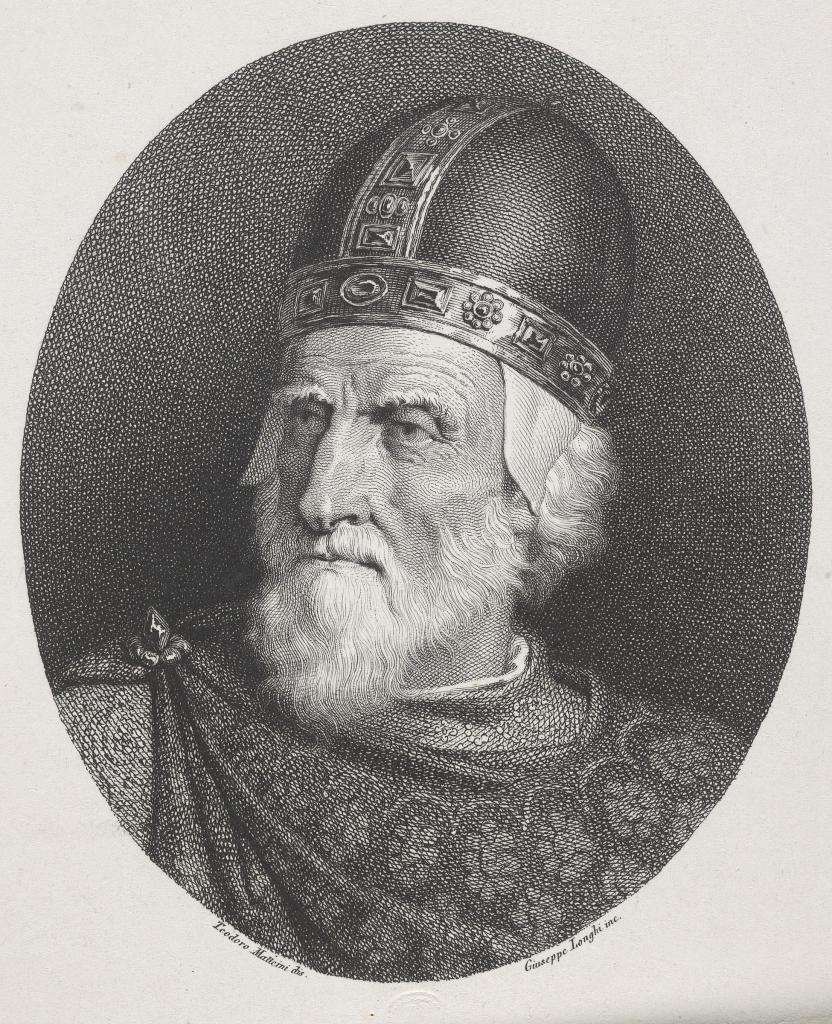
A member of the Frankish Carolingian dynasty, Charlemagne was the eldest son of Pepin the Short and Bertrada of Laon. Following Pepin’s death in 768, he became king of the Franks alongside his brother, Carloman I, and the sole ruler three years later. Charlemagne continued his father’s policy of protecting the papacy becoming its chief defender, and removed the Lombards from power in northern Italy in 774. During his reign, he conquered Bavaria, Saxony, and northern Spain, and these, as well as other campaigns led to Charlemagne extending his rule over a large part of Europe.
Charlemagne spread Christianity to his new conquests (often by force), as seen at the Massacre of Verden against the Saxons. He also initiated diplomacy relations with, and sent envoys to the Abbasid caliph Harun al-Rashid in the 790s, because of their mutual interest in Iberian matters.
In 800, Charlemagne was crowned emperor in Rome by Pope Leo III. Although historians disagree about the coronation’s significance, the title represented the height of his prestige and authority. Charlemagne’s position as the first emperor in the West in over 300 years brought him into conflict with the Eastern Roman Empire in Constantinople. Through his assumption of the imperial title, he is considered the forerunner to the line of Holy Roman Emperors which persisted into the nineteenth century. As king and emperor, Charlemagne engaged in a number of reforms in administration, law, education, military organisation, and religion which shaped Europe for centuries. The stability of his reign began a period of cultural activity known as the Carolingian Renaissance.
Charlemagne died in 814 and was buried at Aachen Cathedral in Aachen, his imperial capital city. He was succeeded by his only surviving legitimate son, Louis the Pious. After Louis, the Frankish kingdom was divided and eventually became West and East Francia, later France and Germany, respectively. Charlemagne’s influence on the Middle Ages and on the territory he ruled has caused him to be called the ‘Father of Europe’ by many historians. He is seen as a founding figure by multiple European states and a number of historical royal houses of Europe trace their lineage back to him (including ours!). Charlemagne has been the subject of numerous artworks, monuments and literature during and after the medieval period and is venerated by the Catholic Church.

His Name: Charlemagne used Carolus (or Karolus) in Medieval Latin; the modern English form would be Charles. The name Charlemagne, as he is usually known in English, comes from the French Charles-le-magne (‘Charles the Great’). The Latin epithet magnus (‘great’) may also have been associated with him during his lifetime.
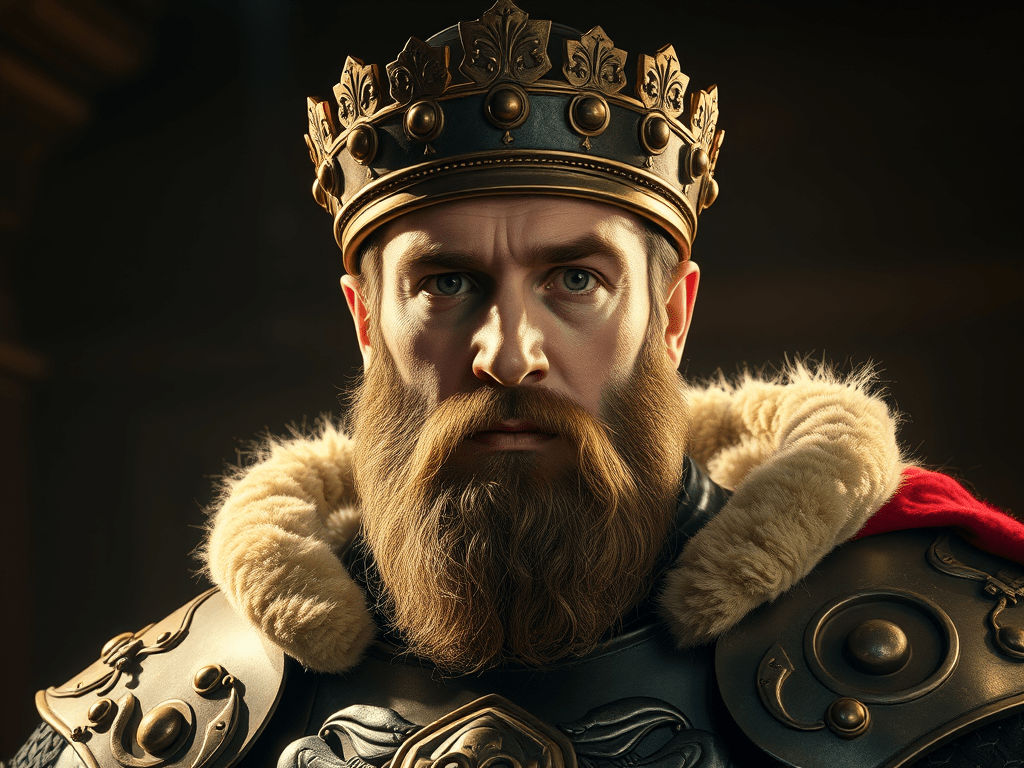
Can you see any similarities between Richard and his ancestor, Charlemagne?
 The New Murrey and Blue blog
Leave a comment