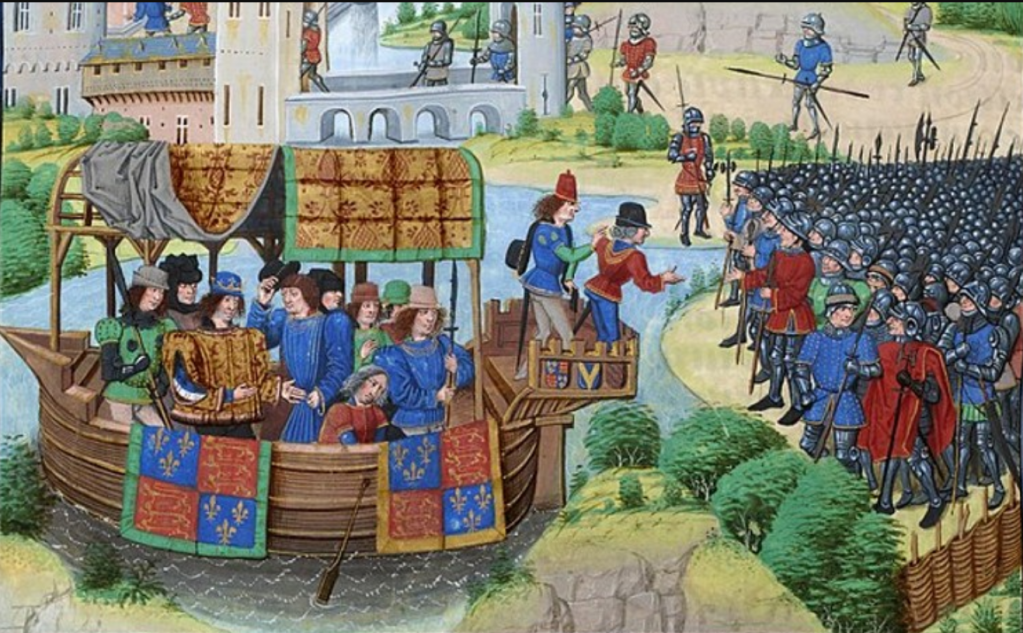
We always bunch the participants in the Peasants’ Revolt together as something akin to Bulwer-Lytton’s great unwashed . But were they the great unwashed? No, according to new research. (See https://theconversation.com/who-were-the-peasants-of-the-1381-peasants-revolt-new-database-has-answers-278011.) Many of them were almost wealthy by 14th-century standards, and women played a great part in what happened. What they didn’t have was armour! The famous Froissart illustration below shows Richard on a ship on the Thames with hundreds of armoured rebels on the shore. Armour? That was expensive and it’s highly unlikely enough of it was readily available for an apparently makeshift army to rise against the government. This has always been ridiculous. But it bolsters the notion of a rebel “army”.
But the article is very interesting and well worth a read. I do, however, have a quibble with the comment which follows it. “….Richard ii could only see the war as a need for greed and power. he could not see the humanity of the suffering and destruction. djt [sic] sits upon his throne, blind to the same anguish his war is extracting….”
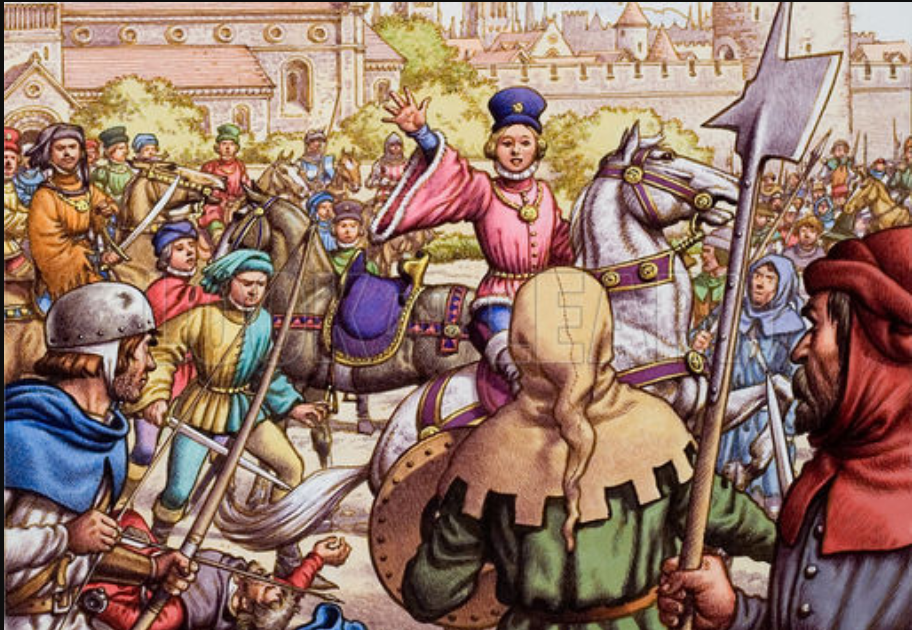
As I’ve said before on this blog, Richard was a boy of fourteen at the time, and very much under the control of John of Gaunt and other uncles/magnates. It has always been my opinion that when he confronted the rebels so courageously to try to mediate, he actually meant every word he said. He didn’t renege on his promises, his uncles/magnates did. I believe that it was a sharp lesson to the idealistic boy, and that it probably weighed on him for the rest of his life. He, the king, had given his word…but had been overruled!
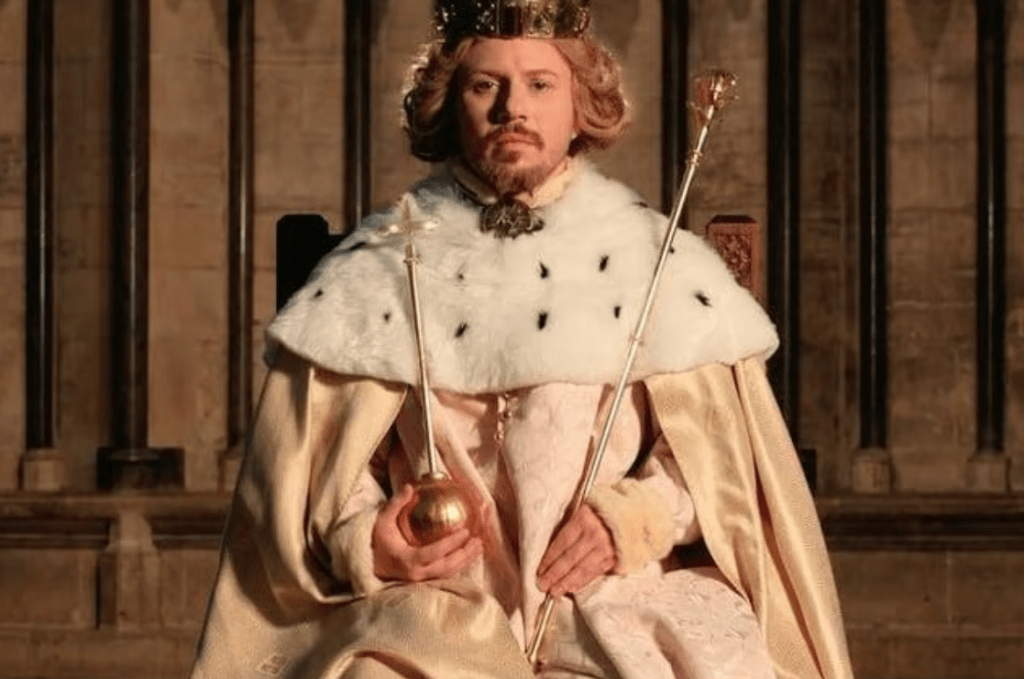
I’m not saying that Richard was perfect, because he wasn’t, but he certainly didn’t deserve the reputation as a lying, tyrannical nutcase that has followed him down the centuries. He wanted to do his best, but learned very early on that even a king can have the rug pulled from under him. It was eventually tugged away so roughly that it killed him. And it wasn’t the peasants doing the tugging, it was his scheming, usurping first cousin, Henry of Bolingbroke, Duke of Lancaster, the son and heir of John of Gaunt.
It was this murder and usurpation that brought the House of Lancaster to its stolen throne, and which eventually led to Richard of Gloucester of the House of York becoming Richard III. No, I won’t say it again. I won’t say that it became a second case of a King Richard being murdered and replaced by a Henry from the House of Lancaster!
by viscountessw


Leave a Reply