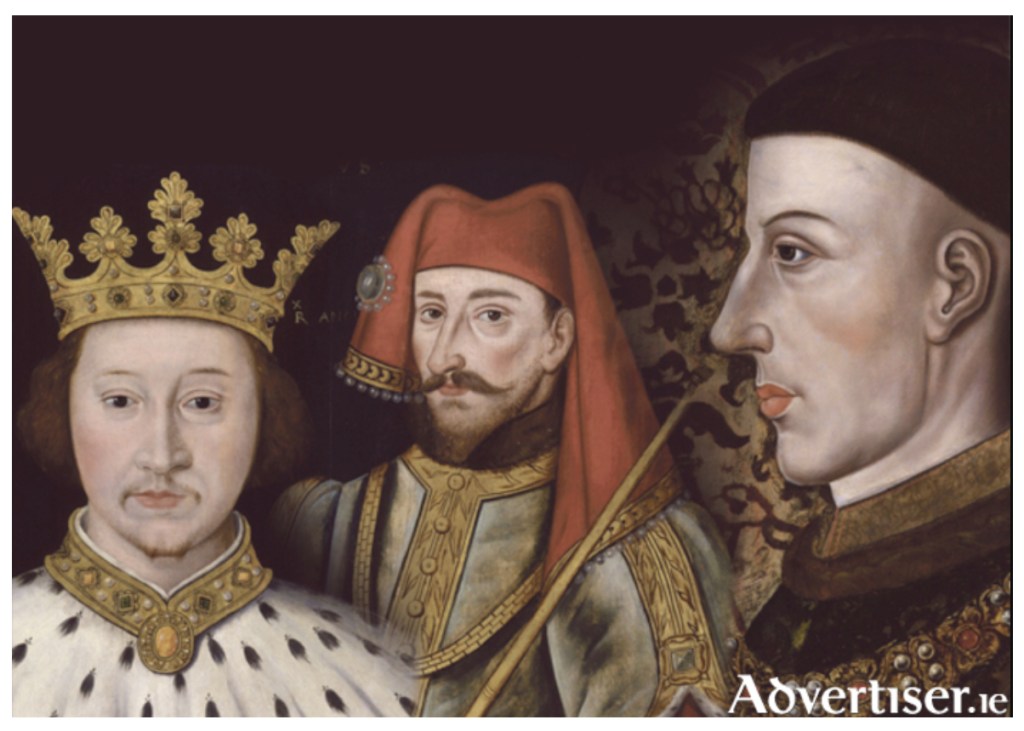
Richard II, Henry IV and Henry V

The following contains my comments on this review (https://www.pressreader.com/uk/yorkshire-post-yp-magazine/20260124/282218017200594) of the book “The Eagle and the Hart” by Helen Castor.

The reviewer (Greg Wright of YP Magazine) remarks that the “dazzling [book] has the pace of a thriller”. Well, it’s certain a work of fiction. Here is a small extract of the review, to set the scene for you: “….Richard’s first cousin, Henry of Bol­ing­broke, who seemed destined to remain a rel­at­ively minor player in the feb­rile soap opera of 14th cen­tury Eng­land….”

Um….a relatively minor player? What rubbish! Bolingbroke was the son and heir of John of Gaunt, Duke of Lancaster, who was the richest and most influential magnate in England and who wanted his Lancastrian line to succeed the childless Richard II. Richard was the son of the Black Prince, who would have been king had he not predeceased his father, Edward III. Gaunt was the third son of Edward III.
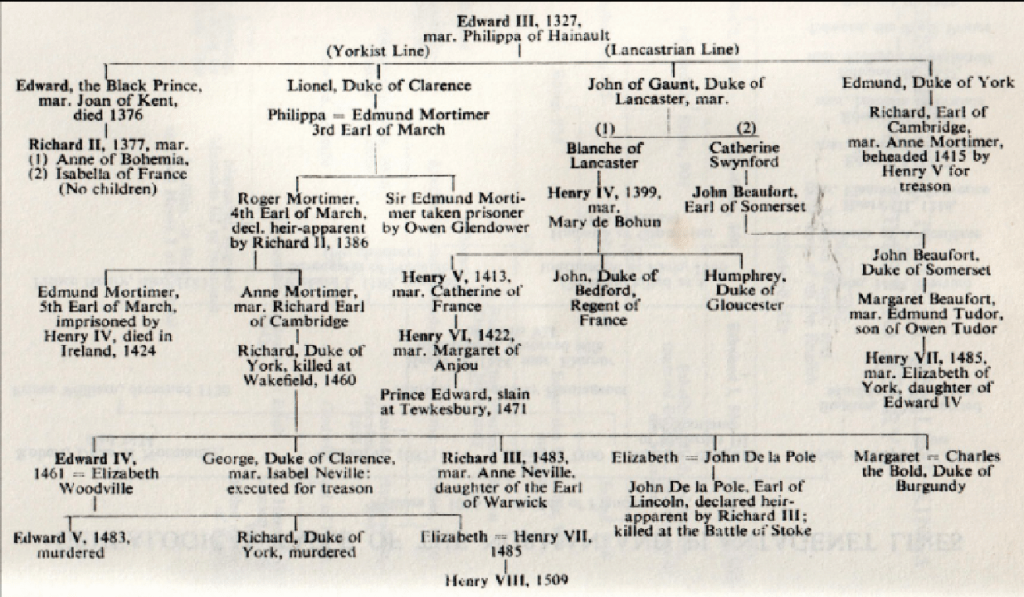
In between the Black Prince and Gaunt was the late Lionel of Clarence, whose only daughter had married the Earl of March (https://en.wikipedia.org/wiki/Edmund_Mortimer,_3rd_Earl_of_March). Their new baby son was therefore senior in blood to Gaunt and his descendants. Gaunt wanted Clarence’s line brushed aside because it was through a woman. (You know, one of those inferior, worthless beings that were only created to be used by infinitely superior men.) In Gaunt’s opinion the crown should only descend through male lines, meaning his own, and he is known to have worked on his dying father to disinherit the female Clarence line.

Gaunt was choosing to conveniently forget that his own immense wealth and prominence came from his first wife, and that he claimed the crown of Castile through his second wife. Even Edward III had claimed France through his French mother! Double standards abounded, methinks.

Anyway, Gaunt’s power and ambition for the crown was passed on to Henry of Bolingbroke, so don’t give me this “poor little Henry fighting to claw out of obscurity” rubbish!

In one thing I do agree with both the reviewer and Helen Castor. Richard’s character was unsuited to his bloodthirsty period. He wanted peace, and was interested in the arts, hardly ideal for the Hundred Years War with France. Henry of Bolingbroke, on the other hand, would have fought his way out of the flimsiest paper bag!

But I don’t agree that Richard was deluded, although a lifetime of being bullied and pushed around by his father’s brothers and other magnates did indeed eventually push him to the edge. By the time he banished Bolingbroke, Richard had certainly had enough of him. I would have reached that point too.

Then, when Richard and his supporters were in Ireland, trying to solve some problems there, Henry returned from banishment under the pretence of reclaiming his rights, etc. etc. But he was after the crown, had an invading army with him and proceeded to overrun the kingdom while Richard’s back was turned.

It all went pear-shaped for Richard, who on his return was soon captured (at Flint Castle), imprisoned….and then forced off his throne. Mind you, pro-Lancastrian propaganda would have us believe Richard surrendered his crown almost eagerly. Really? Come off it.
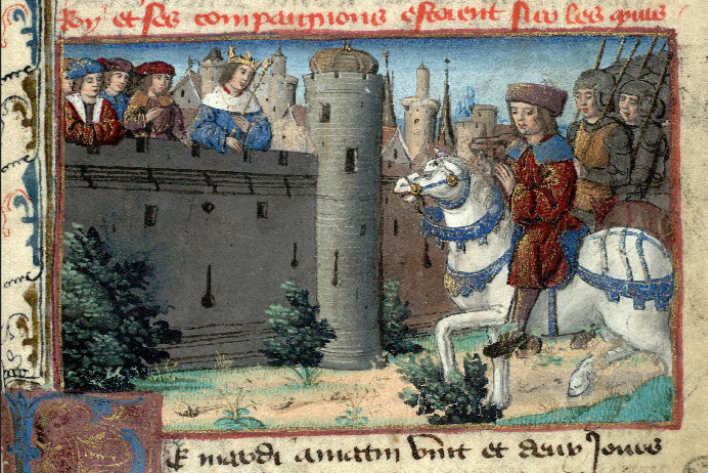
Richard II at Flint Castle – French depiction, from the Ministère de la Culture.

Henry then had himself crowned Henry IV, the first king of the House of Lancaster, and when Richard’s friends rose in a failed rebellion, Henry disposed of them and proceeded to murder Richard, by then a prisoner in Pontefract Castle.

So this is Helen Castor’s wonderful hero. If Henry IV was guilt-ridden afterward, then so he should have been. But he certainly wasn’t the much-loved monarch of this silly book or the review. Nor was his reign the paradisial era painted, instead it brought the shadow of awful oppression that would prevail in the Tudor period.

Need I say more than that it was Henry IV who introduced burning alive as a punishment for heretics in England? See https://en.wikipedia.org/wiki/De_heretico_comburendo. On the other hand, according to https://en.wikipedia.org/wiki/Death_by_burning, “….when the bishops in England petitioned King Richard II to institute death by burning for heretics in 1397, he flatly refused….” Ah, but don’t forget, he was deluded and vindictive.

Nor was Henry himself a beloved monarch. Sighs of relief were heaved across the land when he turned up his miserable toes and his son, Henry of Monmouth came to the throne as Henry V. By the way, Henry V did a lot to try to restore the name and reputation of Richard II, with whom as a boy he’d been in Ireland when Bolingbroke invaded. Richard had always treated him with kindness and favour, and had knighted him in Ireland.
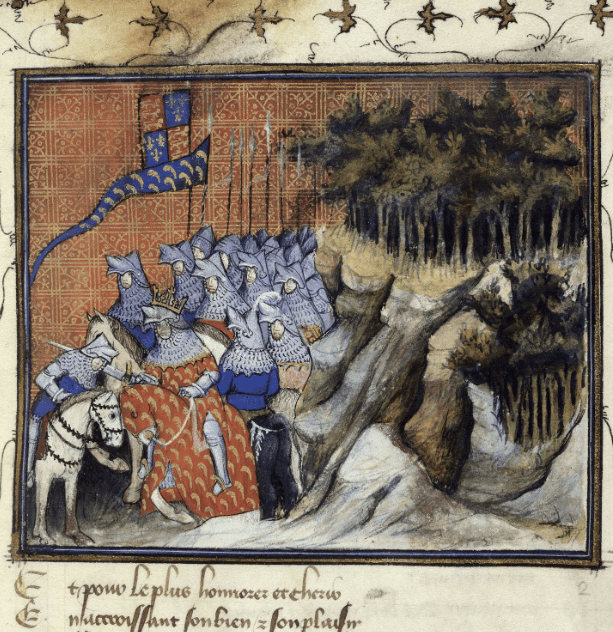
Richard II knights Henryof Monmouth in Ireland.

The boy loved and was still with Richard when he was cornered at Flint, and he didn’t want to leave Richard to go to his own father, which speaks volumes. He was always ashamed of his father’s treachery, and did all he could to restore Richard’s name and reputation. For instance, he brought Richard’s remains to Westminster Abbey—openly, with respect, not slyly and on the q.t.—to lie with his beloved queen in the tomb Richard had prepared for them both.

Henry IV had buried Richard ignominiously and obscurely at King’s Langley Priory, in the hope he’d be forgotten.

Now, you tell me who was the petty and vindictive man?

by viscountessw


Subscribe to my newsletter

3 responses to “Which king was vindictive and unworthy, Richard II or Henry IV….?”

  1. almostswimmingb0d0ce8214 Avatar
    almostswimmingb0d0ce8214

    Wonderful review and important as you have done so concisely to see the record of Richard II put right or at least given some balance. I agree entirely that John of Gaunt and his son were powerful but they were not the most powerful nobles or magnates until after 1388. Edward III and Richard II both had a preferred candidate for the successor of Richard II should the young King not have children and interestingly that candidate was being groomed from 1376 to 1388 for Kingship. He appears in several tapestries and pictures of the time as having precedence over John of Gaunt and the Royal Dukes YET he does not even appear in the family tree you included (a common omission). The candidate to whom I refer was the wealthiest man in England after the King, became the first to hold the title of Marquis, and was married to the eldest child of Edward III thus with as great a claim as any to the throne. He was also a firm favourite of Edward III and his wife and the favourite of Richard II.

    He was, however, a complete idiot and succeeded in divorcing himself out of the line of succession then conducting an incompetently mismanaged rebellion that saw him banished to France where he died in a hunting accident killed by a verres (the Norman word for a wild boar).

    However, the divorce was reversed just before his untilmely death and his family were later reinstated into the line of succession, their titles, honours and estates immediately after his great nephew had a brilliant Agincourt campaign.

    Three generations on and his descendant led Henry Tudor’s army at Bosworth and Stoke winning both battles through the use of the same innovative tactics, placing Henry VII on the throne, mustering the army that put Henry VIII on the throne when facing rebellion in the first three weeks of his reign, while another three generations on, his grandson mustered the army that overthrew Queen Jane and put Queen Mary on the throne.

    The end of his male line, the 20th Earl, led the Bloodless Revolution that put William III on the throne, he also drafted the Bill of Rights, chaired the meeting between William and james II that agreed to the smooth transition and drafted the Acts of Succession that secured the throne for the House of Hanover, before donating 10 Downing Street to be the Prime Minister’s London address.

    Despite having a greater claim to the throne than any of the Tudor, Stuart or Hanover houses (and equal claim to that of the Houses of Lancaster and York), at no point did this family make a bid for the throne themselves. Edward IV famously described the 12th Earl of this House as the only “neutral” noble of rank at the time of Towton and Mortimers Cross and (while being the direct descendant of the 1st Duke of Lancaster), the 12th Earl supported the Duke of York (and campaigned with him in Britanny and France) until his death at Wakefield.

    Thereafter, the family supported the Tudors while the 17th Earl became the lover of Elizabeth I having her only illegitimate son (about whom many of the Sonnets are written).

    The brutal execution of the 12th Earl and his eldest son in front of his other sons, followed by the murder of the 12th Earl’s wife by Howard, Rivers and Richard of Gloucester cemented the enmity of this House and its 13th Earl towards the House of York.

    One of the great might have beens is how history would have changed had Edward IV shown the clemency that he showed to other Houses at this time, thus not driving the 13th Earl to side with the House of Lancaster and of Tudor out of revenge for the brutal deaths of both of his parents..

    Like

    1. I fear I cannot agree with your reasoning, but enjoyed reading it. New viewpoints always invigorate an argument. Thank you.

      Like

    2. Are you referring to Robert de Vere ? if so he was never in the running and he did not manage a  incompetently mismanaged rebellion, he was on Richard the ii’s side and was acting under the kings order’s and he was banished by the Lord’s appellant after he had escaped. His wife was Philippa de Coucy Countess of Oxford & Duchess of Ireland who had no children,after her death Aubrey de Vere, became the 10th Earl of Oxford. I can’t see how The De Vere’s had any right to the throne whatso ever.

      John of Gaunt became the most powerful man in England, well wealthy anyway, the moment he inherited the Duchy of Lancaster from his wife. He was certainly powerful before that and always had designs on the throne. If one goes by Edward iii’s choice of succession (closest in blood, to E iii ) at the time of Richards death, as he died childless, it was possibly Edmund Langley Duke of York as he was Edward iii’s only surviving son and had been named as one of Richard’s successor’s.

      For more info on Robert De Vere i can recommend reading this book which will soon be available in paper back, it is in my opinion an excellent book which also helps dispel the myth that he was Richard ii’s favourite https://www.amazon.co.uk/Robert-Vere-Oxford-Ireland-1362-1392/dp/1837651949/ref=sr_1_1?crid=RY8EIVHDOR6R&dib=eyJ2IjoiMSJ9.FyUkuEuxWNifgyiZGHZJLCE1bEBCW_oKjg1WS8gbimo77F218mWOodFCYV0vASf-nX56Wmr8EJhmkraNSlaVcmRbG0kMbnSXVy35vhx0z0o94sOpwEYrfqtgNva1f8X5v_rn5947HU1NK4gUtQqNtQj8henS_KTDnnNeRfCObx4N9mARNv6JUhmpYnnGHBCXDgFymW44o7ExpRxRGIWtrqkDAPTl32u5z_g67HIeuVQ.PRp0Q1MQ5-kB0Ye0nuBuNYkuq71QdxFowpIzevEWTgY&dib_tag=se&keywords=robert+de+vere&qid=1769688447&s=books&sprefix=robert+de+vere%2Cstripbooks%2C106&sr=1-1&ufe=app_do%3Aamzn1.fos.95fd378e-6299-4723-b1f1-3952ffba15af

      Liked by 1 person

Leave a comment