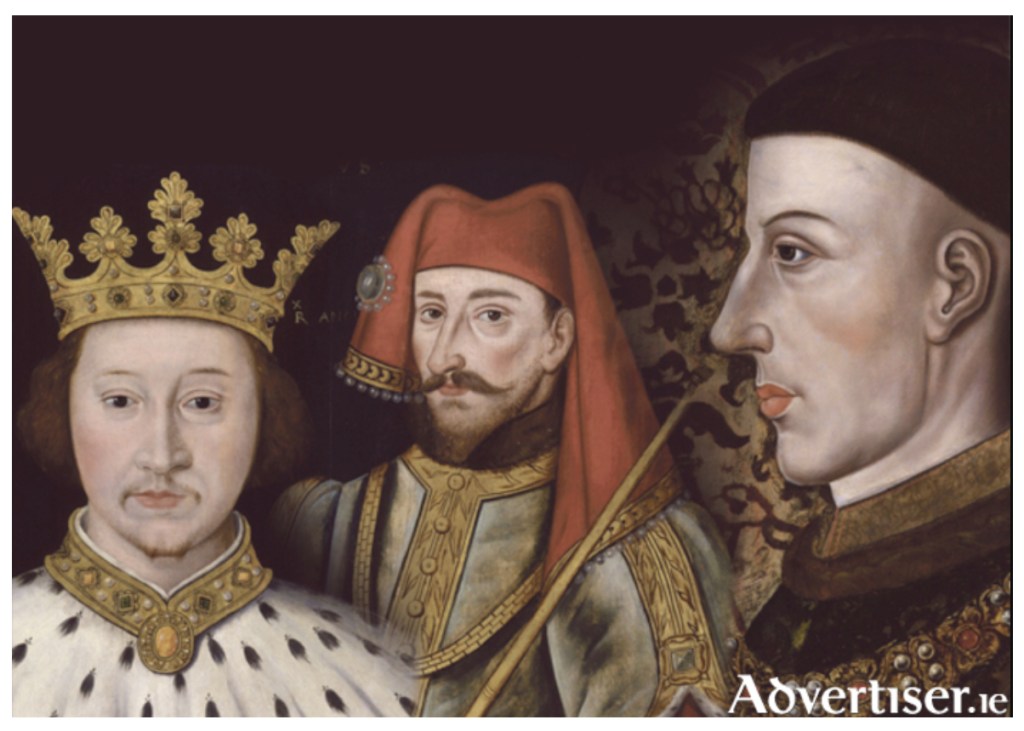
The following contains my comments on this review (https://www.pressreader.com/uk/yorkshire-post-yp-magazine/20260124/282218017200594) of the book “The Eagle and the Hart” by Helen Castor.
The reviewer (Greg Wright of YP Magazine) remarks that the “dazzling [book] has the pace of a thriller”. Well, it’s certain a work of fiction. Here is a small extract of the review, to set the scene for you: “….Richard’s first cousin, Henry of Bolingbroke, who seemed destined to remain a relatively minor player in the febrile soap opera of 14th century England….”
Um….a relatively minor player? What rubbish! Bolingbroke was the son and heir of John of Gaunt, Duke of Lancaster, who was the richest and most influential magnate in England and who wanted his Lancastrian line to succeed the childless Richard II. Richard was the son of the Black Prince, who would have been king had he not predeceased his father, Edward III. Gaunt was the third son of Edward III.
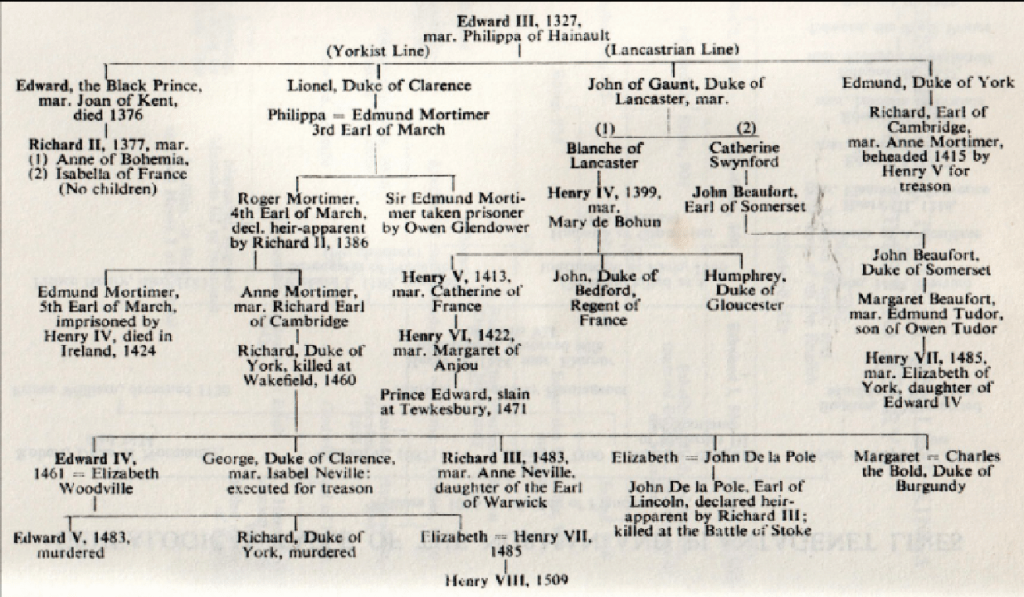
In between the Black Prince and Gaunt was the late Lionel of Clarence, whose only daughter had married the Earl of March (https://en.wikipedia.org/wiki/Edmund_Mortimer,_3rd_Earl_of_March). Their new baby son was therefore senior in blood to Gaunt and his descendants. Gaunt wanted Clarence’s line brushed aside because it was through a woman. (You know, one of those inferior, worthless beings that were only created to be used by infinitely superior men.) In Gaunt’s opinion the crown should only descend through male lines, meaning his own, and he is known to have worked on his dying father to disinherit the female Clarence line.
Gaunt was choosing to conveniently forget that his own immense wealth and prominence came from his first wife, and that he claimed the crown of Castile through his second wife. Even Edward III had claimed France through his French mother! Double standards abounded, methinks.
Anyway, Gaunt’s power and ambition for the crown was passed on to Henry of Bolingbroke, so don’t give me this “poor little Henry fighting to claw out of obscurity” rubbish!
In one thing I do agree with both the reviewer and Helen Castor. Richard’s character was unsuited to his bloodthirsty period. He wanted peace, and was interested in the arts, hardly ideal for the Hundred Years War with France. Henry of Bolingbroke, on the other hand, would have fought his way out of the flimsiest paper bag!
But I don’t agree that Richard was deluded, although a lifetime of being bullied and pushed around by his father’s brothers and other magnates did indeed eventually push him to the edge. By the time he banished Bolingbroke, Richard had certainly had enough of him. I would have reached that point too.
Then, when Richard and his supporters were in Ireland, trying to solve some problems there, Henry returned from banishment under the pretence of reclaiming his rights, etc. etc. But he was after the crown, had an invading army with him and proceeded to overrun the kingdom while Richard’s back was turned.
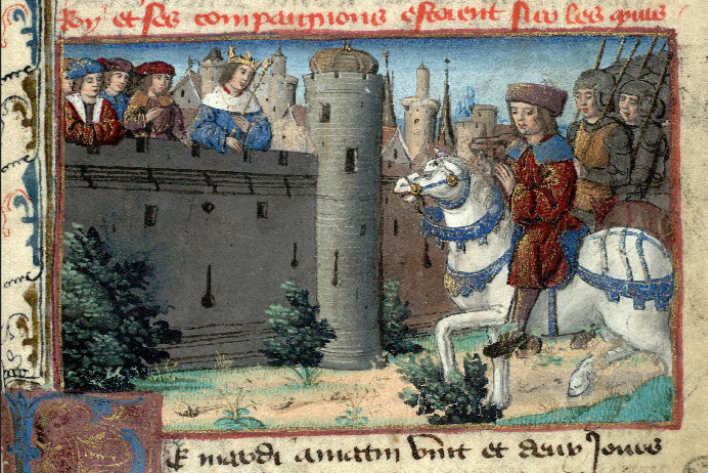
It all went pear-shaped for Richard, who on his return was soon captured (at Flint Castle), imprisoned….and then forced off his throne. Mind you, pro-Lancastrian propaganda would have us believe Richard surrendered his crown almost eagerly. Really? Come off it.
Henry then had himself crowned Henry IV, the first king of the House of Lancaster, and when Richard’s friends rose in a failed rebellion, Henry disposed of them and proceeded to murder Richard, by then a prisoner in Pontefract Castle.
So this is Helen Castor’s wonderful hero. If Henry IV was guilt-ridden afterward, then so he should have been. But he certainly wasn’t the much-loved monarch of this silly book or the review. Nor was his reign the paradisial era painted, instead it brought the shadow of awful oppression that would prevail in the Tudor period.
Need I say more than that it was Henry IV who introduced burning alive as a punishment for heretics in England? See https://en.wikipedia.org/wiki/De_heretico_comburendo. On the other hand, according to https://en.wikipedia.org/wiki/Death_by_burning, “….when the bishops in England petitioned King Richard II to institute death by burning for heretics in 1397, he flatly refused….” Ah, but don’t forget, he was deluded and vindictive.
Nor was Henry himself a beloved monarch. Sighs of relief were heaved across the land when he turned up his miserable toes and his son, Henry of Monmouth came to the throne as Henry V. By the way, Henry V did a lot to try to restore the name and reputation of Richard II, with whom as a boy he’d been in Ireland when Bolingbroke invaded. Richard had always treated him with kindness and favour, and had knighted him in Ireland.
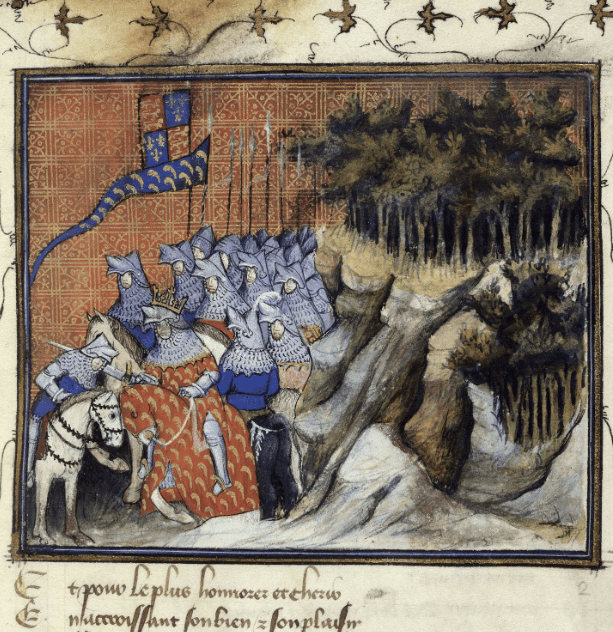
The boy loved and was still with Richard when he was cornered at Flint, and he didn’t want to leave Richard to go to his own father, which speaks volumes. He was always ashamed of his father’s treachery, and did all he could to restore Richard’s name and reputation. For instance, he brought Richard’s remains to Westminster Abbey—openly, with respect, not slyly and on the q.t.—to lie with his beloved queen in the tomb Richard had prepared for them both.
Henry IV had buried Richard ignominiously and obscurely at King’s Langley Priory, in the hope he’d be forgotten.
Now, you tell me who was the petty and vindictive man?
by viscountessw


 The New Murrey and Blue blog
Leave a reply to Nick Fa Cancel reply