
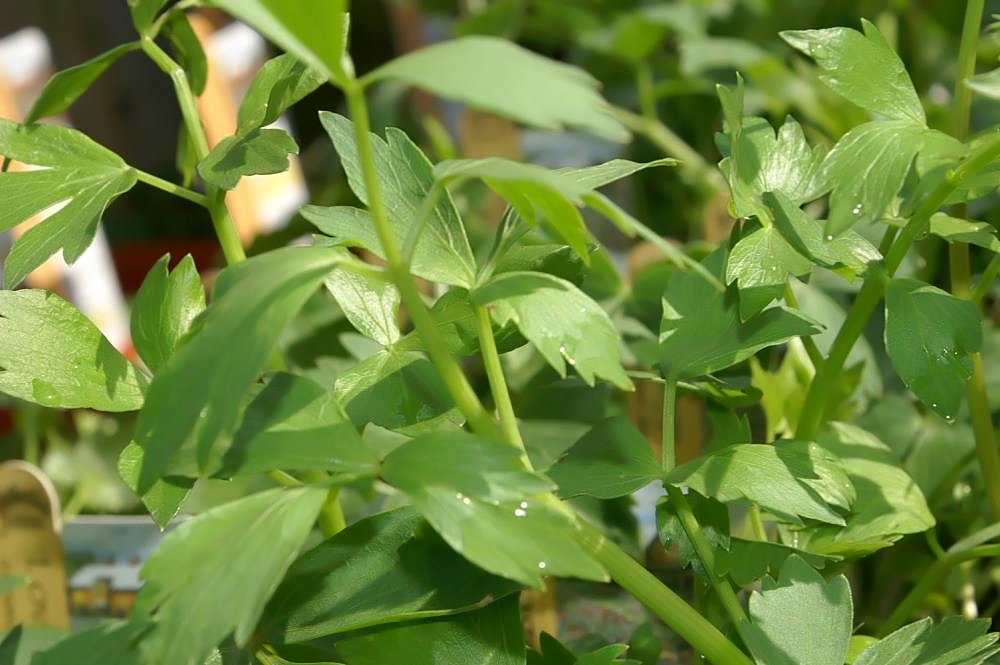
Lovage (Levisticum officinale), a tall, leafy perennial with a strong scent, was popular in mediaeval times, used for medicinal purposes, in cooking and famously, in love potions because of its name, from Middle English ‘love-ache’, where ‘ache’ meant parsley. Its use dates back to the 12th century.
Medicinal Uses- Medieval people used all the parts of the lovage plant (roots, leaves, and seeds) to treat a variety of ailments.
- Digestive Aid: Lovage was one of the most used remedies for stomach aches, indigestion, flatulence and colic.
- Diuretic and Urinary Health: It was often used to increase urine flow and help urinary tract infections and kidney stones.
- Respiratory Relief: The herb was thought to ease coughs and other lung problems.
- Anti-inflammatory: Lovage was used for ailments such as gout, rheumatism, and joint pain by helping eliminate metabolic waste.
- Antiseptic and Deodorant: Mediaeval travellers put lovage leaves in their shoes as a deodorant and antiseptic, and it was thought to combat fatigue.
- Other Uses: It was also used to treat jaundice, malaria, fevers, skin problems (such as boils and ulcers), and sore throats (as a gargle).
- It was valued for its warming properties and skin cleansing, appearing in medicinal texts and home remedies across Europe.
Culinary Uses
Lovage has an intense, celery-like flavour, often described as stronger than celery or parsley, which made it popular for seasoning.
- Soups and Stews: Leaves and seeds were added to broths, soups, and stews to add flavour, reduce the need for salt, and enhance other ingredients.
- Salads: Young, tender leaves were often added to fresh salads.
- Vegetable and Meat Dishes: As it was a versatile herb, it was used with various vegetable, meat, and fish dishes.
- Candied Treats and Drinks: Stems were candied like angelica, and the seeds were used in baking or made into an alcoholic cordial mixed with brandy, a popular winter drink in England, as it had warming qualities.
Folklore and Rituals
Lovage was significant in medieval folklore, mainly due to its name’s association with ‘love-ache’ or ‘love parsley’.
- Love Potions and Charms: It was an ingredient in love potions and rituals aimed at attracting love or deepening emotional bonds.
- Protection and Fortune: If carried by brides or placed under beds, it was thought to provide protection against negative forces and ensure marital harmony.
- Aromatic Baths: People would bathe in an infusion of lovage leaves, as the pleasant, spicy aroma was believed to increase their attractiveness.


Leave a Reply