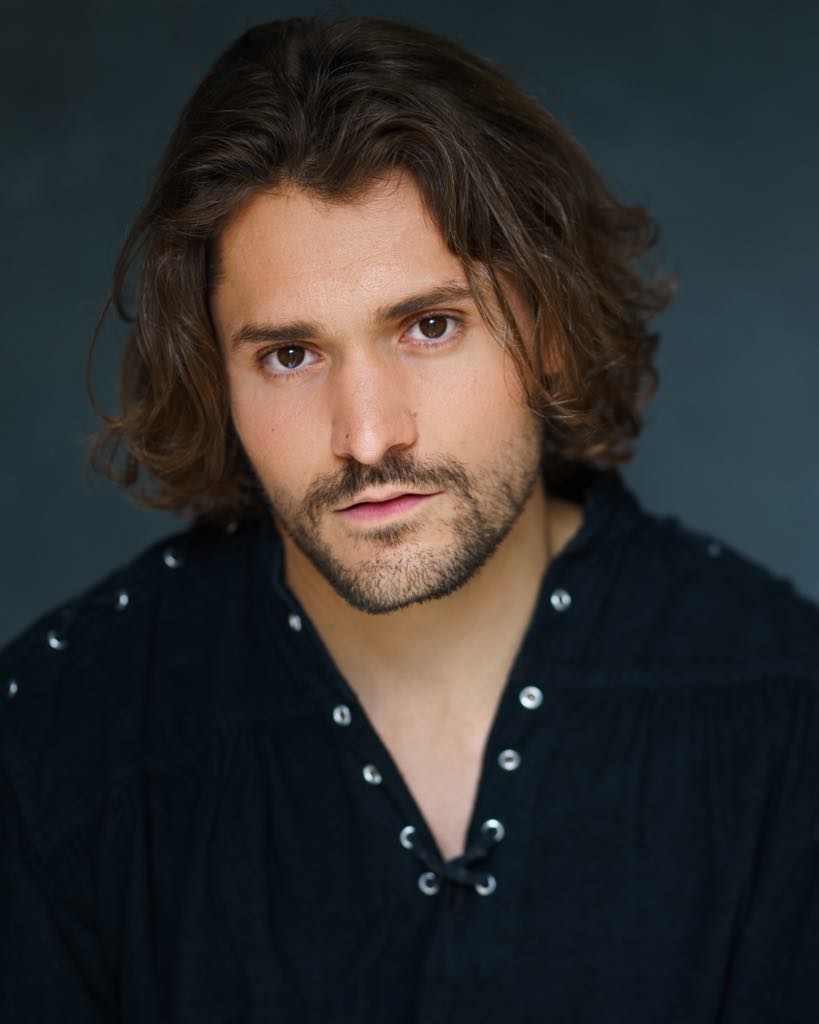
This is the first in a proposed series of interviews with notable people associated with King Richard III.
A short while ago, I was lucky enough to interview Thomas Dennis, the young actor who recreated the voice of Richard III. He was chosen, not only for his acting ability (which has garnered great reviews), but also because his facial bone structure closely resembles Richard’s – this was considered a vital part of recreating Richard’s voice.
N.B. THE INTERVIEW WAS SPOKEN, SO THIS IS A VERBATIM TRANSCRIPT OF THE CONVERSATION.
Joanne Larner: Can you tell us a little about your background and how you came to be an actor?
Thomas Dennis: Yes, really simply, for me it’s always been about history. I loved history as a kid, I was always watching all the historical dramas and films on TV, the documentaries, reading the books, running around pretending to be knights in shining armour, swinging swords, all of that kind of thing and I think the playfulness of that just took me down a route of discovery with the acting world and the acting profession, that actually I can do this for a living, really. And then I came across Shakespeare’s ‘Henry V’, and Kenneth Branagh’s version particularly, and I kind of got swept along in the big, long rallying speeches and before I knew it, I was trying them myself and it started from there. And then, from that point on, I knew what I wanted to do really. I’ve been ambitious from the start and I was lucky, in a sense, that I knew what I wanted to do from a young age and I still fundamentally believe that is it. I don’t have a backup really, because I can’t see myself doing anything else.
JL: How did you first hear about the ‘Voice for Richard’ project?
TD: Ah, well, the ‘Voice for Richard’ project is an interesting one because it’s not a normal kind of acting project you would be put up for, it’s very unique in that sense. When COVID hit, it was a very difficult time for performers and actors because a lot of work had to go on hold, but because of my love of history I’d been in touch with the jousting team at Warwick for many years and started to learn how to ride horses there, learn a bit of jousting there, and over the COVID period I joined their team and they were brilliant. Basically, we did jousting shows. We brought shows around the country, but also at Warwick Castle, telling the story of the Wars of the Roses, very much for entertainment purposes. It wasn’t necessarily a historically-driven project, it was more about bringing the excitement of knights in shining armour and the story of Lancaster versus York to the stage, for families to come and enjoy.
And I was performing at Warwick when I found out that Philippa Langley was coming down to do a talk at the castle about Richard III, and I’ve always had a passion for Richard III, I’ve been a Ricardian myself for many, many years in terms of believing that Richard is not the person that history has portrayed him out to be. Back before they even discovered his body, I remember reading ‘Royal Blood’ by Bertram Fields and that was the first spark in terms of thinking about this, that actually, there is no evidence to say that the princes were ever murdered, so why is that just accepted, historically speaking? So, when I found out she was coming down to talk at Warwick Castle, I wanted to be there, I had to be there, and I managed to meet her after the talk and we had a little chat. And there are other historians I’ve worked with in the field as well, Matt Lewis being one of them, I’ve worked with him in the past, and he mentioned that there was a project looking for an actor to be his (Richard’s) voice, and once I knew that it was happening, I had my agent do some work, chase it down and Yvonne (Morley Chisholm) who led the whole project, through an introduction from Philippa and from my agent chasing it down, we managed to meet, and then they called me in for an audition after that. So, it was a little bit of asking around the people who knew what was going on to try and find the person who was making the project. Then, once we’d found the person who was making the project, we had a good conversation, they invited me in for an audition, and that’s where we meet me in the documentary, going into the audition process. So, it was definitely something that I found out about and chased down myself as well, because it was something I really wanted to be a part of.

JL: How did you feel when you got the role and also when you found out that you have a similar facial bone structure to Richard. How did that make you feel?
TD: It was a very, very special experience, actually. Before the audition, we had a number of pieces we had to prepare to read for Yvonne and Philippa and one of those pieces was his prayer from his Book of Hours. And I remember going up to York for the audition and, just wanting to connect to the piece a little bit, I went into York Minster and I remember finding a little quiet place and reciting the words of Richard’s prayer in there, and it was just a very, very powerful moment because I think it was very real. I was in a building that he would have seen, and been in, and walked in, and spoken in, and prayed in – something that was very important to him. And, as I said on the ‘Voice for Richard’ project, I, myself, am not overly religious, but what I’ve really enjoyed in this process is exploring his faith, and I think it’s something that sometimes with these historical figures these days, it’s one of the things a lot of people find hard to connect to, because we don’t quite understand how significant faith was to them, and to their existence, and to everything they did in life. And I think for Richard in particular, he was very, very pious and so, doing that was very special.

I never really had long hair until COVID hit, it had always been short and I only really realised I had a little bit of a resemblance once my hair had grown out for these jousting shows, because I was playing Richard in them and I was enjoying growing my hair out, and then I realised I had a similar jaw structure, from when they brought out the recreation of his skull after they discovered his body, and we thought that was funny and that was amusing, and he’s always been a character I would love to play. There are two characters I have that I dream of playing, and one of them is Henry V, and one of them is Richard III. I don’t want to play him in the Shakespeare context, if I’m honest. I see the Shakespeare context as very much a fictional villain that he’s created, and it’s a brilliant villain, but it’s not the real person. And I think, for me, one of my big passions is to show the real person.
JL: And they’ve never really done that, have they?
TD: No, they’ve never really done it, and it surprises me because I think he is somebody a lot of people relate to. And it’s interesting why people relate to him, but he is one of the most popular mediaeval monarchs. And when we say ‘popular’ it almost cheapens it somewhat, but I think he has a very strong meaning to a lot of people and it’s easy to brush that off as people who are just a little bit obsessed, but I think it’s deeper than that. I think when people don’t understand it, they can label it very easily, but I think there’s something about the struggle that he had, and the things that he was up against, and just his core beliefs from a young age that we see, and the fact that, according to history, they change overnight and something doesn’t quite sit right with that. I think there’s a strong connection to wanting to know who this person was, rather than what people have just always said about him. And I think a lot of people can relate to that, in their daily lives, of what people think of them or say about them, but actually what’s at the heart of the truth and why people respond the way they do to certain things.
And so, it was a really nice thing to realise I actually do have some similarities to him. My hair is the same colour and what’s interesting is, in the documentary, they first thought he would have been quite blond. And then they realised that, no, because when he was younger, he would have been, and then his hair got darker as he got older and that’s exactly what my hair’s done. When I was born, I was exactly the same: I was a lot blonder when I was younger and then as I’ve got older my hair is actually quite dark now. So that was another really lovely similarity and the fact that I’m exactly the same height as him as well, and I also think, I’m quite muscular because I do a lot of training for acting, and my career, and my fighting that I do, but I also think he would have been, because you don’t fight on a battlefield and train in martial arts from a very young age and not be strong and physically fit. So, there are a lot of similarities, and I feel very lucky, but also honoured to be able to play a little part in the telling of his story. It’s a little piece of history ourselves, what we’ve done here, and that makes me feel very close to him and I think that’s very moving for me.
JL: What did you find the most challenging aspect of re-creating his voice and were there any aspects that surprised you about it?
TD: Yes, I think the most challenging element was definitely the accent and learning a new way of speaking. It’s important to identify that this project – Yvonne, before I came on board, had spent years working on it and researching it and that’s not just looking into his physical structure and bone structure, and all of that information that they found, but also into his life, into where he spent a lot of his time, who the people were around him. Matt Lewis did a really lovely talk, at the ‘Voice for Richard’ project, talking about where his accent would have been influenced by people he knew and spent a lot of time with. And we are all the same – our accents are influenced by those who are around us. And then the work of Professor David Crystal as well, of talking in, in effect, a different dialect. And I think the trickiest thing was shaping, finding those sounds, finding the way that those sentences were structured and making it feel human and real, rather than a disconnected reading of a language from another world. Again, for me it comes down to making him a real person, who thinks, feels, the way that we do, and so it was trying to bridge that gap of getting the accent, getting the sounds right, the placement of the jaw, the placement of the mouth, the way the tongue was working, everything as correctly as possible, and then trusting that, and allowing the human expression to come through with that, while keeping all of that in place.
JL: What responses have you had from audiences and other feedback, and any particularly memorable feedback?
TD: The day we released the voice is a little bit of a blur for me, it was such a whirlwind experience! We did have some really, really lovely feedback. What’s really interesting is just the openness of people to accept that this is us, trying to get as close to the real person as we possibly can, and what’s always tricky with something like this is, people have their own expectations of what it might be or what it might sound like. For me, it’s odd hearing it as my voice, because I hear myself differently to everybody else and, as a result, I also see a little bit of myself – I can’t separate the two quite so well. But it was lovely to hear that a lot of people were very moved by it, but also really excited about the progress that we’re making in the research and in the discoveries, and how much they could learn from hearing him speak his own words. And I think, as well, we had some really lovely reactions by people thinking it was really, really moving to see him talking about his son in that way. And, as the actor, that’s probably the most important bit of feedback for me, was when people found it moving or found it emotionally connected, and what he was saying was no longer just an official document. It was actually something real and tangible that had feeling behind it and was his life, it was his existence. And I think they were probably the most memorable bits of feedback, and it came from lots of different people, and lots of different areas, which was really nice.
JL: How do you hope the project will contribute to our understanding of Richard III and his place in history?
TD: For me it’s about truth, I think that’s the fundamental thing for me. I think why Richard’s story is so important that we study and we learn and we look at it, is twofold. One is because it’s a very, very exciting story that can captivate people’s imaginations, which it does, and number two is because what it tackles is, realistically, this concept of truth and the way truth can be spun. We’re living in a world today of social media where it doesn’t matter what you believe, you can find an article somewhere that will substantiate it, that will support it, and it doesn’t necessarily mean it’s truthful or it’s right. It’s about the information that is presented to you. And Richard is a perfect example in history of a character that has been maligned, in a way, through the use of propaganda to serve particular political purposes. And the exploration, the study, the search for the truth around, for example, the princes in the Tower, it asks bigger questions. It asks what can we believe, what shouldn’t we believe, what do we take for granted? And, if we’re going to hold ourselves to standards like ‘innocent until proven guilty’, why do we then just decide to turn round and discredit that when it comes to something historical that has just been accepted? So, I do think it’s about the bigger questions, and that’s what is so important about it and the more humanity we can find in this human being, with his right decisions that he made but also his wrong decisions – we’re not trying to say every decision he made was the right decision, but it’s about finding the human being. Nobody is perfect. We all have our inner demons and we all have things that we’re battling with, and I think it’s just trying to bring that to the light and when that comes to the light, there’s a lot to be learned from it.
JL: If you could go back in time and meet Richard, what would you say to him or ask him?
TD: I think I’d probably say: ‘It’s an honour to meet you, your Majesty’, first and foremost, if I could get the words out. I fundamentally believe he did not murder the princes in the Tower. I personally believe there is more evidence to suggest proof of life than there is evidence to suggest proof of death and, as a result, I don’t believe he murdered them.
And so, my question would be, why didn’t he present them as proof, and I think I know the answer. Or maybe not even present them as proof, but why didn’t he tackle the rumours head on, that were being circulated? Because he must have known they were going round, he must have known what people were saying. And I suppose my question would have been why didn’t he tackle it a bit more head on? We don’t have any record of him saying that the rumours, the lies about the princes being murdered are not true, so why didn’t he feel the need to address the issue head on? Because, if he had murdered them, it makes no sense why he wouldn’t have presented their bodies and claimed they’d died of natural causes – there are a lot of things that don’t make sense. OK, if he had done it, and I don’t think he had the best cause to do it anyway, but if he had, why didn’t he make it known? It’s more useful to make it known, if you have murdered them, because then people aren’t going to rally to their cause. Whereas, if they’ve just disappeared and you’ve murdered them, you don’t gain anything from it, really. You gain all the rumours that lead to your downfall, but you also don’t gain the benefit of people thinking they can’t fight in their name. But I do think I know the answer – it’s only supposition, it’s my own interpretation of it, but I do feel like I know why he doesn’t. But it would be nice to hear from his perspective.
JL: You were in a production called ‘When Darkness Falls’, which is a ghost story. Do you believe in ghosts?
TH: It’s interesting – we were asked this a lot while we were doing that show, and I think… I do. I do believe in ghosts, but I don’t know if I believe in them in the sense of somebody who walks through walls and is a see-through figure, that goes ‘Boo!’ in the night, I don’t know if I believe it in that respect. But I do believe that there can be a very strong connection through time. I don’t know what that is, per se, but I believe in energies and people’s energies, and there’s something very haunting, for example, about a school at night, when everybody’s left and the energy of all the kids, the students and the teachers that fill the building during the day, and then when they all vacate and it’s just then silent, there is still an energy there. So, I believe that energies can be captured within walls and within environments, especially when it’s moments of real traumatic experience, that people might have been through.
JL: Yes, isn’t that called Stone Tape theory?
TD: Maybe, I haven’t read into it enough to be honest. If I’ve thought of a theory that I didn’t even know about – amazing! I do believe there can be something like that, definitely, and I definitely believe there is a connection between ourselves and our ancestors.
JL: Some Ricardians believe Richard is ‘recruiting’ people to fight his cause, particularly creative people. Have you had any strange experiences while playing him, or do you feel like you have been recruited? Or that you were in some way fated to play Richard, considering your background as a Ricardian?
TD: Yes, I do, like with Philippa Langley, I believe there is something that is unfinished business for Richard, I really do, because I feel like the way he responded to things was genuinely the best way he thought he could, or he knew how. I think he did what he believed was best for people, for the country. I think he had an incredibly horrific experience during his reign, of losing his boy and then losing his wife, obviously, losing both his brothers, well, all three of his brothers, losing his father. I mean, he experienced so much loss and trauma in his life and I genuinely think he was almost not of his time, he was almost a bit too old-fashioned. I feel like he was very chivalric, I think he was very pious, he had very noble beliefs, that I just don’t think sat well with the political climate at the time, and I think he was a little bit of a satellite, in a way, of the Court. And I feel like he has been wronged and if he had just understood that the battles were fought on the battlefield and he knew who his enemy was and all of that, he probably would have handled it much better, but I think the cloak and dagger that really started to come out, was something that he really struggled to deal with.
And also, he had all that emotional trauma going on at the time. I genuinely believe Richard’s last charge, if you look at where he would have been emotionally, I feel like it’s a very, very, very gallant move, but I also feel like it’s something that was quite spur of the moment. I do feel like it’s a moment in history. I know there are some historians who believe he had to have planned it to have orchestrated it and I don’t discredit that, I trust their expertise in that. But I do feel like he had a chance to live to fight another day and he chose not to, and I don’t think that’s a predetermined decision before the battle, but something that can fluctuate moment to moment, and I think he sees an opportunity and he goes for it. And I think it’s charged with everything that he’s experienced in the last few years and his lifetime, and it comes down to that moment and he gets so close as well, so, so close!
So, I wouldn’t say I had necessarily any strange experiences but I do believe that Richard wanted to be found and that he was wronged and he’s been wronged by history, and if there is a way of communicating or connecting with the past, there’s something about his story that has been left unanswered, that needs finishing, and I do believe in that connection, yes.
JL: Will you tell us something about what you are working on currently?
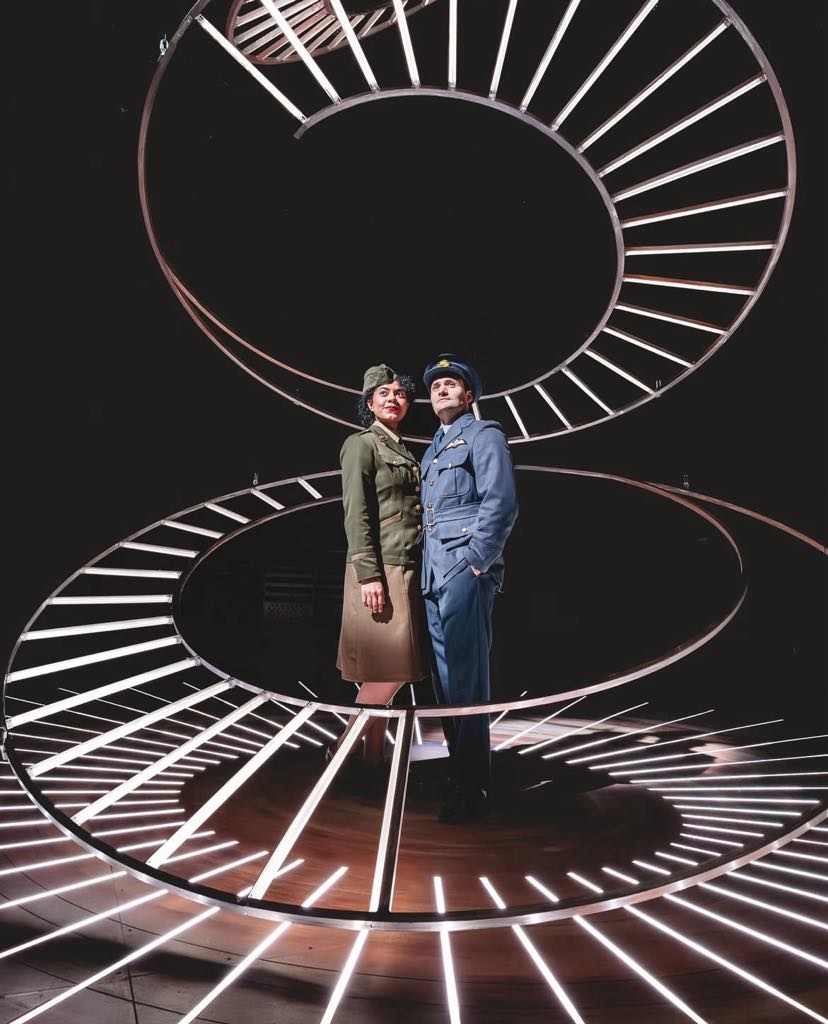
TH: Yes, I am currently working at the New Vic theatre in Stoke on Trent in their new adaptation of the 1946 film, A Matter of Life and Death, that starred David Niven, and I’m playing Peter Carter, so I’m playing David Niven’s character at the moment. And we’ve had some really fantastic reviews, five stars in the Observer which was great, and a good four-star review from The Stage as well. It’s a really lovely show, A Matter of Life and Death, it’s basically a love story with a metaphysical twist which is really interesting, and we’ve got a live ten-piece swing band in it as well, which is really exciting. It’s a beautiful show, it really is and it’s a wholesome night out at the theatre. I’m really enjoying it.
JL: Is there anything else coming up in the pipeline after that?
TD: There are things in the pipeline in the future. I am hoping that my story with Richard is not yet complete. That should come out this year, it’s very exciting. I am looking forward to hearing the prayer, the prayer was my favourite. But all of those things are yet to come.
JL: Thank you. I have been to Warwick Castle, by the way.
TD: Warwick Castle’s interesting because, once I got involved in the show, I’ve made little adjustments to the script to make it a little bit more historically accurate. It’s one of those where, because of the nature of the show, and the story they are telling, they need that villain, and Richard very much is that villain, and I don’t agree with the story of it, but at the same time, a show like that gets kids interested in it, gets audiences interested in it, and then they can go away and do their own discoveries for it.
JL: I have seen it, but it was quite a while ago and I was booing Henry the whole time.
TD: Good Job! I do, I’m in it and I boo him! I’ve refused to play Henry. Henry is the leading role, in a way, and they have offered it to me on a number of occasions and they now know that I at no point will ever play a Lancastrian part in that show. I might play any of the Yorkists but I will not play a Lancastrian, I just can’t stand them, so they’ve stopped asking me now!

JL: That’s brilliant! Thank you for agreeing to be interviewed.
Here is a link to Thomas’s current show, ‘A Matter of Life and Death’ Its run finishes soon, so book now!
Here is a link to Thomas as Richard’s voice: Digital Avatar of King Richard III
With thanks to Thomas Dennis for the photographs.


Leave a comment