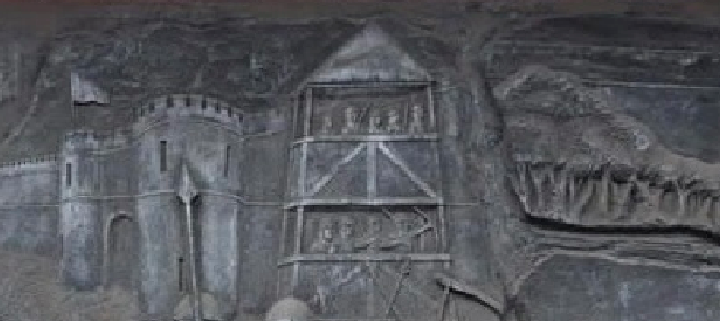
Detail of mural in Gloucester City Centre

No, I’m not picking a fight with Colchester’s claim to Humpty Dumpty, for they did indeed have a huge Royalist cannon called Humpty Dumpty which was destroyed by the Parliamentarians, see http://www.englishcivilwar.org/2012/04/tracing-siege-of-colchester.html and https://lordgreys.weebly.com/articles-and-features/humpty-dumpty-exploded).

However, I definitely find fault with any silly notion about Richard’s horse at Bosworth being called Wall (https://murreyandblue.org/2022/01/02/humpty-dumpty-and-his-wall-were-richard-iii-and-his-horse/ and https://murreyandblue.org/2021/08/22/hey-diddle-dumpty/).  That’s plain daft.
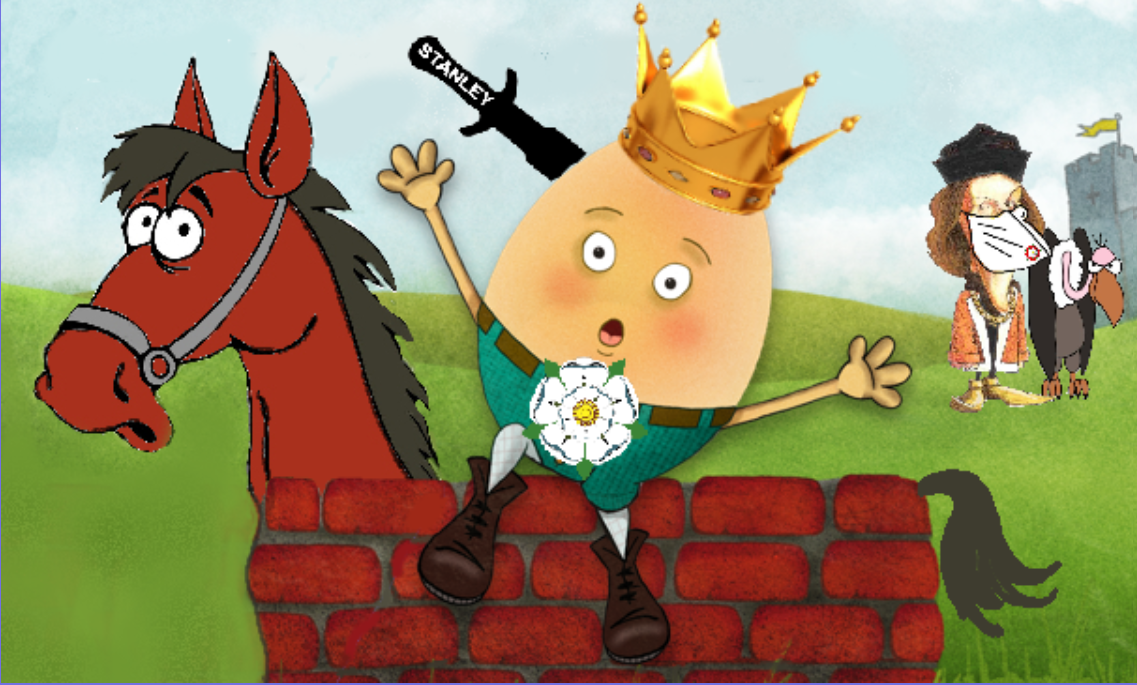
Image created by me in 2022, with Henry Tudor’s mask courtesy of the pandemic.

A Dictionary of Archaic and Provincial Words, Obsolete Phrases, Proverbs and Ancient Customs from the Fourteenth Century, Vol I, page 467, Halliwell, defines Humpty Dumpty as follows: Humpty-dumpty means short, broad and clumsy, while Humpty on its own means hunch-backed. The latter perhaps explains why poor Richard III features in the narrative. There’s still a Tudor-manufactured insistence that he suffered from kyphosis.

But now I have happened upon another explanation, and this time it is from my home city (home since 1963) of Gloucester. Prompted by a thread on a FB group that’s concerned with Gloucester past and present, I did some digging, and yes, Humpty Dumpty seems to have been involved in the 1643 Siege of Gloucester! See https://www.visitgloucester.co.uk/discover/blog/read/2021/11/gloucesters-nursery-rhymes-b121.

Found on Alchetron.com

If you go here https://www.gloucestercivictrust.org/wp-content/uploads/Siege-of-Gloucester-Tour-Notes-Jim-Dillon.pdf you’ll find the route of a present-day tour around various city sites concerned in the siege, including: “….Brunswick Road. Humpty Dumpty. A siege engine which collapsed. Pig and Whistle. Gloucester allegedly ran a pig around the walls to show that they had food. A boy played a jolly tune on the whistle to draw their attention….” *

From the description on the FB group I take it that this siege engine was actually a siege tower, like the one in the image at the top of this post and in the centre of the image below, rather than a trebuchet or battering ram. Although the visitgloucester.co.uk site claims it was a catapult. Whatever, it wasn’t a cannon, such as the one at Colchester.
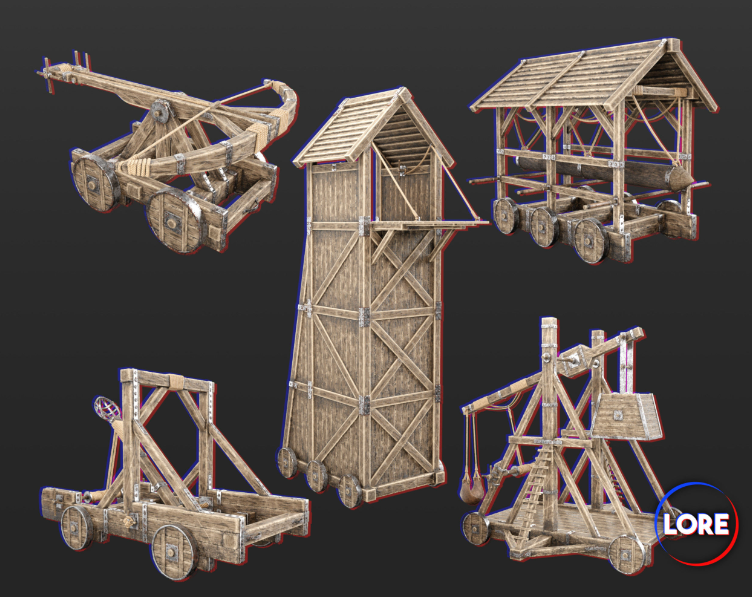
from https://www.cgtrader.com/3d-model-collections/medieval-siege-engines

So there. Gloucester claims Humpty Dumpty in his siege tower persona! The tower’s wheels became stuck, it toppled over and broke into pieces. Then Humpty Dumpty couldn’t be put together again! 😲

*Does this mean Gloucester can also claim to be the origin of the pub name Pig and Whistle? Well, not according to this link: https://www.phrases.org.uk/meanings/pig-and-whistle.html  
https://www.tripadvisor.co.uk/Restaurant_Review-g186342-d4298597-Reviews-The_Pig_Whistle-Norwich_Norfolk_East_Anglia_England.html (I have no idea of the significance of the ostrich/emu in the background, right.)


Subscribe to my newsletter

  1. davidbliss@bigpond.com Avatar
    davidbliss@bigpond.com

    Good morning from Australia.

    I edit the newsletter of the Victorian Branch of the RIII Society.

    In May 2015 I wrote this. I thought it might interest you.

    Regards

    Humpty Dumpty

    by David Bliss

    HUMPTY DUMPTY IS one of the best-known characters in English nursery rhymes. The most common modern text is:

    Humpty Dumpty sat on a wall, Humpty Dumpty had a great fall. All the king’s horses and all the king’s men Couldn’t put Humpty together again.

    The earliest known version was published in Samuel Arnold’s Juvenile Amusements in 1797, with the lyrics:

    Humpty Dumpty sat on a wall,

    Humpty Dumpty had a great fall.

    Four-score Men and Four-score more,

    Could not make Humpty Dumpty where he was before.

    The melody usually associated with the rhyme dates from 1870 in James William Elliott’s National Nursery Rhymes and Nursery Songs. The rhyme’s origins are obscure.

    The Oxford English Dictionary gives a 17th century meaning of “humpty dumpty” as brandy boiled with ale. Probably by association it also meant a drunk. The term was also an 18th century term for a short and clumsy person.

    There are various theories as to the origin of the rhyme. One is that it refers to Richard III. The theory was first set forth by Katherine Elwes Thomas in 1930 in The Real Personages of Mother Goose. The theory was propagated by Robert Ripley.[1] Thomas speculated that because Richard was “humpbacked” and because he lost at Bosworth, despite “all the King’s men”, King Richard was Humpty. Richard, of course, was never described as chubby. Indeed we now know him to have been of a slight build. Again, the original version of the rhyme does not refer to the “king’s men” but to “four-score men and four-score more”. Other than Thomas’ speculation there is no evidence of any kind linking Bosworth to the rhyme.

    In Gloucester some believe that Humpty Dumpty refers to a testudo (“tortoise”) battering ram used by the Royalists in an attempt to liberate Gloucester in 1643. This is clearly not the case. The Cavaliers did not use battering rams in the month-long siege of Gloucester. The story was a joke by Professor David Daube in The Oxford Magazine of 16 Feb 1956. He included a number of impossibilities to make it clear that the whole thing was a spoof. Again, there is no evidence connecting the Siege of Gloucester to Humpty Dumpty.

    St Mary-at-the-Wall, you can see the different coloured brick where the tower was re-build after the siege.

    From 1996 the Colchester Tourist Board’s web-site said that the rhyme refers to a cannon used from the church of St. Mary-at-the-Wall by Royalist defenders in the siege of 1648. The story given out was that a large cannon, informally known as “Humpty Dumpty” was placed on the wall. The rebels damaged the wall beneath the gun, causing it to fall. “All the King’s men” were unable to re-mount the weapon on another part of the wall. On 28th Aug 1648, the Royalists surrendered to the regicides.

    Popularist “historian” Albert Jack claimed that there were two other verses supporting the claim which he found in an “old dusty library, [in] an even older book”.[2] However, he did not state what the book was or where it was found. It has been pointed out that the two additional verses are not in the style of the 17th century, or the existing rhyme, and that they do not fit with the earliest printed version of the rhyme, which does not mention horses and men. I note that the Colchester site of Britain Express now describes the story as “unlikely”.

    A story with a similar lack of any evidence is that “Humpty Dumpty” referred to Charles I of England. He was toppled by the Puritans in Parliament (the great fall). The King’s army (Cavaliers) could not give his power back and Charles I was executed. There’s no evidence for this.

    So what is the origin of Humpty Dumpty? The surprising answer is, he’s an egg! The rhyme was a children’s riddle.

    The answer to the question, “what, if it fell off a wall, could not be re-constructed?” is “an egg”. The riddle used the name Humpty Dumpty as a red hearing as it was understood to mean a chubby person. No-one now poses the rhyme as a riddle, because everyone knows the answer.

    Similar riddles have been recorded in other languages, such as Boule Boule in French, Lille Trille in Swedish and Norwegian and Runtzelken-Puntzelken or Humpelken-Pumpelken in different parts of Germany.

    Albert Jack says that we think of Humpty as an egg because Lewis Carroll depicted him so in Through the Looking Glass and What Alice Found There.[3] Jack is wrong, Carroll depicted him so because that’s what people already knew him to be.

    Humpty as he was represented in Through the Looking Glass

    Humpty Dumpty, shown as a riddle with answer, in a 1902 Mother Goose story book by William Wallace Denslow.

    Liked by 1 person

    1. Aw, David, you spoilsport you! 😄

      Like

Leave a reply to davidbliss@bigpond.com Cancel reply