
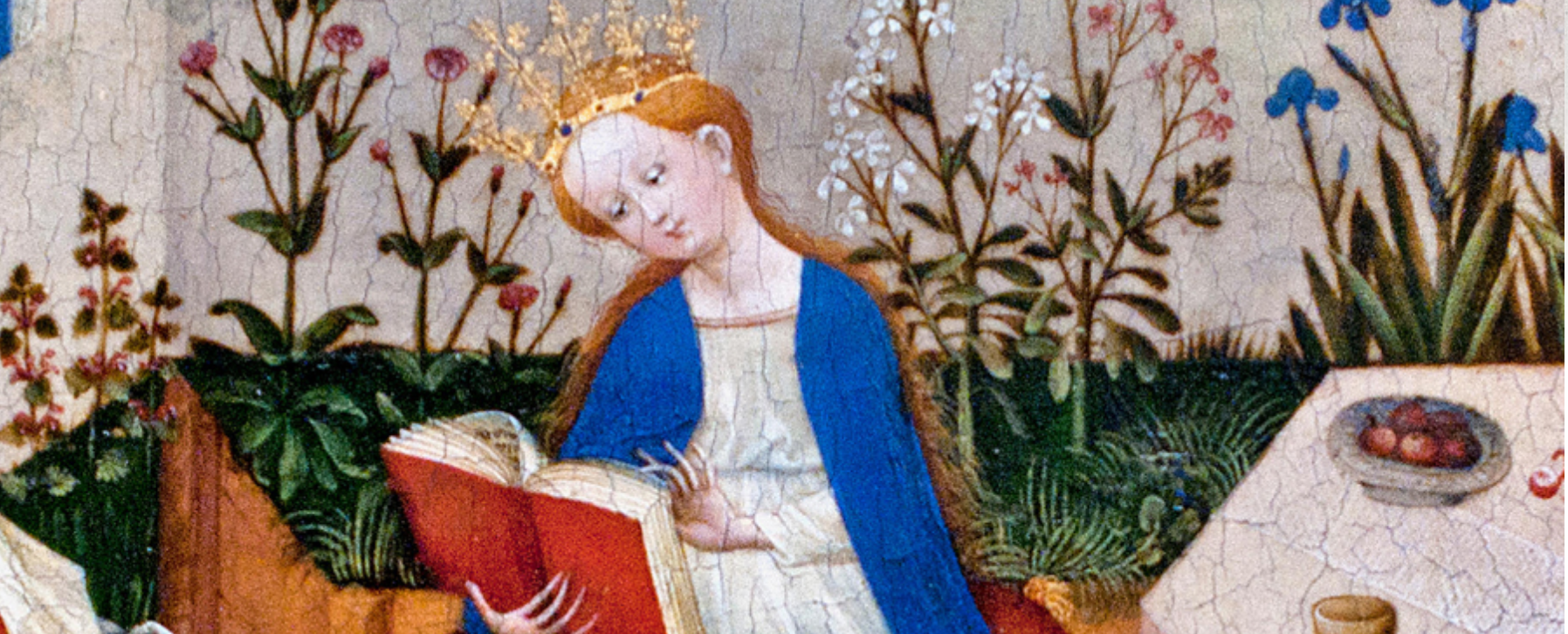
For the purposes of this article, the sweet lady in question is Philippa of Hainault, the queen of Edward III of England. She was very interested in gardens and in acquiring new flowers. Perhaps she was influenced by her French mother, Joan of Valois, Countess of Hainault, who in around 1340 sent some cuttings of rosemary to her daughter, with instructions to put some of it under Edward III’s pillow, to ensure his fidelity. This is how rosemary is said to have arrived in England.
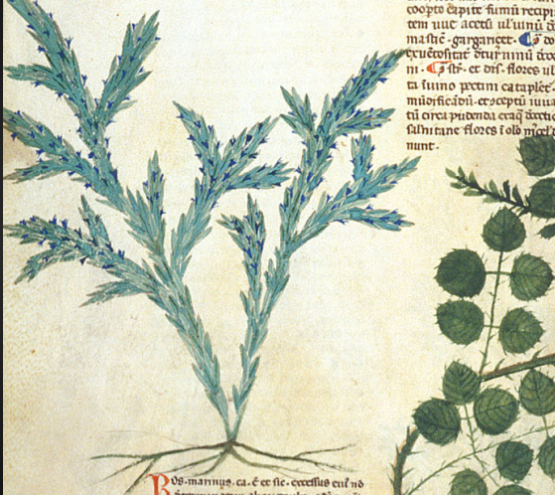
Well, perhaps the rosemary was hidden under the king’s pillow because Edward was indeed a faithful husband—astonishingly so for a medieval monarch. That is until toward the end of his life, but hopefully after Philippa’s demise, when as an aging man of fading faculties he fell under the influence of Alice Perrers, who became one of the most notorious women of fourteenth-century England. She still is. Was she evil and grasping? Or misunderstood?
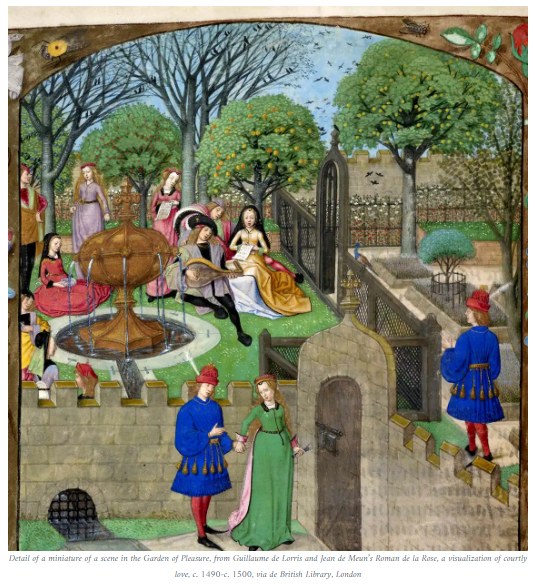
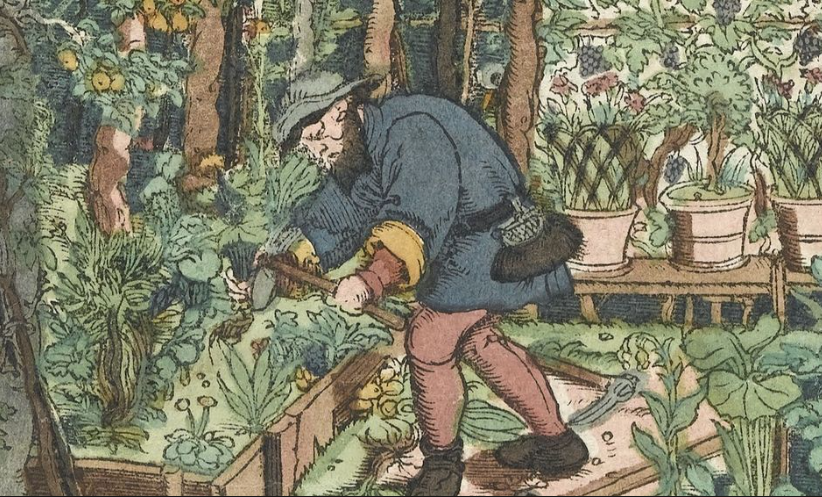
Gardens appear to have been a medieval joy as indeed they are to us today. We are fascinated by the illustrations that not only reveal the design but also the appearance of flowers as they were originally, not as they are today, after generations of horticultural tweaking.
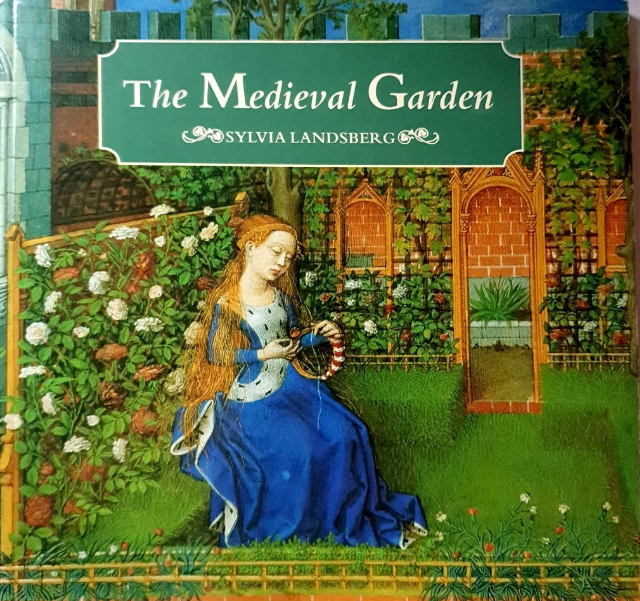
Think of the rose, for example. The wild rose indigenous to Britain is the simple, single flower that blooms so daintily pink and sometimes white in our hedgerows, but the experimental tweaking had begun even in the medieval period. In the illustration above you can see double white and red roses that are a few steps away from the wild rose but still a long way from the multi-petalled, multi-coloured specimens that prevail today. Now we even have blue roses!
You can see much more about medieval flowers, with period illustrations, in Celia Fisher’s excellent The Medieval Flower Book, in which I found the story of Queen Philippa, the rosemary, and Friar Henry Daniel (of whom more below).
The story of the gift to Philippa from her mother comes to us courtesy of the fourteenth-century Dominican, Friar Henry Daniel (also known as Henry the Poet), who was interested in finding cures through plants and who shared the queen’s passion for gardens.
Daniel was always journeying around England, “….a doctor in search of cures, which purpose inevitably involved plants of all regions, and his descriptions always displayed his fascination with the regional names, habitats and growth habits of plants, and above all their irresistible beauty….”
The good friar managed to acquire various new plants from the royal herber (the man in charge of the royal gardens), and these included many pinks and the new rosemary. He squirrelled them all to his own garden in Stepney. Here he nurtured no fewer than 250 different types of plants which, considering the period, was as astonishing as Edward III’s faithfulness!
Another excellent article about medieval gardens can be read here Castle Life – Medieval Gardens (castlesandmanorhouses.com). And you can read more about Friar Henry Daniel himself here Henry Daniel (friar) – Wikipedia. If you log in to JSTOR please go here Through a Fourteenth-Century Gardener’s Eyes: Henry Daniel’s Herbal on JSTOR, here https://www.jstor.org/stable/43344047 and here The Square Garden of Henry the Poet on JSTOR. If you are interested in learning even more about Friar Henry Daniel you’ll find a helpful bibliography here Works on Daniel | The Henry Daniel Project (utoronto.ca)
Today rosemary is associated more with remembrance than fidelity, although if you have worries about your spouse straying, you can try the pillow trick. It really may have worked a treat on Edward III!


Leave a comment