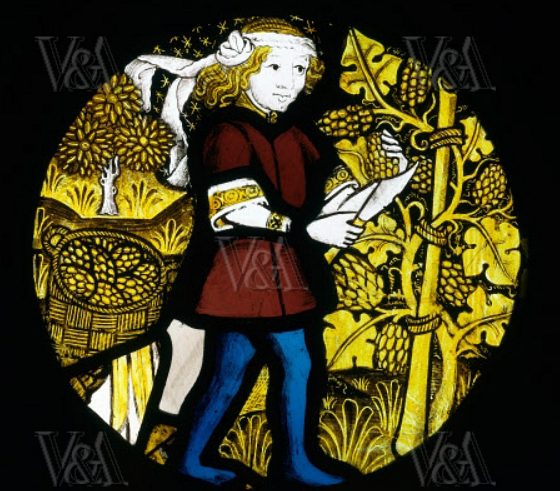
Yes indeed, it seems that Londoners invented champagne. It’s a claim that won’t go down well across La Manche, and I found it at this site, which is also where I found the illustration from Rocque’s Map below.

“…If you could time travel back to medieval London you would [find it] awash with vineyards at that time. You could find them in Southwark, Westminster, Saint Giles, Bermondsey, East Smithfield, Holborn, Piccadilly (the Vine Street on Monopoly boards), St James’s Park, the Tower of London and almost anywhere with a road containing the word ‘vine’….”
I don’t know when exactly a process of secondary fermentation began, but it was certainly around in the 1660s when it was recorded that “….London vintners were inducing a secondary fermentation in (French) white wine bottles, thereby inventing what today we call the méthode champenoise. Yes, Londoners seem to have invented what we today know as champagne decades before the French because their bottles, made from wood-fired rather than coal-fired furnaces, were so fragile they would explode under secondary fermentation….”
But wine-producing in England had been going on for centuries, at least since the time of the Romans and then by the Anglo-Saxons. Mostly, it seems, by the Church and nobility. According to English Heritage St Augustine’s Abbey, Thanet, Kent “…was probably founded in 598 and consisted of an inner precinct containing the abbey’s main buildings and cemetery, and an outer precinct containing vineyards, orchards and gardens…”

By the end of the 11th century it seems there were around 50 vineyards in the southern half of England. By the time of Henry VIII there were 139 in England and Wales. They flourished until a cooling climate put a stop to them and allowed their European rivals to take precedence.
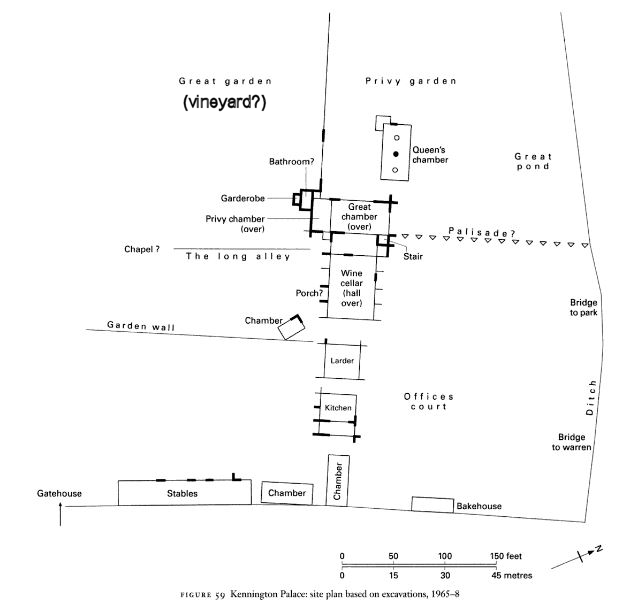
Royalty was in on the act as well, because according to this site there was a vineyard at Kennington Palace. In the early 14th century Hugh le Despenser sent wine made at Kennington (then just a royal manor) to the London markets.
“….The palace gardens, which in 1390 were described as being rich with vines, extended as far as the present East Stand of the Oval Cricket Ground, which itself is still part of the Duchy of Cornwall Estate….The vine garden survived at least until 1461, and was perhaps located in the Prince’s Meadow; in the early 14th century Hugh le Despenser had sent wine made at Kennington to the London markets….” The vault beneath the great hall was a wine cellar and there was access from it to a vineyard that was in either the great garden or the privy garden.
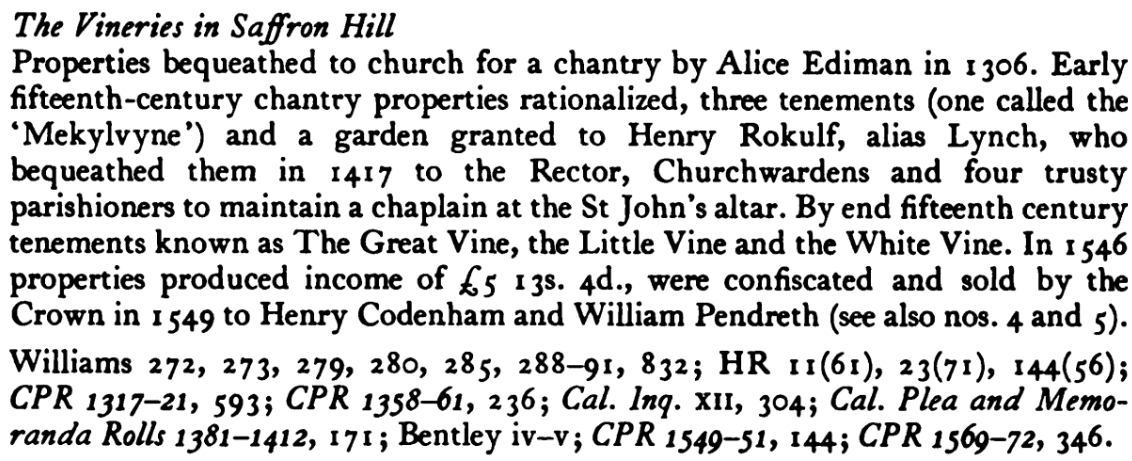
One comes upon mention of London vineyards when least expecting it. While reading an interesting paper about the Medieval Parish Church of St Andrew Holborn, by Caroline Barron and Jane Roscoe, I came upon the following footnote:
And should you think the vines in question were merely the names of the properties, the paper states later on:
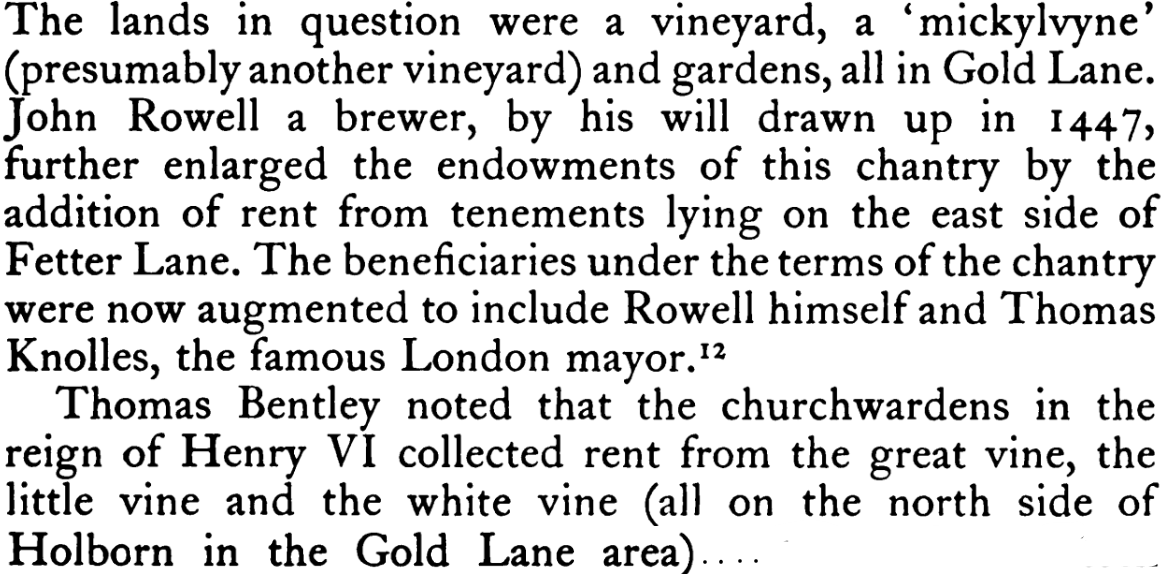
So definitely vineyards.
But be warned, medieval wine was not like the wine we expect today, and for a variety of reasons. It sounds so unpalatable that we’d very pushed to drink it! To read more, go to the inquisitive vintner.
Now London is getting in on the wine act again after many centuries, and the first sparkling wine made from London grapes has been produced, see this site . Gloucestershire, of course, has been producing exquisite wine for decades now, see here – but I won’t brag about my county! 😊 Nor will I forget to mention Welsh vineyards, see here.
To read more about English wine production in the medieval period, go here.

 The New Murrey and Blue blog
Leave a reply to H.J. Hill Cancel reply