Reblogged from Edward IV – A King of Bling’s Wardrobe Accounts
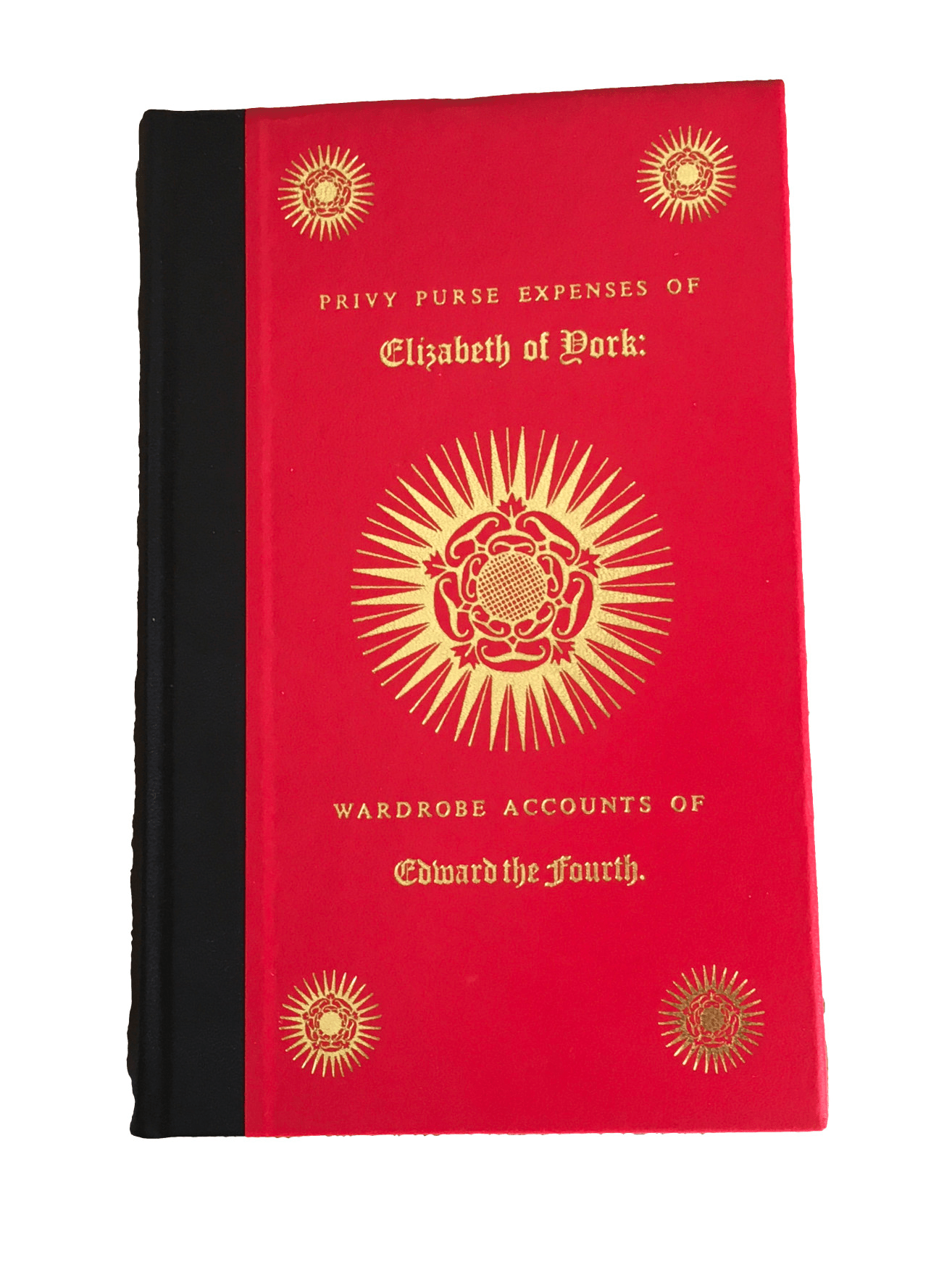
 

imageThe Privy Purse Expenses of Elizabeth of York and The Wardrobe Accounts of Edward the Fourth Edited by Nicolas Harris Nicolas Esq

As demonstrated by my earlier posts on the subject I enjoy nothing more than a delve around privy purse/wardrobe expenses.  This may be partly due to my naturally nosy nature but also because of  how much they can tell you about that specific person.  Take for example Elizabeth of York’s cheap lanten shoe buckles or her generosity to any person who rocked up who had been in the service or provided help for any of her relatives.  Not to mention Henry VII’s penchant for dancing maidens – now theres a surprise!   Here today are some of Edward IVs Wardobe Expenses.  Good grief did that man  love bling bling –   the wonderful fabrics he wore, the jewels  – how he must have shone and shimmered  in the candlelight..

image

Edward IV  motto, ‘confort et lyesse’,

However before I go further I should say I’m  being unfair to call Edward King of Bling – all medieval monarchs knew the importance of dressing sumptuously, even Henry Tudor, who known for his meanness, except where it came to his funeral,  had his helmets encrusted with jewels  – yes he did! –

27th May 1492  many precyous stones and riche perlis bought of Lambardes for  the ‘garnyshing of salads, shapnes and helemytes’ 

June 30th 1497 £10 was paid to the Queen to cover her costs of ‘garnyshing of a salet’.

August 9th John Vandelft, a jeweller was paid £38.1s.4d for thegarnyshing of a salett‘ – Now thats what you call ostentatious! 
helmet studies albrech durer 1503.jpg

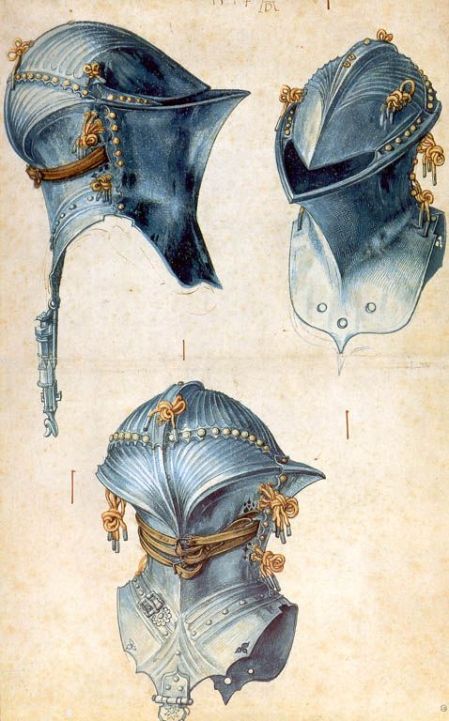
A Helmet or Salet decorated.  This is not Henry’s salet because his would have been more jewel encrusted and pretentious.  

It was actually  written by an  ‘historian’  that,  Richard III who was just being a medieval king,  was a fop! (1).   We have Sharon Turner (1768-1847) to thank for this gross misinterpretation  of  facts.    Turner did not stop there and went on to also absurdly describe Richard as a vain coxscomb and we have the editor of The Wardrobe Accounts of Edward IV, Sir Nicolas Harris Nicolas,  writing in 1830 to thank for righting this silliness.   Sir Nicholas wrote that the

love of splendid clothes and taste for pomp belonged  to the age and not to the individual‘ (2).

So we can clearly see all medieval kings were all naturally very blingy.   However  fortunately,  or unfortunately,  depending how Edward would have viewed people gawping over his expenditure,  his wardrobe  accounts are readily available for us to peruse.   Mind you I do not think Edward himself would have cared a flying fig.    Indeed he liked nothing better than to show off as Mancini has mentioned – 

‘He was wont to show himself to those who wished to watch him and he seized any opportunity that the occasion offered of revealing his fine stature more protractedly and more evidently to onlookers’ (3). 

To continue reading please click here..


Subscribe to my newsletter

  1. Sparkypus, what a sumptuous post! And thank you for all the very detailed illustrations, the northern painters like van Eyck used oil paint (rather than egg tempera or fresco) for their panels which allowed for such startling color and luminous representation of the textiles, jewels, and furs that were seen everywhere in the outrageously excessive Burgundian court and across the Low Countries’ trade. I wonder if the need for oil, as the preferred medium, came because of these very luxuries rather than some artistic whim or innovation. (Until very recently art was a luxury, made for a select few, pricey beyond description, a power or status image or object, and the artist was really not very different from the guy shoeing your horse or polishing the armor).

    All pigments, and for centuries to come, were made in the artist’s studio, very labor intensive, and very expensive as well, and the most prized colors were the blue, red and gold, and worth a king’s ransom. So exorbitant were these pigments that an artist would put the cost of their purchase INTO their contract with the patron (and Van Eyck’s patrons could well afford such excesses) so when your eye glances over those rich reds, crimsons, glorious blues, and gold leaf, just remember, the artist was also a businessman/woman and IF you didn’t want smalt disguising itself as “blue” then be prepared to pay up!

    Btw, I’ve read that E4 had a wonderful pair of red Cordovan boots, thigh high, hmm, well, at 6’4″ he had the legs to wear them; at least in his 20’s?! It is also possible for one to think of Richard in such boots, he never put on the weight/unsightly bulk of his older brother the king, and while he may have been 5’6-8″ the legs would have been well accentuated in such a style; (thankfully those hideous long pointed shoes, held up at the tip with little chains (egad) were gone by Richard’s adulthood).

    Question, Sparkypus, is that last portrait the one of Isabel of Portugal? the mother of Duke Charles the Bold? (That would be Rogier van der Weyden’s awesome portrait, not sure but I think it’s at the Getty out in LA, how the heck it ended up there I do not know!)

    PS. for those who are curious why oil paint has any advantages over egg tempera or fresco it is simple, the pigment, ground into a powder, as it was for all painting applications, and kept in a pouch, vial, or some other receptacle until needed, was added to a variety of oils, in van Eyk’s day it may have been walnut oil. Think of it then being applied in thin almost transparent layers, sticky yes, due to oil content, but nearly transparent, usually over a white lead background, so, when light went through those layers it hit the white background and bounced back out at the Viewer with a shocking brilliance – something fresco and tempera can never do. Continue adding layers of these thin layers to build up the desired saturation and the gold shimmers, gems gleam, every drop of perspiration visible, every eyelash and glint of eye visible as if that person was in front of you. I tell students to think of it as painting with stained glass, melted, in puddles of color, and work fast because glass cools quickly lol – the real beauty of oil though is that oil is incredibly forgiving, it takes forever to dry, can be adjusted easily, wiped off and painted over. And nothing in acrylic or watercolor or pastel can come close to oil’s advantages. There is a very good reason that Da Vinci abandoned fresco and tempera for oil and likewise ushered in the wholesale Italian adoption of the medium as well!

    Liked by 2 people

    1. Thanks Amma..yes Im sure that is Isabel of Portugal as far as I can remember. I saved the picture because im interested in costume but I didnt save the name of the sitter..x

      Liked by 1 person

      1. Sparkypus, funny what you said about costume, I work part time with Barnes & Noble, (the discount is delicious), so I keep a steady stream of items on my wish list and yesterday I was cruising through our database of what is still available on Jan van Eyck, van der Weyden, Memling, Christus, van der Goes, etc, usually called Early Netherlandish painting and oh pooh, it’s a wasteland out there!

        I have a few monographs from school but I wanted to add to my material after your post. Our “interlibrary loan” system, which is where I would normally turn for out of print or very pricey items, is of course, nonfunctional during Covid and apparently will remain so ad infinitum… IF you haven’t looked into (online is one source unless you have a good available library system) some of these artists for costume give it a try, the Burgundian court was THE most spectacular, cultured, lavish, and stunning example of the arts across the spectrum, no parallels anywhere in Europe or England (though I think R2 had the aesthetic and intellect to come close!).

        One sculptor you probably have not heard of but MUST look for is CLAES SLUTER … I’m a painter and I can’t build a 4″ Lego house if my life depended upon it so sculptors exert an exotic fascination on me, and this one perhaps more than any other! We know ZIP about his training, his background, and can explain even less how he can even have created the extraordinary figures that surround, in mourning, the Tomb of Philip the Bold and first Duke of Burgundy (it is at Dijon) who died in 1404 – curiously it is a single monument as his wife decided to be buried alongside her parents. The figures Sluter crafted are choirboys, monks, members of the household, but it is their drapery that is just a revelation – GO LOOK!

        When Frank Gehry, the Canadian architect, explained WHAT influenced his amazing Guggie art museum at Bilbao he cited the large and small figures found in Giovanni Bellini’s lovely Madonna and Child painting AND… the drapery folds in the Mourning Tomb figures at Dijon by Sluter! These date to about 1403-6, literally a century before Michelangelo’s David! I had three grad classes in Sculpture and no one ever had an explanation as to how someone like a Sluter could ‘happen’ – his expressive realism, (and just look at his costuming at the Well of Moses as well), is a seismic break with everything in the Northern mode at the time and long after him! Allegedly Michelangelo knew of his work, that I find hard to believe as Sluter never left his province (we think) and Michelangelo, as we know, openly loathed Northern artists, and there was no Pinterest, no Net, no Instagram, no nothing! If you wanted to know what another artist was doing you had to walk, take a donkey, a ship, and schlep your way there to their studio, and see it for yourself!

        Sparkypus, Sluter is 3 decades before the painters you used in the post – look at these mourning figures – they are all shown in deep emotion, each one in their own world of openly crying, or contemplation, or some profound expression, they are simply breath taking – there is NOTHING like these sculptures in Northern art, for their realism, accuracy (in art, living things, animals and people, for example, when shown in accurate perspective, is called “foreshortening” – it is not yet popular in Northern painting in this period, it won’t be for another century really) and the sculpture of the day remained “gothic” in that figures were more of less attached to the columns of a church or cathedral, not freely or visually understood as uniquely and completely human. Sluter is just a shocker.

        ok, I’m out, had my Sluter rant on, but he IS worth looking for!

        another thing you might do, for comparison, is look at the costuming detail of say the Northern painters 1400-1500 and then again 1600 during the Dutch or Northern Baroque age (roughly 1590’s through 1715!) – and compare with what the Italians do in art 1400-1490’s (primarily it was egg tempera and fresco) then also see the Italian Baroque period (same dates as North but now almost exclusively in oil for portraiture, which is where one sees costuming in greater detail).

        What I noticed, (my major was/remains Italian/French 1470’s-1550’s) is that something definitely happened in painting – while oil paint was introduced to the Italians (thanks to Leonardo) it’s effect did not have the same correlation in the detailing of costuming as it had in the visual description of hair, facial expression and emotional content of portraiture, which hardly ever, maybe NEVER factors into portraiture before in Northern painting where Oil had been supreme for decades. While a Raphael of Titian might – on occasion – pay lip service to aspects of some costume worn by a favored sitter, as a rule that is not the focus of the portrait the way it is in Northern painting – why??? what changed? I have a few theories but you have made a more enthusiastic and thorough study of costume than I have and I would love to hear it!

        (Titian has several famous portraits – Emperor Charles V, one equestrian, horse steals the show in that one, and the one with his hound, sleeves on that coat are impressive! My favorite is the Man with the Blue Sleeve, hahhaaa)

        Liked by 1 person

  2. […] the reign of Edward IV, thanks to his queen’s endeavours on her relatives’ behalf, their rise to prominence led to […]

    Like

  3. […] land fair and square on his parents shoulders, particularly his father.  Yes the buck stops with Edward IV who kept his brains in his pants and a lot of people paid a heavy price for that…tsk.   […]

    Like

  4. […] almost have been written about More’s account of what is supposed to have happened to the sons of Edward IV in the Tower. But no, it’s about Michael Sherbrook’s Falle of the Religiouse Howses, which […]

    Like

  5. […] lived there and was also buried there. She was the younger sister of Eleanor Talbot, first wife of Edward IV. Her only child, Anne Mowbray, was buried at the Minories. She’d been the small wife of the […]

    Like

  6. […] the accession of Edward VI as the only surviving son of Henry VIII. It is well established that Edward IV had appointed Gloucester, Edward V‘s paternal uncle just as the Dukes of Bedford and […]

    Like

  7. […] believes that Dr John Argentine murdered not only the young sons of Edward IV and Elizabeth Woodville, who were just 12 and nine respectively when they disappeared in 1483, but […]

    Like

  8. […] author then moves on to Edward IV.   Edward took the throne, aged just 19,  after his father’s death at Wakefield when it […]

    Like

  9. […] Woodville was “queen in her own right”. I think not. She was queen because she married King Edward IV. She was his […]

    Like

  10. […] Henry VII “knew” that Edward IV‘s sons were dead by the time of his accession, why did he take nineteen years to produce any […]

    Like

  11. […] Then, after the Battle of Tewkesbury, we have “Edward VI is now the disputed king and it looks as though the House of York has won….” Edward VI won at Tewkesbury? I wonder if anyone thought of telling Edward IV? […]

    Like

  12. […] the possibility is actually fact, it makes me wonder if Edward IV married someone else – as well as Eleanor Talbot and Elizabeth Woodville! Anything’s […]

    Like

  13. […] Earl of Warwick was born at Warwick Castle on the 25 February 1475. Among his godparents were Edward IV, who created him Earl of Warwick,  and John Strensham,  Abbot of Tewkesbury (1).  His father was […]

    Like

  14. […] Thus he was the great-grandfather of Richard, 3rd Duke of York, and great-great-grandfather of Edward IV and Richard III. So it is very interesting to see the same brutal lies being applied to his […]

    Like

  15. […] Mortimer, the wife of Richard of Cambridge. Her son was, of course, Richard Duke of York, father of Edward IV and Richard III. Upon his death it passed to the crown and remained so until 1616. It has been […]

    Like

  16. […] August 1473,  who for a while was first named as the new king.  He was of course the youngest of Edward IV’s sons and had disappeared in 1483 with his brother, Edward V, from the Tower of London.  Their […]

    Like

  17. […] of his death during the boys’ minority Richard was to be appointed protector. This proves that Edward IV (clearly not in his right mind) really trusted “this man”. But not everyone trusts “this […]

    Like

  18. […] extant household records do not appear to show excess.  Perhaps Leland was taking a subtle jab at Edward IV, who was large, by making his great-uncle similar? It is possible, of course,  that Norwich was a […]

    Liked by 1 person

  19. […] But I have to add that if there are any bones at Westminster in need of examination, they’re in a certain urn in the Abbey! Who knows, maybe they’ll turn out to be equine as well. They certainly won’t belong to the sons of Edward IV! […]

    Like

  20. […] Edward IV marched his army over the Cotswolds on his way to confront Margaret of Anjou at Tewkesbury, before which conflict the city of Gloucester had closed its gates to her. And if you go south of Gloucester to the quaintly named Nibley Green, you’ll find the site of the last battle in England, in 1470 between “private” armies, those of Lord Lisle and Lord Berkeley. This wasn’t the Wars of the Roses exactly, but a quarrel between rival families, but it took place during the wars. […]

    Like

  21. […] Which one? Elizabeth of York or Elizabeth I? The only kings to “beget” a Queen Elizabeth are Edward IV and Henry VIII. Poor old Richard is blamed for a lot of things, but not siring a priest-hanging […]

    Like

  22. […] course, there are other theories about the sons of Edward IV having slipped from the ‘wicked clutches” of their much lied-about Uncle Richard. Not […]

    Like

  23. […] focus back on Edmund –   he shared much of his childhood with his older brother, Edward,  Earl of March,  as can be seen by  delightful letters written by the pair of them while at Ludlow to their […]

    Like

  24. […] be questioned, he was the rightful heir. The boys and their sisters were illegitimate because Edward IV neglected to marry their mother. Rather carelessly, he already had a secret wife.  So, was Richard […]

    Like

Leave a comment