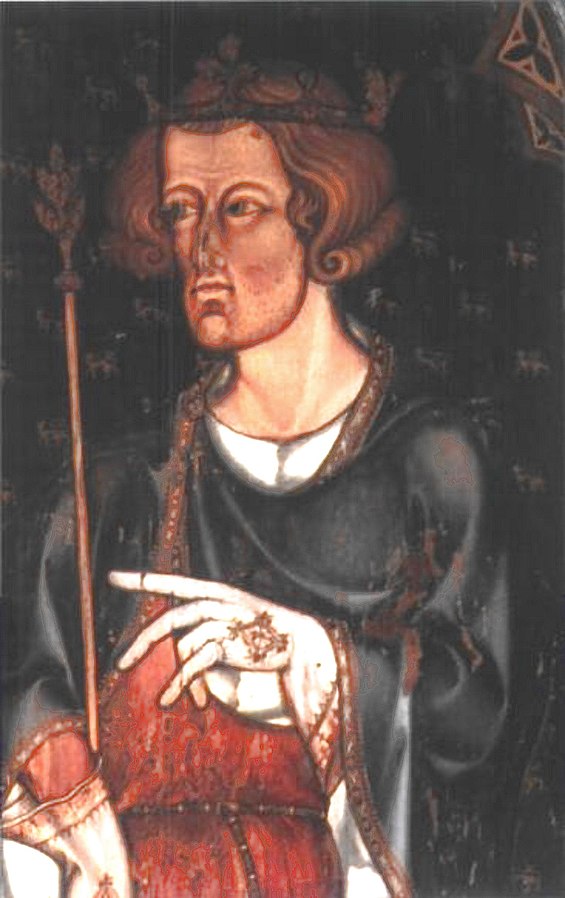
Edward I and nursery rhymes go together….um, no, they don’t….!


Edward I, Westminster Abbey

Well, I associate Edward I with many things, but not children’s nursery rhymes. I can imagine him being used to frighten them witless, but not to sing and chant with humour. Anyway, according to this site two of our oldest rhymes are due to old Longshanks. I find it hard to believe the Dr Foster explanation! Would anyone with a least a single grey cell dare to refer to Edward as Dr Foster?Not if they wanted to keep their heads on their necks.

Anyway, here are the two rhymes said to be associated with Edward:-

“….Baa Baa Black Sheep,
Have you any wool?
Yes, sir, yes, sir,
Three bags full;
One for the master,
One for the dame,
And one for the little boy
Who lives down the lane.

“….Not surprisingly this rhyme is all about sheep, and the importance of sheep to the English economy. Until the late 16th century the final lines of the rhyme read “And none for the little boy who cries down the lane.” It was changed to the current version in order to cheer it up and make it into a song more suitable for children.

“….In medieval England, the wool trade was big business. There was enormous demand for it, mainly to produce cloth and everyone who had land, from peasants to major landowners, raised sheep. The great English landowners including lords, abbots and bishops began to count their wealth in terms of sheep, with some flocks totalling over 8,000 animals, all tended by dozens of full-time shepherds.

“….After returning from the crusades in 1272, Edward I imposed new taxes on the wool trade in order to pay for his military ventures. It is believed that this wool tax forms the background to the rhyme. One-third of the price of each bag, or sack sold, was for the king (the master); one-third to the monasteries, or church (the dame); and none to the poor shepherd (the little boy who lives down the lane) who had tirelessly tended and protected the flock.

“….Doctor Foster
Went to Gloucester
In a shower of rain
He stepped in a puddle
Right up to his middle
And never went there again

“….Although first published in 1844, the origins to this rhyme may date back more than 700 years, to the time of King Edward I. Edward was known by several nicknames, a powerful man, over six feet tall he was often referred to as Longshanks, but he was also recognised as a clever and learned man and hence earned the title Dr Foster; the origins of the Foster part are lost in time. Not a great fan of the Welsh, no doubt Edward was visiting Gloucester due to the town’s strategic position at a major crossing of the River Seven into Wales….”

“….The story goes that the king arrived during a storm and mistaking a shallow puddle for a deep ditch steered his horse in that direction. Both horse and rider became trapped in the mire and had to be hauled out; infuriated and no doubt embarrassed by the humiliation, he vowed never to return to the town….”
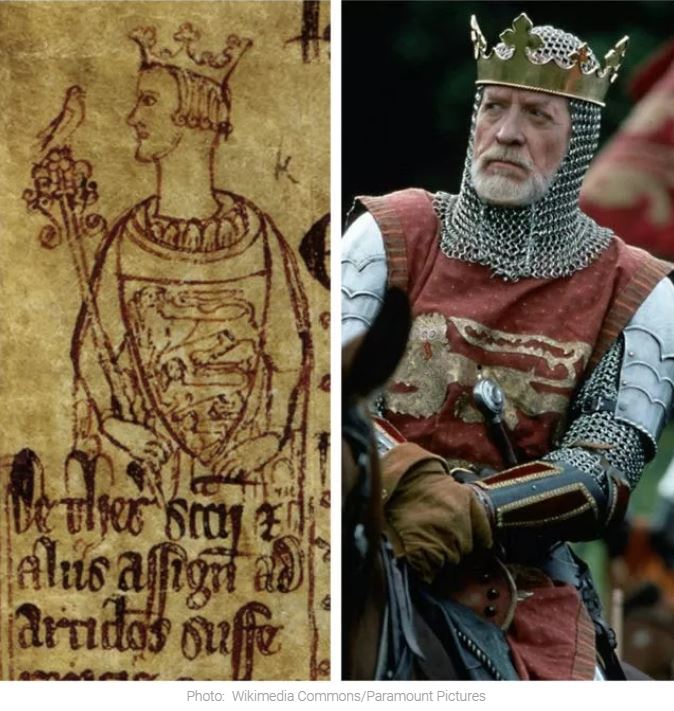
Yes, it’s Edward I from “Braveheart”. Say no more – he’d terrify me!


Subscribe to my newsletter

15 responses to “Edward I and nursery rhymes go together….um, no, they don’t….!”

  1. […] Cross then headed to Tunisia, where they were to be joined by young Edward of England, the future Edward I. Unfortunately for Louis, dysentery swept through the forces amassed in Tunis, and he was one of […]

    Like

  2. […] I don’t think the tower itself dated to Edward III, but rather to his grandfather, the formidable Edward I, so the Elizabeth Tower is certainly […]

    Like

  3. […] tracing-back to the supposed origins of our beloved nursery rhymes isn’t new, in fact it’s been around a good while. Another one I’ve seen […]

    Like

  4. […] we’ve all heard versions of the true meaning of Humpty-Dumpty, including that it was a reference to a 17th-century cannon used in the Siege of Colchester. Oh and […]

    Like

  5. […] Well I fear you can blame our first King Edward for that. He stayed here once and the hall and his bedchamber—now my sister’s—were […]

    Like

  6. […] ALL most likely descended from or connected to prominent figures and the monarchs of the past, like Edward I and Edward III. Some of them were very busy in the procreation […]

    Like

  7. […] great fortresses built by Edward I to subdue the rebellious Welsh are all spectacular and have survived the centuries. Now they are […]

    Like

  8. […] the “right of the first night” (here called prima nocta and supposedly imposed by Edward I in Scotland, according to Braveheart), table manners, the frequency of open warfare as opposed to […]

    Like

  9. […] de Clare was born on this day, 16th September 1295, the granddaughter of King Edward I. The 11th Lady of Clare, she was the heiress to the lordships of Clare in England and Usk in […]

    Like

  10. […] have been previous posts on Murrey & Blue about fairy tales, nursery rhymes and so on, from their original meaning to when they first emerged. Some of them are much younger […]

    Like

  11. […] was the daughter of Edmund, Earl of Kent (1307-30), younger son of Edward I’s second marriage, and therefore half-brother of Edward II and half-uncle of Edward III. You can […]

    Like

  12. […] 1283, the subordination of Powys to King Edward I was formally ratified and the title ‘Prince of Powys’ quietly dropped. From now on, the […]

    Like

  13. […] His prominent ancestors include include the poet Henry Howard, Earl of Surrey (leading back to Edward I through the earlier Howards), although the 1st Earl of Bedford himself is disappointingly obscure. […]

    Like

  14. […] Sir John Howard, 1st Duke of Norfolk, was descended from Thomas of Brotherton, a younger son of Edward I. Several branches of the Howard family have held the title ever since, except for periods under […]

    Like

  15. […] October, the garrison was still inside the castle and Henry and his sons, Edward and Edmund, increasingly concerned about the situation. If the King could not take the castle, it […]

    Like

Leave a reply to Great Tom came before Big Ben….! – murreyandblue Cancel reply