William Marshall
-
Richard’s Castle, on the border of Shropshire and Herefordshire, was founded by a Norman knight called Richard Scrob or FitzScrob. This is how it received its name. The manor eventually passed from Richard’s line and was owned by a junior branch of the Mortimers, the Mortimers of Attleborough. In 1264, Hugh Mortimer was forced to…
-
Rumi, the Persian Poet
Afghanistan, Angevin Empire, Anglo-Saxon Chronicle, Brad Gooch, Cambridge University, Eleanor of Aquitaine, Genghis Khan, Henry III, Holy Roman Emperors, Innocent III, Iran, Islam, John, Layamon, Muhammed Ali Musofer, Persian Empire, Philip of Swabia, poets, Shamsoddin, Siberia, stephen langton, Tajikstan, Turkey, Vakhsh, William MarshallI grew up under the tutelage of an amateur historian father, one who both dissected past events and also generously passed along a wide range of historical snippets. Perhaps he had a limited knowledge of this event, or I forgot most details about that one. Whatever the reason for the more modest lessons, or memories,…
-
In previous years, Lisl took part in conversations with other bloggers and writers about book covers, regarding their importance and appeal. From these discussions the Cover Crush evolved amongst several participants, who began recording their thoughts on images that, for various reasons, caught and kept their attention. Today, Lisl shares her most recent Crush,…
-
Caversham is just across the Thames from Reading. The present bridge carrying the main road between the two places is modern, but it is more or less on the site of a medieval stone and timber bridge, dating from between 1163 and 1231. Sources vary as to whether it had one, two or three chapels,…
-
THE STRANGE LEGEND OF USK CASTLE
Azincourt, Bannockburn, birthplaces, Cecily Duchess of York, Dafydd Gam, Edmund Mortimer, Edward I, Edward IV, Fotheringhay, Gilbert de Clare, Gwent, Henry IV, Iorweth ap Owain, Iron Age, isotope analysis, Joan of Acre, Leicester dig, Ludlow Castle, Mortimers, Owain Glyn Dwr, Pwll Melyn, Richard de Clare, Richard Duke of York, Richard III, Rouen, Stone of Revenge, teeth, Tristram FitzRolf, Usk Castle, Wales, William Herbert, William I, William MarshallIn a tiny town in Wales, a ruined castle stands on rising ground amidst a haze of dark trees. An atmospheric round tower, cracked by time; shattered walls, the remains of hall and chapel. Privately owned, a garden drops down the hillside before it, to an old house which appears to contain much castle stonework.…
-
The Greatest Knight and Richard III
Barons’ War, Battle of Newbury, Bruces, Cartmel Priory, Crusades, Eleanor of Aquitaine, Henry II, Henry III, Isabel de Clare, John, jousting, Lincoln, Louis VII, Maud de Braose, Papal Legate, Pembroke Castle, Plantagenets, regent, Richard I, Richard III, sieges, Stephen, Stewarts, Templars, Temple Church, William Marshall, Worcester Cathedral, Young King Henry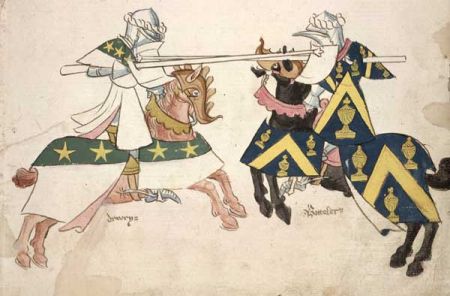
I have previously posted about my family history connections with Richard III here and I have since found out more interesting links. One such is William Marshall. Called by some the greatest ever knight, he is one of my direct ancestors and also the direct ancestor of Richard III. William had an eventful life. He…
-
Reading in Berkshire is apparently famous for, among other things, five varieties of potato. Nine other items for which Reading is renowned are listed here, and I presume that eight of them are correct. But the last one definitely is NOT! I quote: “Philippa Gregory, the woman who found the body of Richard III under a car…
-
ENGLAND’S MINORITY KINGS 1216-1483
Alice Perrers, Anne Curry, Annette Carson, books, Chrimes, codicil, David Carpenter, Edmund of Langley, Edward III, Edward IV, Edward the Black Prince, Edward V, Elizabeth Woodville, France, Great Council, Henry Chichele, Henry III, Henry V, Henry VI, Honorius II, Humphrey of Gloucester, John, John Ashdown-Hill, John of Bedford, John of Gaunt, John Russell, Lancastrians, Lord Guala, Lord Protector of the Realm, Louis VIII, Magna Carta, minority kings, Parliamentary Roll, precedent, Privy Council, Ralph Griffiths, Regency, Richard II, Richard III, Roskell, Thomas of woodstock, William MarshallIntroduction This essay was prompted by a sentence in John Ashdown-Hill’s latest book ‘The Private Life of Edward IV’: “ According to English custom, as the senior living adult prince of the blood royal, the duke of Gloucester should have acted as Regent — or Lord Protector as the role was then known in England…
 The New Murrey and Blue blog