archaeology
-
In 2008, archaeologists made a find that was possibly even more astounding than the discovery of Richard III’s remains. Beneath the floor of Magdeburg Cathedral in Germany, they opened a sarcophagus that was believed to be a cenotaph, or empty, symbolic memorial. Inside, they found a lead coffin which turned out to contain the remains…
-
Recently I came across an archaeological article which I found very interesting as it had similarities to Richard III’s finding and identification. Duke Bela of Macso was a young Hungarian nobleman who was assassinated, aged approximately 25, in 1272. On August 6, King Stephen died, and his young son, Ladislaus, IV ascended the throne. Infighting…
-
Medieval buildings uncovered for the first time at the Tower of London. As part of preparations for installing a lift outside the Chapel of St Peter ad Vincula, we have undertaken an important archaeological excavation to record and preserve the fascinating histories beneath our feet. Go to this link on the Tower of London Facebook…
-
Archaeology Today reports that the remains of St Leonard’s, a medieval hospital, have been discovered while repairing a sink hole in York. It dates from the 12th or 13th centuries and wasn’t destroyed until H8 got his hands on it during the Reformation, so Richard III would certainly have known of it. Read more about…
-
Click here for article The above link takes you to the whole story. It concerns King Harold II aka Harold Godwinson, my other favourite king, who had a lot in common with his descendant, Richard (see my previous post regarding this). They appear to have located the home of the king, often suspected of being…
-
I have written before about the various medieval monarchs who visited Exeter, and about some of the sites and other goodies that can be seen there. (https://murreyandblue.org/2024/10/17/richard-iii-edward-iv-george-of-clarence-warwick-the-kingmaker-and-henrys-vi-and-vii-all-went-to-exeter-but-not-at-the-same-time/ and I mentioned the wax votive offerings and effigies discovered when wartime bombing at the cathedral affected the tomb of Bishop Edmund Lacy (circa 1370-1455). The unique wax…
-
Well, it has to be said that Leicester has benefited immensely from the discovery and burial of Richard III, and his supposed “murder” of the boys in the Tower. Of which he was NOT guilty. Anyway, maybe Perth can benefit too, because it has its own royal mystery. James I of Scotland died a very bloody, grubby…
-
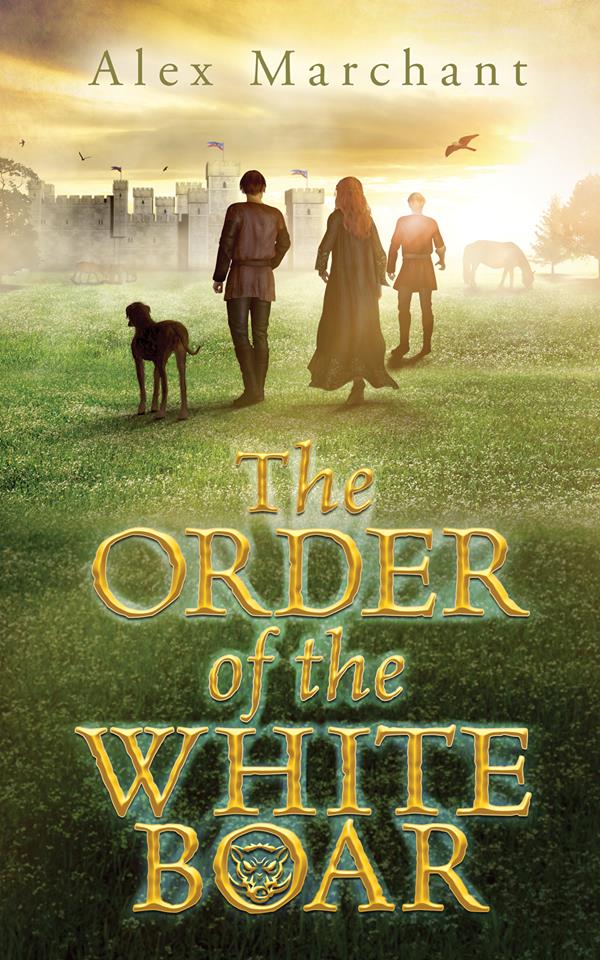
There is a new Ricardian children’s author on the block: Alex Marchant. Alex kindly agreed to an interview: Q: You’ve recently published your first novel about King Richard III for children, The Order of the White Boar. What made you write about King Richard? Alex: I first became interested in King Richard in my teens…
-
The two gold rings, thought to be about 600 years old An interesting article about two beautiful gold medieval rings caught my eye. The article explains how the rings, thought to be about 600 years old were found in a field in Dorset. The larger one would have been worn over a glove while…
-
There is an issue with Edmund the Martyr, King of East Anglia, who was shot and beheaded by Vikings, today in 869. He isn’t England’s patron saint, although he is far more English than St. George, who is thought to have originated in modern-day Turkey or Syria. However, unlike St. Edward the Confessor, whose brother-in-law…
 The New Murrey and Blue blog