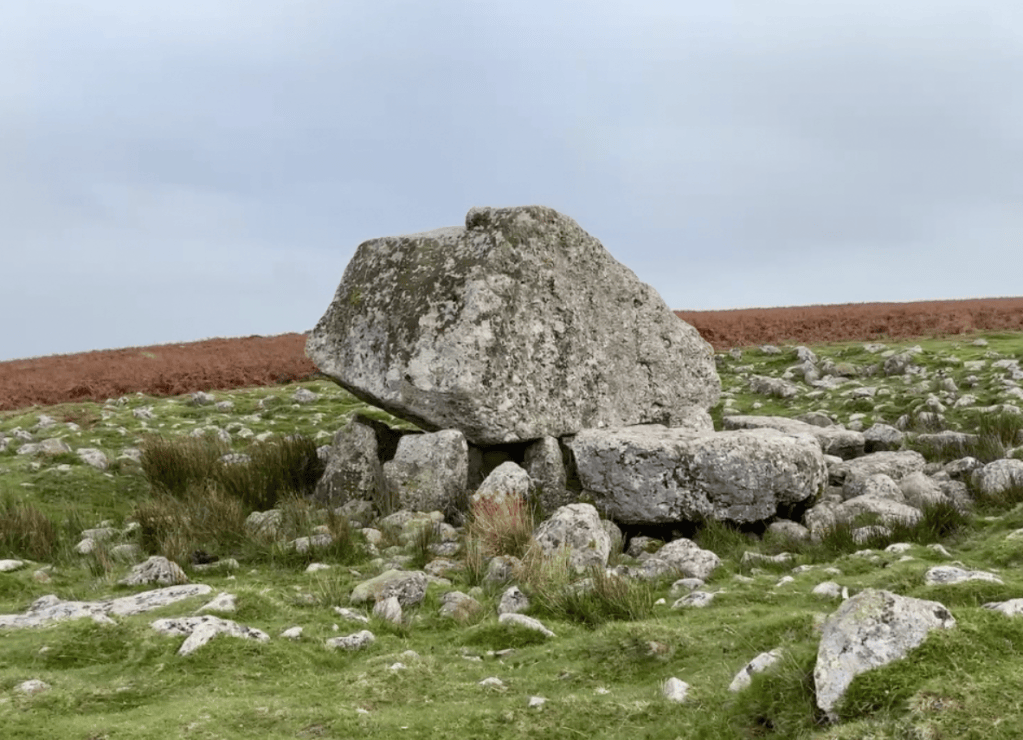
There are always legends and folk tales about ancient monuments, and Arthur’s Stone in Gower is no exception. It’s also known as Maen Ceti, and yes, its anglicised name refers to the King Arthur He is said to have been strolling in Carmarthenshire and felt a stone in his shoe. So he removed it threw it away, only for it to land on Cefn Bryn, the ridge that is known as the backbone of the beautiful Gower Peninsula. Um, St David is also credited with this stone-throwing exploit.
The view from Arthur’s Stone is truly wonderful, stretching for miles in all directions, taking in Lundy Island and the distant North Devon coast. Well worth a visit, as is the entire peninsula, of course. Gower doesn’t lack medieval castles! If you go to this link to Google Maps, you can navigate all around the Stone and see the panoramic views: https://tinyurl.com/2ukefubw
Anyway, after King Arthur and St David, imagine my astonishment when I found the Battle of Bosworth getting a look-in. By then the cromlech was fully established and more or less in its present form, and was apparently widely held in “religious awe”. So much so that when the Tydder’s invading troops landed at Milford Haven, en route for their ill-gotten victory at Bosworth Field, the Breton contingent made an eighty-mile diversion just to pay their respects to the Stone.
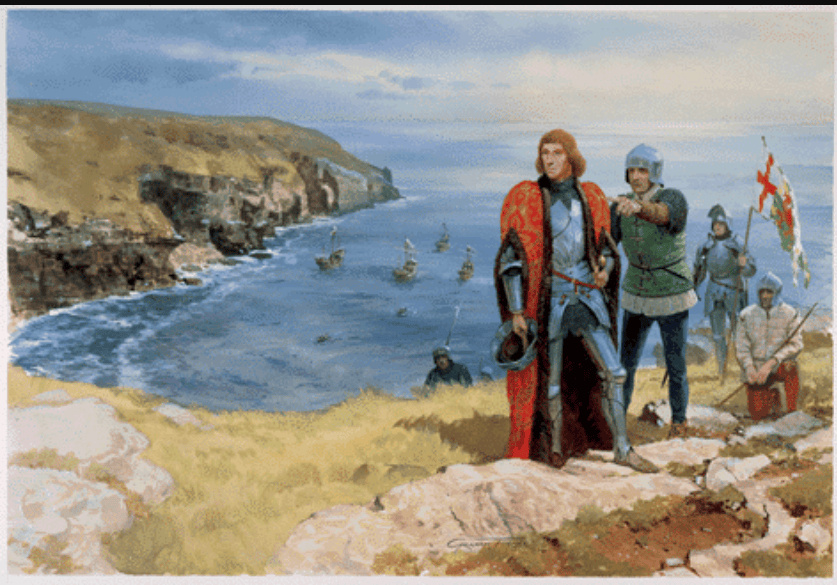
I’d never heard this tale before, until I was reading Portrait of Gower by Wynford Vaughan Thomas, pp 115/116. This is a cracking book that’s filled with of information All sorts of odds and ends about magnificent Gower appear in its pages…but I certainly wasn’t expecting the Tydder’s appearance! Long Live King Richard!!!!!
You can read more about the Stone and Tydder’s troops’ voluntary re-routing here: https://parc-le-breos.co.uk/walks-for-guests/cefn-bryn-arthurs-stone-broadpool-walk/


Leave a Reply