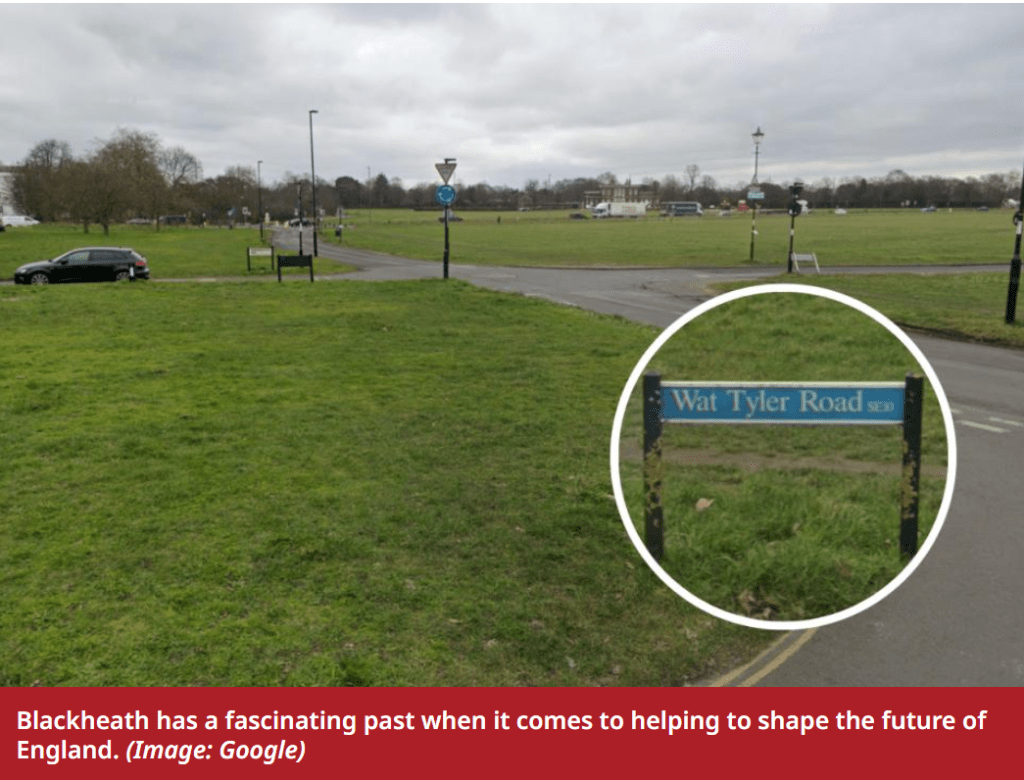
“….Back during this time [1381] King Richard III was on the throne….” Quote taken from https://tinyurl.com/3558yumz.
It would seem that the Peasants’ Revolt of 1381, during which the famous rebel leader Wat Tyler was murdered, has become somewhat fashionable. Articles about it are frequently dropping into my in-box and there is even to be a film based around it. This being so, you’d think that by now most people would know that the young king who rode out alone to confront the rebel army was 14-year-old Richard II.
Got that? Richard II ….Second ….Zweite ….Deuxième ….Secondo…! You know, the one who came between Richard I and Richard III. But no, as you can see from the quote at the top of this page, Richards II and III are always being mixed up.
Do you remember all the excitement about the discovery of the remains of Richard III in Leicester on 25 August 2012? See this link for more information: https://richardiii.net/finding-reburying-richard/faqs/.
With all that going on, you’d expect his identity and life would by now be firmly entrenched in the world’s psyche. Surely everyone knows now that Richard III died at the Battle of Bosworth in 1485 and his tomb can now be visited at Leicester Cathedral.
Yet all too often we find these two Richards mistaken for each other.
For instance, according to the article at this link https://tinyurl.com/3558yumz (from which the above image is taken) it was Richard III who was present on the day Wat Tyler died. To be fair, in this case I think the III is a typo for II, because later in the article the correct Richard is referred to. But all the same, these errors are so frequent as to be very annoying indeed to all Ricardians.
Here is the background to the article. In the 14th century, such was the unrest and resentment about unfair taxes and so on, that in 1381 thousands of Kent rebels gathered at Blackheath just outside of London. There they established a base camp on the evening of 12 June 12. But as they marched on London, led by the now famous Wat Tyler, it all culminated at Smithfield on 15 June 1381 when things got out of hand and Tyler was murdered in front of the king.
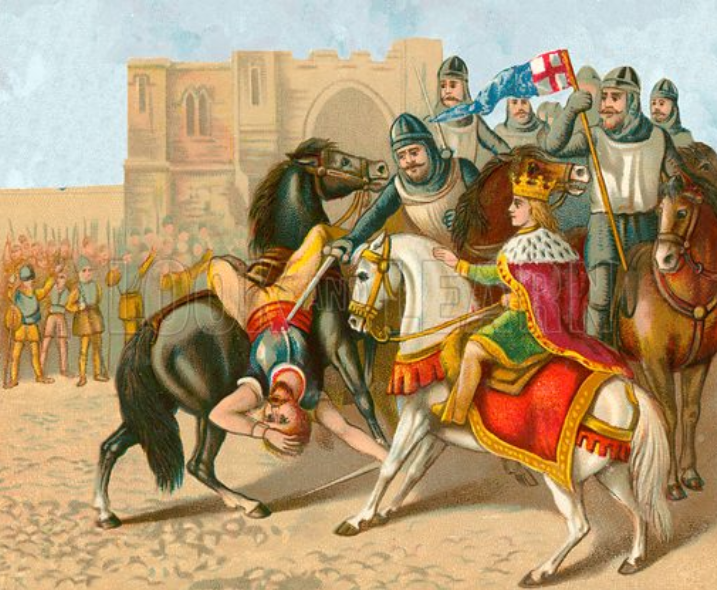
This was the moment when young King Richard showed amazing courage by facing the angry rebels on his own. He promised to grant them all the demands within his power, and the sting was taken out of the revolt. The rebels dispersed, lauding their king. But, of course, Richard had no real power, he was too young, and the great lords around him weren’t about to grant the mob anything at all. Richard II has been blamed ever since for turning his back on his promises. But he didn’t go back on anything, his promises were overruled. I will always believe that he meant every word he said to the rebels that dreadful day.
You can read about Wat Tyler and the Peasants’ Revolt here: https://www.historic-uk.com/HistoryUK/HistoryofEngland/Wat-Tyler-the-Peasants-Revolt/. And here: https://www.historyhit.com/1381-peasants-revolt/.
There is a lot about the revolt here, plus a short BBC video: https://www.bbc.co.uk/bitesize/articles/zyb77yc#ztp22v4.

 The New Murrey and Blue blog
Leave a reply to Christine Kutlar-kreutz Cancel reply