by Maria Leotta
The very day I started working for the Trust Museum, I had my induction at the Castle Museum.
On the first floor, just above Kirkgate also called Victorian streets, there are four beautiful period rooms, mostly Victorian, that reproduce how those rooms would have appeared to contemporaries. However, the room that mostly attracted my attention was the Jacobean room.
Notwithstanding its denomination, some items and furniture inside the room are older than the Stuart dynasty. I was immediately drawn to an object in particular, a beam (bracket) on the left side of the room. The detail that left me puzzled was the carved face of a man with a typical medieval hat. Clearly, the carving was not Jacobean, so I was determined to know more about the beam and the story behind it. I looked for it in the collection book and I was gobsmacked; the beam had been taken from a rich house in Fossgate belonging to “Lord Lovell, best friend of King Richard III”. The beam is an oak wood one, with four different carvings. It is about 12 feet long and 1 foot wide. It is very dark, but it would have been much lighter when it was carved, as the oak darkens with age.
Months before, I had read that Francis Lovell had some possessions in Knavesmire in York, but this was the first mention of Lovell having a house in Fossgate. This area continues the line of Petergate and Colliergate to the River Foss, and beyond the bridge, it is continued by Walmgate.
Needless to say, I immediately started my personal research about the intriguing beam and, after a long and complicated research, I found out some interesting details.
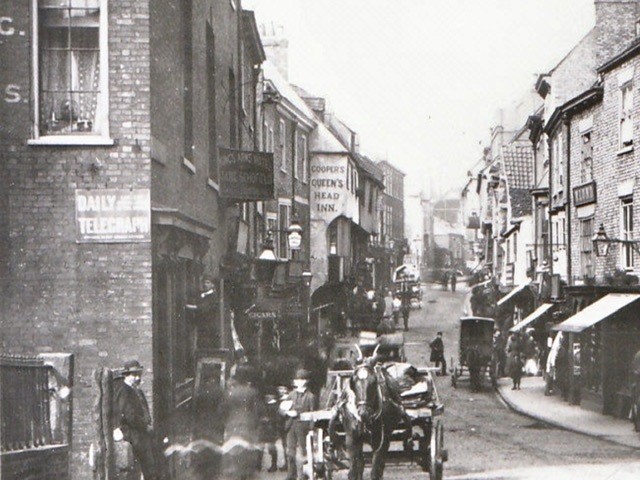
In Bodies and disciplines : intersections of literature and history in fifteenth-century England published by the University of Minnesota, it is mentioned that, in 1479, Francis Lovell had some issues with the citizens of York for the possession of land. A house in Fossgate was not mentioned, so I tried to carry on with my research and I came across another document where the house was mentioned, including the fact that the beam is now in the Castle Museum. The beam was part of a demolished building, the Queen’s Head, that stood at No. 44 Fossgate next to the Nags’ Head.
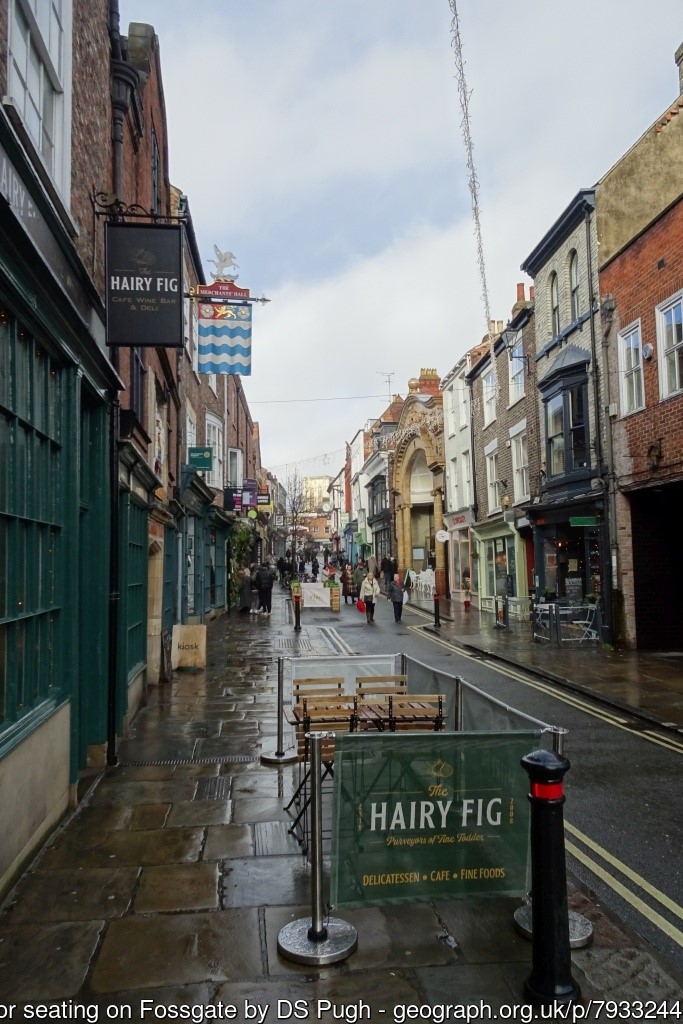
The front range, of three storeys and timber-framed, was built in the late 15th century. It was originally of three bays, roofed parallel with the street, but the North bay was formed into a separate tenement in the early 19th century. There is no mention of Lovell, but apparently the same building was a house before becoming the Queen’s Head. My theory is that, after the death of King Richard and the disappearance of Lovell, the house was transformed into a public house. By a very strange coincidence, the owner of the Queen’s Head in 1840 was a certain John Howard.

 The New Murrey and Blue blog
Leave a comment