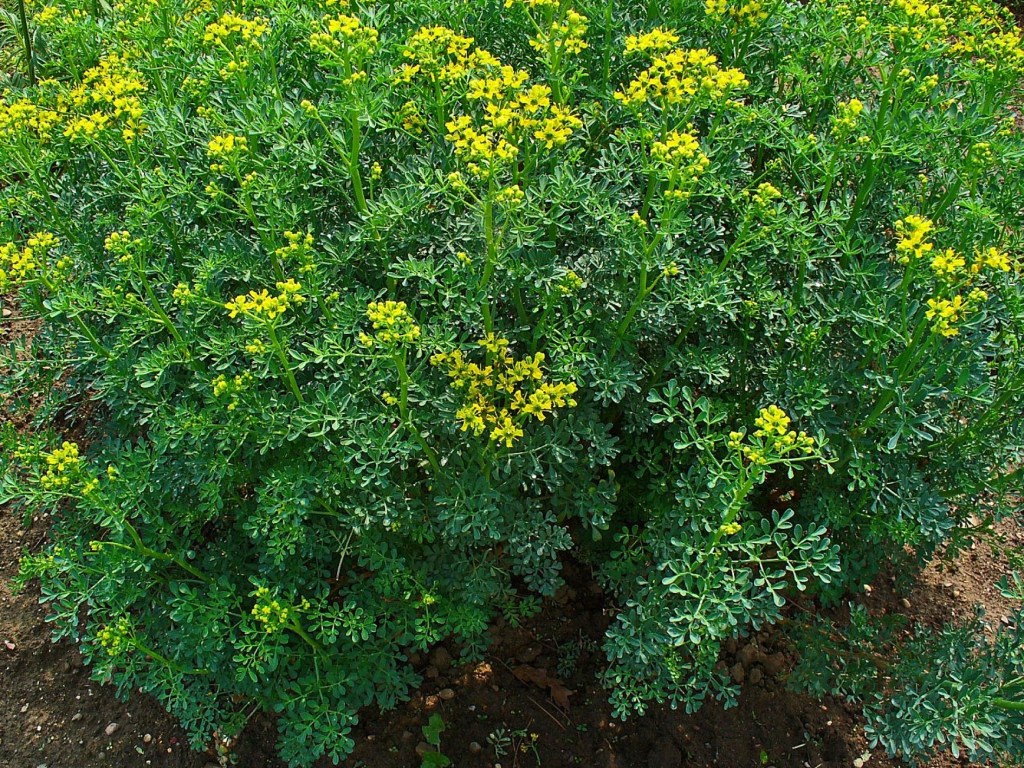
Rue (Ruta graveolens) is another fascinating medieval herb. Here are some interesting facts about it:
Medicinal Uses
Digestive aid: Rue was used to treat digestive issues, such as indigestion, bloating, and gas.
Menstrual relief: The herb was used to ease menstrual cramps, bloating, and other symptoms associated with PMS.
Anti-inflammatory: Rue’s anti-inflammatory properties made it useful for treating arthritis, gout, and other inflammatory conditions.
Culinary Uses
Flavouring: Rue’s bitter, slightly sweet flavour was used to season foods, particularly fish, meat, and vegetable dishes.

Preservation: The herb’s antimicrobial properties made it useful for preserving food, especially meats.
Traditional Mediterranean cuisine: Rue is still used today in traditional Mediterranean cooking, particularly in Greek, Turkish, and Middle Eastern dishes
Magical and Superstitious Uses
Protection: Rue was believed to give protection against evil spirits, witches, and curses. It was often hung in doorways or carried as an amulet.
Protection for travellers: Rue was used by travellers as a protective charm to safeguard them against accidents and misfortunes.
Purification: The herb was used in rituals for purification and cleansing.
Symbolism and Folklore
Regret and repentance: In folklore, rue is associated with regret and repentance. It’s said to symbolize sorrow and remorse. We use the expression ‘to rue the day’, meaning we regret a certain action.
Funeral rites: In some cultures, rue was used in funeral rites to protect the deceased from evil spirits
Historical Significance
Name origin: The name “rue” comes from the Greek word “rhyte,” meaning “to set free” or “to flow.” Rue has a rich history, and its uses have been documented in various medieval texts, including the works of Galen and Dioscorides.
Ancient Greece and Rome: Rue was highly valued in ancient Greece and Rome for its medicinal and culinary uses.
Medieval Europe: During the Middle Ages, rue was used extensively in cooking, medicine, and rituals.
Other Interesting Facts
Toxicity: Rue contains toxic compounds called furanocoumarins, which can cause skin irritation, blisters, and other adverse effects. Handling rue requires caution.
Pregnancy and breastfeeding: Rue should be avoided during pregnancy and breastfeeding due to its potential toxicity.
 The New Murrey and Blue blog
Leave a comment