Here is the second part of our interview with Dominic Smee, continuing from yesterday’s post.
JL: How did your experience change your outlook on your scoliosis? After the documentary, has your life changed and in what ways?
DS: These days, I have learnt to embrace my scoliosis as part of who I am instead of seeing it as a foreign body which needed to be removed or corrected. For a long time, I did see it as a punishment or consequence of something in my past or genes, but then I realised that even if it was, God had used it for good. Everything that God made is good, so if God made me this way, then it is good for me to be like this. If He wants me to be healed, then it is up to Him to do that. If He does not heal me, then that is good too because I can encourage others like me. It is not necessary to change anything about myself in order to be an accepted, worthy human being.
My scoliosis stopped being a thing to be feared when I was told that it had stabilised in my mid-twenties. At present there is no medical urgency or need to have corrective surgery.
In 2011, I was given a prophecy from a family friend at the church I used to attend. To paraphrase, this prophecy outlined that God had plans for me; plans to use me just as I am, and that in Him, what I saw as weakness, would be a strength. After the documentary, I realised that there was a purpose for being who I am. At the time I did not know what that was, but with the benefit of hindsight, I can now say that the opportunities and people that I have met as a result of having scoliosis far outweigh any life that I could have predicted for myself had I been born without the condition. The day-to-day cost has not changed, but I’m not pretending that that part of me does not exist anymore.
I was told a long time ago by a medical professional that I could have arthritis by when I’m 40. Well, I’m 38 this year and I’m still going! I’m still almost as capable as I was twelve years ago, and I’m sure that while I have the freedom to control my life – God willing, then I will continue to sustain my present-day level of health and fitness.
How my life has changed has always been a difficult question for me to answer because I have not yet been truthful with my answer; after the documentary, I felt like my reputation was somehow linked to that of Richard’s. I had to be perfect because I was seen to represent Richard.
Richard’s identity is incredibly polarising; some see him as a saint who can do no wrong and almost dismiss his scoliosis altogether, and others hold steadfast to the Shakespearean propaganda. Because so many people are so reluctant to accept the truth about Richard, it has been difficult for me to be open about my life experiences.
I was unemployed before the documentary, and to this day, I am not financially self-sufficient. I have done a vast amount of volunteering work (it helps for me to be in control so that I can manage my condition), mostly at places where I hoped it would eventually lead to employment, but unfortunately that was never the case. Over the years, I have attempted casual work, but this was never sustainable due to the unpredictable physical nature of the work. Contrary to popular belief, spending hours in front of a computer screen on a daily basis is not helpful for my back either; my posture worsens over time, and the muscles supporting my spine begin to seize up – more so now that I am older. Freedom of movement is paramount.
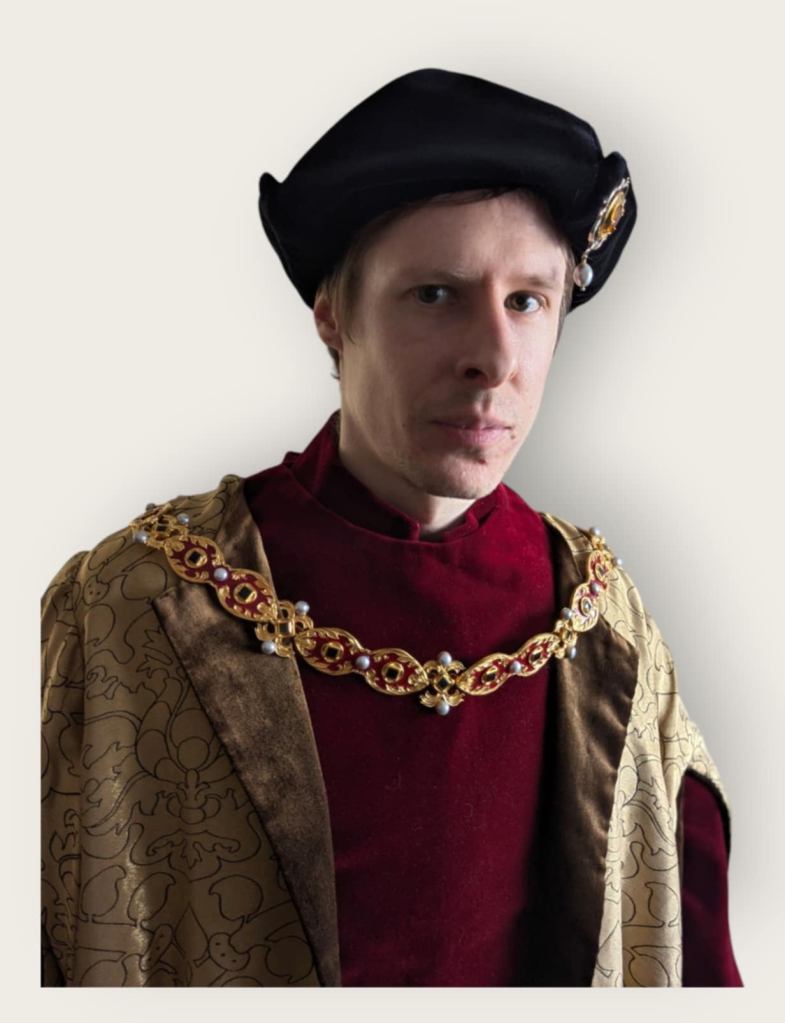
My day-to-day life has not changed since taking part in the documentary, but I have had some amazing, once-in-a-lifetime standalone experiences. I have also had the chance to meet some incredible people. I have been to America twice and travelled all over the country, giving talks to various groups. Last year, I was able to use money raised to finish the harness which Channel 4 began in the programme, to complete a set of tailored clothing (owned by the Richard III Society) based upon the Paston Portrait. My hope is for this to be kept on display for posterity in order to show future generations what Richard’s torso could have looked like adorned in period clothing – or at least as close as we could get with the funds available.
JL: Has your experience changed your views on Richard III? Would you call yourself a Ricardian?
DS: Before taking part in the documentary, Richard, to me, was mostly an academic figure in the history books, as well as a character in Shakespeare’s play. After my experience on television, my life took on new meaning, even if expected milestones of life were and still have not been achieved. I felt called to communicate the truth about my scoliosis in order to help people better understand some of the challenges that Richard himself may have faced. However, I never felt able to do that because the documentary tended to focus predominantly on whether I could do what Richard did, and not on what was challenging or why. A big part of having a disability is the battle which is waged in your mind – that part was omitted altogether. I suppose Richard became a role model for me – and an inspiration to never again use my scoliosis as a reason not to accept myself for who I am – warts and all.
After recognising just how similar my spine was to Richard’s, I would ultimately discover that my ability to succeed in a traditional male arena was not necessarily dependent upon not having a gracile frame or not having scoliosis. My achievements in the documentary were effectively a rite of passage into manhood.
Richard had the strength and courage of a boar, not because he was built like his brother, Edward (supposedly a tall and striking figure), but because he wasn’t. He faced his enemies head on and trusted God with the outcome. That is the kind of faith that I wish I had in my daily life. As I mentioned before, I found the courage to share my scoliosis with the world because God prepared me in advance. I believe it was a gift for when I needed it most.
I suppose the answer as to whether I see myself as a Ricardian or not depends on how you define the word. I support the idea of uncovering the truth about who he really was as a man and historical figure. I am not sure I agree with the extreme notion of making him out to be a superhero or a villain in order to justify present day propaganda. You cannot remove the reality of how his scoliosis could have impacted him just because his tailor or armourer concealed it. It is important that Ricardians look at the whole man; palatable or not.
JL: What aspect of Richard III do you most appreciate?
DS: I’d have to say his faith, as I believe that his strength, his mind, courage, loyalty and bravery all stem from his beliefs. I feel that it is Richard’s faith which enabled him to live with the scoliosis which I can wholeheartedly appreciate.
JL: How did your experience with scoliosis influence your understanding of Richard III’s daily life and challenges?
DS: That’s another difficult question to answer because Richard did not have to do everyday tasks – he had servants. He could dictate the flow of things around him to an extent. He could use his position to employ others to carry out tasks. He had access to the best medical care of his day and the most comfortable lodgings. He could spend hours prioritising combat training, horse riding and learning without having to worry about common tasks assigned to servants. Alternatively, he had to travel great distances on a regular basis and camp out and fight in extreme weather without the amenities and protective clothing, vehicles and insulated buildings which we possess today.
I can tell you how such activities would affect me given my present-day conditioning and lifestyle, but it is difficult to speak for somebody who is accustomed to those things. Strength and conditioning will have helped to an extent, but in the long term the extra demands placed upon his body could have hastened the consequences of living such a life.
As a general rule of thumb however, cold weather causes the muscles in my spine to tense up, which can be painful. Standing still for long periods of time can be painful. Lifting weights above shoulder height can be tiring. Repetitive twisting and lifting can be tiring. Carrying a heavy weight away from my chest can tire my spinal muscles. None of these experiences prevent me from doing any of these activities; I just rest or grit my teeth and carry on. I could take pain killers, but I prefer to avoid them unless absolutely necessary.
I myself have an orthopaedic mattress and bespoke chair which help my muscles to recover quickly. I also have warm showers or salt baths to help loosen my muscles. If necessary, I have massages to remove the knots from my back.
JL: How do you think Richard’s scoliosis might have impacted his self-perception or interactions with others?
DS: This is another difficult question to answer as all of that depends on how he interpreted his scoliosis; did he see it as walking in the footsteps of Christ in suffering, or as a punishment from God for his sins? Both of these concepts I believe can be interpreted in the light of the Catholic teaching of the day.
In his prayer, Richard asks to be freed from many of the difficulties in which he is placed. He also asks to be freed from affliction. If he felt like he deserved to be in a state of affliction, then surely, he would ask for the strength to endure instead? Again, Richard’s faith is worthy of discussion.
My scoliosis certainly impacted how I saw myself in the social hierarchy. As a guy, strength is mostly communicated in the physical arena. Any physical disability will place you at a disadvantage there. I was always rather small, and very skinny, so I was judged on the outside primarily on what I looked like. My posture was often interpreted as a sign of low self-esteem as opposed to a curvature of the spine.
Richard’s status as a noble would circumvent this to an extent. His rank would protect him from any teasing or bullying. His skills in battle and tactical training would balk any threat from all but his closest peers.
Edward – Richard’s older brother – was his opposite physically, yet the two were described as close. He respected Richard enough to place him in charge of his vanguard. He was even given command of the North. Ultimately, he was never openly prejudiced against because of an underlying physical vulnerability. Maybe that was a sign of the trust which Edward placed in Richard’s talents and loyalty. Maybe there were many equally significant disfigurements carried by the battle-hardened because of the Wars of the Roses.
As an adolescent approaching adulthood, Richard could have been surrounded by teens who were testing their newfound limits and growing stronger. For him, reality would be completely different. His body would begin to gradually start imposing limits which previously may not have existed. This would have been incredibly frustrating, and very hard to ignore.
Maybe Richard chose to marry his friend Anne because she was already close and would not have been upset by his condition. Maybe this marriage was a testimony to Anne’s ability to look beyond the physical appearance of her husband. If an alliance of convenience fell apart, then the disaffected spouse could weaponize his secret for political gain and leverage.
As a result of being on the documentary, I was blessed to meet a young lady who herself has scoliosis, and the knowledge that we both understood this one thing about each other really helped to put me at ease during the beginning of that relationship. I am no longer involved with that person, but I will always be grateful to her for the good times we spent together.
JL: What is the strangest experience you have had since ‘becoming’ Richard III?
DS: I suppose that the strangest experience that I have had since ‘becoming’ Richard III has to be what happened with the vaulting horse on the final day of filming. I was wearing full plate at the time. We were recreating a possible scenario for Richard’s last moments. I was surrounded by a group of guys attempting to drag me off my ‘horse’. The idea was to see how I dealt with such a situation. During the melee, I blocked an attack on my right with my battle axe, and then turned to my left to deal with another opponent. The hook of the battle axe literally hooked around this person’s weapon and when they pulled back, I was dragged over the side and on to the ground because I did not let go of my weapon. Fortunately, no harm was done. Many hands came to my rescue before I hit the floor, but in that very brief moment of falling out of control, I felt like I was witnessing what could have been Richard’s last moments. It was the closest thing I have ever had to an ‘out of body experience’. We decided to use the momentum of the accident, and place the vaulting horse over my legs to simulate Richard being trapped in the mire by his steed. Whilst I could twist my legs within the shell of the armour, the metal was pinned. I felt like I was a prone turtle, lying vulnerable and exposed; a very unique experience…
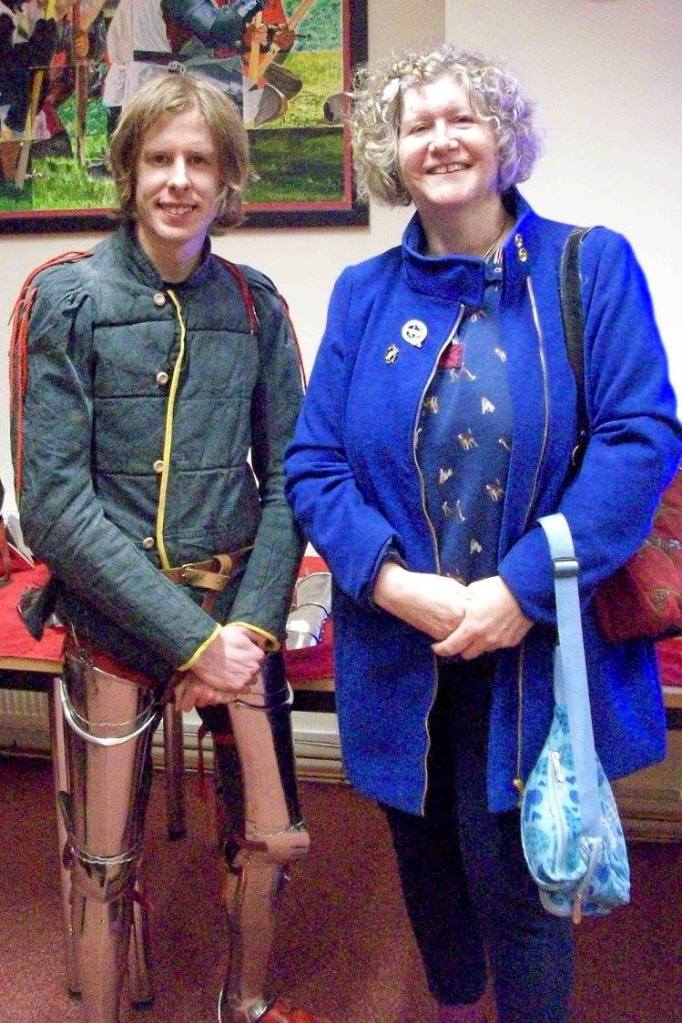
Another very ‘strange’, but surprisingly positive experience, was my encounter with Benedict Cumberbatch at St Martin’s House, Leicester, following the Reinterment Service. I won’t go into details, but he actually approached my mom and I on our way upstairs to the ‘after party’. We had a private chat and he presented me with a hand written note of gratitude for what I had done, before being whisked off to meet the then Countess of Wessex. It turns out that Gary had shown footage of the documentary to Benedict for his role in The Hollow Crown. I must point out that he did explain that they deliberately exaggerated the reality of the scoliosis in order to demonstrate that the character is a fictitious interpretation.
JL: What has been the best thing that has happened to you since the documentary aired? And the worst/most challenging?
DS: I’d have to say that there were two things at the top of my ‘bucket list’ since the documentary aired. The first ‘best thing’ was to finally have a girlfriend. This person was my first ever serious relationship. The second thing was getting the chance to visit America. Both were dreams come true.
I cannot not mention how moving it has been to speak to each and every one of the members of the public who were touched by what I did, and wanted to share their own story with me. At the risk of sounding cliché, it really was their words that made it all worthwhile.
The worst experience since the documentary aired has been getting misquoted in more interviews with journalists than I’d care to admit, many of whom had typed-up answers to their questions sent back to them over email – so no excuse!
The most challenging, yet rewarding experience was probably my first ever time giving a talk on my own. Labelled as quiet and shy at school, I was discouraged from doing English A level because I didn’t have the confidence for public speaking. I was also discouraged from having speaking roles in any productions at school. Fast forward a couple of years after the documentary first aired, and many, many people told me how I was a natural speaker, and that they appreciated how ‘real’ I was in my delivery. Richard has been perceived as both a hero and a villain, and I have been perceived as both good at public speaking, and quiet and shy. It’s hard to think that I am both simultaneously, just as it is difficult to think that Richard could possess both extreme characteristics at the same time. Are both true, or is the real truth somewhere in the middle?
I cannot move on from this question without reflecting on how much of an uphill struggle it was to try and get the rest of the armour finished. The number of armourers who pulled out was beginning to become a bit of a running joke. Ultimately, I came to realise that nobody wants to spend so much of their time creating something which may never functionally see the light of day because of my circumstances. Looking back, I can now see that I was wrong to accept donations to continue a project which was propped up by the resources of Channel 4 and their consultants. This realisation was why we offered to return individual donations to people who had given solely for the purpose of seeing the armour completed, and used the remaining funds to commission some clothing which we felt was a good alternate use of the funds.
JL: Do you believe Richard III’s scoliosis has changed how he is perceived? In what way(s)?
DS: I think that Shakespeare connected Richard’s scoliosis with the villainous character in his play Richard III. I think that any disability automatically makes people perceive limitations or adjust the way they behave around that person. I think that the medieval church’s attitude connecting disability with sin helps to feed the evil persona. I do not think that Richard’s scoliosis would have been obvious enough in public to the untrained eye for anyone to hold against him; I don’t believe we have any historical sources to suggest otherwise.
However, once his scoliosis became public knowledge after his death, Shakespeare took advantage to exploit prejudices and create a great piece of Tudor propaganda.
I think that if anybody is using scoliosis as an excuse to see Richard as weak, then they are overlooking what made him strong. They aren’t really interested in the real Richard, but rather a facsimile created in their own mind, worthy of their own idolisation.
JL: If you could go back in time to Richard’s life, what would you say to him? (What advice would you give him? What questions would you ask him?)
DS: I think actions speak louder than words. I think Richard would much rather have had loyal supporters than mere words. I think I’d rather have him teach me what he knows; how he has adapted to his scoliosis.
I think I’d probably tell him that ‘I get it’. I’d probably be more interested in listening to him tell me about his life than in offering any advice.
I don’t think there’s any advice I could give him, as he did what he had to do. He didn’t know that betrayal would lead to his death. It was in his nature to do what needed to be done. How could I ask him to be a coward and to run from battle? To not defend his crown? With hindsight it is easy to suggest that he choose somewhere else to send the princes or to change his tactics on the battlefield, but would he have left the legacy that he did by not pursuing the chivalric ideal?
JL: Your mother, Christina, has written a novel about Richard III – what role do you think fiction has in sparking an interest in Richard III and mediaeval history with the public?
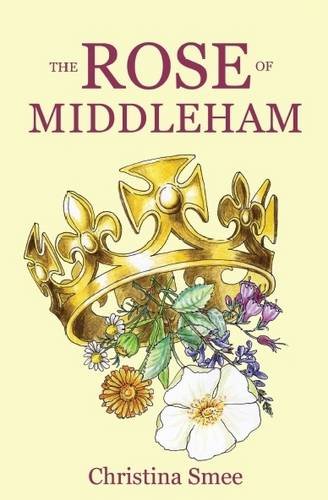
DS: Yes, my mom has written a novel – ‘The Rose of Middleham’. It is still available on Amazon, although we have plenty of hard copies – you could order directly from us if you want a signed copy! Email Christina for a signed copy of ‘The Rose of Middleham’: christinasmee@gmail.com
I think historical fiction is a brilliant opportunity to whet the appetite and start to explore the past. The novel format brings together many facets of history, clothing, food, customs etc., in an immersive way that non-fiction does not, by potentially placing anyone, anywhere, doing anything. It is a great place to explore the human condition. More often than not, what we invent in our minds is far more captivating and thrilling than the truth. After all, even primary sources themselves are an interpretation of how that person saw (or was led to see) what happened. As we know with journalism today, spin and agendas play a large role in how that story is written. Facts rarely mean unbiased truth.
Other than by building a time machine, we can never truly know all of the facts about Richard, but we can have fun trying to solve the mystery of what could have happened or who he could have been. Inspire somebody’s imagination, and that person could be the next Philippa Langley who uncovers the next key bit of evidence in the story.
Not only do people love a good mystery, but they also love being the one to solve it! Which is why we have so many people desperately trying to find that one bit of proof to definitively show that Richard was innocent or guilty.
Ultimately, I think fiction is a hook, but what you reel in is important too. Chasing Moby Dick did not end well. Chasing an illusion of who we want Richard III to be may not produce the prize many are hoping for.
JL: As a Ricardian, how did your mother feel when your similarities with Richard were revealed?
DS: I can’t really answer that one. I’d better pass the ‘keyboard’ over….
CS: After spending many years researching historical facts for my novel on Richard III and bringing up a son with scoliosis it was almost unbelievable to learn that there was a connection. Never once did I think that there would be a link. I was closely involved in the documentary as a bystander (it was too important an event for me to let pass by) and had the wonderful privilege of watching as it all unravelled.
JL: What projects/activities are you involved in at the moment?
DS: As you may know, I was recently involved in the Voice for Richard project because of my shared scoliosis and as a model for the Richard III clothing.
The clothing was made using funds raised internally by the society, as well as through our Armour Fund page and events, initially for the intention of completing the harness started during the Channel 4 documentary. Unfortunately, the original purpose for the money did not work out, so we and the society ultimately decided this was an appropriate alternate use of the funds.
You can read more about it on the ‘Dominic Smee Armour Fund’ Facebook page.
The Richard III clothing is based on the Paston Portrait. It is a closer approximation of what Richard would have worn than if we had simply tried to replicate the more well-known, altered painting in the National Portrait Gallery. The outfit was recently completed with the addition of a chain collar. I will be wearing the ensemble for the Richard III Society AGM at the beginning of October.
As part of the VFR project, I was lidar scanned whilst wearing this clothing in order to add a body to the facial reconstruction of King Richard III, whilst the 3d model is ‘reading’ significant documents using the voice of actor Thomas Dennis (whom you recently interviewed), to produce an animated approximation of how Richard himself may have spoken, based upon the findings of various experts.
An accompanying book is due to be published in the near future about this project. I contributed a chapter on the physical aspects of my scoliosis, with a reference to my faith.
JL: Is there anything else you would like to add?
DS: A short while ago I was invited to attend an afternoon tea at Leicester Cathedral, as part of the tenth anniversary of the reinterment. The food was great, as was the company – thanks to everyone involved! During the event, I met up with Kevin Schürer, (one of the people to work on Richard’s Genealogy), who agreed to look at part of my family tree in order to verify a possible connection to King Richard III. Whilst it turns out that I do not have a direct link to the monarch (through that line in particular), I am most likely related by marriage (not blood) to the Spencer / Churchills, and indeed through them, to Richard himself by John de la Pole. Interestingly, I could also therefore be distantly related to John Howard, Duke of Norfolk (and his son), and Alice Chaucer, the granddaughter of Geoffrey Chaucer.
As detailed in Kevin’s report, there is one connection in the tree which could be a potential spanner in the works if we are to publish these conclusions as fact. Genealogy is not an exact science and due to the nature of the records available, Kevin has decided to go with the most likely choice. Even if the presumed connection turns out to be false, then it is still possible that there is another, more convoluted route back to the same person/people.
Although not as mind-blowing a revelation as I had originally hoped for, to find such possible connections in my past was still incredibly fascinating, especially when you think that John de la Pole was named as Richard’s heir at one point! I am hoping that Kevin’s full report will be published online in the future.
Link to the documentary on YouTube: Richard III: The New Evidence
Link to buy ‘Secrets of the Dead: Resurrecting Richard III’ (the American version of Richard III: The New Evidence): DVD
Link to website of Nicky Wade, who created the replica chain for Dominic: Gemmeus
Link to website of Ninya Mikhaila, who designed the costume as a replica of the Paston Portrait: Ninya Mikhaila


 The New Murrey and Blue blog
Leave a comment