
Just look at the above portrait of Katherine/Catherine/Catalina of Aragon (https://tinyurl.com/3auwsmsf). This is her in 1502-1509, between losing her first husband, Prince Arthur (Tudor), (https://tinyurl.com/53n9mbd6) and marrying his younger brother, who had by then been King Henry VIII for about a month, (https://www.royal.uk/henry-viii). She and Prince Arthur had wed in November 1501, when he was 15 and she was 16. They’d been husband and wife for a mere five months when they both fell very ill. Katherine recovered, but Arthur died. Their marriage seems never to have been consummated.
How sweet, demure and needy she appears in the portrait, someone we all instinctively want to protect and care for. No wonder we’re always inclined to take her side in the matter of Henry VIII’s brutal behaviour over Anne Boleyn (https://tinyurl.com/y7kkmzsf). Poor little Katherine, all alone in a foreign land, far away from her parents and everything she’d always known. I’m not being facetious, because this was her lot in life at the time of the portrait.
But what if she wasn’t quite what we have all come to think?
Back in 2018 I wrote about something I’d learned of Katherine at the time of her first Tudor marriage. See https://tinyurl.com/48wu8asu. If you refer to it you will learn that Katherine’s devotion to religion appeared to be nothing short of a complete obsession and was certainly considered detrimental to her health.
Don’t forget that she came from a profoundly devout land where her parents, Ferdinand and Isabella, known as the Catholic monarchs (https://www.historyskills.com/classroom/ancient-history/ferdinand-and-isabella/), had established the Spanish Inquisition in 1478, see https://tinyurl.com/y38hasa8 and https://tinyurl.com/mra4hujd. Strict adherence to the teachings of the Church of Rome must have been drummed into Katherine from babyhood.
But just how far was she taking her devotions? Were they so drastic that they hampered her chances of bearing healthy children….or even having any pregnancy at all?
I’m not knowledgeable on extreme religious practices and have no idea what she might have been doing. Maybe Katherine’s women reported that her monthly periods had ceased entirely or become so intermittent as to be of concern, and cited the extreme nature of her religious fervour as the cause? Whatever it was, the matter clearly bothered her young husband, who must have told his father, Henry VII (https://tinyurl.com/4fnsscwd).
To me excessive devotion is unnatural. It lacks reason and its demands have to be observed and obeyed to the nth degree every minute of every day. In this case it was severe enough for the Pope’s (https://tinyurl.com/yvb3bj5w) intervention to be deemed essential.
Prince Arthur—or more probably his father in Arthur’s name—sent a letter to the Vatican, pointing out that all marriages were for procreation, but royal marriages particularly so, and Katherine’s activities were deemed to be endangering this basic rule. The Pope’s response was awaited anxiously.
But it went astray for quite some time, and when finally received it granted authority to Prince Arthur to “….restrain his wife from continuing to engage in ‘excessive religious observances injurious to her health since these would imperil the maritalis consuetudo (marital custom) of Roman law and endanger her ability to bear children’….”
But the tardiness of the response rendered it too late for Prince Arthur, who died suddenly on 2 April 1502, six months short of his sixteenth birthday. Apparently he died without consummating his marriage. Now, the reason for this has to be a matter of conjecture. During their marriage, Katherine and Arthur had both fallen gravely ill.. Katherine survived, but Arthur succumbed. Was this due to his health having been weakened before this final illness?
Or was his abstention in the marriage bed by order of his father, so that the union could be annulled if necessary. An infertile queen would be a disaster to the bloodline. Still with an eye on the marriage contract money, did Henry VII want to see whether or not the Pope’s reply resulted in Katherine “mending her ways”.
But now Arthur’s demise without consummating the marriage became a problem. If Katherine was returned to her parents still a completely innocent virgin, the money would probably have to be returned with her! Henry VII could seldom be prised away from money, especially not copious amounts of it. But if she returned having knowingly made herself infertile (for which the Pope’s intervention could and would be cited), then Henry would have what he’d see as excellent cause to be rid of her but keep the money because she had broken the terms of the marriage contract by ensuring she couldn’t have children.
He’d worked hard to achieve this important Spanish union because it would enhance the standing in Europe of his own new, rather wobbly Tudor regime. His hard work included executing all Yorkist males of royal blood who might challenge him, e.g. the 17th Earl of Warwick, Perkin Warbeck and, it’s believed, Richard III’s illegitimate son, John of Gloucester (see https://murreyandblue.org/2024/11/12/could-john-of-gloucester-have-had-children/). Katherine’s strict parents had refused to even consider the match unless this was done. They weren’t about to despatch their daughter to a new monarchy that might be toppled at any moment.
So Henry VII complied with their terms. If he now had to send Katherine back to Spain as an innocent but untouched virgin and repay the marriage money at the same time, the House of Tudor’s prestige on the international stage wouldn’t amount to much.
Henry VII worshipped the Great God Gold, and had accumulated heaps of it in his coffers since becoming king. He had no idea his spendthrift younger son and successor would set about squandering it. When that happened, the furious and agonised howls of protest from the first Tudor king’s magnificent tomb in Westminster Abbey must surely have compelled the second Tudor king to have a good supply of Five-star deLuxe Sooper-Dooper Ear Plugs!
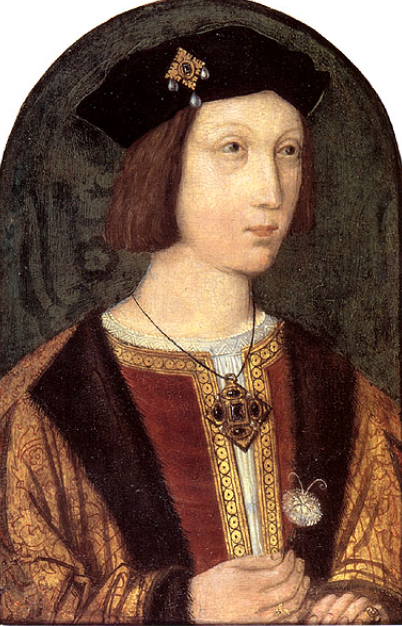
So the widowed Katherine was detained in England and her tight-fisted father-in-law kept his paws on the dosh. For Katherine these years of detention in England, from 1502 to 1509, included an interval when the widowed king even considered marrying her himself to keep the money! Her possible barrenness would only matter if he lost Prince Henry as well as Arthur.
Katherine swore again that she and Arthur had never consummated their marriage (which Henry VII already knew if his elder son had abstained deliberately). A new marriage to Prince Henry would therefore not be within any prohibited degree. No problem there. Plus the money would stay in English coffers and the original marriage contract would be adhered to because Katherine would still be the future queen.
But the matter of her religious excesses was vital. Besides keeping the marriage contract money, Henry VII now had Pope Julius II’s permission to lean on her. I have no doubt that he’d been going about this—not to the point of bullying, physical or mental, so that she complained to her parents, but enough to persuade her that perhaps she had been overdoing it. So maybe the letter from Rome made her comply just enough for her periods to return. Henry VII was thus reassured that the future of his House was no longer in jeopardy. So he decided Katherine should marry his remaining son.
For whatever their personal reason, the young bride and her new groom agreed to their union. But the actual wedding wouldn’t be just yet. Henry wasn’t quite of age for consummation, and there was still the matter of making absolutely certain Katherine’s “health” continued to improve. To be on the safe side.
But if Katherine thought she’d had a lucky escape from marriage to the Weasel (as Henry VII is known “affectionately” to all supporters of King Richard III 🙄) she would eventually realise that she might have been better off with the father than the son!
Then something went wrong. I don’t know what it was, but “….on 27th June, 1505, Prince Henry [by then 14] appeared before Richard Fox, Bishop of Winchester, and the Lord Privy Seal. The young prince had reached his [marital] maturity, and wished it to be formally recorded that he disowned his part of the marriage contract….”
Disowned it?
It’s quite possible that when first betrothed to Katherine, Prince Henry hadn’t known anything about her problems. His brother Arthur’s household had been far away in Ludlow, Shropshire, in the Welsh Marches, so Prince Henry had never known him well, and as a mere second son he wasn’t likely to be fully in the loop—if at all, because he was only a boy and not the heir.
Henry VII doted on his first son, not his second, who’d been of no interest until Arthur’s death. Now, in 1505, Prince Henry was Prince of Wales himself and at fourteen old enough to consummate the marriage whenever it took place….but suddenly he wanted out of the contract?
Had he only now learned the full story of the long-held disquiet over the now 19-year-old Katherine’s debilitating preoccupation with worship? Had he also learned of the Pope’s response, which confirmed the English complaint? Had he perhaps also found that in spite of everything, Katherine’s efforts to curtail her devotions had been short-lived and she’d now slipped back into these fatiguing practices, whatever they were? He, Prince Henry, would need children for the next generation of Tudors….and perhaps he didn’t want to share his marriage bed with the overpowering expectations of his bride’s Holy Church!
I don’t know if Henry’s reasons for wanting to escape from the contract were ever explained, but they ceased to matter anyway because he dropped his opposition and the wedding took place in 1509, just over a month after the death of Henry VII. With his father out of the way and Henry wearing the crown himself, he could have ended the forthcoming union there and then. He didn’t. Maybe, like his father, he too saw the significance of an important Spanish bride? Perhaps he’d received new reassurance of some kind? Perhaps he even fancied Catherine.
So, the marriage took place, but as the years passed whatever it was that Katherine did in the name of Christianity became blamed increasingly for her succession of miscarriages and still-births. Did Henry conclude that he’d made a big mistake after all, and should have finalised the disowning of the marriage contract when he had the chance? His wife’s religious activities were indeed preventing him from having a male heir. Did he even convince himself, that she was doing it deliberately, in the full knowledge that she was denying her husband a son?
Henry VIII was capable of believing anything that suited him. After all, he was potent enough! From 1519 at least he’d fathered children with other women, see https://tudorsdynasty.com/illegitimate-children-of-henry-viii/. So it couldn’t possibly be his fault, it had to be hers.
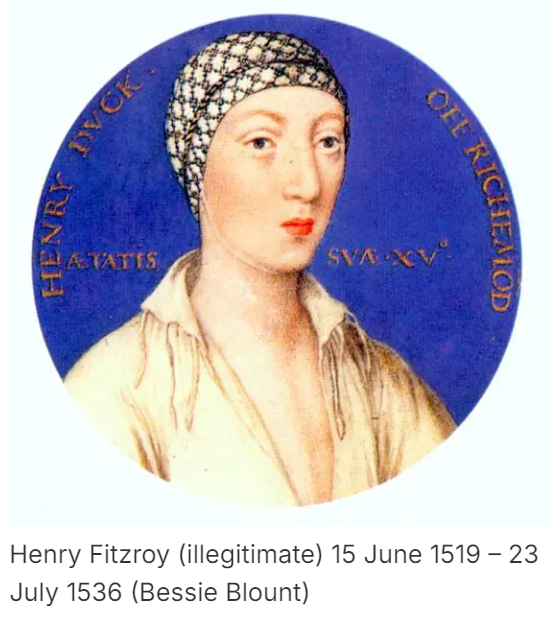
It’s really small wonder that Henry finally rounded on Katherine when, circa 1526, he became infatuated with beautiful, fascinating, sophisticated Anne Boleyn (born 1501 or 1507), one of his wife’s maids of honour. But, possibly for the very first time, his advances were rebuffed. Anne wasn’t about to surrender simply because he wished to add her to his tally of conquests. Oh no, her price for giving in to his blandishments was nothing less than marriage! (Did she perchance know of his maternal grandmother, Elizabeth Woodville? Elizabeth’s price for granting Edward IV what he wanted had also been marriage. She became his queen, unpopular, but queen nevertheless. See https://tinyurl.com/4vcxwhan) and https://murreyandblue.org/2024/11/29/more-about-elizabeth-woodville-dying-of-the-plague/.
But Henry VIII was chained to an internationally significant, feverishly religious, arguably barren consort, and he was deeply enamoured of Anne, who would set his hitherto cold marriage bed on fire and give him all the sons Katherine was denying him. He had to have Anne!
He demanded of Katherine that she free him from their marriage. (See here https://tinyurl.com/mz5xw9ur for the way he is said to have gone about it.) Mind you, if she’d persisted in her severe devotions then perhaps his attitude is more understandable, if not forgivable. But, of course, he immediately came up against the solid granite cliff of her inflexible religion.
Katherine refused point blank, and quite right too. She was now in her early forties and had borne Henry some eight children, seven of whom hadn’t survived, including a short-lived son….but there was a living legitimate daughter, Mary, who was Henry’s rightful heir. Divorce was out of the question, and annulment would bastardise Mary. Katherine would never give up her daughter’s legitimacy and thus her leading place in the succession.
But as far as Henry was concerned, Katherine of Aragon was wilfully obstructing his marriage to Anne. Just to spite him. One can imagine all the usual cruel male insults he traded when speaking of the older wife who was barring the way of his red-hot lust for a younger woman.
Please note, I’m not suggesting he’d been a good, faithful little husband up to that point because, as I’ve already pointed out, he certainly hadn’t. Any woman Henry wanted, Henry had. For instance, Anne Boleyn’s sister Mary (https://tinyurl.com/ycmayp9e) had been his lover, so he’d probably taken it for granted that Anne would oblige too. Her resistance must have given him quite a jolt.
Henry VIII was conventionally pious, not fanatical. Put it this way, he was conventional when it suited him, but he’d bend the rules when it suited him too. He wanted to make Anne Boleyn his queen, and he set about achieving this within the Church’s own strict rules.
He had to be careful, and knew it would be too risky to approach the Pope (https://tinyurl.com/58etf84y) for a divorce/annulment with a repeat of the complaint that Katherine was too devout and barren because of her unrestrained religious practices. After all, he, Henry, had been married to her for years, and there’d been miscarriages, still-births and one surviving daughter. So Katherine clearly wasn’t barren. She may by then have been past childbearing age, or almost past it, but she’d never been infertile as such.
Nor was her disproportionate religious ardour something Henry had only just discovered. It had been known at the Vatican since the letter from England during her marriage to Prince Arthur, when she’d been sixteen. So it would be argued that Henry must have known too. Papal instructions had been granted for her confessor to do what was necessary to curtail her excesses. The failure of the English to attend to this was hardly the Church’s fault! And Henry had gone ahead and married her after his father’s death, which had to be read as his, Henry’s, consent to whatever she was doing. No, no, Pope Clement VII would have none of it on those terms.
So Henry tried a “living in sin” wheedle instead, using Katherine’s previous marriage to his elder brother. See Leviticus 18:7-17, King James Version. 16: Thou shalt not uncover the nakedness of thy brother’s wife: it is thy brother’s nakedness. Henry pleaded that his conscience weighed because he’d married his late brother’s wife. His implication was that he now knew Arthur had consummated the brief marriage, so Katherine hadn’t been the virgin she said she was when Henry married her. Their union was therefore within prohibited degree after all, and he, in all trusting innocence, had been deceived into breaking the Lord’s Commandment!
It didn’t work. Clement VII held firm, the marriage to Katherine still stood.
Henry’s patience snapped. His conventional piety blustered furiously out of the window, and the King’s Great Matter swept in with all its consequences (see https://dirkdeklein.net/2018/01/18/the-kings-great-matter/).
A sort of 16th-century cricket match then ensued. Henry VIII opened the batting against the Church of Rome. Henry’s partner at the crease was his secret weapon, the freshly created Church of England, of which Henry was the captain, not the intractable Pope. Henry walloped the Vatican’s opening ball for six, right over the crowded stands and out of the ground itself! Together he and his new church then amassed a huge score before declaring confidently.
New innings, new ball, and it was the Church of Rome’s turn at the crease. Henry’s fastest Church of England bowler came on and with his first ball the marriage with Katherine was caught in the slips. And so it continued, out for a duck, leg before, caught in long off, clean-bowled, run out, you name it. Victory went to the King of England and his no-longer-secret weapon!
But the Vatican wasn’t about to take it all without appealing and the row kept the stewards busy for years. However, argue as they would, in England Henry’s first marriage had been reduced to ashes. (See https://tinyurl.com/3cmj8r8m)
Thus the King’s Great Matter was resolved to Henry’s satisfaction. He could now set Katherine aside, forget her and marry Anne. To Hades with everyone else. He anticipated the royal nursery soon being full of bouncing legitimate sons. But his selfish actions were to lead to the English Reformation, see https://tinyurl.com/bp99wp7w. England would be officially Protestant, as the United Kingdom still is. And all because Henry VIII wanted Anne Boleyn and had a huge beef with his first wife!
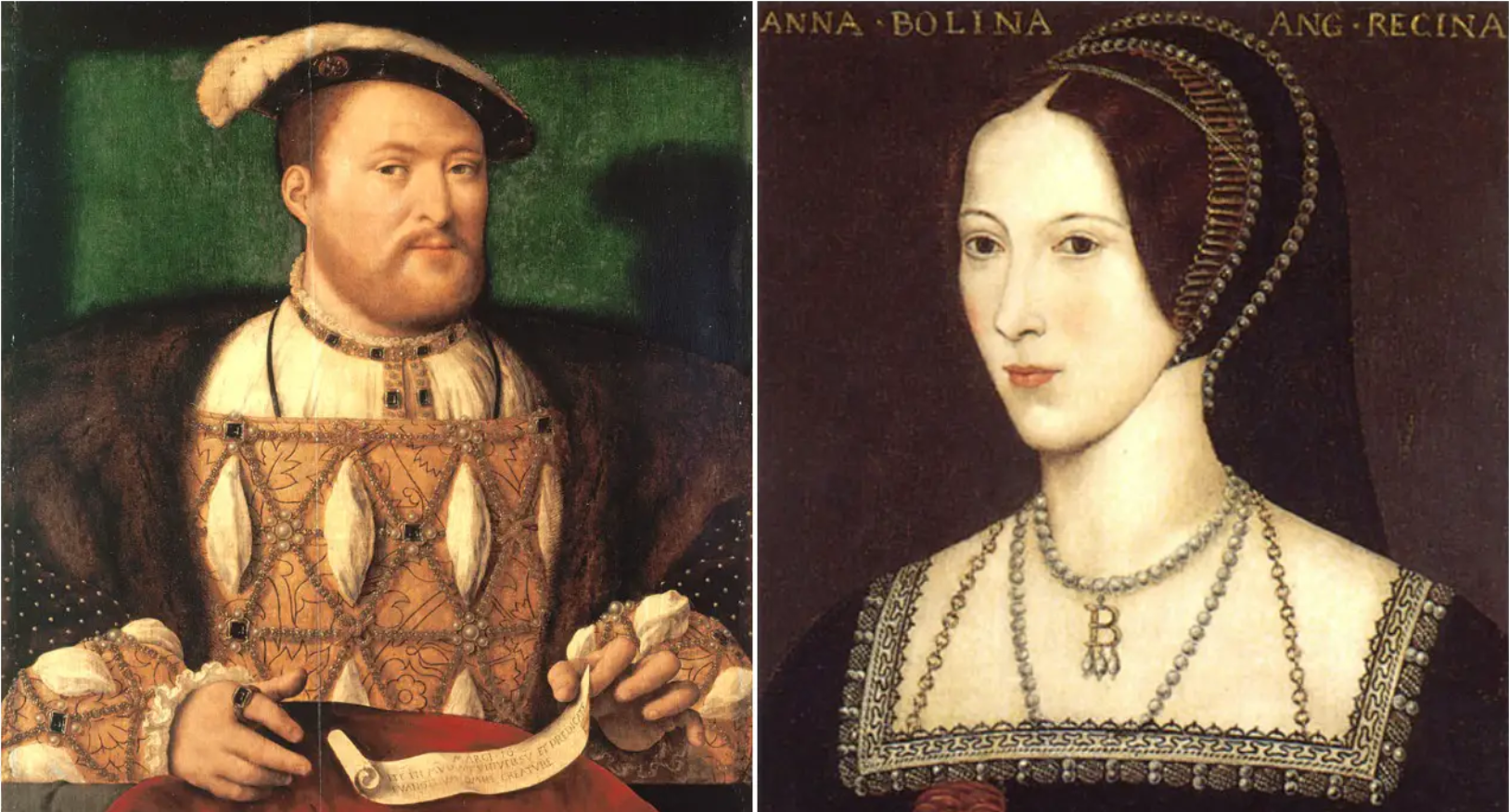
Well, Anne’s fate was to be much worse than Katherine’s. She too had miscarriages and only managed to give Henry a surviving daughter, Elizabeth. Then his roaming gaze alighted on a prospective third wife, Jane Seymour (https://tinyurl.com/292fmdjy). Anne wasn’t just set aside as Katherine had been, she went to the block, having been found guilty of high treason because of trumped up charges that included incest with her own brother! Henry was over her and was now set upon Jane.
His third queen performed the ultimate miracle of giving birth to a healthy son, Edward, only to pay with her own life almost immediately due to the grimness of 16th-century childbirth, see https://en.wikipedia.org/wiki/Postpartum_infections). So amid his joy at having a legitimate son at last, Henry was genuinely broken-hearted over losing Jane Seymour. For the rest of his life he adored and cherished her memory. Well, he did….at the same time as marrying a few other queens as well, of course. But he only had the original three surviving legitimate children, Mary, Elizabeth and Edward, in that order. Of the three, only Edward—to be Edward VI—mattered to his father.
At least Katherine of Aragon’s head hadn’t been separated from her neck, nor had childbirth claimed her. She may no longer have been Queen of England, but she had abided by the dictates of her Christian conscience and on 7 January 1536 she died in her bed at the age of 51, it’s thought maybe of cancer.
On the death of Henry VIII himself on 28 January 1547, Jane Seymour’s son ascended the throne as Edward VI (https://tinyurl.com/mt6thk5r), and brought fiercely Protestant views with him. Then he died young and childless and his half-sister Mary, Katherine of Aragon’s daughter (https://tinyurl.com/4cds9xk3), became queen. She immediately swung England back to strict Catholicism, even to the extent of marrying Philip II of Spain (https://tinyurl.com/5c5nwx23).
But her mother’s strong streak of overpowering religiosity flourished in Mary, with disastrous results. She too died childless, and England made sure her widower, Philip of Spain, didn’t get his hands on the throne! Miffed, Philip was to launch the Spanish Armada instead! (https://www.history.com/topics/european-history/spanish-armada)
After Mary, Protestantism was in the ascendant again because we had Anne Boleyn’s daughter, Elizabeth (https://tinyurl.com/35965znn). But Elizabeth possessed the canny streak that had eventually deserted her mother, and enjoyed a long and “glorious” reign, during which she saw off Philip’s Armada! She also steered well clear of marriage before turning up her toes in 1603. Just like her siblings, she too was childless, and with her ended the rule of the Tudors.
Then came the Stuarts, under whom we still had problems with religion!
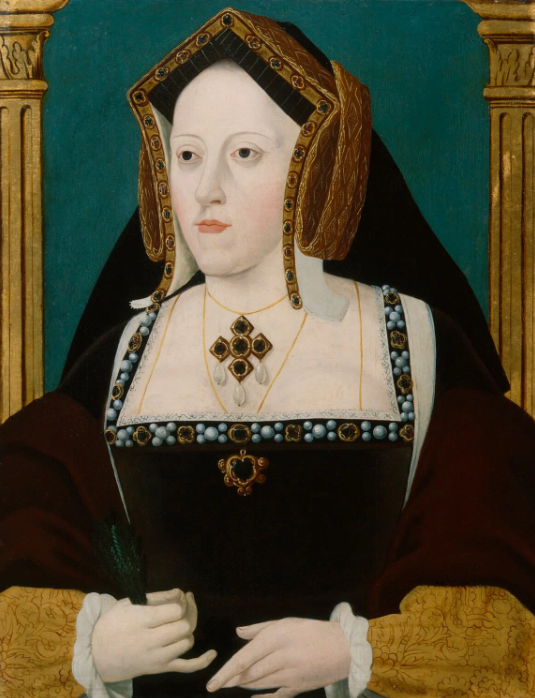
So, can we really blame Henry VIII alone for what happened with Katherine of Aragon? Oh, he was a selfish, cruel man who’d do anything to have his own way….even if it meant spurning the Church of Rome, wrecking monasteries etc. etc. But might we still have been a Catholic country if it weren’t for the overwhelming religious zeal of his first wife? If Katherine had conducted herself more circumspectly in her devotions, might she have presented Henry with a few hale and hearty sons? We’ll never know, but if she had, might the Henry VIII who has come down to us through the centuries have been a vastly different man from the monster he actually became? Although I suppose he’d still have had the disastrous head injury that seems to have affected him for the worse ever after.
Anyway, I know one thing, religion is all too frequently at the root of conflict and trouble. It always has been and it always will be. People just will not keep it to themselves or within reason. Well, that’s my opinion, you don’t have to agree.


Leave a comment