We all know of the paltry 2016 work of fiction by Terry Breverton titled Henry VII: The Maligned Tudor King. For more of Mr Breverton himself, see here http://welshwriters.co.uk/terry-breverton/).
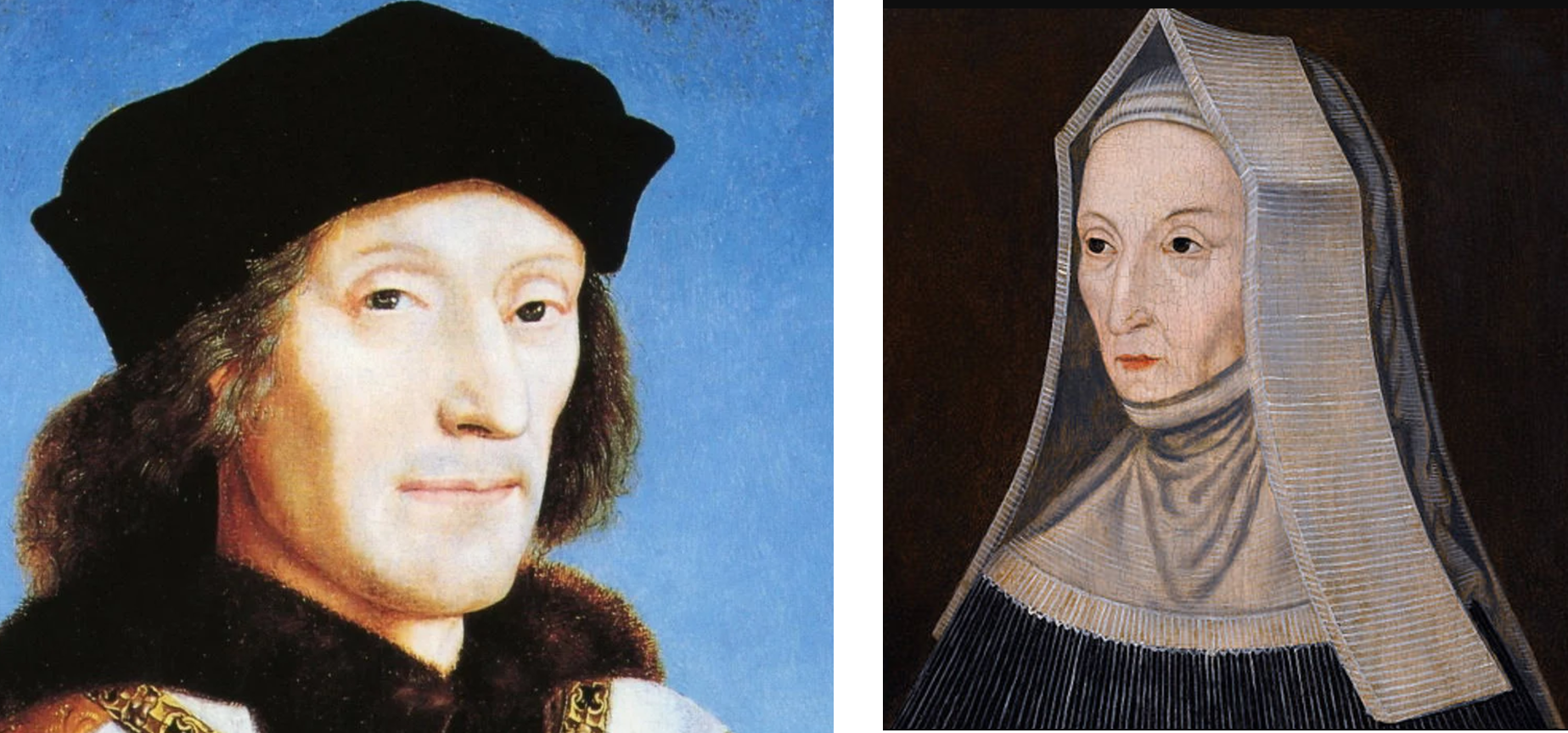
In the book it is stated that “….Henry’s first parliament also reinstated his mother with the lands and grant taken from her by Richard III….” What is omitted here is that Richard had promptly handed said lands and the treacherous Lancastrian lady herself (Margaret Beaufort, Lady Stanley, https://en.wikipedia.org/wiki/Lady_Margaret_Beaufort) into the care of her new (supposedly Yorkist) husband, Thomas, Lord Stanley (https://richardiii-nsw.org.au/wp-content/uploads/2016/07/Thomas.pdf).
For those who do not know, the Yorkists (https://en.wikipedia.org/wiki/House_of_York) and the Lancastrians (https://en.wikipedia.org/wiki/House_of_Lancaster) were the two main protagonists in the Wars of the Roses (https://richardiii.net/richard-iii-his-world/the-war-of-the-roses/), a drawn-out, decades-long dispute between the family of the very royal 3rd Duke of York (https://richardiii.net/richard-iii-his-world/his-family/richard-duke-of-york-father/) and supporters of the feeble-minded Lancastrian king Henry VI (https://www.bbc.co.uk/history/historic_figures/henry_vi_king.shtml).
Richard III’s actions against Margaret were prompted by her participation in the Buckingham Rebellion of 1483 (https://richardiii.net/richard-iii-his-world/the-war-of-the-roses/rebellions-and-uprisings/#section6). She’d hoped to see her exiled son Henry emerge as the new Lancastrian king (heaven alone know what Buckingham had wanted) but the rebellion was vanquished by Richard, Buckingham was caught and executed, and Henry scampered back to the safety of the Continent without even stepping ashore.
If Margaret had been caught conspiring against a Tudor monarch she’d have gone to the block! And good riddance. But oh, sometimes it’s useful to give half the picture and omit the rest, is it not, Mr Breverton?
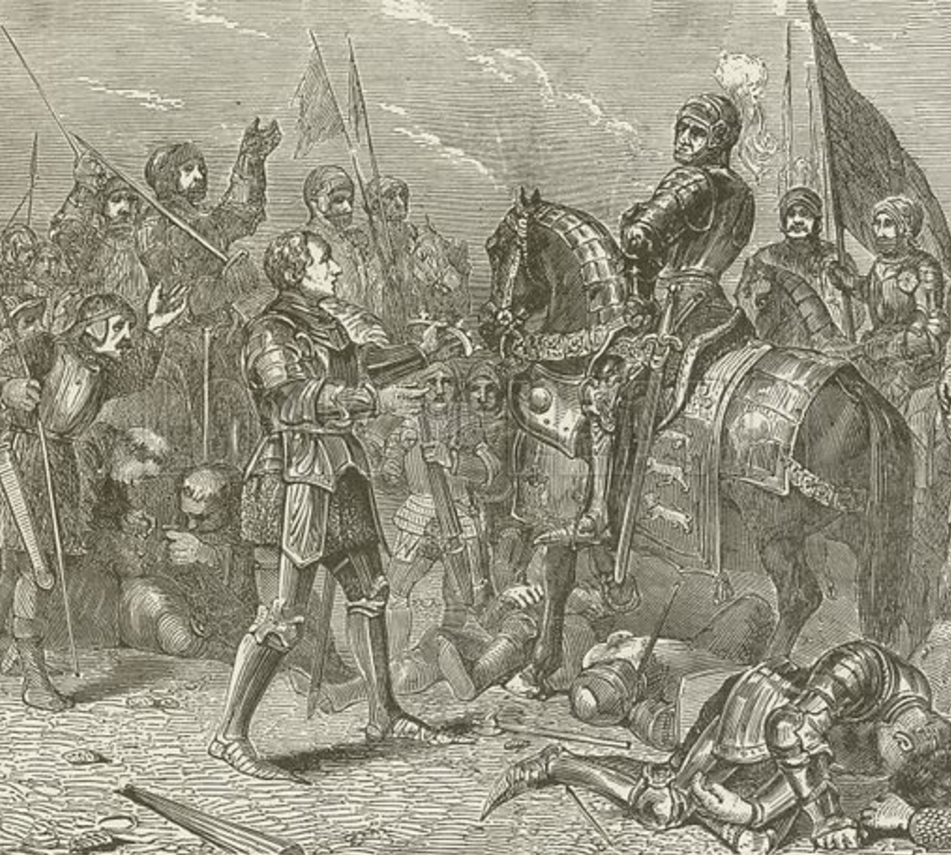
However, the reference to Thomas, Lord Stanley, led me to something else in the book that was (to me at least) a rather new slant on the post-Bosworth relationship between Stanley and his stepson, Henry VII.
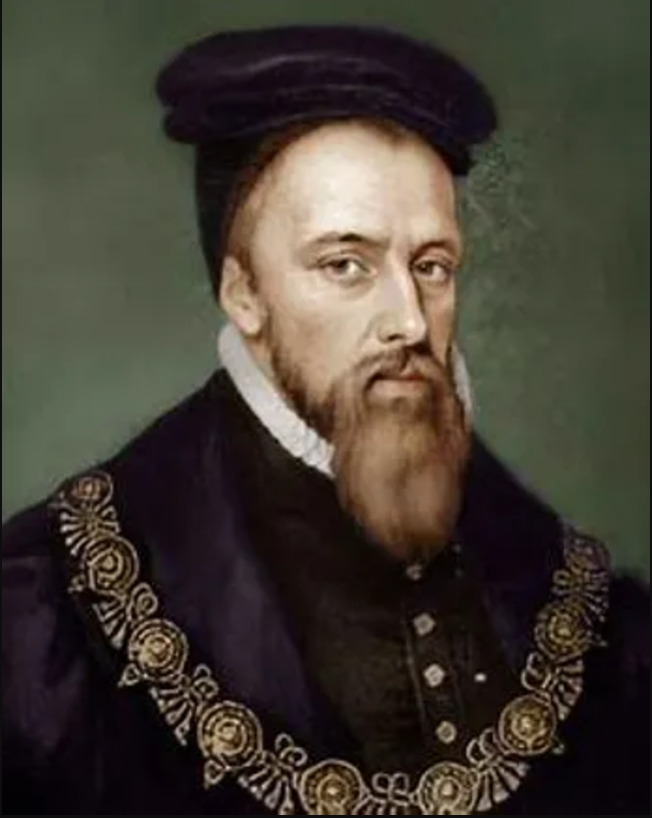
In 1472 Richard III’s eldest brother, the first Yorkist king, Edward IV— https://www.bbc.co.uk/history/historic_figures/edward_iv_king.shtml—had been reinstated on the throne after the final defeat and death of Henry VI, and Margaret wanted to (a) protect herself, and (b) try (unsuccessfully) to persuade Edward IV to allow her exiled son Henry (whom she secretly supported financially) to come back to England.
That same year Thomas became Margaret Beaufort’s fourth husband, because at the time she needed a wealthy “safe” man for protection, and Thomas was not only rich, handy and willing, he was also an ally of the House of York, which no doubt she thought would help her regarding her son. The marriage was advantageous to him as well, for she was a very wealthy high-ranking woman.
I had always known that Thomas and his younger brother Sir William (see https://sparkypus.com/2020/06/26/sir-william-stanley-turncoat-or-loyalist/ and https://www.luminarium.org/encyclopedia/williamstanley.htm) were fence-sitters par excellence. Richard III knew it too. As Duke of Gloucester he’d crossed paths with Thomas before (https://murreyandblue.org/2024/10/06/does-the-harrington-stanley-feud-harbour-a-secret-about-richard-of-gloucester/, here https://murreyandblue.org/2017/07/22/richard-the-stanleys-and-the-harringtons/ and here https://murreyandblue.org/2017/07/20/while-on-a-cheshire-road-richard-duke-of-gloucester-happened-upon-the-retainers-of-thomas-lord-stanley/), so he knew that trusting the fellow to keep the scheming, dangerous Margaret out of mischief was risky, to say the least. She continued to send vital financial support to her son, and Thomas Stanley was no longer the Yorkist supporter he’d once been.
Surviving and prospering were Stanley specialities, and at Bosworth (https://richardiii.net/richard-iii-his-world/the-war-of-the-roses/the-battles/the-battle-of-bosworth/) Richard was to pay the price of staying his hand when he ought to have been severe. Being too lenient was one of his flaws, yet he is always accused of the bloodthirsty, wholesale murder of his foes. I wish! He’d have lived much longer and established himself as a fine and just king if he’d removed a few more Judas heads.
Mr Breverton refers to Thomas as Earl Stanley of Derby (Thomas did indeed receive the earldom of Derby from Henry VII) but the author warns that the elevation is by no means to be regarded as a sign of Henry’s approval of Thomas. See here:
“….Henry’s first parliament also reinstated his mother with the lands and grants taken from her by Richard III. She was also given the rights and privileges of a ‘sole person, not wife nor covert of any husband’, allowing her personal control over her extensive properties. This was very unusual for the time. Immediately after Bosworth, Henry spent two weeks in close consultations with his other, learning about the ways of government, the powers at court and the like. Called at court ‘my Lady the King’s Mother’, she now signed herself ‘Margaret R’ and became extremely influential at court. Some recent sources state there was friction between Henry’s Lancastrian mother and his Yorkist wife, but it is difficult to find any real evidence. Making Thomas Stanley the Earl of Derby also enhanced the status of his [Henry’s] mother, now Countess of Richmond and Derby. When Henry reversed the attainder of his mother and curtailed the marital power of Thomas over her estates, he enabled his mother to run her own financial affairs, and the Act could be seen as the equivalent of a virtual divorce. Henry’s mother later took a vow of chastity, further isolating Stanley. Neither mother nor son ever seemed to forgive Stanley for his lack of promised support at Bosworth, and Margaret Beaufort made a will asking to be buried beside Edmund Tudor , not Stanley [https://www.englishmonarchs.co.uk/tudor_26.html]. Henry may have wished to attaint Thomas Stanley, but that would have meant that his mother was married to a traitor….”
So, was Thomas acutely resented and distrusted for the shilly-shallying at Bosworth, at which battle he’d promised his full support to Henry? Was his inaction regarded as serious treachery? Treason?Fence-sitting with a vengeance? Henry only trusted his mother and uncle Jasper Tudor, see https://tudortimes.co.uk/people/jasper-tudor-life-story/reward-retirement), and was always deeply wary of anyone known to have switched sides. Step forward the likes of Thomas and William Stanley. So Henry had a built-in, well-founded suspicion that if Richard III’s valiant final charge had been successful, as it very nearly was, the two Stanley brothers would have emerged neatly on the Yorkist side. Too right they would.
So, according to Mr Breverton, it seems that soon after the accession of Henry VII, Thomas Stanley was being gradually elbowed aside. Was a charge of treason hanging over Thomas? Did he know it? Was he aware that he was spared the axe simply to save Margaret Beaufort from the ignominy of being married to a traitor? Oh, there was an initial show of approval for him, with the earldom and a prominent role at his stepson’s coronation, but the earldom was for Margaret’s benefit and she was soon wriggling away from him.

Sir William Stanley, whose turncoat action against Richard at Bosworth was pivotal to the outcome, was eventually executed by Henry VII in 1495. He’d swapped sides again and became involved in the Perkin Warbeck affair (https://richardiii.net/faqs/richard-and-his-world/aftermath/perkin-warbeck/). Might it really be that the shielding of Margaret Beaufort’s good name was the only reason Thomas Stanley hadn’t paid the same price too?
I’m not pretending to be the first to draw attention to this, because obviously I can’t be. I’m not Tim Thornton and Tracy Borman, claiming to have found “new” wondrous, proof-positive evidence that Richard III murdered the Princes in the Tower. What they “discovered” was already known to the world and proved nothing whatsoever, see https://richardiii.net/society-statement-on-upcoming-princes-programme/).
I’m simply someone to whom this aspect of Thomas Stanley’s dealings with Henry VII and Margaret Beaufort hadn’t really occurred previously.


 The New Murrey and Blue blog
Leave a reply to viscountessw Cancel reply