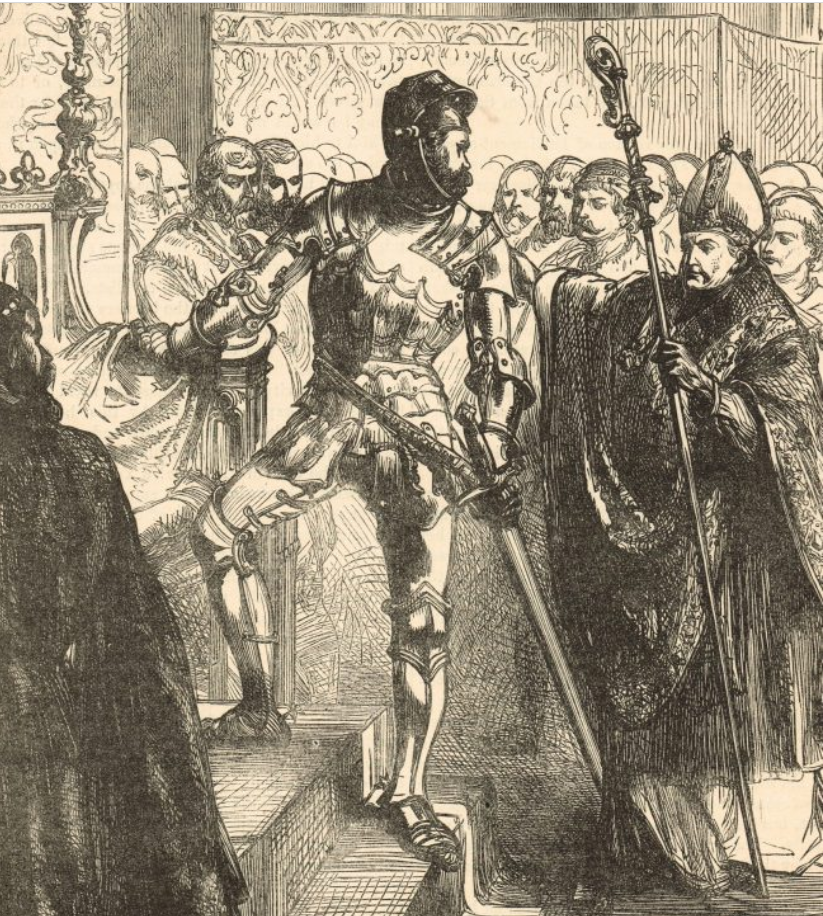
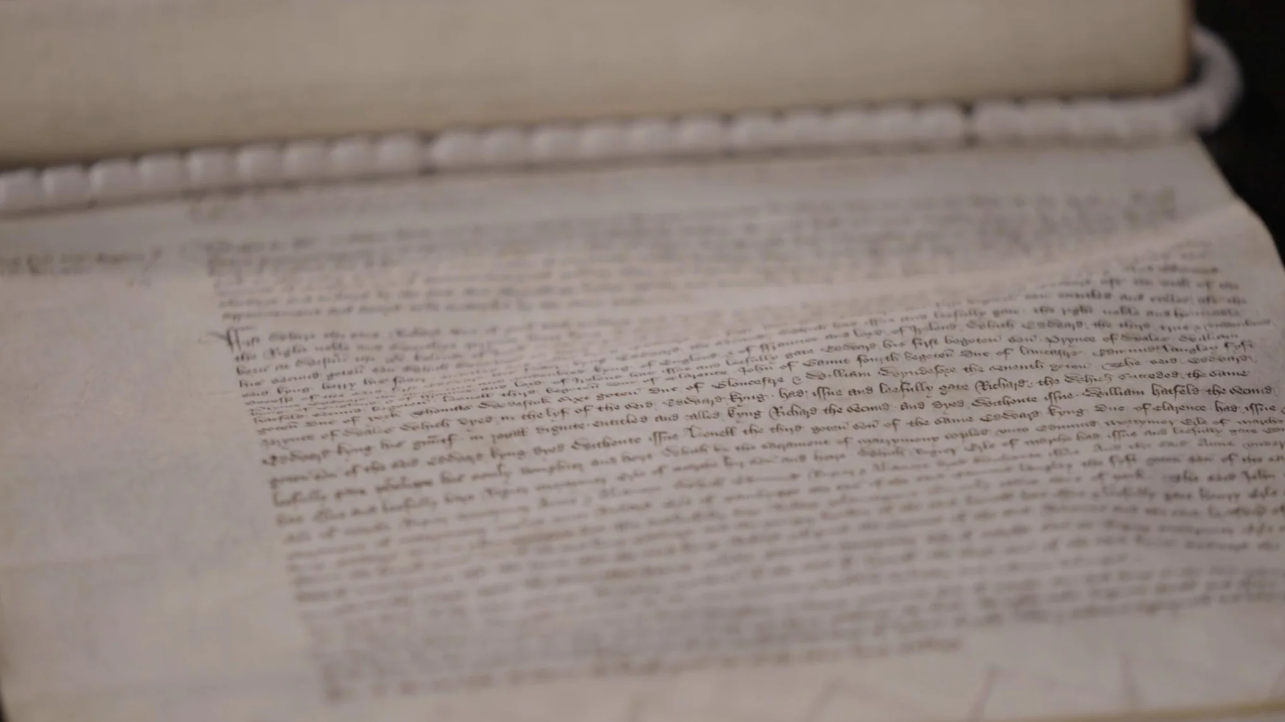
“….Richard Duke of York shall be entitled, called, and taken from now on as true and rightful heir to the Crown’s royal estate, dignity and lordship. After the death of the said King Henry….”
So states the Act of Accord of 1460 (https://www.tutorchase.com/answers/a-level/history/discuss-the-significance-of-the-act-of-accord-in-1460), which confirmed the Yorkist claim to the throne and was enrolled in Parliament. The Act declared it high treason to conspire against Richard or his heirs, and thus it confirmed . “….If any person or persons scheme or plots the death of the said Duke, that it shall be deemed an heir, judged High treason….”
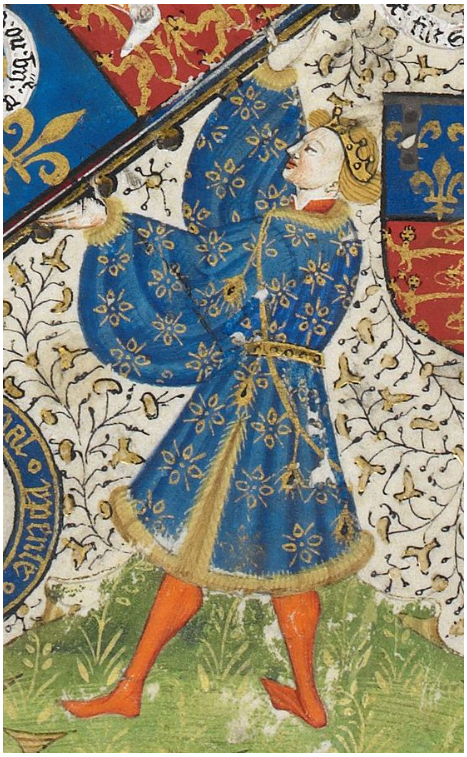
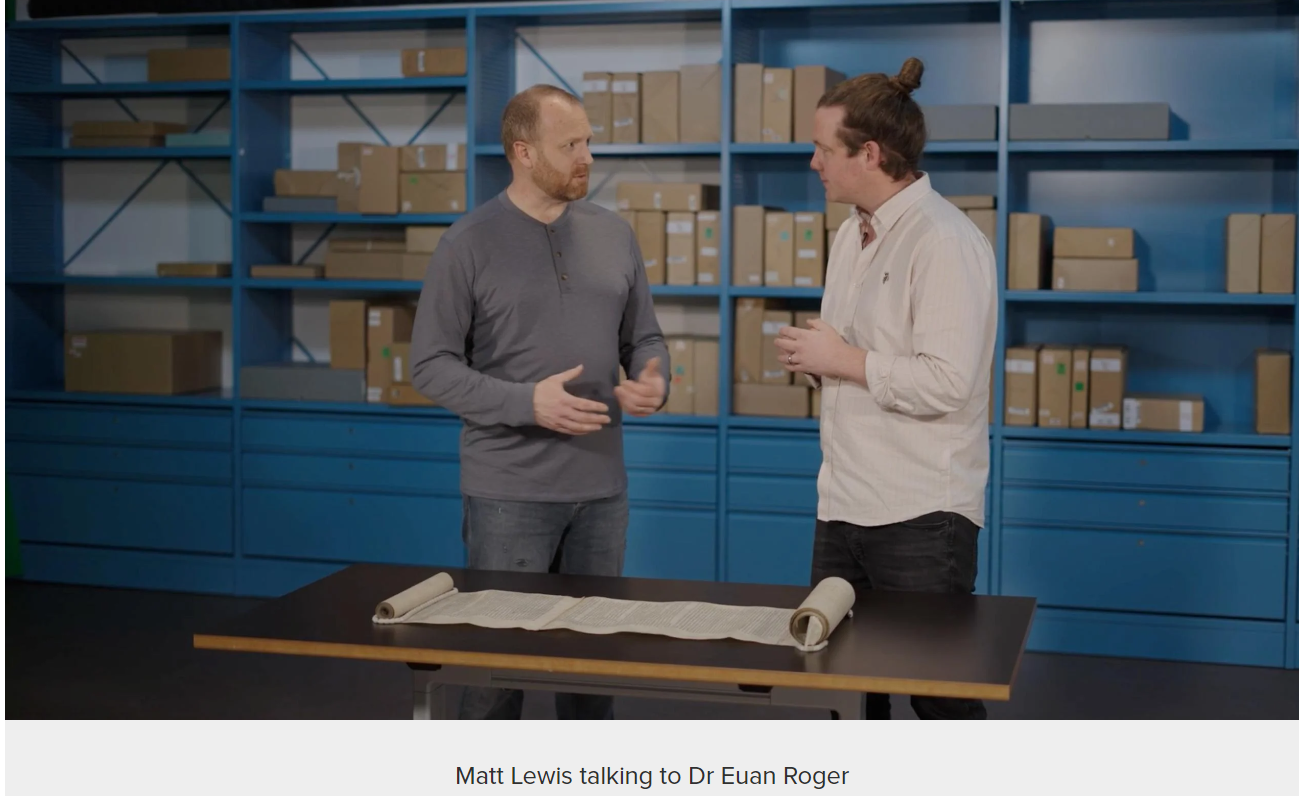
The Act crops up in the investigations of Matt Lewis (https://www.mattlewisauthor.com/), Chair of the Richard III Society (https://richardiii.net/), and the result is a two-part documentary entitled “The Real Richard III”* in which he consults with Dr Euan Roger of the National Archives (https://www.nationalarchives.gov.uk/about/our-research-and-academic-collaboration/our-research-and-people/staff-profiles/dr-euan-c-roger/).
The Wars of the Roses between the Houses of York and Lancaster (https://www.britannica.com/event/Wars-of-the-Roses) had become a very serious matter, and an attempt to solve the bitter dispute was made by creating Richard, 3rd Duke of York (https://richardiii.net/richard-iii-his-world/his-family/richard-duke-of-york-father/), heir to the throne. He was to become the first Yorkist king on the death of the third Lancastrian monarch, Henry VI.
The Act disinherited Henry’s son, Edward of Westminster, Prince of Wales (https://www.englishmonarchs.co.uk/plantagenet_41.html). Well, it’s extremely unlikely that Edward was Henry VI’s son anyway, having been conceived during one of the latter’s long mental disturbances when he seemed unable to do anything, let alone get his strong, determined queen, Margaret of Anjou, with child. (See https://www.historyextra.com/period/medieval/king-henry-vi-facts-life-death-reign-marriage-sex-coach-wife-illness-mental-health-mysterious-strange/).
So it’s much more likely the boy was sired by one of Margaret’s sidekicks, Edmund Beaufort, 2nd Duke of Somerset or James Butler, 5th Earl of Ormond. The odds are on Beaufort. Oh, doesn’t that name crop up time and again? And never to the comfort of the House of York. Anyway, the above circumstances suggest strongly that Edward of Westminster was illegitimate and without any right whatsoever to the crown.
The 3rd Duke of York’s claim had always been very strong. He was descended from Edward III’s second and fourth sons, Lionel of Clarence (https://en.wikisource.org/wiki/Dictionary_of_National_Biography,_1885-1900/Lionel_of_Antwerp) and Edmund of Langley (https://www.englishmonarchs.co.uk/plantagenet_69.html), whereas Henry VI was descended only through the third son, John of Gaunt (https://medievalbritain.com/type/medieval-life/people/john-of-gaunt/). The Lancastrian kings—Henrys IV, V and VI—wore the crown because the first of them, Henry of Bolingbroke (https://murreyandblue.org/2024/08/19/june-july-august-1399-how-england-fell/), murdered the previous king, Richard II (https://murreyandblue.org/2024/08/03/a-very-telling-portrait-of-richard-ii/) and usurped the throne.
Incidentally, the Beauforts were also descended from John of Gaunt, but not legitimately. Well, they’d been legitimised later, but that’s another story. (https://www.englishmonarchs.co.uk/plantagenet_47.html)
Even after the Act of Accord, the House of York’s rights continued to be thwarted by its enemies and the Wars of the Roses engulfed the land. Within weeks of the Act, the 3rd Duke was killed at the Battle of Wakefield (https://en.wikipedia.org/wiki/Battle_of_Wakefield). His eldest son, Edward became the 4th Duke and then Edward IV (https://www.historic-uk.com/HistoryUK/HistoryofEngland/King-Edward-IV/), and in the following years of bitter warfare the throne was torn between Henry VI and Edward IV, until the latter’s decisive win at the Battle of Tewkesbury in 1471 (https://tinyurl.com/4p5rrjkj). Edward of Westminster was killed during this battle. and shortly afterward Henry VI died “of pure displeasure and melancholy”. Well, he was certainly put out of his misery! The House of York was secure at last.
Secure, that is, until Edward IV messed up big time by making a bigamous marriage that meant his children were illegitimate (see https://murreyandblue.org/2024/11/29/more-about-elizabeth-woodville-dying-of-the-plague/). This led to his brother Richard III (https://richardiii.net/) becoming the rightful king. There was more trouble from Lancastrians, and finally came the Battle of Bosworth (https://richardiii.net/richard-iii-his-world/the-war-of-the-roses/the-battles/the-battle-of-bosworth/), during which Richard III was murdered by treachery. England ended up with the House of Beaufort/Tudor. Oh joy.
So the Act of Accord is vital acknowledgement of the legality of the Yorkist claim to the crown of England.
*The documentary “The Real Richard III” is now available at History Hit. You have to subscribe if you wish to see the documentary, but there is a useful article to be read first. History Hit has many other useful articles/documentaries, including https://tinyurl.com/yxc2cdcy which is about the recent looks/voice avatar of Richard III.


 The New Murrey and Blue blog
Leave a reply to viscountessw Cancel reply