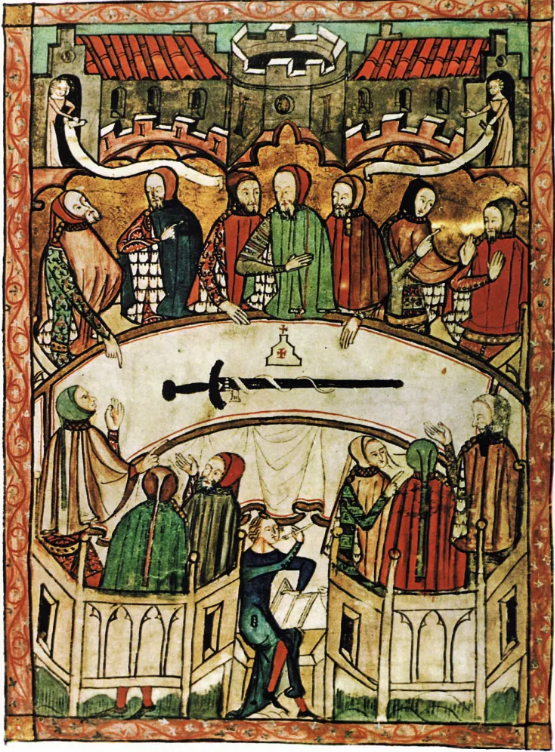
When I read this article https://fcpp.org/2024/10/02/how-the-1327-coup-against-edward-ii-contributed-to-english-constitutional-development/ by Gerry Bowler, it was clear the author’s purpose was to explain how the advent of the Lords Ordainer and dethroning of Edward II affected the constitution of England. Not just in the 14th century, but right to the present day, when we’ve long been the United Kingdom.
The article refers to the term “Shadow King”, and I hasten to point out that it does not mean the Marvel Comic character of that name. Rather is it I concerned with events in the 14th century when 14-year-old Edward III (https://en.wikipedia.org/wiki/Edward_III_of_England) assumed the throne of his living (but ousted and imprisoned) father, Edward II, (https://en.wikipedia.org/wiki/Edward_II_of_England).
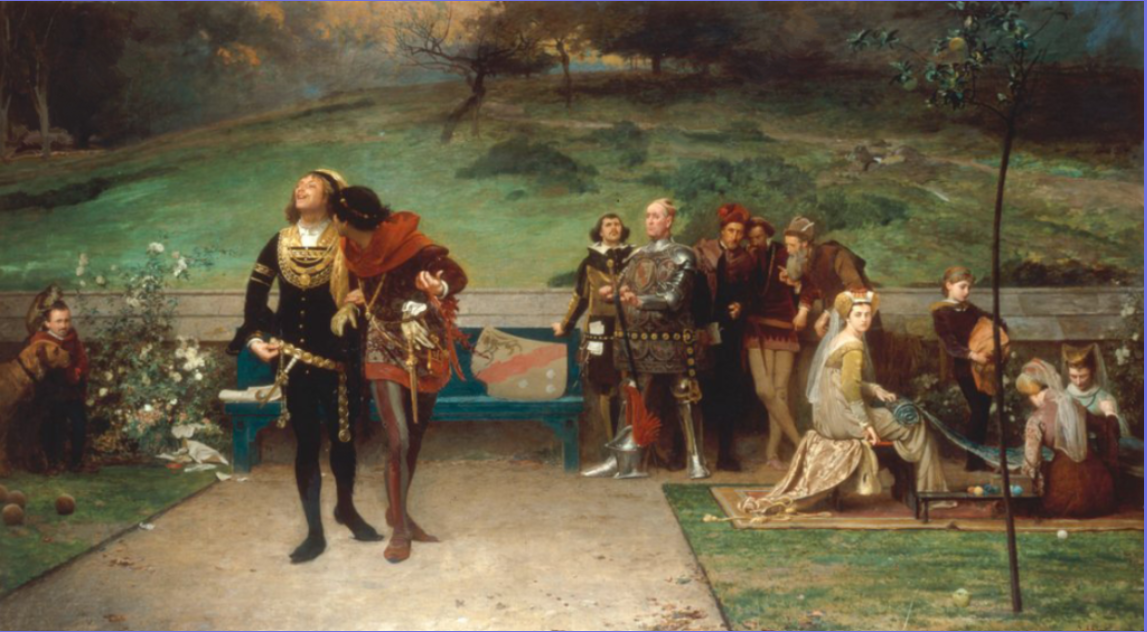
Edward II’s eviction from the throne came about because he’d been judged to have “….committed crimes against the church and against his nobility, had violated his coronation oath, and had chosen to follow evil counsel….” He had male favourites and mocked his barons, to whom the greatest of these royal favourites, Piers Gaveston (https://britishheritage.com/history/king-edward-ii-piers-gaveston-relationship), gave insulting nicknames. Then there was the crushing humiliation of Bannockburn (https://www.bbc.co.uk/news/uk-scotland-27900285). It was all too much for the English baronage, which considered him to have demeaned the crown, the real….and them. The name given to these barons is the Lords Ordainer.
They got together to warn him that “….Homage and the oath of allegiance are more in respect of the Crown than in the king’s person and are more closely related to the Crown than to the king’s person; and this is evident because, before the right to the Crown has descended to the person, no allegiance is due to him….” The threat was clear enough, but was ignored, and so for the first time ever, a King of England was expelled from the throne and made a prisoner. He was replaced by his teenaged son, Edward III. England had two living kings.
I’ve taken the following extract from Gerry Bowler’s article: “….[when on Edward II’s removal] an assembly was summoned in the name of the young Edward [III] acting as Guardian of the Realm (a true Parliament could only have been called by the king)….drawing on the canon law concept of rex inutilis (a useless or ‘shadow king’)….” (see also https://blog.oup.com/2017/05/simple-minded-ruler-medieval-solution/.)
Edward III was crowned on 1 February 1327…but his father wasn’t judged to have died until 21 September that same year. So for those months Edward II, once a true king, had become rex inutilis, a Shadow King.
I’m not going to judge Edward II’s competence or morals one way or the other, but the date of his death is tricky. There is now a lot of speculation about his apparent demise at Berkeley Castle in 1327….with increasing consensus that he didn’t actually pass away until many years later on the Continent. You can read more about Edward II’s death here https://wordpress.com/post/murreyandblue.org/26643 and here https://wordpress.com/post/murreyandblue.org/55721. So for how long was Edward II a Shadow King? Not only the months until Berkeley, but for years afterwards!
Edward II may have been a Shadow King….but he was never a False King. To me the story of this father and son is unique, because no matter when Edward II eventually died, the end result would have been the same….barring intervention/usurpation by a third party, Edward III would legally and bindingly always have succeeded Edward II.
The case of Edward IV and Henry VI in the 15th century is sort-of similar, I suppose, because Henry VI was definitely a useless king, and it wasn’t until his eventual demise/murder after the Battle of Tewkesbury that the decidedly useful Edward IV became secure on his throne. But at no time before then could it have been said that Edward was bound to have been the ultimate ruler. A stray arrow might have extinguished Edward at Tewkesbury, and a triumphant Henry VI would then have mounted the throne again. Then it would all have dragged on into another round.
To read more about the Lords Ordainer, see here https://fourteenthcenturyfiend.com/2020/06/19/a-king-under-heel-the-ordinances-1311/ (which contains a lot of useful references) and here https://thehistoryofengland.co.uk/resource/the-ordinances-of-1311/.
Online you can read Thomas of Lancaster, 1307-1322: a study in the reign of Edward II by J.R. Maddicott here https://archive.org/details/thomasoflancaste0000madd/page/n5/mode/2up. Lancaster was Edward II’s first cousin and a leading Lord Ordainer.
There is also the excellent biography of another Lord Ordainer, Aymer de Valence, 2nd Earl of Pembroke, by J.R.S. Phillips, the print version of which you can acquire here https://tinyurl.com/2j7mb2dn. If, that is, you have the cash lying around begging to be spent. I read this book decades ago when I lived about a mile from the hamlet of Moreton Valence in Gloucestershire. I became interested in the reason for the hamlet’s name and found its connection to the Valence family. Moreton Valence is in the Vale of the Severn south of the city of Gloucester, and not all that far from Berkeley Castle, supposed scene of Edward II’s violent demise. You can read about the hamlet here https://www.british-history.ac.uk/vch/glos/vol10/pp205-208.
I have just discovered a previous post on this blog concerning Henry VI as a Shadow King: https://murreyandblue.org/2020/05/23/shadow-king-the-life-and-death-of-henry-vi/.

 The New Murrey and Blue blog
Leave a reply to H.J. Hill Cancel reply