(https://www.youtube.com/watch?v=25ODdbpg6OA)
Question: “….What do a small market town, a church in ruins, and Sherlock Holmes have in common?….?
Answer: “….The fact that the graveyard in the church precinct was the burial place of a sinister [17th-century] squire whose story is said to have inspired Sir Arthur Conan Doyle to write The Hound of the Baskervilles….”
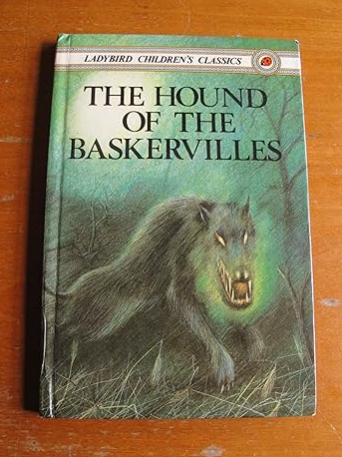
Doyle’s Baskerville story has never been out of print, and Ladybird Books certainly knew that children too love to be given the shivers, because the publisher produced more than one edition of the story just for our little darlings. As a child I for one always relished spooky stories, and I believe that nowadays our children are subjected to far too much molly-coddling and political correctness! We’re denying them the delicious shivers that I used to revel in. Well, that’s my opinion, for what it may or may not be worth.
Now, before I begin this article in earnest, let me say that there is a lighter, rather silly side to it, although you will have to wait until the very end to find out about The Hounds of the Plantagenets.
So let me get on with things. I’ve heard variations of the origins of the Baskerville story, but this link (Sherlock Holmes and the phantom pack – Hindustan Times) relates it again, very interestingly. If you are knowledgeable about Sir Arthur Conan Doyle, you will be aware of it already. And so too will anyone who is a Hammer film afficionado.

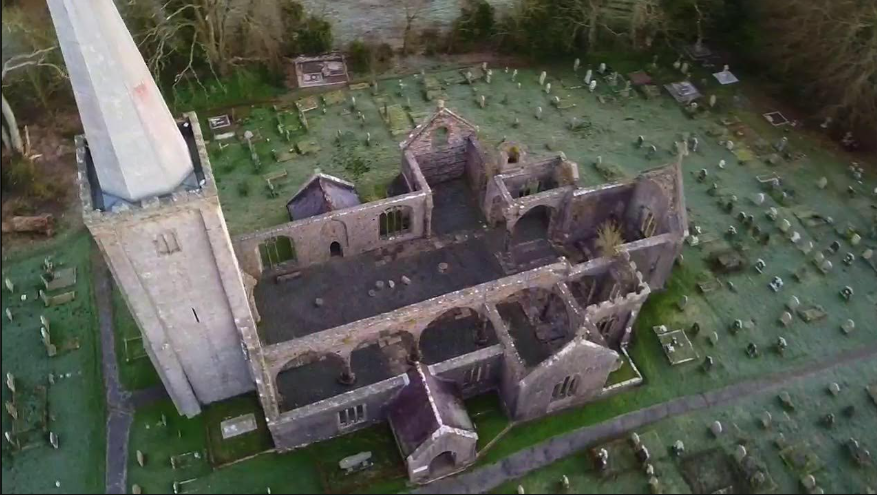
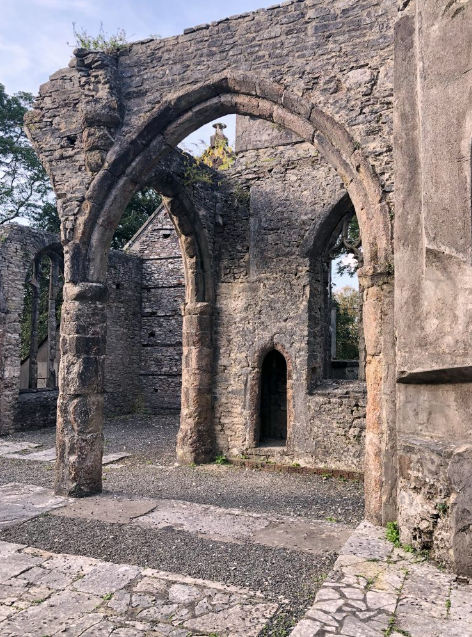
“….The late 13th century Trinity Church [Buckfastleigh, Devon] , isolated in its location on a rocky outcrop, isn’t really functional; the well-preserved ruin is now a shell of the building it used to be….” The impression gained from the previous sentence is that the church has been ruined for quite a few centuries, but far from being covered in old ivy with branches as thick as trees, and being infested with ancient ghosts, the present building only burned down in 1992.
And that wasn’t the first time the church was gutted by flames, because in the 1850s there’d been an arson attack that reduced it to ruins. It was rebuilt, only to be demolished again during World War II by a stray German bomb. Yet again it was rebuilt, only for another conflagration to consume it in 1992. This time it was left in its present ruined state.
A joint research project between 2002-2005 revealed that the medieval church had been erected on a previous late-Saxon structure (which was perhaps the first Buckfast Abbey). So the site itself has been a place of worship for a very long time, and maybe not always Christian! Why? Because the 1992 fire had commenced at the altar, and strong local rumours blamed Satanists.
Even so, the ruins do not exude a menacing atmosphere….which perhaps they should because of one Richard Cabell III of Brooke, who was buried there in 1677. He it is whose memory creates fearsome stories of a wicked, murderous squire who sold his soul to the Devil and rode across Dartmoor with huge, red-eyed hounds….
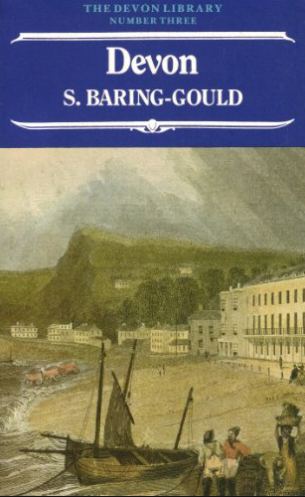
The Reverend Sabine Baring-Gould (1834-1924) was an antiquarian who studied the supernatural legends of Devon, and he wrote of Cabell in his book The Little Guides (1907). “….Before the S porch (of Holy Trinity) is the enclosed tomb of Richard Cabell of Brooke, who died in 1677. He was the last male of his race, and died with such an evil reputation that he was placed under a heavy stone, and a sort of penthouse was built over that with iron gratings to it to prevent his coming up and haunting the neighbourhood. When he died the story goes that fiends and black dogs breathing fire raced over Dartmoor and surrounded Brooke, howling….”
Cabell was a tyrant who murdered his wife and kidnapped the daughters of several local farmers. And if you were unfortunate enough to fall foul of him he would indeed pursue you with his dreadful pack of hounds.
Locals believed he’d made a pact with the Devil in order to escape punishment for the murder of his wife. The Devil demanded that the tomb be left open, so it would be easy to collect the soul, but the local people sealed it. The story goes that “….on the anniversary of his death every year, the squire could be found leading his phantom pack across the moor. If not, the ferocious pack could be seen moving around his grave, howling and screaming….”
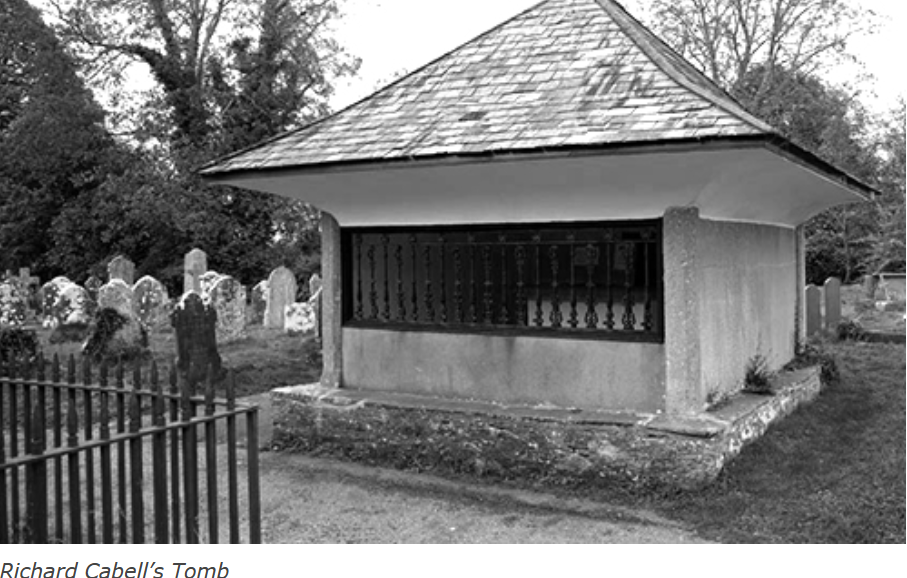
Now, where does Sir Arthur Conan Doyle come into this? Well, it seems that when he was a doctor in Plymouth, the tales of Richard Cabell III inspired him to write “….the interesting story into his book about a diabolical hound of supernatural origin who killed Sir Hugo Baskerville after he abducted and murdered a woman in the mires of Dartmoor….”
Doyle visited the area connected with Cabell during the first rebuilding of Holy Trinity Church, and absorbed the dreadful lore about the evil squire.
Read more about the church and Richard Cabell here: https://ukga.org/churches.php?pageid=1241 and here https://escapetobritain.com/richard-cabell-buckfastleigh-church/ here Mystery of abandoned burnt-out church where Satanic rituals took place – Plymouth Live (plymouthherald.co.uk) and here Richard Cabell – Wikipedia
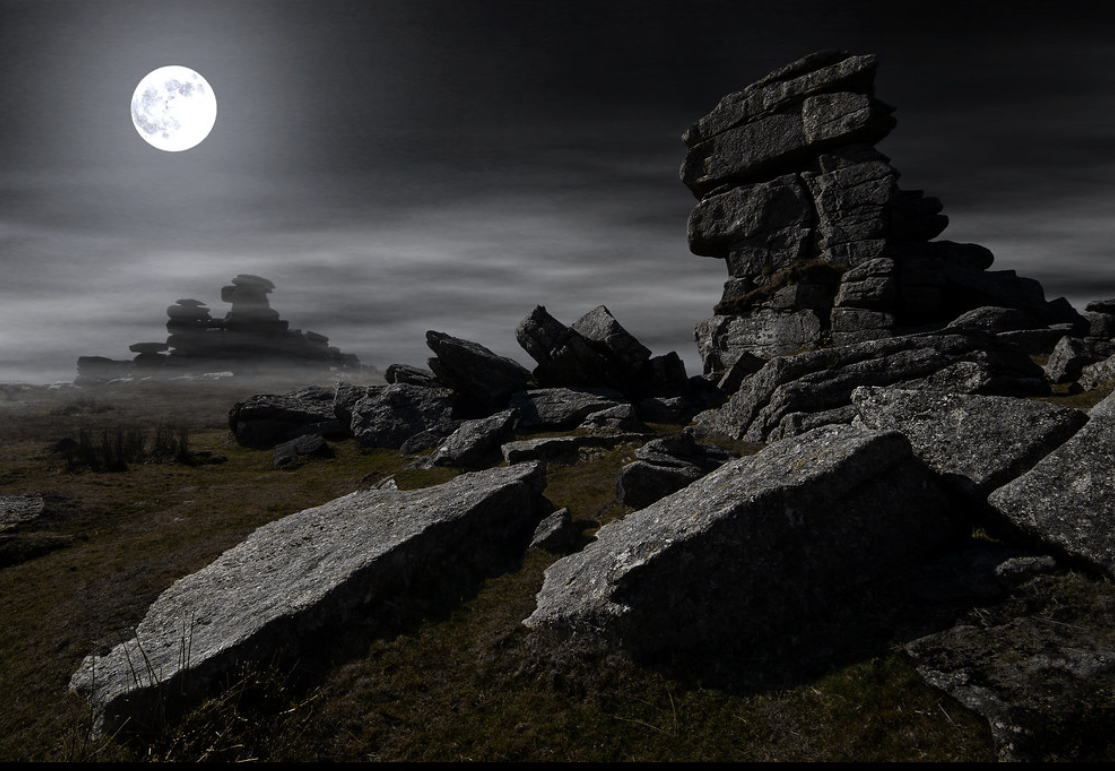
Having been alone on Dartmoor myself, I can well imagine the absolute dread experienced by anyone who had to cross it at night, especially on foot….
OK, so why have I written about something that has nothing whatsoever to do with the medieval period (except for the age of the church)? Because it was an online search concerning King Richard III that brought me to the Hindustan Times link above. How? Because at one point it mentions Richard Cabell III as only Richard III, hence it turned up in my search.
Well, it was enough to prompt my ever ready grey cells. I found myself imagining our Richard riding vengefully across Dartmoor with a pack of bloodthirsty, half-starved supernatural hounds. The Hounds of the Plantagenets!
Good Grief, I thought, if that story were to get out it would be Tudor propaganda to make Henry VII hug himself and dance around in delight. Heaven forfend that the scrawny creep should even smile! 😱😄

 The New Murrey and Blue blog

Leave a reply to Black Shuck and the avaricious, deeply resented Abbot Henry of Poitou…. – murreyandblue Cancel reply