
British Library Arundel MS 66 f.201r.
Assessments of monarchs are always absorbing, but when the monarch is Henry VII, it’s of particular interest to a Yorkist like me. While browsing today I came upon this short paper Thinking History Activity, the heading of which is Henry VII: From diligent bureaucrat to paranoid blunderer? In it I read the following:
“….One more attack on the cold, calculating Henrician stereotype is provided by Ian Arthurson’s study of Perkin Warbeck, particularly the impact of astrology on decision-making in 1499. (3) Here Henry, ‘addicted to hearing prognostications’ from the court astrologer, William Parron, orders the executions of Warwick and Warbeck in a panic, buttressed by Parron’s predictions that such actions were in the country’s interests. While we must view astrology in the context of fifteenth century rather than modern thinking this is a clear warning not to see Henry VII as a modern mind in Tudor clothing….”
“….(3) Arthurson, I. (1994) The Perkin Warbeck Conspiracy , Alan Sutton….”
I agree. The only modern mind on the throne in this period belonged to Richard III, who in his two short years as king had shown very clearly that he was intent upon transforming England into a land where there was justice for everyone. When Henry VII usurped the crown, justice became a rather scarce commodity.
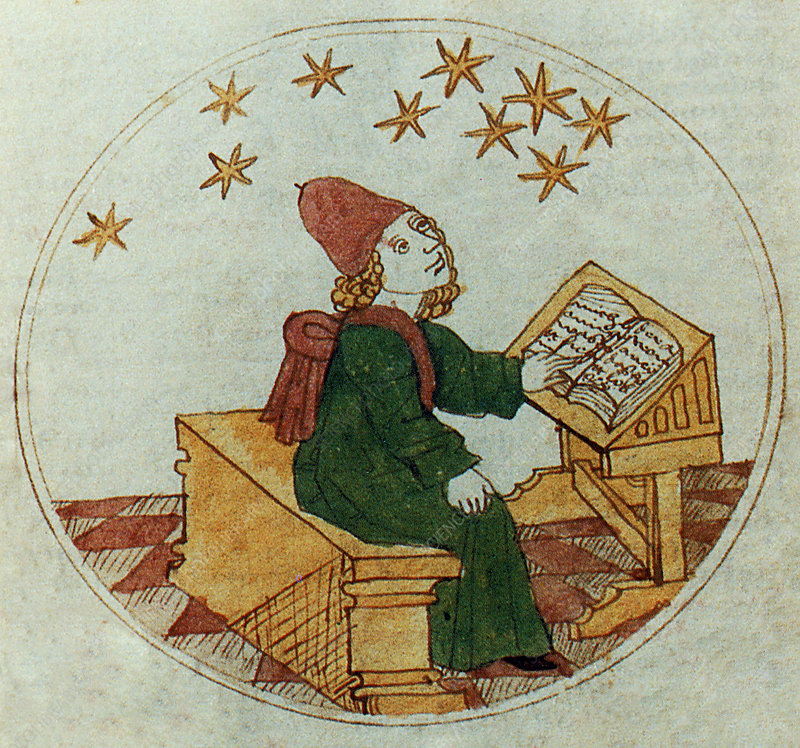
The Italian astrologer William Parron (the anglicised version of Gulielmus Parronus Placentinus) is the man who predicted that Elizabeth of York would live to the age of 80. When she died at only 37, Parron “left the court”. I’ll warrant he did! With his heels on fire. He also predicted that the future Henry VIII would have a happy marriage and many sons. Um….I hope for Parron’s sake that he’d left the country and stayed away!
Well, we’ve long known that Henry VII was steeped in astrology and all manner of superstition. His Welsh upbringing must have ensured he believed in prophecies! It was this that urged him on.
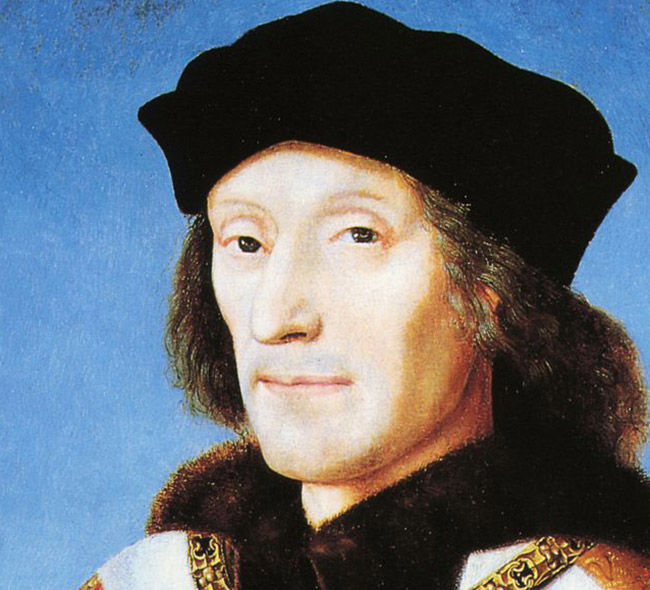
I found the 3-page paper interesting because of its emphasis, not the sly chancer we usually encounter, but on the unexpectedly impressionable side of Henry’s personality. Apparently he wasn’t the epitome of composure and craftiness his portraits suggest, but could be completely panicked—I’d loved to say discombobulated!—by astrology and bounced into decisions he might otherwise not have made. So in my opinion he got where he was by simply being lucky.
The decisions brought about by predictions and readings of the stars—rather than deep logical thought—just happened to go his way. But they could as easily have gone in the other direction.
“It’s a pity they didn’t.” Ah, I hear Richard III’s forlorn sigh from afar.
By the way, I know that Henry wasn’t the only monarch to have been influenced by astrology, most of them were in one way or another. Richard II certainly appears to have believed in all forms of magic and prediction, as you can read at length in The Rise of Alchemy in Fourteenth Century England by Jonathan Hughes. But Henry was perhaps a little more affected than the others, and perhaps it was because of his early association with Wales.
I’ll refrain from calling Henry a Welshman because there is a large question mark over whether or not his father, Edmund Tudor, really was the son of Owen Tudor and Catherine of Valois (see The Unexpected Afterlife of Catherine of Valois – Historic UK (historic-uk.com) and The royal bride who changed England forever – Royal Central). On the death of her first husband, Henry V, Catherine became romantically involved with the rather English and royal-blooded Edmund Beaufort, 2nd Duke of Somerset (Edmund Beaufort, 2nd Duke of Somerset – Wikipedia). They’d wanted to marry, but a stop was put to it perhaps because any children they had would be perilously close to the throne. Or maybe Catherine was suspected of being interested in making a bid for power herself? Henry VI, her son by Henry V, was a minor, so who knows? As a royal husband who was also English, Beaufort would certainly help such a goal. So, if there wasn’t an affair between Catherine and Beaufort, are we to think it was just a coincidence that at this very time parliament passed a statute regulating the remarriage of queens of England?
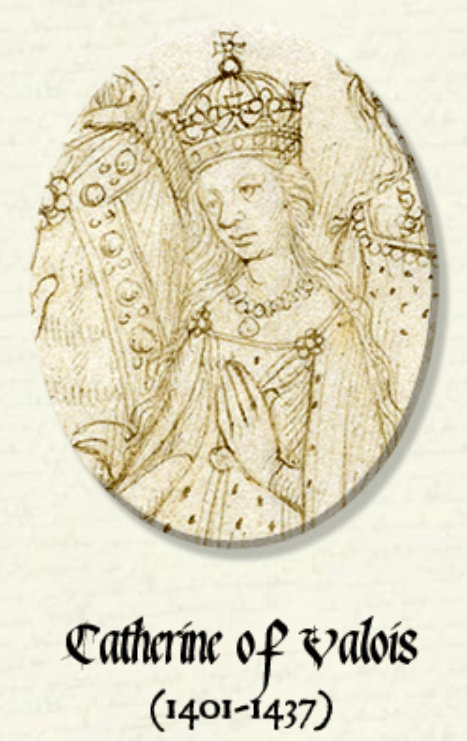
There was certainly something oddly secretive about the subsequent union between Catherine and Owen Tudor. It’s widely believed now that he was protecting her from the shame of giving birth outside marriage. Not that the baby—Edmund, who took Owen’s name, Tudor—was his. Oh no, the boy was far more likely to have been Beaufort’s.
But then, do we even know that there was a marriage between Catherine and Owen? It would have run foul the new legislation, and there is certainly no evidence of a formal ceremony. It’s suggested they simply lived together as man and wife, and this could well have been the case simply because there’s no proof of marriage. After all, a little later Edward IV and Elizabeth Woodville were never truly married, because Edward rather overlooked the fact that he was pledged to Lady Eleanor Talbot first! Oops. So dodgy marriages did exist in high places, and why should we think Catherine of Valois and Owen Tudor were strictly within the law? Proof is the word. And there is none.
If all—or any—of this is true, there wasn’t any Welsh blood in the veins of Henry VII. He was a Beaufort through his father and his mother, Margaret Beaufort (Luminarium Encyclopedia: Biography of Lady Margaret Beaufort, Countess of Richmond and Derby (1443-1509))! And the Beauforts were a belatedly legitimised illegitimate line anyway, but that’s another story.
Until the age of fourteen, when the Yorkist victory at Tewkesbury crushed the House of Lancaster, Henry had been brought up in Wales and would have absorbed a lot of that land’s culture. But in 1471, being an important Lancastrian, he had to flee to Brittany. When he eventually returned in 1485 and defeated Richard III, his victory was brought about by a plot led by the Stanley brothers. They were supposedly Richard’s supporters, but also just happened to be Henry’s stepfather and uncle. It was to be through their treacherous desertion to Henry’s side that he gained the throne. Boo! Hiss!
Whatever the truth/rumour that passes down to us from the past, and no matter that we’ve always known that Henry VII was into astrology etc., there’s something rather fascinating about the thought of him spending sleepless nights, having palpitations, pacing, suffering the trots, sweating and chewing his lips and fingernails. And all because of something that the clearly unreliable Parron swore to him was in the stars!
The Yorkist in me finds it a very agreeable thought! I hope the wretch suffered a lot!
Read more about Henry and Parron here https://elizregina.com/tag/astrologer/. And for Henry’s superstitious beliefs try these: Two Lancastrian King Henrys and their use of prophecies…. – murreyandblue and Did Henry VII believe in vampires….? – murreyandblue
PS: Now, Henry’s mother Margaret Beaufort was the daughter of John Beaufort, 1st Duke of Somerset. And who was John Beaufort’s younger brother and successor? Why, Edmund Beaufort, 2nd Duke of Somerset. So Margaret was Edmund Beaufort’s niece. Still with me? And who was Margaret’s first husband? Edmund Tudor, who was almost certainly the offspring of Edmund Beaufort, 2nd Duke of Somerset, and Catherine of Valois. So first cousins Edmund Tudor and Margaret Beaufort married and produced Henry VII. Nothing wrong with that in my view, except that Edmund Tudor’s history is rather muddy water.
We’re supposed to believe that Henry VII was from a Welsh line with ancient royal roots, when he darned well wasn’t! No wonder he turned to prophesies and astrology. Anything to legitimise his situation.


 The New Murrey and Blue blog
Leave a reply to mry4441 Cancel reply