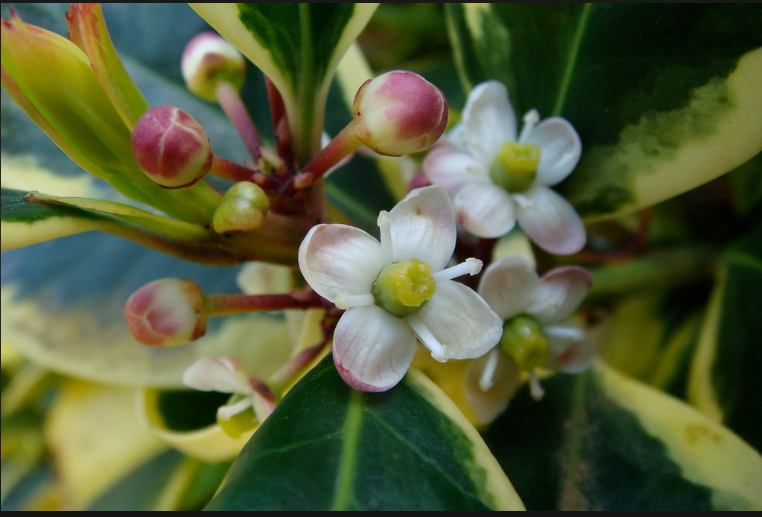
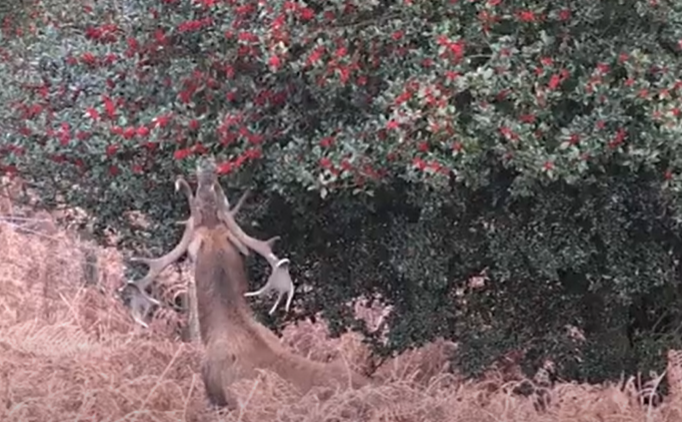
Today, 24 July, is my granddaughter’s birthday, and her name is Holly. Why was she given that particular name? Because her existence was first anticipated at Christmas. So my Holly is linked to both Christmas and Summer. She, like the holly in the above photograph, first actually bloomed at the height of summer. And her namesake tree has as many associations with the warmer months as with Christmas. This little article is dedicated to her.
My intention with the above title is to remind you of the carol The Holly and the Ivy….which can be traced back to the 15th century and is itself is a reminder of pre-Christian times when “A boy in a suit of holly leaves and a girl in ivy, paraded around the village. The idea was to bring Nature through the darkest part of the year to re-emerge for another year’s fertility….” Not Christian, I think you’ll agree. But the carol would have been known to our king, Richard III. Perhaps he and Anne heard it—maybe even sang it—at Christmas?

According to the mythology of the Celts, the Holly King reigned from the summer solstice to the winter, at which point the Oak King replaced the Holly King and reigned until the summer solstice came around again. The Holly King was thought of as a muscular giant covered in holly leaves and branches, and carrying a whole holly bush as a club. Perhaps the Green Knight of the Arthurian tale, which begins at Christmas, was actually the Holly King?
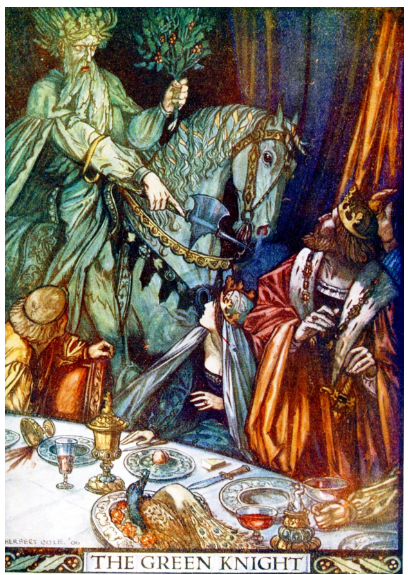
People believed holly had protective properties. Sometimes it was brought inside to protect the home from malevolent fairies….and also to allow friendly fairies to shelter there without any problems. Holly is also said to be antagonistic to witches, goblins and the devil, because as far as those beings are concerned its name is simply another form of the word “holy”, and for them its spiky leaves and blood-red berries are a disagreeable reminder of Christ’s crown of thorns.
Planting a holly tree close to the house was to protect against lightning. But they could also be planted in churchyards!
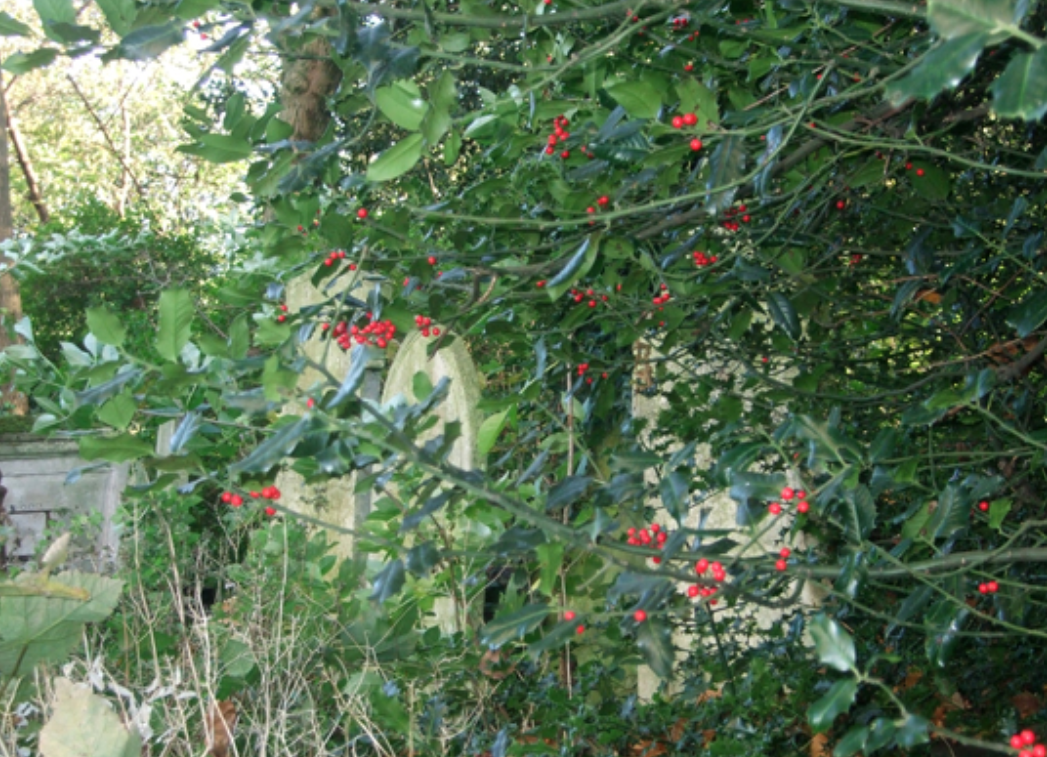
The mythology of various European countries linked holly with thunder gods like Thor and Taranis. Putting holly sprays up in the loft was another surefire way of fending off lightning. “We now know that the spines on the distinctively-shaped holly leaves can act as miniature lightning conductors, thereby protecting the tree and other nearby objects. Science occasionally catches up with an explanation for what may previously have been dismissed as superstition!”
Whole trees should never be cut down completely, which is why you’ll often see isolated holly trees rising above otherwise well-trimmed hedges.
Mind you, one reason for leaving them to grow was “to obstruct witches who people believed ran along the tops of hedges”. Um, yes…. But farmers also left them growing to provide a line of sight for ploughing. In 1861 the Duke of Argyll had the planned route of a new road changed in order to avoid the cutting down of an old holly tree. Whether his reason involved witches scampering along hedgerows or making sure his ploughmen kept perfectly straight lines is another matter.
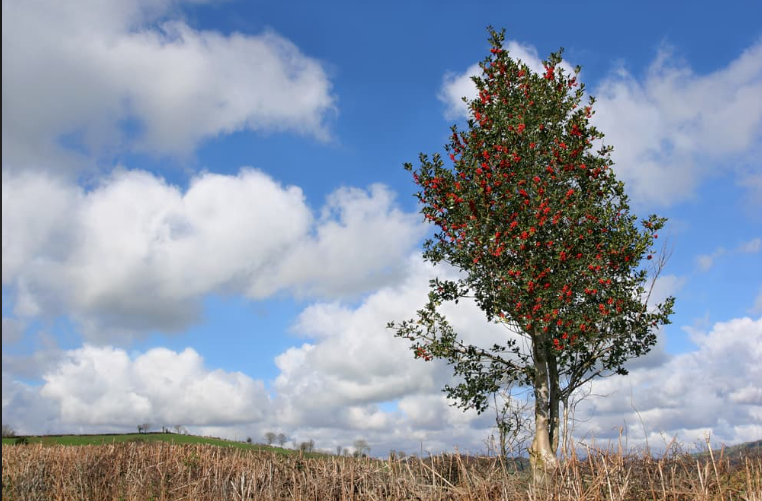
Mature holly trees can live for 300 years, and the tallest holly on record is/was, I understand, in Canon Wood in Preston Candover here in the UK, and is/was nearly 83 feet tall or 25.20 meters. I dither with the tenses because I’m not sure if this tree still exists. I can’t find any illustrations, ancient or modern. One thing’s certain, unlike oaks and yews, there isn’t a holly tree old enough for Richard and Anne to have seen, even as a tiny sapling.
Scientists have also found recently that holly trees change their spikes to fend off animals. Depending upon their surroundings “….they can produce some prickly leaves to fend off nibblers while others remain smooth….” Clever holly!
Young trees, low enough for animals to reach, have the spiky leaves, but older trees, apparently, will probably have smoother leaves, especially in the upper branches.
Holly is dioecious, a word I’d never heard before and which I at first read as delicious! Dioecious means that male and female flowers occur on separate trees. Flowers are white with four petals. They bloom any time between early spring and the very beginning of summer, depending on the climate. Now I know why the smooth-leaved variegated, very well established holly bush in my garden blooms exquisitely in the summer but never produces a single berry. It needs a male holly tree somewhere close by as a polleniser! Pretty much like humans. Please plant one, neighbours, because I really would like some berries.
Whereas cutting down whole trees was strictly off limits, taking sprays and branches was allowed. Holly leaves were a nutritious food as winter feed for animals, and sometimes the leaves were ground down to be rid of the spikes and make it easier for the livestock to eat. Coppicing was permitted, of course. The hard, pale, close-grained wood of holly was used for marquetry, chessmen, walking sticks and tool handles”. It was also used for the whips used in ploughing and coaching.
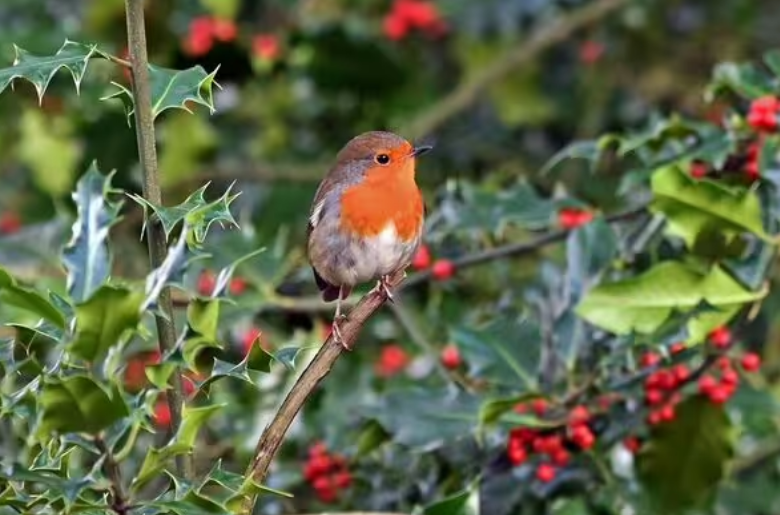
But there was another—more ancient—reason for leaving the holly completely untouched where it grew, which was that its berries provided nourishment for the sacred bird, the robin. The picture above would, yes, be associated with Christmas, but it could be taken at any time of the year when the berries were present. Robins and holly are not solely for Christmas.
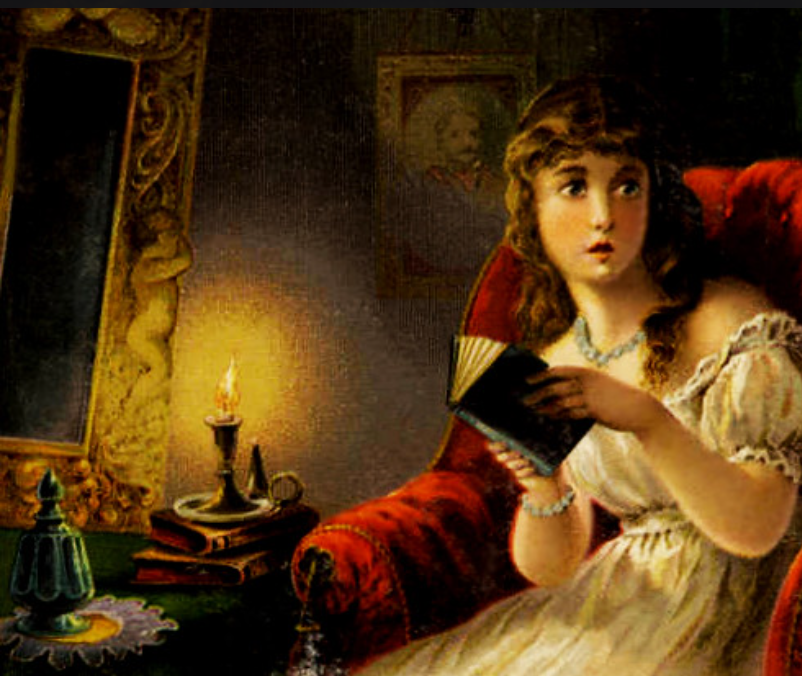
Four times a year, at Christmas, New Year’s Day, Midsummer and Hallowe’en, lovers believed holly to have the magical property of conjuring foretelling dreams. In northern counties, on retiring for the night, a young lady had to pin three holly leaves to her nightdress and then place three pails full of water in the room. Then she went to bed, feeling certain she’ll be awakened by the sound of three cries, “as if from the throats of three bears”, followed by hoarse laughter. Such an abominable racket would be enough to propel me from the room shrieking, but not our stalwart young lady, because she knew her future husband would then appear, rearrange the pails of water without even touching them, and then disappear again. One supposes that if there are no screams, demonic laughs and apparitions, she’s destined to remain unmarried!
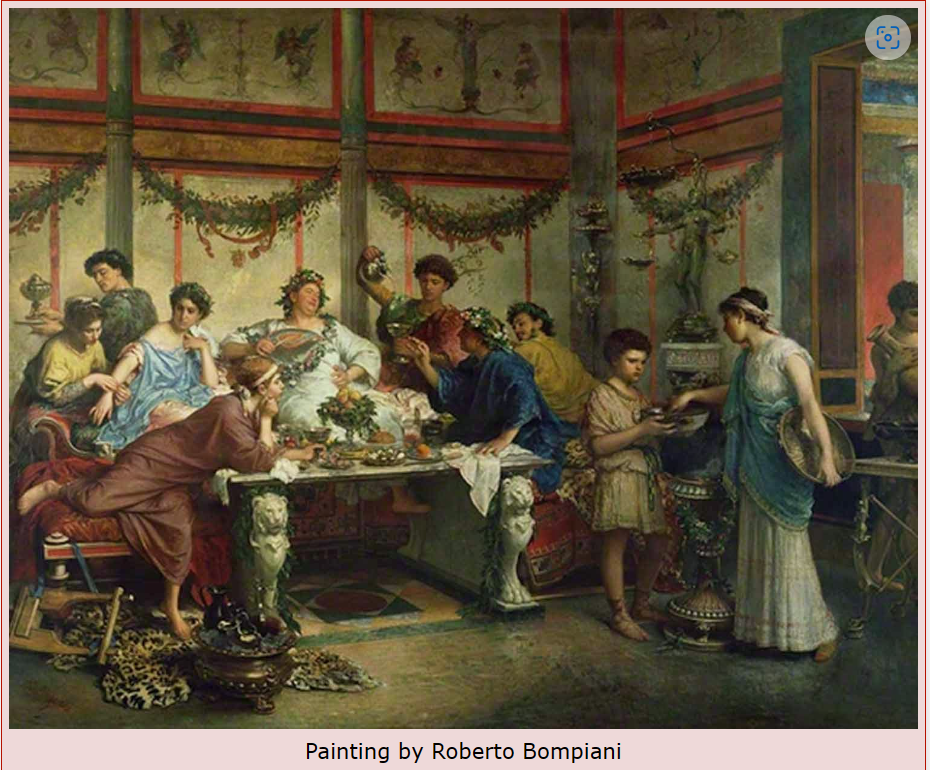
But if our young lady happened to be Roman and if she did get married, wreaths of holly would be sent to congratulate her and her groom. And speaking of Rome….there was much festivity in midwinter, called Saturnalia, with gift-giving that often included wreaths of holly or gifts with little sprigs of holly fixed to them. Our canny Church knew the advantages of keeping popular pagan celebrations but giving them another name and meaning. Hence, at that particular time of the year, we now have Christmas but no Saturnalia.
The holly tree also had medicinal purposes. Mind you, I don’t know whether either of the following ‘cures’ were effective. In Derbyshire chilblains could be cured by beating them with holly, while in Hampshire the whooping-cough could be driven away by drinking new milk out of a cup made from the wood of variegated holly. I suppose anything is worth a try, but I wouldn’t hold out much hope for either of these.
I have assembled everything above from various sources, including:
A Dictionary of British Folk Customs by Christina Hole, The Encyclopaedia of Superstition by Edwin and Mona Radford and The Folk-lore of Plants by Dyer, T. F. T (Thomas Firminger Thiselton).
But there is much, much more to learn about the beliefs concerning holly. To find out, try these links:
https://extension.psu.edu/holly-legends-customs-and-myths
Holly (Ilex aquifolium) – British Trees – Woodland Trust
Holly tree mythology and folklore | Trees for Life
https://magickalspot.com/holly/
https://www.indobase.com/holidays/christmas/superstitions/holly-ivy-superstitions.html
Plus many more.
And, of course, there is always something sneaky to confound everything. https://shuncy.com/article/false-holly-lore
In the meantime, Happy Birthday to my Holly!


 The New Murrey and Blue blog
Leave a comment