
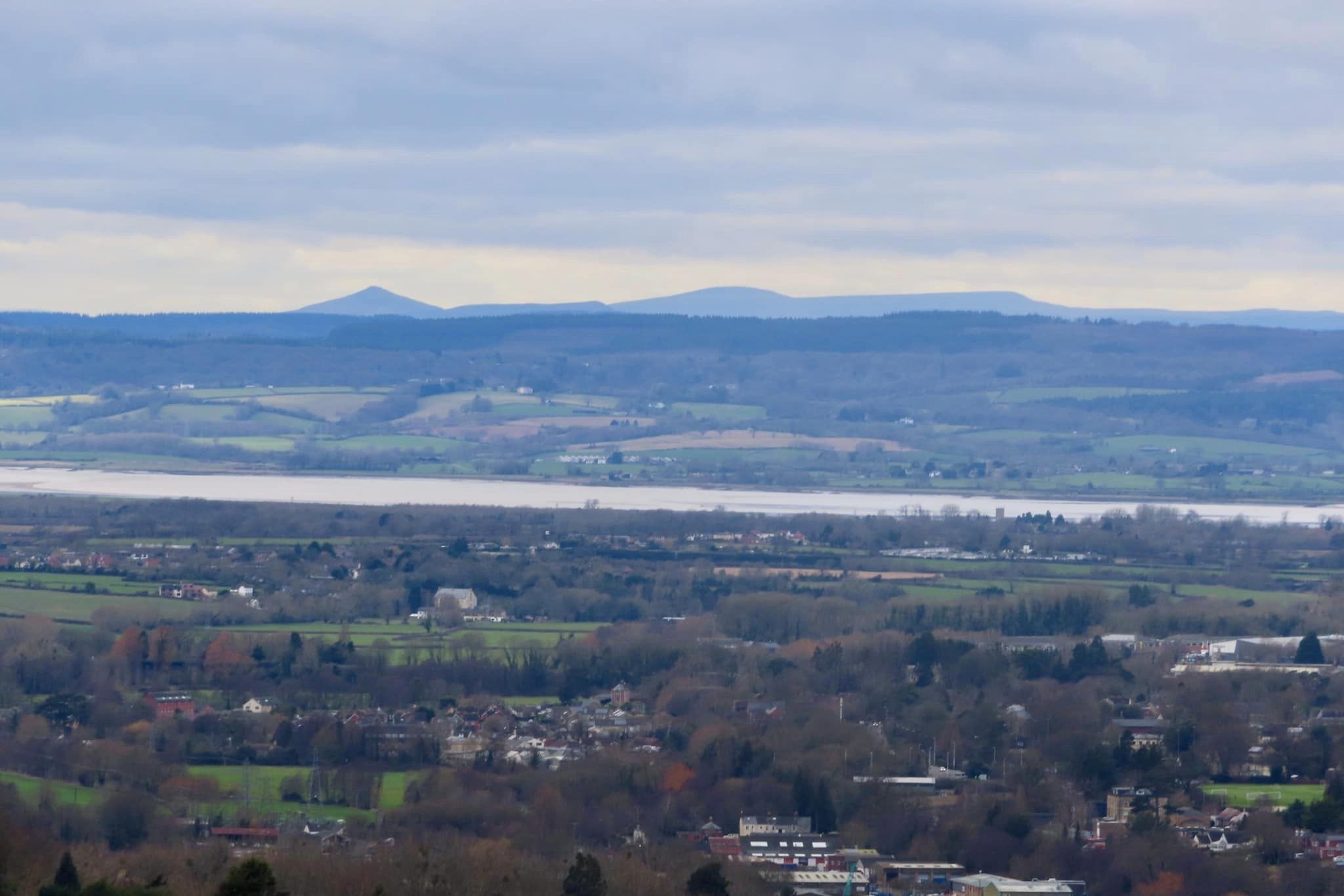
Before I go any further, let me say that the above image is more or less the first view I had back in the 1970s of the Romano-British temple of Nodens, at Lydney Park near the town of Lydney in Gloucestershire. The temple is on a hillfort site on a bluff where the River Severn nears its estuary. The 220-mile river is the longest in Britain, and flows south from somewhere near Llanidloes, through Shropshire and Worcestershire to its mouth in Gloucestershire. Let me add that my interest in the temple of Nodens wasn’t due to my being of the pagan persuasion, rather was I simply considering writing a novel set in the period. I was inspired by Mary Stewart’s amazing books on Merlin and Arthur (see here), but I knew I could never even approach her brilliance, let alone presume to match her. My book was never written.
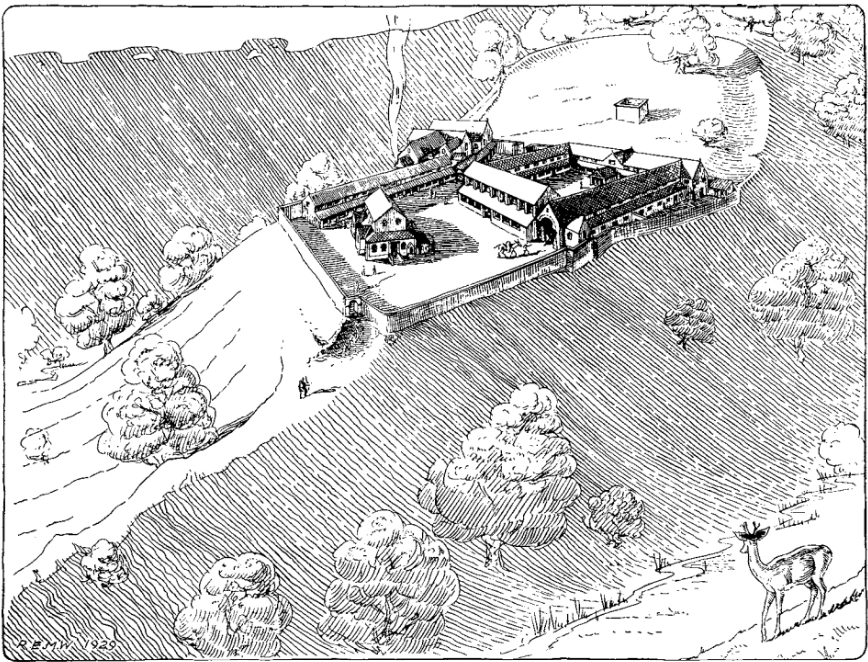
Regarding the temple. It’s been estimated that it was built in the late 3rd century or early 4th, and was dedicated to the Celtic god Nodens, who is linked with healing, the sea, dogs and hunting. And maybe a little fighting and cursing* as well, as a sideline. At that time the Romans had converted to Christianity, but the worship of older gods seems to have persisted in Britain the farther west one went. Especially if they ventured across the Severn into Wales, where the druids held sway over the populace.
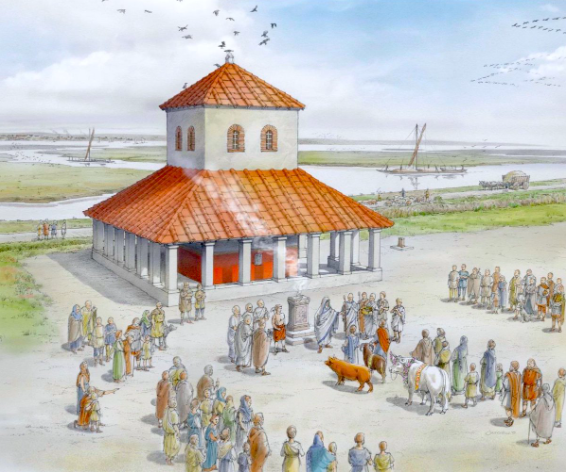
The sacred site at Lydney Park had been lost to us through the centuries. I don’t even know if anything of it was still visible in the medieval period, but it’s visible now because R.E.M. Wheeler discovered it during excavations in the 1920s. His is a name to conjure fond childhood memories of the 1950s BBC television series Animal, Vegetable or Mineral? I little thought then that I would write something now, in 2024, in which I would mention him!
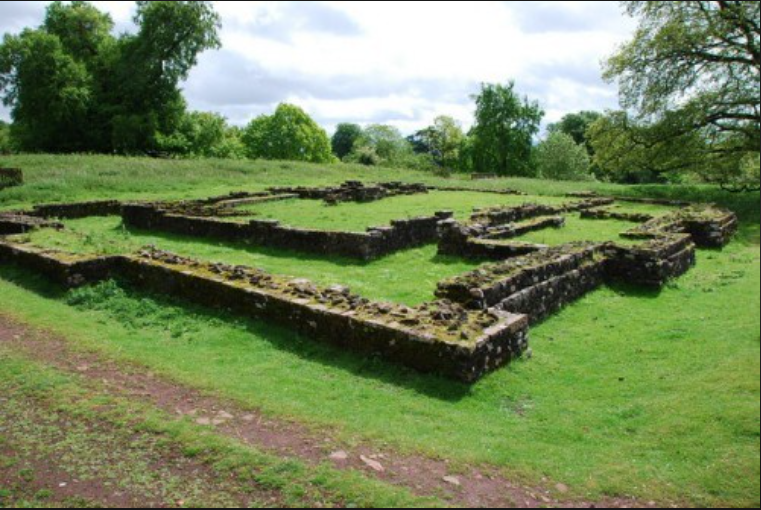
Another famous name associated with the site is J.R.R. Tolkien, who was called in to investigate by the owner of Lydney Park. Tolkien’s opinion was that “….the god Nodens developed from the Celtic god ‘Nodens the Catcher‘, who had a magical hand. Nodens evolved in Irish legend as Nuada (‘of the silver hand’) and in Welsh folklore as Lludd Llaw Ereint, the inspiration for Shakespeare’s King Lear….” So a great deal has emerged from this one site in Gloucestershire.
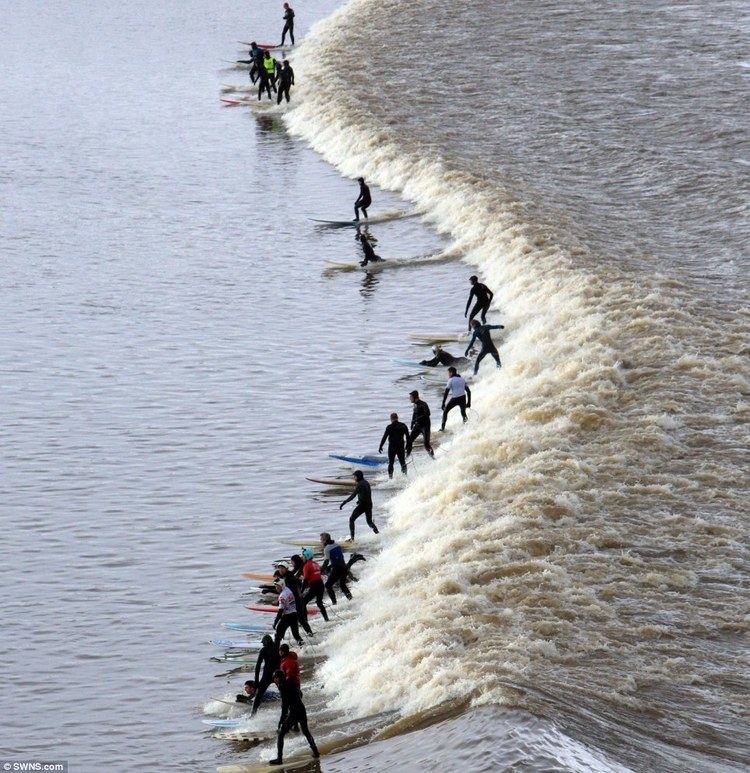
The Severn is an uncanny river, sometimes smooth and silent, sometimes roaring and frothing as the famous Severn bore rushes upstream. The bore churns the water, reversing the current and sometimes threatening to hurl itself beyond the ever-narrowing confines of its banks. Small wonder it has inspired myths and legends that go back into the mysteries of the distant past.
But if you are interested in the mystical, pagan aspect of the Severn, then go to this site https://www.whitedragon.org.uk/articles/sabrina.htm but be warned about a certain four-letter word and other ruderies! If you’re of a delicate disposition, perhaps give it a miss.
The Severn, also known as Sabrina, and its estuary is the nest of numerous eggs from which have hatched some of the most wonderful of our ancient stories, including a number of Nennius’s Wonders of Britain The Wonders of Britain. Otherworldly enchantments awaited there, with strange gods and goddesses, both good and bad, King Arthur, a disappearing lake, a magical salmon and so on. One wonders what the ordinary Roman soldiers expected when they ventured across those treacherous waters, most likely at Gloucester (which they called Glevum).
If the historic site is interest to you solely for facts, then a visit to this site and this one will be helpful
You can see a video of the site here.
All these wonderful things are part of my neck of the woods, and I love it. Gloucestershire is much, much more than the picturesque quaintness of the Cotswolds!
*….“He may also have been in the curse business as a lead curse tablet was found: ‘For the god Nodens. Silvianus has lost a ring and has donated one-half [its worth] to Nodens. Among those named Senicianus permit no good-health until it is returned to the temple of Nodens).’ Taken from the roman-britain.co.uk site listed in this article.


 The New Murrey and Blue blog
Leave a reply to refagan51 Cancel reply