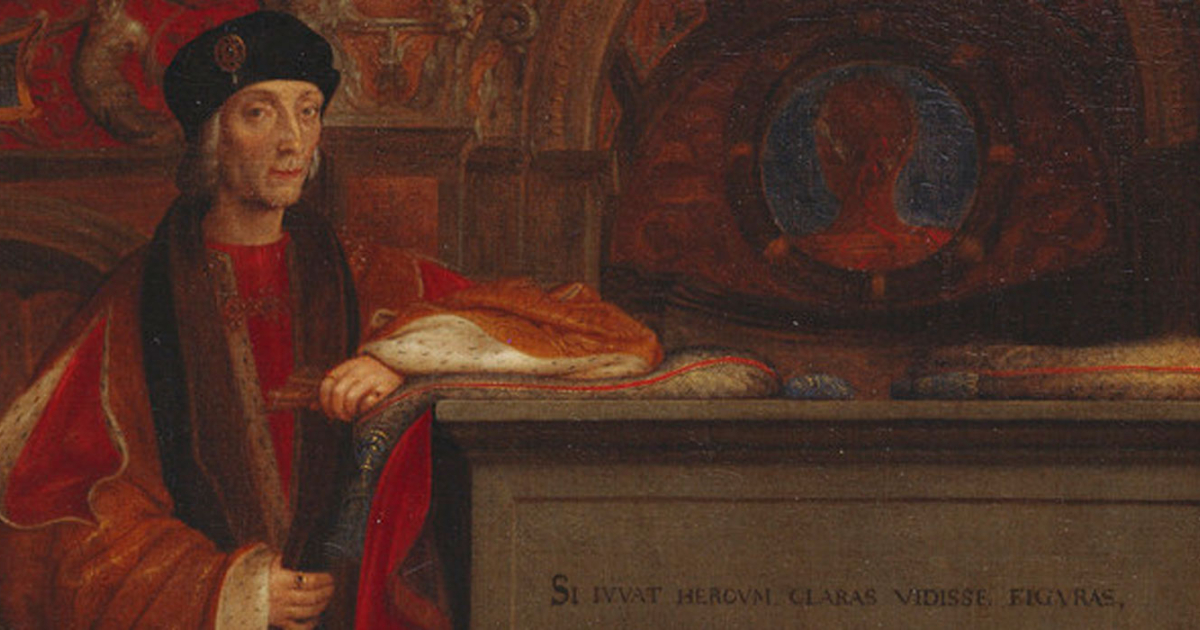
Everyone interested in the late medieval/early Tudor era will have heard of the two ‘pretenders’ to Henry VII‘s ill-gotten throne–Lambert Simnel and Perkin Warbeck.
However, there was a third pretender as well, and I admit I did not realise this myself till a few weeks ago when I stumbled across his story.
His name was Ralph Wulford or Wilford and he appears on the scene a little after Perkin Warbeck. His story is told in Fabyan’s Chronicle. Fabyan claims he was the son of a London Cordwainer but it is possible Ralph was actually one of the Wilford family of Kent (Sir James Wilford appears as a notable in the next century.) Indeed, Ralph first makes his appearance in Kent which makes this association more likely.
Ralph apparently claimed to be Edward of Warwick, although Warwick was known to be locked in the Tower. One source said he did not claim this at first but only that he was the true heir to Warwick’s lands, which is even more strange and intriguing. Later, though, he did in fact start claiming to be Warwick himself.
Apparently he was coached in his actions by an Austin Friar called Patrick and soon rumours about this new ‘Earl of Warwick’ spread about the Kent countryside. Henry was swift to act, and unlike Simnel and Warbeck, Wilford seemed to have no large following to back him up, so there were no battles to be fought. The unfortunate youth was hurriedly arrested and then executed on February 12, 1499, some months before the executions of both Warwick and Warbeck. Friar Patrick was imprisoned for life.
Ralph Wilford’s tale is indeed an odd one. It has certain similarities to Lambert Simnel’s story (ie made up or heavily embroidered Tudor tale) but this time, there really seems to be no reason why Wilford made his claim, especially with no real backing. It seems incredible that he and those who did follow him would risk their lives on what seems dangerous folly. Maybe his ill-fated attempt is good evidence that, once again, the Tudor era was not so wonderful as their own apologists would have it, and that many people in the late 15thc would have liked to have seen Henry VII replaced by someone, anyone, else.

 The New Murrey and Blue blog
Leave a reply to Q Cancel reply