St Lawrence’s church in Hampshire is, from the outside, a rather unassuming parish church with an unsightly stucco exterior. Inside, however, it has several very interesting historical features that make it well worth a visit.
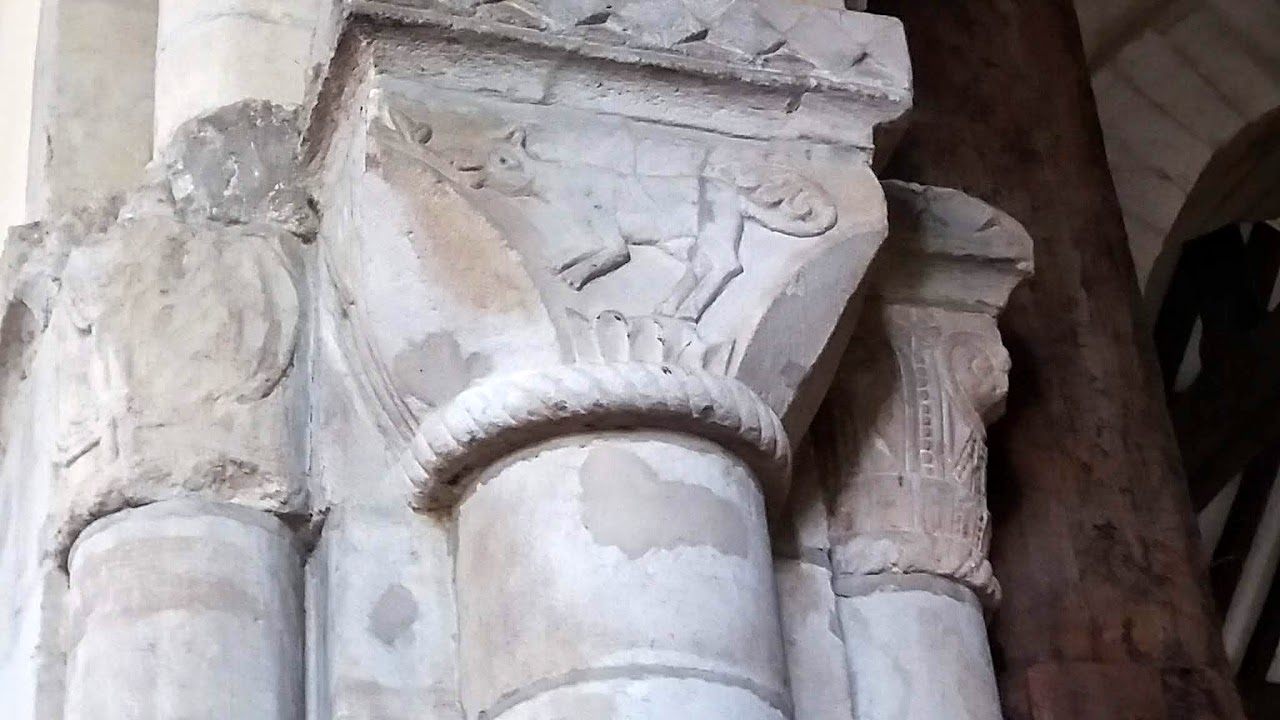
The church is Norman, with later additions from the 13th and 15th c. It contains an even earlier Saxon font, complete with crude axe marks, denoting an earlier structure on the site, and three types of medieval church architecture are still evident. Huge interior Norman arches, complete with lavish decorations, remain inside, but they are now in the middle of the southern nave rather than being in the central body of the church, giving the building a very different layout and appearance to most medieval churches. The pillars have carvings of a wolf, a demon, and a pelican, amongst others strange figures.
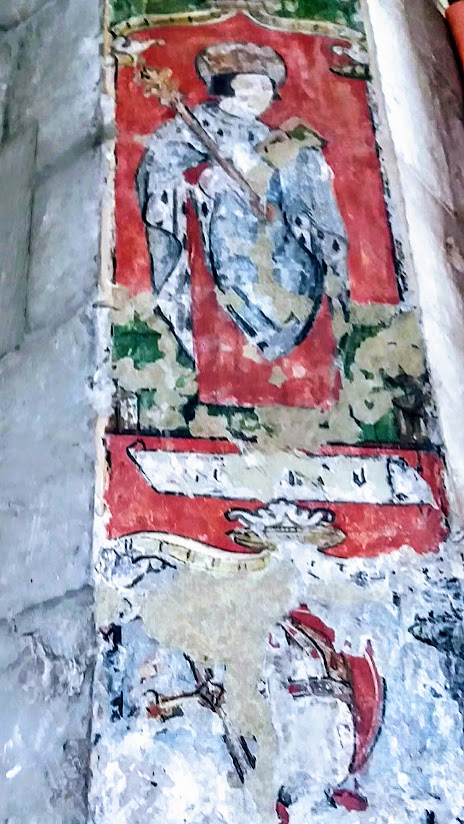
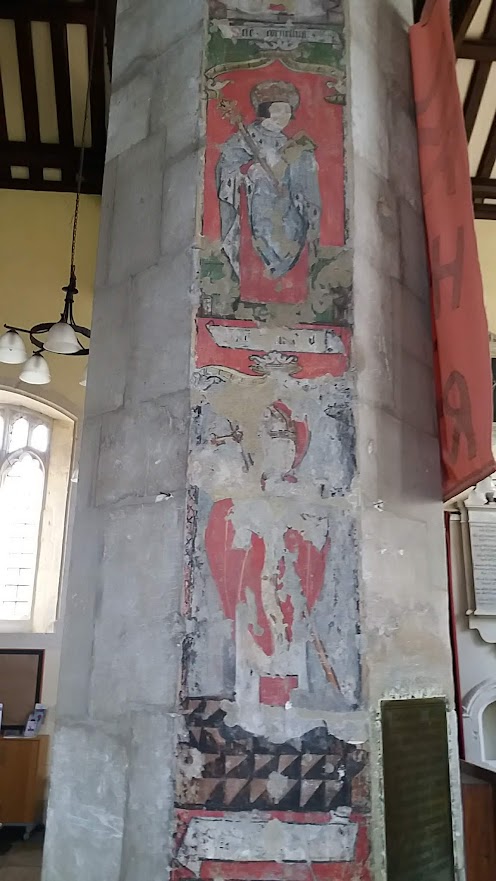
Perhaps, though, the most interesting feature is the 15th c wall paintings that are on one of the pillars in the nave. The colours have remained surprisingly bright, and one of the figures depicted is believed to be that of Henry VI, the last Lancastrian king.
Despite being a disastrous ruler, in the years following Henry’s death in the Tower, the King began to gain a cult following with claims of miracles happening when invoked. This following began at York Minster in the mid-1470’s in front of a statue of Henry in the Rood Screen. This veneration was stopped a few years later, as was any pilgrimage to Henry’s original burial site at Chertsey–because, according to documents of the day, these acts greatly displeased King Edward IV (for obvious reasons!)
Later, Richard III moved Henry VI’s remains from Chertsey to St George’s chapel at Windsor. This was NOT, as some traditionalists would have it, a move meant to stop Henry’s growing cult in its tracks. St George’s at Windsor was still visited by pilgrims eager to visit the old king’s resting place, as evidenced in records kept by the chapel.
Once the Tudors came to power, though, there was a huge push to see Henry VI canonized for propaganda reasons. Great for the fledgling Tudor dynasty if Henry VI’s half-uncle was an actual saint! One supposed ‘miracle’ that Henry VI was supposed to have brought about was a woman being raised from the dead in 1486! However, despite Henry VII’s constant lobbying, the pope never made ‘Holy Henry’ a saint.


 The New Murrey and Blue blog
Leave a reply to Thomas Tresham – Lancastrian and Speaker of the Commons. – murreyandblue Cancel reply