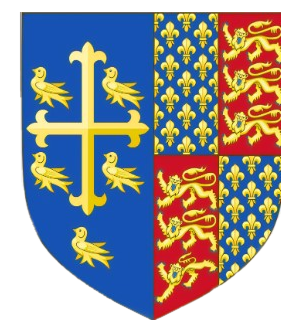
13 October was the Feast of the Translation of Edward the Confessor, who was Richard II’s most cherished saint and king. So great was Richard’s veneration that he even impaled the Confessor’s arms with the royal arms of England. See above. And on this day every year of he presented a gift at the saint’s famous jewel-encrusted shrine in Westminster Abbey. Often the gift was another jewel.
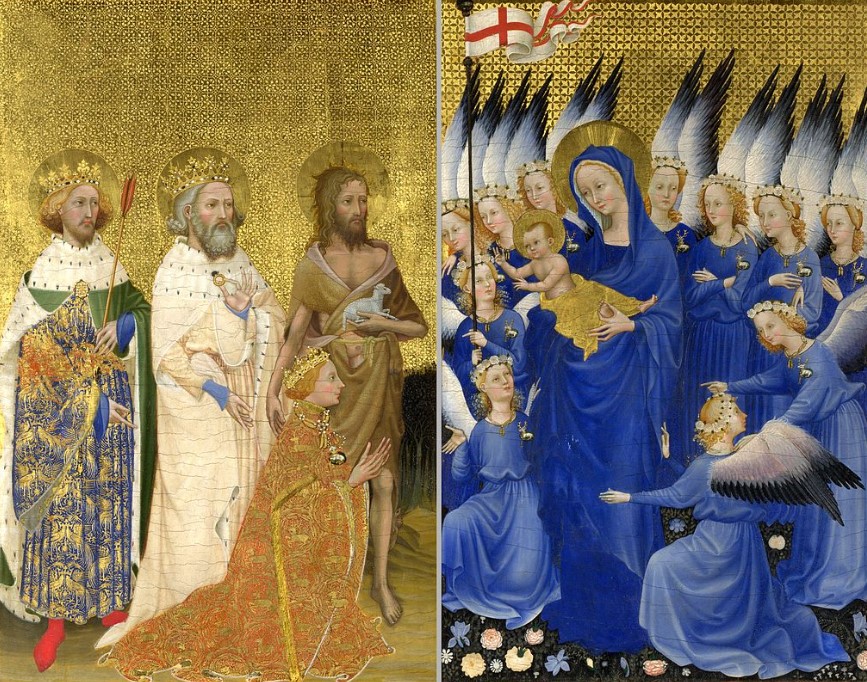
Clearly the Confessor was very important to him and is depicted on the wonderful Wilton Diptych as one of the three saints protecting the boy Richard. You can read an interpretation of the Wilton Diptych here.
But everything went wrong for Richard and he was wrongly accused of many things, including being tyrannical. He wasn’t, but he did take revenge for all the insults and virtual imprisonments that he’d suffered since ascending the throne as a small boy. The end of his reign came when his exiled cousin, Henry of Bolingbroke, by then Duke of Lancaster, returned at the head of an invading army. Richard was in Ireland and came back to England in some disarray. He was captured and forced to abdicate.
History has blamed Richard incorrectly for many crimes, but the abdication is one of which he was indeed guilty. Yes, guilty, because by stepping back from his crown he foisted the House of Lancaster upon us! Oh Richard, you should have inserted it IN Bolingbroke not simply handed it over!
Ah, now here’s the thing. All the illustrations of the time portray the scene as a simple handing over.

Shakespeare, of course, did ,the same, as shown below in this scene from the first episode of 2012 The Hollow Crown series, which episode concerned the reign of Richard II..

But the truth is rather different. Richard was MUCH too elegant and classy to just give the crown to his hateful cousin. According to Nigel Saul’s biography of him “…he did not resign it to Henry, instead he placed it on the ground and resigned it to God – from whom he had received it….” Definitely elegant, and definitely classy. Bolingbroke certainly hadn’t been either. Plus, Richard was pious and sure of his God-given right to the crown. He wouldn’t deign to simply put it in the hands of his despised cousin and enemy.
And in between this event and finally having Richard murdered at Pontefract, there came Bolingbroke’s coronation. It was the occasion when the House of Lancaster first imposed itself upon kingdom it stole. And what day did Bolingbroke choose for this sacrilege? Why 13 October, which had always meant so very much to Richard. To me this was an act of petty spite, a totally unnecessary unkindness to his vanquished foe.


 The New Murrey and Blue blog
Leave a reply to The de Courcy Matter Part I: According to English records…. – murreyandblue Cancel reply