Northwich, from https://www.ilivehere.co.uk/northwich-cheshire.html [a not very complimentary article about the town but I like the photograph]

When I read this Northwich Guardian link I was drawn by the fact that Richard III is mentioned. However, I was then a little confused by the following:

“….The history of Northwich started on September 17, 1483, when King Richard III granted the manor and village of Northwich to Lord Stanley and his brother Sir George Stanley….”

The Lord Stanley of 1483, who became the 1st Earl of Derby, was the traitor who helped bring about Richard’s murder at Bosworth. His brother was the equally treacherous Sir William Stanley. Derby’s son and heir was George, 9th Baron Strange, so I imagine the above article has mistakenly termed him Stanley’s brother.

George, Baron Strange wasn’t to live long enough to become the 2nd Earl of Derby, dying in 1503, the year before his father. So the earldom went to Strange’s eldest son, another Thomas Stanley.  Strange did have a son George, who was therefore the brother of a Thomas Stanley, but this George appears to have died young. If not, I haven’t found anything about him.

Anyway, all that is by the by, because the above isn’t the fault of Northwich itself, about which the Northwich Guardian article is centred. Obviously the Northwich of today is unrecognisable from its 15th-century self, and you can see a tourist map of the present town here.
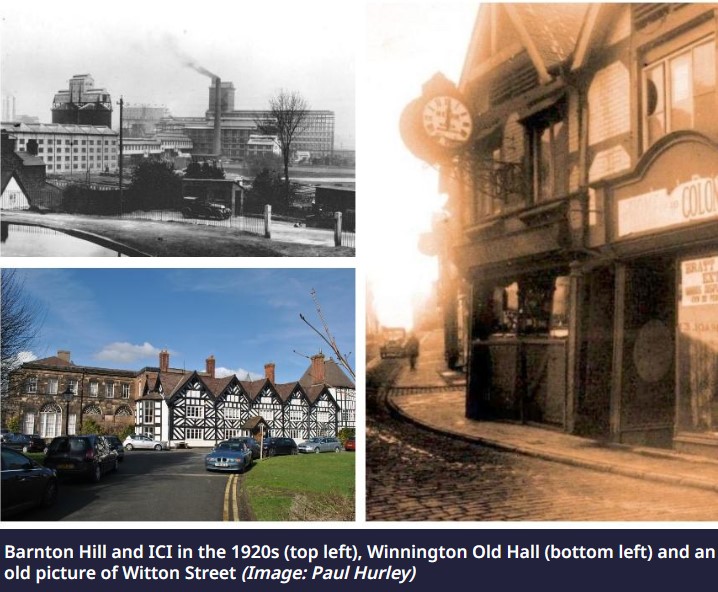
from the Northwich Guardian link above

As for the statement that Northwich’s history began on 17 September, 1483, If you go here (and elsewhere) you’ll find that it goes back to Roman times (and most probably long before) when salt was discovered there. Read about the modern town here and at this link.
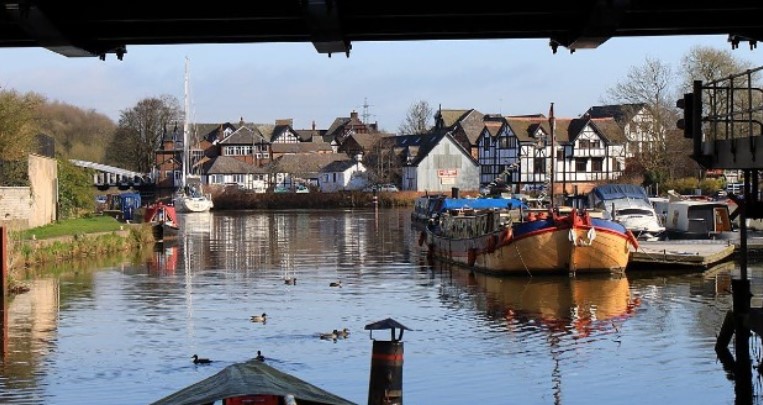
Northwich – from 4.bp.blogspot.com

A medieval festival has been held in Verdin Park every summer since 2011, but I have been unable to ascertain if there is one this year..
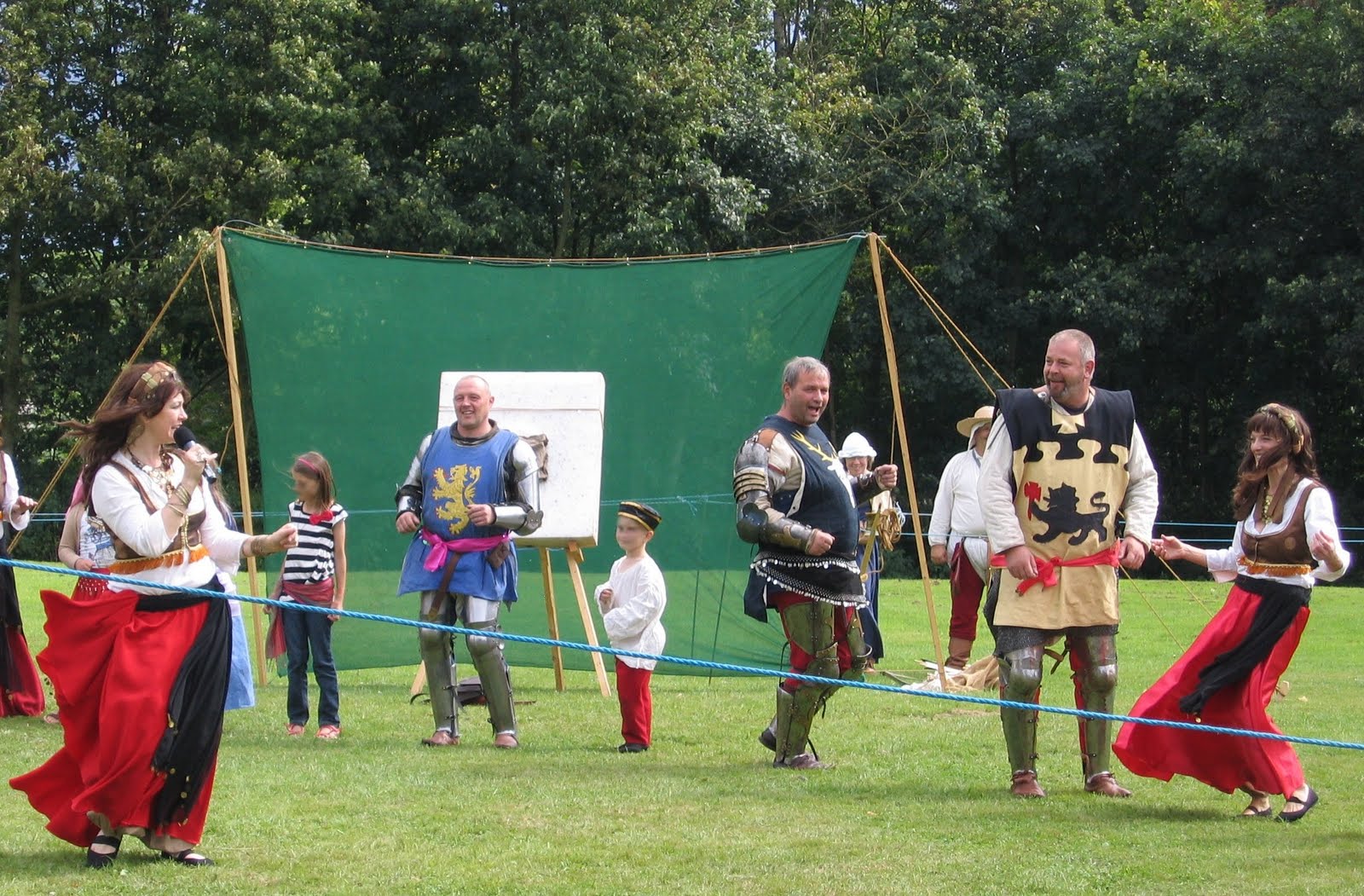
from http://yaraqs.blogspot.com/2011/09/northwich-medieval-festival-posted-by.html


Subscribe to my newsletter

  1. Viscountessw, you might be surprised how well Thomas Stanley (and William) did under Richard, he did not skint on grants to them, nor to John Savage (nephew of Thomas and WIlliam, and embedded traitor during Richard’s reign) or to John Lord Dynham, Sir Tho. Everyingham, Air Ralph Hastings, Sir Richard Tunstalle (also made KG by the new king, and Tunstalle was the most elegant of trimmers if there ever was one), throw in John Risley (arch weasel, who will repay Richard in 1495 with complete slander in his ‘deposition’ for his master, John de Vere, 13th earl of Oxford, so eager to reclaim his mother’s properties, the ones Edward IV handedover to young Gloucester essentially to keep out of the hands of the three de Vere brothers all pirating in the Channel – what de Vere wanted were the ones Richard bequeathed to Cambridge to pay for chantries, including prayers for Oxford’s mother and father!) Also, throw in Richard Hastings, Lord Welles (yes both brothers of William), and not to forget Sir James Blount (the other weasel, younger brother of Lord Mountjoye, who sprung de Vere at Hammes; he would later track down his brother-in-law at Bosworth, intent on killing him, so as to increase his wife’s cut of the estates, only to – yes – kill the wrong in-law)… there are more, but suffice it to say all this is being gathered to refute Horrox’s ludicrous claim (among others) that Richard set up ‘plantations’ of Northerners to suffocated the south, poor blighted south, with his knuckle dragging barbarian hordes! There were no plantations. Not even lily pads.
    Sorry, ranting got off message, but both Stanleys did very well – William will end up with Holt, and mind you, he still had that in his grubby hands, piled high with immense wealth, which shocked H& who had Holt stripped to the rafters when he had him executed! (just HOW William kept Holt I would like to know as H7 rescinded every blessed grant, office and title Richard made during his reign, including even the charter to the Heralds!)

    Liked by 1 person

    1. Richard was too trusting….and only too often he was a lousy judge of character. I’d like to go back to 1483 and give him a good shaking!

      Liked by 1 person

      1. In defense of Richard he followed the Yorkist tendency (Margaret, George and probably their father the duke as well, all had it) and most notably Edward. The Guildfords, Auchers, Latimer, Lutterell, Arundells, Courtenays, Gaynesfords, Lewkenors, Hungerfords, the Brownes, William Parr, (not to mention the Stanleys et al) were all happy to throw in with the Lancastrians and then Warwick and then the new wave of Lancastrians (I would call them latent but since so many were from Kent rebellion and insurrection was never more than likely in any given reign) and Edward literally ignored their treasons or brought them into his household, perhaps preferring to keep prior enemies close at hand. Several would be sorely mistaken if they thought Edward would reverse old attainders he had cast on their families, fathers etc (Lutterells, Hungerford, etc) and it was Richard who would in fact be stuck with their grievances although he was not the one who placed the attainder.
        Sometimes reconciliation worked for Edward, as in the case of William Parr, who was directly involved in the death and execution (and demise) of the Herbert affinity in South Wales (battle of Banbury, July 1469), Edward never recovered his authority in the region but Parr took the pardon sometime in spring 1470 when Edward needed friends and in his case was loyal thereafter.
        A similar case can be made for the rupture in the Neville-Stafford family when the Neville-Beaufort children were given precedence and between legal wrangling and animosity between the two branches the feud went on for years – Richard, and of course we don’t have the details, in the mid to late 70’s reunited the two branches through the Westmorland heir (Ralph) – I believe he was in the process of rehabilitating young William Herbert’s career once he was king, possibly even before.
        The most striking reason for the often, too often, appalling gentry and baronial conduct in the 15thc goes beyond the civil conflict all of the Yorkists were embroiled in, it was to my mind a long lost adherence to chivalry – the Stanley’s could pay lip service, like H7, to being chivalrous, but they were not, that conduct was beaten to death by a century and more of the French wars – families like the Hungerfords, for one, were ravaged by ransoms, decades after the fact, the endless feuds between the gentry families and barons, far beyond the Neville-Percy spat, speaks to societal cratering LONG before Richard was even born!
        One’s trust only went as far as family connections, and family/ marriage connections meant property connections – the Stanley’s were no more trustworthy to H7 than they were to E4 or R3 or H6 for that matter, on any given day they behaved as if once they turned their back a 100 knives would be in there. Barry Coward has the only family biography on the Stanleys, if you can stomach to read it – they conducted themselves LONG before Bosworth as kings in their own right. Had Richard emerged from Bosworth alive I do wonder what he would have done with that wretched family!

        Like

  2. i lived in northwich for most of my life – it has indeed changed from a ‘black and white’ market town (and thats why i no longer live there). there is certainly a lot of history – vale royal abbey (founded by edward 1 i think) and there was action during the civil war – cannon ball marks on winnington bridge and witton church. i’m sure i read somewhere that there is also a connection to john holland – i know you have researched him viscountess – have you heard of this? also – the rebel army passed by the town en route to the battle of shrewsbury – and from what i have read recently it seems that one of the ‘cheshire knights’ executed after the battle (sir richard vernon) held lands at shipbrook which is part of the village of davenham on the outskirts of northwich. strange to think that as i sat in history lessons at what was then the local grammar school we could see his lands from our classroom window – but we were taught nothing about this period of history – it was all about the tudors!

    Liked by 2 people

  3. I couldn’t tell you off hand if my John Holand had a connection with Northwich, but I think his son, another John Holand, Earl of Huntington and Duke of Exeter did.
    Oh, the history that is ignored….or, worse, forgotten entirely! I live in a Gloucestershire village that’s halfway between Gloucester and Cheltenham, and it has its own hill. There are actually two outlier hills of the Cotswolds down in the vale of the Severn. And local tradition here has it that in 1471, in the lead-up to the Battle of Tewkesbury, Edward IV sent his scouts up to the summit of the nearest hill (which I can see from my home) to spy on the Lancastrian army as it was refused entry to Gloucester (and thus access to the bridge over the Severn). The Lancastrias had to move on upriver to Tewkesbury, where the next bridge was located. That’s why the battle took place there when Edward’s Yorkists caught up with them. I often look up at the hill, with its isolated church, and imagine those scouts all those centuries ago.
    It’s all so fascinating….and yet all today’s students get are (in your case the Tudors) or my daughter’s and graddaughter’s cases WW1. It’s as if there was just a huge void before then. Oh, grizzle, grumble, mutter and moan….. 😠

    Liked by 1 person

    1. Silly me. Yes, my John Holand did have a connection with Northwich. “…the wardship of Rhys ap Gruffudd’s estates, mainly in Staffordshire, Northwich in Cheshire, and Hope and Hopedale lordship in Flintshire, was extended by his [John Holand’s] first administrative appointment as justice of Cheshire for life on 6 May 1381….” I’m afraid he had rather sticky fingers and didn’t always stick to the right side of things.

      Like

  4. thanks viscountess – i just love these connections!

    Like

Leave a reply to viscountessw Cancel reply