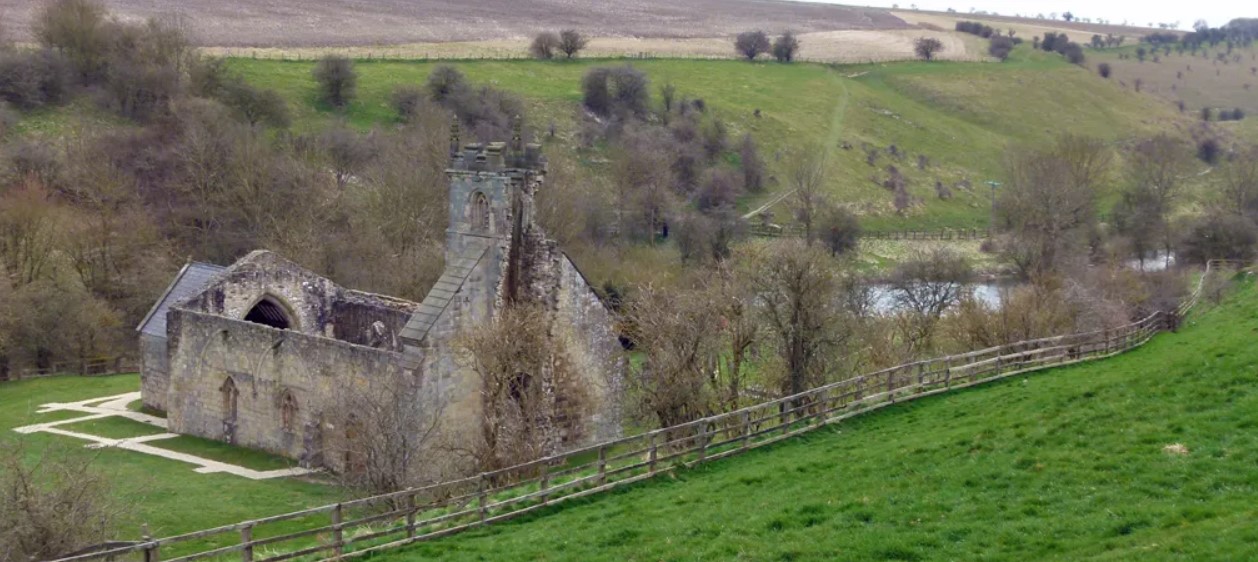
Our landscape is strewn with abandoned medieval villages, which are usually marked on Ordnance Survey maps. Their fate is often linked to the decimation caused by the Black Death, but there is one that’s slightly different in that it certainly doesn’t only apply to deaths caused by the plague.
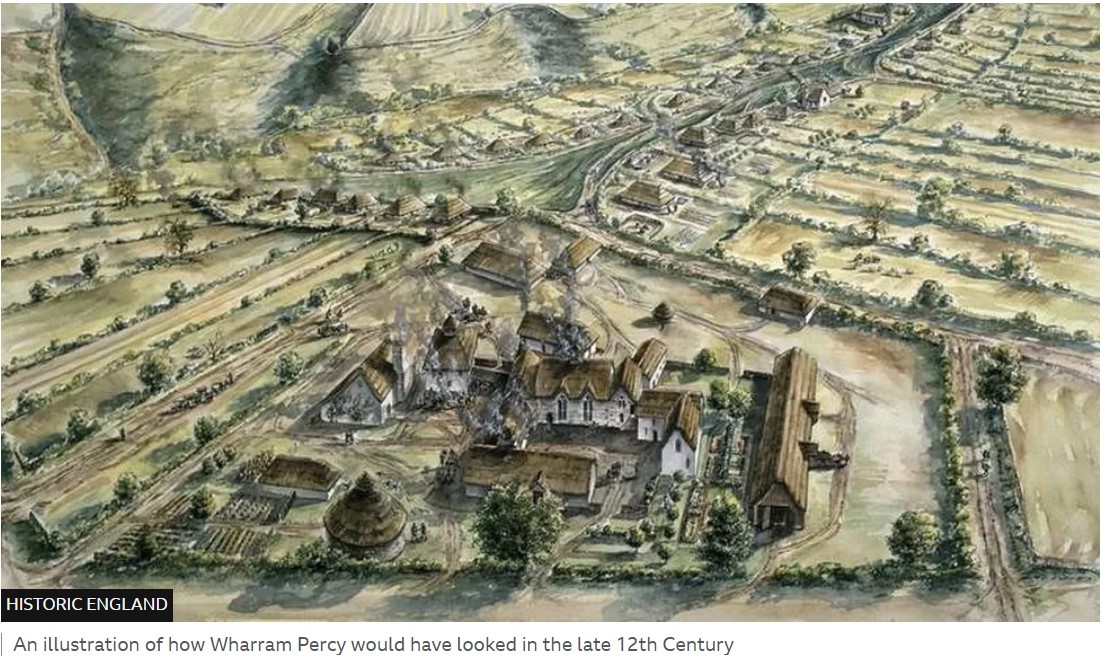
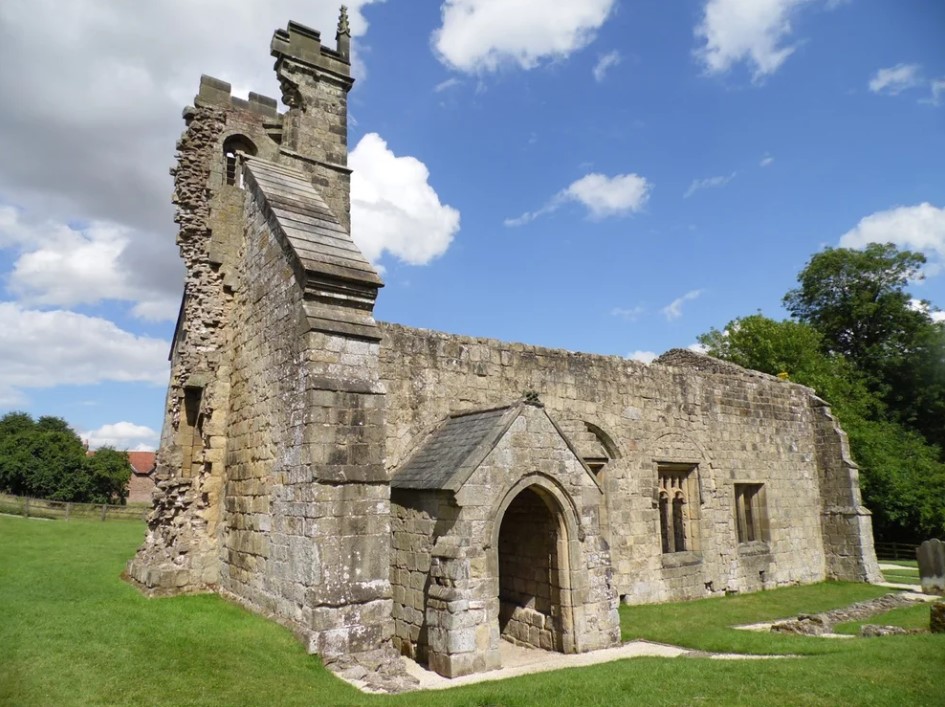
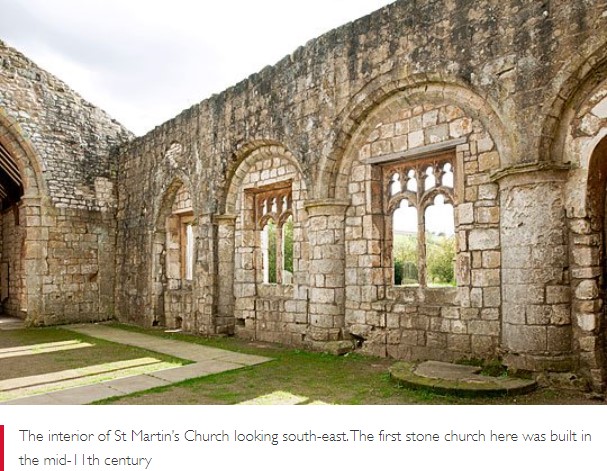
Wharram Percy was struck by the plague as well and the inevitable desertion followed. Its derelict church, St Martin’s, still stands proud, an atmospheric ruin in a cleft in the North Yorkshire landscape, not far from Malton. With it there were once two manor houses and about forty small dwellings, so it was quite a substantial village by medieval standards.
Like all medieval villages, lost or not, there were burials, and Wharram Percy is no exception. What does make it an exception is the state of those burials, which date from the 11th to the 14th centuries. So not just due to the Black Death but covering hundreds of years of villagers. Excavations have revealed that the skeletons were beheaded and otherwise dismembered, and some were also burned.
The knife marks on the bones led to the initial thought that starving villagers had resorted to cannibalism. But the nature of the marks proved otherwise. This was no cutting up for the purpose of eating the flesh. This was something else entirely.
So what on earth could have caused the living to so mutilate and indeed desecrate their dead? Our medieval forebears were nothing if not devout, and they respected their dead…well, unless the dead had been enemies in life, of course, in which case anything went. But these dead were their own, not enemies or even outsiders, and respect would have been paramount. Yet there was no respect at all for the dead of Wharram Percy. Why?
According to this article “…. it was the first evidence of ancient practices to stop ‘corpses rising from their graves, spreading disease and assaulting the living’….” In other words, the dead were believed to be what we now know as zombies, the undead or revenants. What a horrible thought. It belongs in horror movies.

But even in the 21st century many people are convinced such things exist, so the superstitious mind of a medieval person would almost certainly believe it. Had something happened in Wharram Percy to raise such fears? Was something going on that they thought could only be caused by the undead? Were they perhaps being whipped up into hysteria by a convincing rabble-rouser? Or had that happened originally and the consequent dread carried on through the years? Maybe they actually saw what they believed to be revenants leaving their graves under cover of darkness to do harm to the living?

What do you think? Might the villagers of Wharram Percy been justified in their dread?


 The New Murrey and Blue blog
Leave a reply to viscountessw Cancel reply