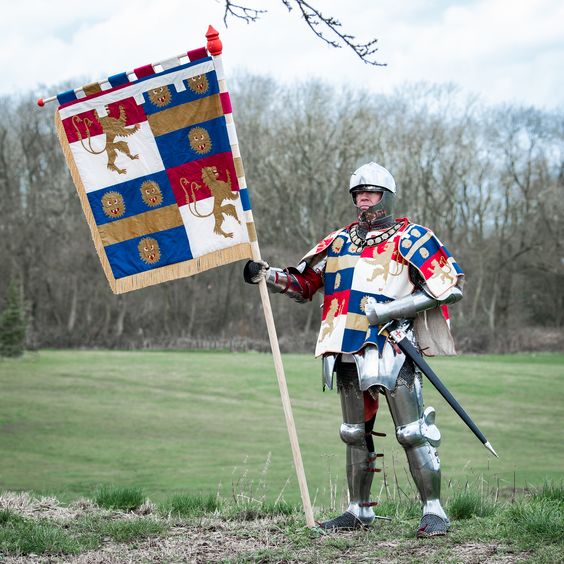
John de la Pole, Earl of Lincoln – image found on Pinterest

My devotion to watching TV documentaries often turns up odd bits and pieces. This time the culprit is “Curse of the Vampire” from Mythical Beasts, series 1, episode 3, shown on Sky History 2.

As you might expect, the theme was the strong medieval belief that the dead could return to torment the living as revenants. Such a belief wasn’t confined to east European lands, because I know it has turned up in the British Isles too. I understand that graves containing skeletons with stone in their mouths are to do with revenants.

Anyway, the well-known  stake-through-the-heart thing was fact, and wasn’t meant to “kill” the vampire, just keep it confined to its grave. This is where my mind started to ponder something that is said to have happened after the Battle of Stoke Field in 1487. Henry VII wanted the Yorkist leader John de la Pole, Earl of Lincoln, taken alive, in order to “question” him. I can imagine what that would have entailed! But to Henry’s great displeasure Lincoln and his captains were killed in the battle.

It’s said that unlike the body of Richard III after Bosworth, John’s body wasn’t put on public display, instead it (and those of other Yorkist captains) were hurriedly buried beneath a willow tree. Not only that, the bodies were pierced with willow osiers, from which legend has it that great new willows grew. If this is true (and I know many believe it’s a fabrication) why were the remains impaled with osiers? As a gesture of contempt? Indeed, why was Lincoln especially shown so little regard. He was a royal earl and the future Duke of Suffolk, yet was apparently shoved in a shallow unmarked grave, all trace of which has now disappeared.

Was Henry VII a superstitious man? Maybe he feared Lincoln would return from the dead and raise another Yorkist army against him? Perhaps the osiers were the wooden stakes with which we are more familiar. Which leads me to wonder if Henry was making sure this was one Yorkist leader who’d be confined to the grave forever?
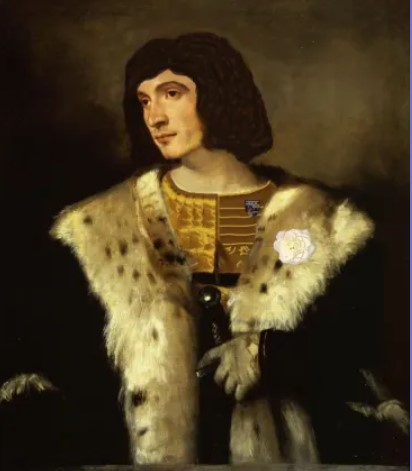
My version of John de la Pole, 1st Earl of Lincoln. Adapted from Titian.

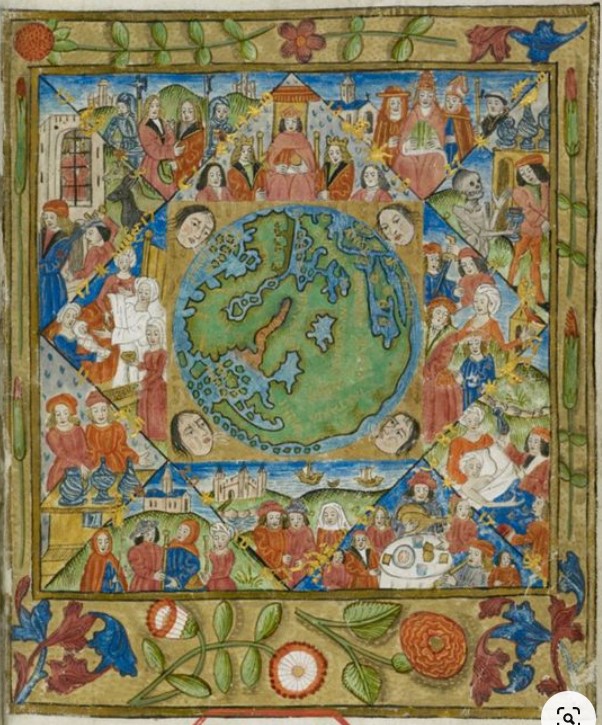
Many medieval aristocrats employed astrologers and Henry was no exception. Plus, of course, he was paranoid by nature. He consulted one William Parron, who produced “a private printed prediction” for him. I wonder if Henry feared it might include dire warnings of Yorkist revenants? Parron came unstuck when he predicted that Henry’s queen Elizabeth of York would live to be 80, but she died most inconveniently at 37! You can read about Henry and William Carron here

Miniature of the horoscope diagram for the day in which the world was created, including a world map within an astrological chart and personifications of winds, surrounded by 12 triangles with symbolic scenes representing aspects of life associated with the twelve astrological houses, from William Parron’s Liber de Optimo fato Henrici Eboraci ducis et optimorum ipsius parentum, England (London), c. 1502-1503

Subscribe to my newsletter

  1. […] Sir Rhys ap Thomas. It is thought that Sir Rhys and Derwydd Mansion provided accommodation for Henry Tudor, as well as 5,000 Welsh soldiers added to Henry’s growing army, as he travelled to Bosworth […]

    Like

  2. […] herself, but was not a ‘Plantagenet Queen’ —Elizabeth of York, the wife of Henry Tudor. Weirdly, Joan of Kent , mother of Richard II was included, even though she was never a queen, and […]

    Like

  3. […] married Sir Richard Guildford, KG, and secondly, Anthony Poyntz. She was at one time in charge of Henry VII‘s daughters, acting as their governess. She was the mother of Sir Henry Guildford, KG. She […]

    Like

  4. […] We Ricardians know this wonderful novel inside out and back to front, of course, but in his school days Hitchens was new to it. Like most other people at the time (and now, sadly) he believed Richard III was an evil old child-murdering, hunch-backed monster, and like the main character in Tey’s book, one Alan Grant, a police detective laid up in hospital, he has his mind changed and his finger directed at the likely real culprit, one Henry Tudor. […]

    Like

  5. […] I think the above extract should have been applied to her odious son, Henry the Weasel! After all, he certainly was ruthless (and his horrific son was even worse!). The boys in the Tower […]

    Like

  6. […] enthusiasm. Come to that, I can’t wax lyrical about any of the Henrys, least of all numbers VII and VIII of course. The last pair set my teeth […]

    Like

  7. […] Henry VII, the second Lancastrian usurper, didn’t hang around long for his coronation either. Richard III was murdered at Bosworth on 22 August 1485, and Henry was crowned and anointed, his scrawny….er, bony backside plonked on that throne at the end of October. Well, unless you count the unseemly grabbing of Richard’s fallen crown to shove on the Lancastrian murd—um, usurper’s head while still on the battlefield! That, ladies and gentlemen, was rushing to get the job done! […]

    Like

  8. […] For Ricardians the name de la Pole conjures thoughts of John de la Pole, Earl of Lincoln. And maybe too of his father, John de la Pole, 2nd Duke of Suffolk, whose effigy lies at Wingfield Church in Suffolk with his duchess Elizabeth of York. She was a daughter of Richard Plantagenet, 3rd Duke of York and therefore a sister of both Edward IV and Richard III. The elder John de la Pole had escaped an earlier match to Margaret Beaufort, mother of Henry VII. […]

    Like

  9. […] general belief is that the dreaded sweating sickness arrived in England along with Henry Tudor and his French army. Maybe it did. Certainly it became rife after Bosworth and he entered London. […]

    Like

  10. […] Wars of the Roses, at one time ending up in a bit of a pickle after managing to irk a  suspicious Henry VII and for which he spent some time in Tower of London but with remarkably good luck managing to die […]

    Like

  11. […] she did. No records exist. They lived together, certainly, and became the apparent grandparents of Henry VII. Of whom the least said the […]

    Like

  12. […] manner of levels, so a book about what went on before them (yes, there was indeed an England pre-Henry VII) is definitely welcome. It was published on 4 April 2024 and contains biographies of six […]

    Like

  13. […] Read more about Henry and Parron here https://elizregina.com/tag/astrologer/. And for Henry’s superstitious beliefs try these: Two Lancastrian King Henrys and their use of prophecies…. – murreyandblue and Did Henry VII believe in vampires….? – murreyandblue […]

    Like

Leave a reply to The adventures of the coronation chrism oil…. – murreyandblue Cancel reply