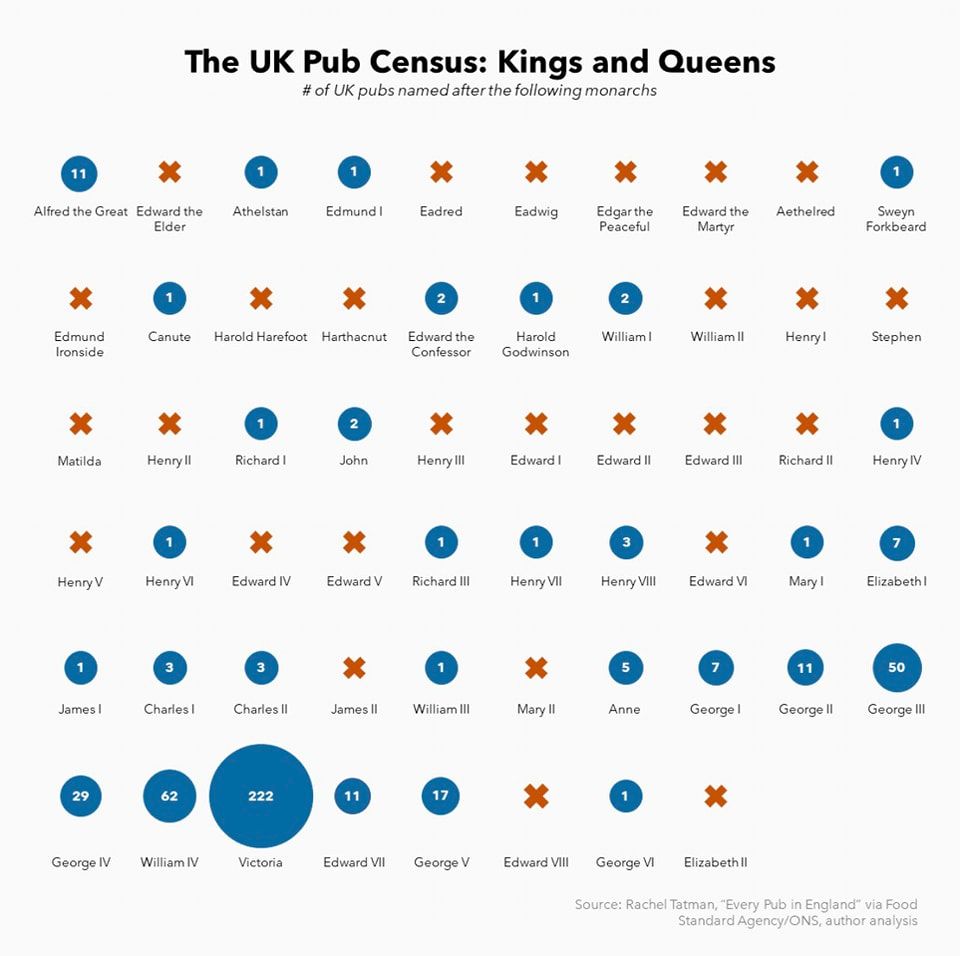
Well, obviously a lot of our pubs bear the names of kings and queens, with Queen Victoria heading the list above. I’m surprised to find Kings George III, George IV and William IV galloping up behind her, while all the rest are far more thinly spread. Why are these four monarchs, who all reigned in succession, honoured with so many pubs? And what would Victoria have had to say about leading the pack? Maybe she wouldn’t be amused.
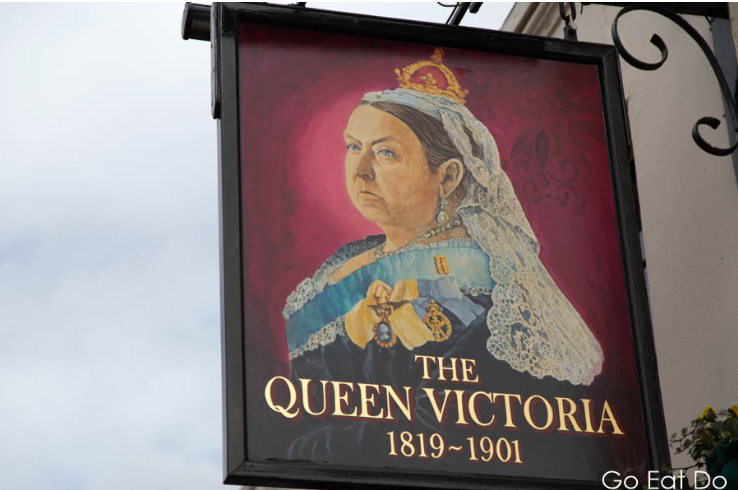
The Queen Victoria, Windsor

To go back to the period in which we’re interested, I’m even more surprised to find that Richard III only has one pub to his credit. One? And my other favourite king, Richard II, has none at all. Ah, but wait a minute. Richard II may not be actually named….but how many White Harts are there across the land? A lot. The White Hart was Richard II’s personal badge, so he is honoured.
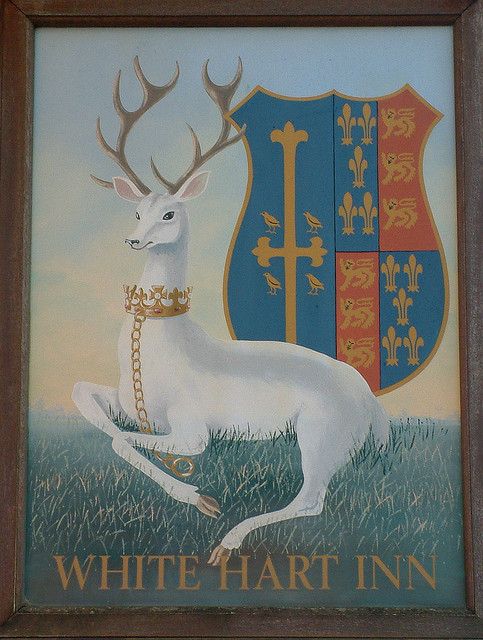
White Hart Inn, Havenstreet, I.o.W.

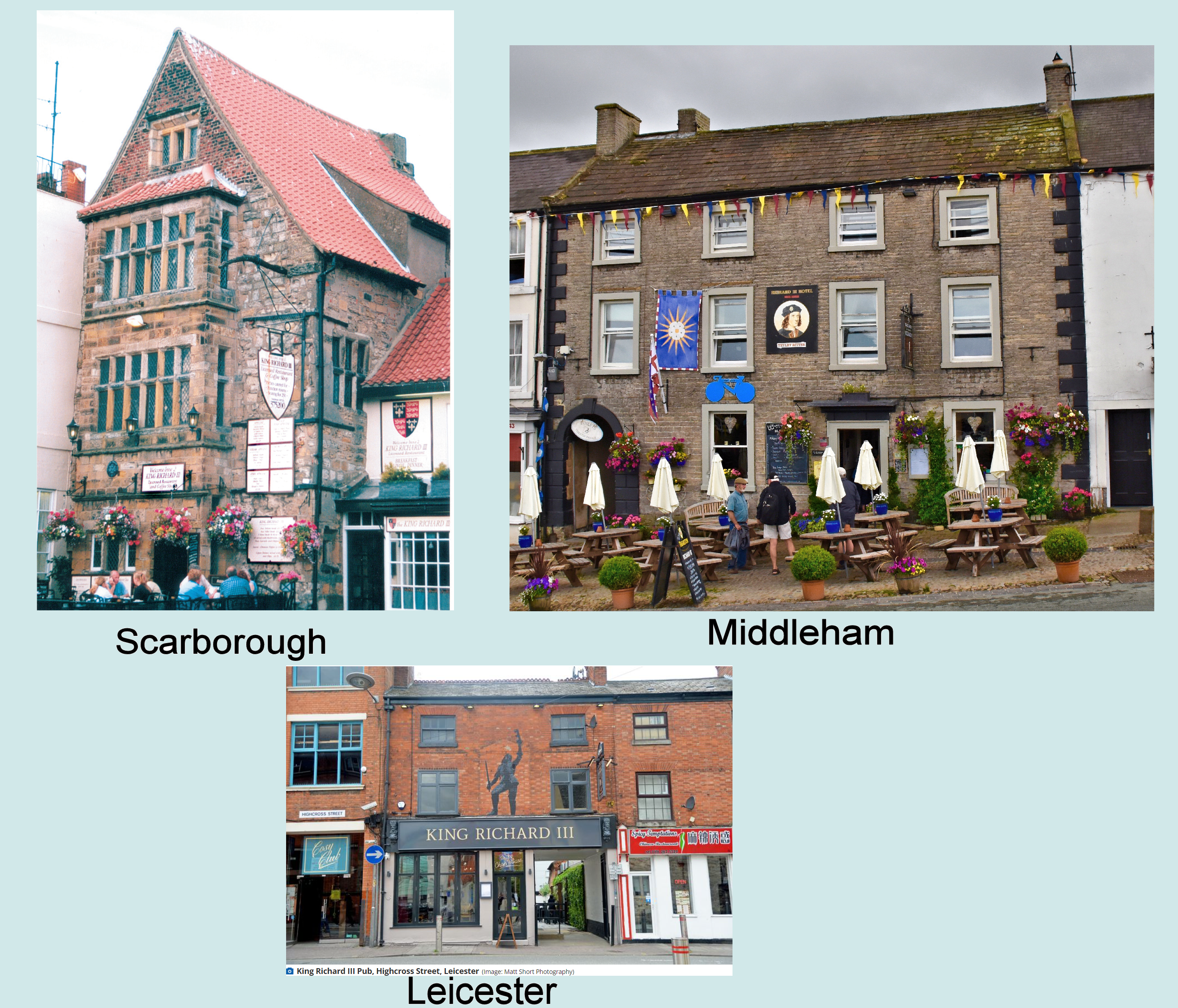
According to the above census, Richard III has one to his actual name? Well, I have found three, in Scarborough, Middleham and Leicester (as well as the Last Plantagenet there that closed a couple of years ago). Maybe there are more.
But Richard also has a pub bearing his badge, the White Boar, in Bury.
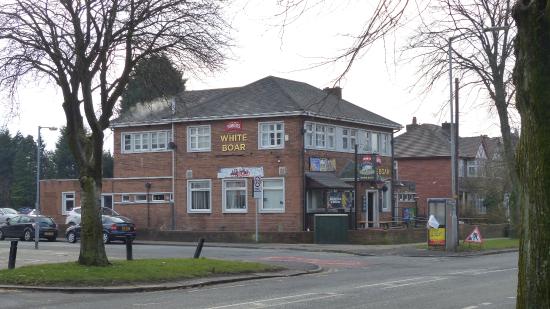
White Boar, Bury

Calling inns and taverns after Richard or his badge became somewhat dangerous after 1485, when his successor, Henry VII, was determined to denigrate Richard in whatever way he could. A lot of White Boars suddenly underwent a change of colour and became Blue Boars…which also happened to be a particularly safe bet because that was the badge of Henry VII’s supporter, the Earl of Oxford.
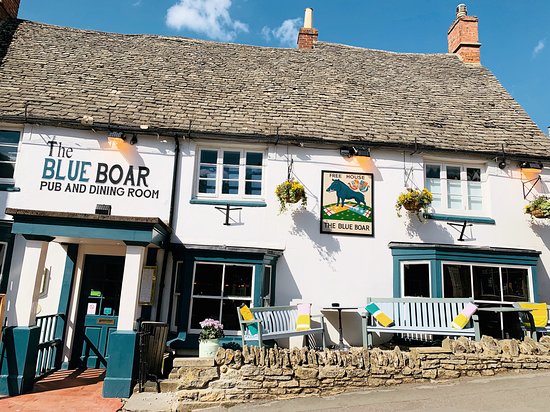
Blue Boar, Chipping Norton

Richard III also has a pub in Gloucester, a Wetherspoons named The Lord High Constable, which is definitely dedicated to Richard. The menus bear his portrait.

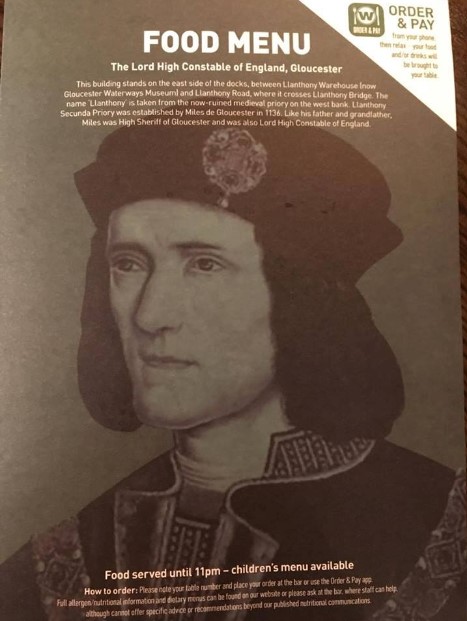
Lord High Protector, Gloucester
photograph taken in 2017

Henry VII’s pub is in Shrewsbury and is very good to look at…pity about the sign hanging outside!
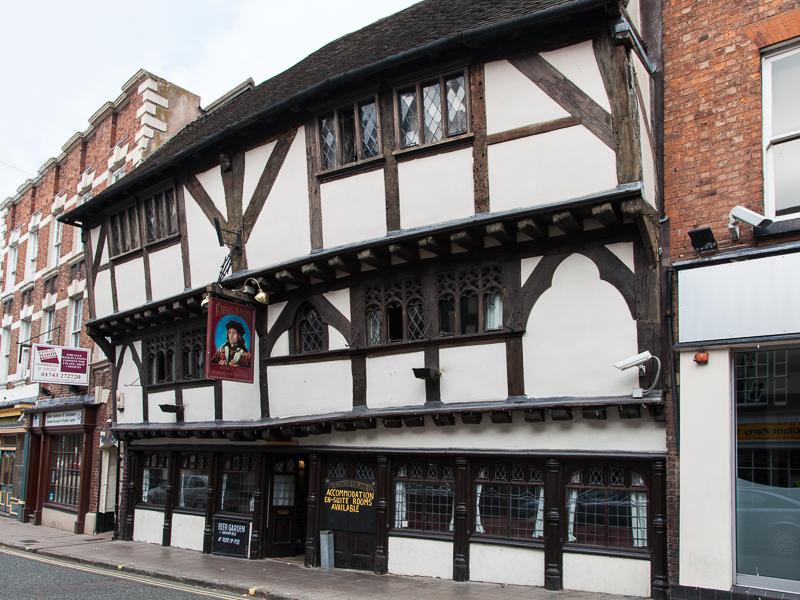
King’s Head, Shrewsbury

Aha, but wait a second….the King’s Head in Malton is dedicated to Richard III!
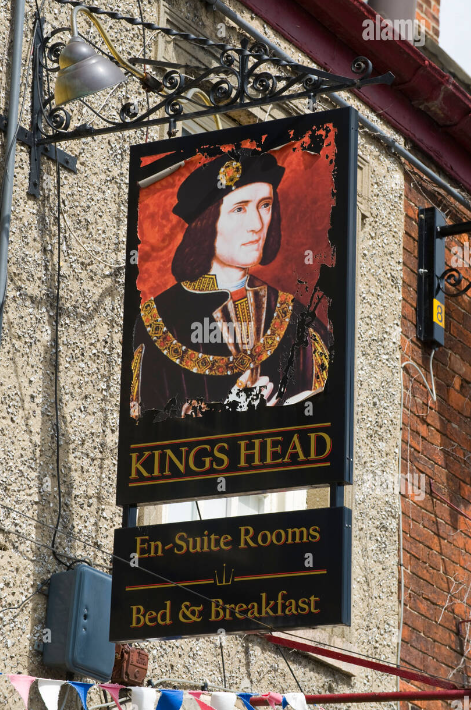
King’s Head, Malton

When it comes to King’s Head pubs, I can’t imagine who wins the race, but perhaps Henry VIII gives everyone a good run for their money.

So, all in all, it’s not straightforward when it comes to linking monarchs to pubs! I’m sure I’ve missed a lot, and I’m sorry, but I couldn’t possibly name them all anyway.


Subscribe to my newsletter

  1. I admit this surprises me, Queen Vic??? Sorry, but she just doesn’t strike me as party central lady. However, Viscountessw, I cry foul on behalf of your Richard II – his White Hart would have graced numerous taverns, Inns, alehouses, and hostelries and much like the Three Ostrich Feathers were immediately understood to represent his father, Prince Edward of Woodstock so too would the White Hart be instantly connected to his son. Problem for King Richard II is what happened to so much of London, the Great Fire of 1666, virtually everything (of interest to me) from before 1500 was lost in the fire. When I compare material I find in IPM’s and Hustings to what is in Stowe and Harben the continuity for the names of taverns is strikingly consistent; yes, the Reformation does have an impart in names like ‘the Pope’s Hed” et al, and the Tudor nobility all have new Inns cluttering up the streets, but the real changes came after that Fire.
    If I was to go through my notes on Taverns, Alehouses etc, I just bet I’d find a stack of White Harts from the Inns of Chancery to Aldgate!

    Liked by 2 people

    1. I’m not quite sure what you mean about the White Harts. I do say in my post that although Richard II isn’t actually named, his badge of the White Hart most certainly is. Everywhere.

      Liked by 1 person

      1. If you have Harben on hand check out pps 626-7 – he can be an eye strain, trying to untangle the lineage of many of his citations but once you get the hang of it he’s got a charm all his own a – here’s an example:
        – ‘tenement’ called the “Sygne de le Whyte Harte” in Westchepe (parish St Mary Colchurch) at this time c1539 – Harben goes on to explain “this sign was the badge of Richard II” and if you read enough of Harben, or properties mentioned in wills (Thrupp is a good source too) you soon realize a ‘tenement’ was often something else in an earlier period, and conversely, what was an Inn, becomes offices and business houses in the ‘modern’ period. (See White Hart Inn, west side of Coleman Street, so names still in 1670’s – this is one that in Harben’s day was repurposed into offices).

        Liked by 1 person

  2. The King’s Arms on The Kings Staithe in York carries Richard’s image on its signage.There used to be a Richard III pub in the city but it changed its name some time back.

    Liked by 2 people

  3. Lovely piece – and of course don’t forget the pub by the River Ouse in York that regularly floods. The Kings Arms has the coat of arms on one side of the hanging sign and Richard III on the other! And there was a “pub” at the Burton on Trent Brewery museum (now closed?) called The Duke of York, but bearing the face of Richard III. They must have been told SO many times…

    Liked by 3 people

  4. You’d think there’d be more for Charles II or Bonny Prince Charlie – but perhaps it wasn’t politic to name a pub after the Stuarts in Hanoverian England…

    Liked by 3 people

  5. […] Anne recommended Dr Wright’s site at Triskele Heritage and I took a look. It is indeed a fascinating site, and if you go to this link—Mediaeval Mythbusting Blog #28: Ancient Pub-lore – Triskele Heritage (triskelepublishing.com)—you can read the article about England’s oldest pubs. […]

    Like

Leave a reply to Anne Ayres Cancel reply