
In the above illustration I do believe the illustrator has endeavoured to create the real Abbot Wheathampstead (also Whethamstede), baldness and all, if the lack of hair around the ears is anything to do by.
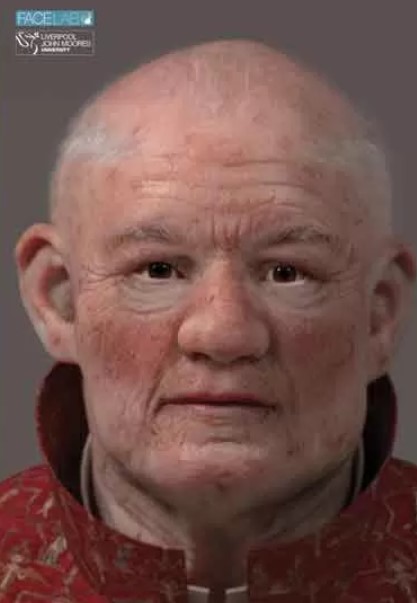
My interest in St Albans has hitherto been concerned with the 14th century, specifically the time of Abbot Thomas de la Mare, but it is one of his Benedictine successors, John Wheathampstead, whose remains were discovered recently and who has now been reburied at St Albans Cathedral. During his lifetime, of course, it was St Alban’s Abbey.
He was born circa 1392, maybe at Wheathampstead, some five miles away from the then monastery of St Albans.at the town the name of which he bears. So he was a local man whose family included members of the nobility, and who rose to be abbot not once but twice. He became close to King Henry VI’s uncle, Humphrey, Duke of Gloucester.
John was abbot at the time of both battles of St Albans, and his register describes seeing a discarded head and severed limbs with bodies in the street. It goes on to describe the plundering, spoiling, and pillaging of the town by the northern soldiers, and well as the stealing of the opposition’s horses and armour. It looked as though they were going to do the same to the monastery, but the Registra claims that due to the protection of the martyr Alban.” if you go to this site you can read more about the battle and Wheathampstead’s account.
Wheathampstead was growing older, and after 1445 had to delegate to his officials. He went home to his family’s manor and died there on 20 January 1465. Now he’s been reinterred in the abbey church, in the chantry chapel he himself had had built. He now lies next to his friend, Humphrey, Duke of Gloucester, within the same tomb in the chantry chapel, close to the shrine of St Alban, Britain’s first saint.
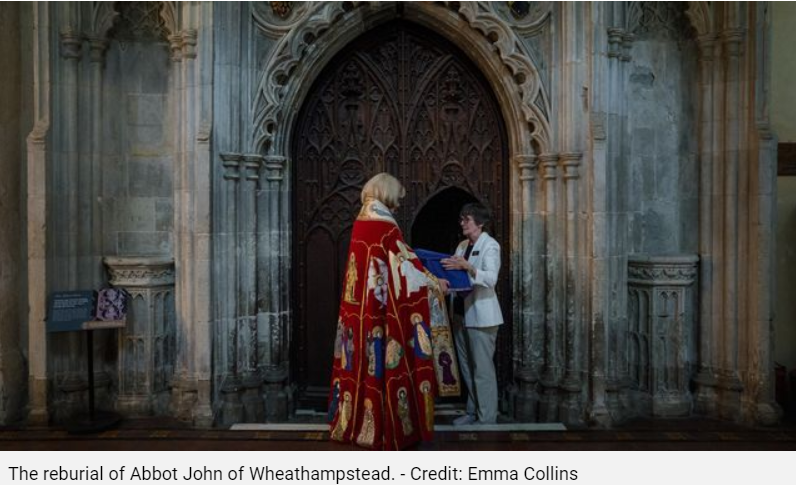
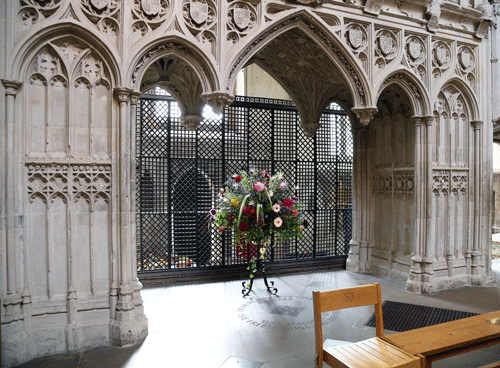
You can read more about the discovery of his remains here, about his modern reburial at this site and this one.
 The New Murrey and Blue blog
Leave a reply to A VISIT TO KING’S LANGLEY – murreyandblue Cancel reply