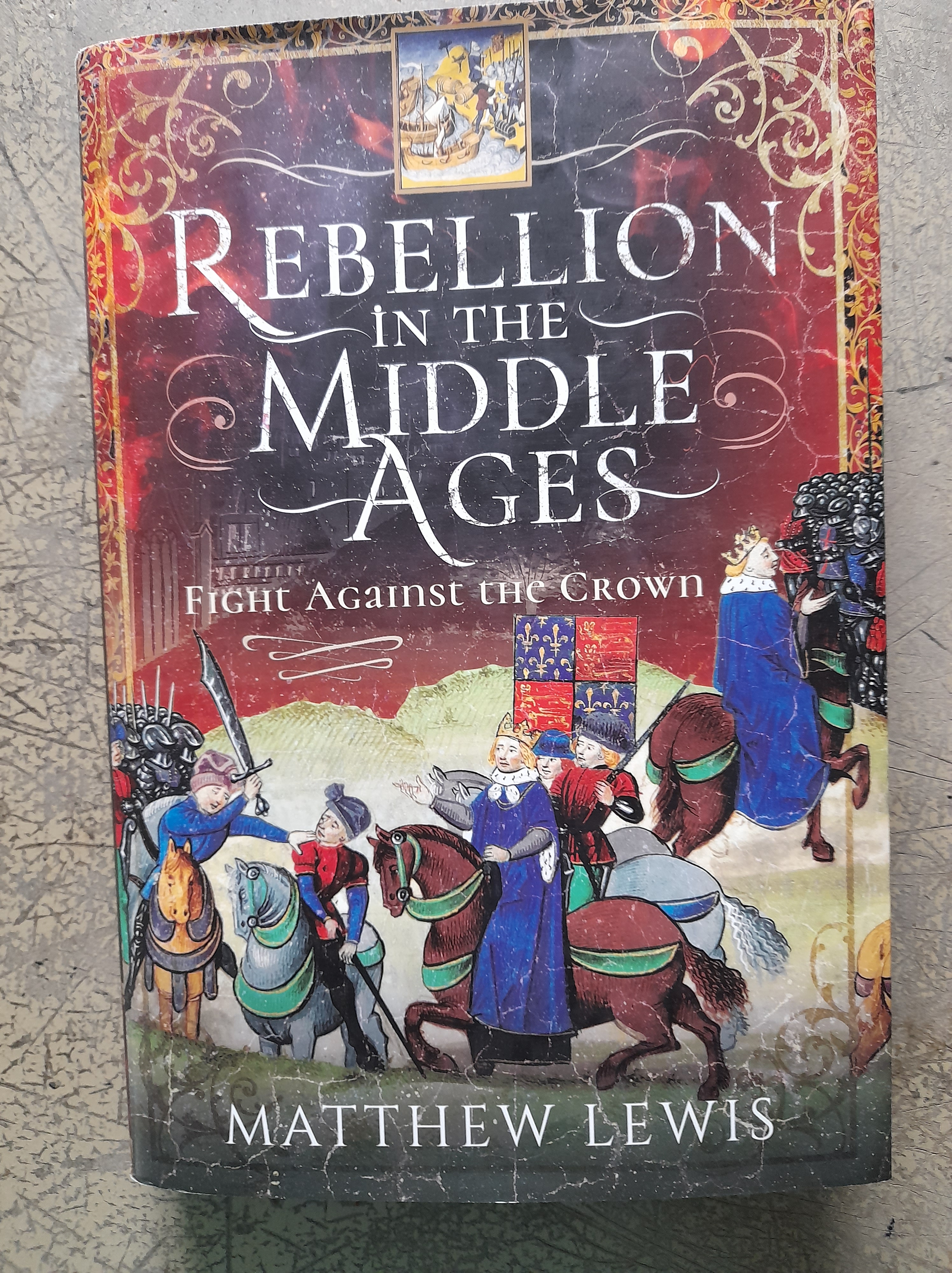
 This is the latest of Matthew Lewis’ books and covers a longer period than any of the others, from Hereward the Wake’s emergence after Hastings to the beginning of the Wars of the Roses, almost as long a period as this book. Lewis is already an expert on “The Anarchy” (chapter 2) and the Roses (10) but each chapter follows the last, almost seamlessly, with a clear connection. Henry II features in three consecutive chapters, for instance, whilst Edward II‘s life and mysterious fate is also analysed. Then comes Richard II‘s youth and the Peasants’ Revolt, followed by his deposition and the implosion of the House of Lancaster.
Some of these rebellions succeeded and some failed. This book explains why in greater detail.
 The New Murrey and Blue blog
Leave a comment