I grew up under the tutelage of an amateur historian father, one who both dissected past events and also generously passed along a wide range of historical snippets. Perhaps he had a limited knowledge of this event, or I forgot most details about that one. Whatever the reason for the more modest lessons, or memories, many names and some details nevertheless settled into my brain, to be re-discovered years later when I came across them in books or documentaries, and I reveled in their familiarity.
From him I also developed a hunger for “elsewhere, who else, what else,” that is, an awareness of what was happening in other parts of the world at the time of whatever we were studying. Settled into my brain were names such as Vashti, Veronica, Rostám, Agamemnon (which I loved saying aloud), Cyrus, Sina (i.e., ibn Sina, aka Avicenna), Sassanid, Archimedes, Qin, Punic Wars, Mithra, Nefertiti, Sappho, Zoroaster, Ahura Mazda, Ur, Sun Tzu, Helios.
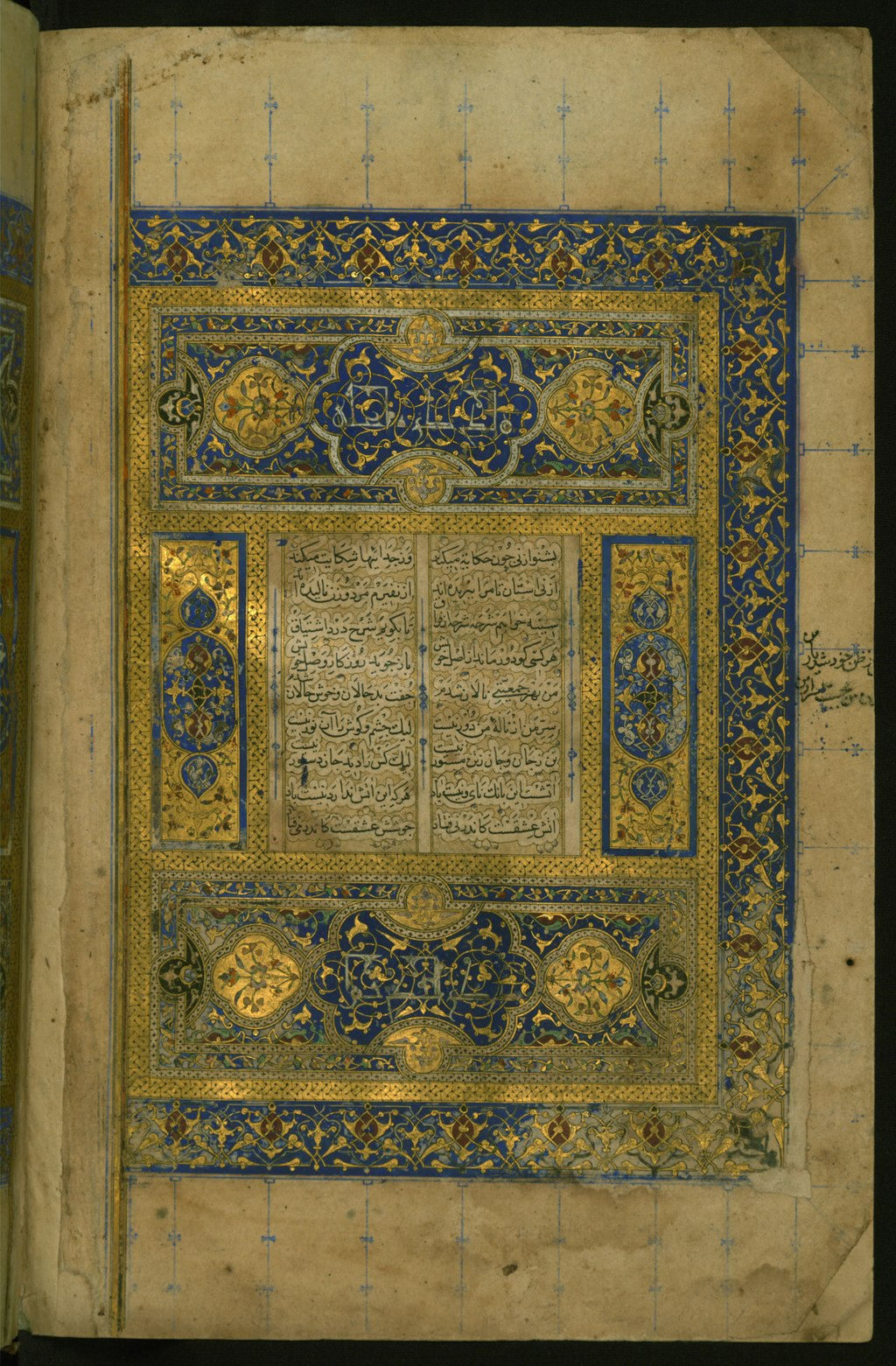
And Rumi.
In 1207, Pope Innocent III supported King Philip of Swabia as Holy Roman Emperor; the English King John refused to accept Stephen Langton as archbishop; Genghis Khan became a world leader, having completed his conquest of the Siberian taiga; Cambridge University was less than a year away from being founded; and Layamon’s Brut was the first historiography written in English since the Anglo-Saxon Chronicle. Eleanor of Aquitaine had died just a few years before 1207, and William Marshal, known as “the greatest knight who ever lived,” would, in under a decade, become regent to the nine-year-old Henry III. The year 1207 is witness to a host of events that will inspire and influence for years to come.
On September 30 of the same year, far from these names, events, and places of great renown, in Vakhsh in modern-day Tajikistan, an obscure town on the banks of the Vakhsh River, is born a baby boy whose family would later cite Balkh as their point of origin, following their departure into the world of refugee status as they escape the mighty Khan’s impending invasion. Vakhsh is an outpost of Balkh in the north of modern-day Afghanistan – Westerners could best gain a point of reference knowing that within it lies Mazar-e-Sharif, itself a stop on an important trade route and formerly part of the old Persian Empire. Thus, Zoroastrianism was an influence, as was Buddhism, and Islam, the religion of the conquering Arabs, who had arrived in the seventh century.
This would not be the first stop for the boy Mohammad, who with his family traveled to Samarkand in Uzbekistan, Iran, Syria, Saudi Arabia, and then Turkey, where the man the world later came to know as Rumi lived out his last fifty years. It was here, in Konya, that Rumi, in his late thirties met Shamsoddin of Tabriz, a wandering dervish with whom Rumi immediately developed a rapport. Rumi’s biographer Brad Gooch, in Rumi’s Secret: The Life of the Sufi Poet of Love, discusses in detail their relationship, one no one has ever truly been able to characterize, but which certainly strained the norms of their time. Having initially spent three months secluded together, they embarked upon a journey of pairing music and poetry together with the spiritual. Rumi, who had previously been uneasy with his life as a preacher and scholar, realized he had “been given an opportunity for a more expansive existence. Shams allowed Rumi to experience the heartfelt warmth that he would always associate naturally enough with the sun, from which creativity would soon begin to flow.”
A little over a year later, following much tension within Rumi’s family and community, Shams mysteriously disappeared. It was unknown whether he had simply left, perhaps aware of the conflict, or was murdered, possibly by a jealous relative or someone else associated with Rumi, who after Shams’ disappearance became “startled, confused, distraught.” It was at this time that Rumi began to write the poetry that today is so beloved across the world, and of which so many ask: what is it about Rumi’s poetry that makes it so popular?
Well, there are many answers to this, some as simple as Rumi’s universal relatability. So many of his words mean so much to so many people, from the relatively straightforward and simple verses ~
don’t look how
low and weak you are
look at your aspiration instead
~ ancestor to today’s inspirational quotes advising us to dwell on what is good in order to overcome what is not, to the somewhat more sublime ~
Take someone who doesn’t keep
score, who’s not looking to be richer,
or afraid of losing, who has not the
slightest interest even in his own
personality: he’s free.
~ and a host of others too numerous for this limited space. But even within a small further exploration we could ask: what is he relating to? What are so many readers responding to in his writing? What Gooch likes to call “the map of Rumi’s life,” covering some 2,500 miles, well equipped Rumi as a writer, particularly a poet, given his introduction and exposure to a variety of languages and religions. Not unlike the year of his birth, he too is witness to history, and he writes about the universal and ongoing attempts of humanity to find meaning within life.
Muhammed Ali Musofer writes of Rumi’s connection of humanity and meaning, stating that the diverse ways in which people present are merely physical differences, which individuals focus on, rather than delving deeper into the soul in search of human commonality, leading to discord and polarization. “Without loving mankind, one cannot achieve divine inspiration. In short, according to Rumi, love for God and His creation is crucial for human salvation.”
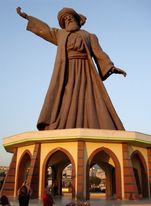
This commonality is what Rumi was so skilled not only in recognizing amongst his many linguistic and religious influences, but also writing about: even today his voice is fresh and as full of any of the emotions humans continue to feel. There also is something about poetry, something I believe people instinctively recognize, often without knowing they do, that even a small sample of words can articulate something so reflective, something that has touched us and can lead, guide, or inspire us. Rumi often keeps it in a style I call “simple but not simplistic,” even at times injecting humor, which itself is incredibly powerful as a force. Many people are afraid of poetry, but Rumi opens it up to them and they see the sublime and profound within the everyday.
Musofer’s discussion about Rumi’s beliefs is reflected even in how the poet approached death. He was beloved in other religious communities besides his own Muslim gathering, and people from various faiths attended his funeral, which Rumi had planned out like a wedding. Greater description, including the role played by the dervishes, can be found here and, updated for the 2021 observance, here.
It is a long way from the famous Ghengis Khan invasions, Angevin expansion and the new, wider reach of Arthurian legend ushered in by Layamon (and Wace before him). Certainly, all of these and more are still written about today, without a doubt, as they should be. But for sheer relatability, it truly is difficult to place any of them – with the possible exception of some volume of Arthurian legend stemming from Layamon’s history – on the shelves of as many people on so many levels of ability and preferences in today’s world as is Rumi, whose reach truly seems to be the deeper examination and connectivity, that discovery of what poet and reader have in common that binds them, rather than focusing on the differences.
 The New Murrey and Blue blog
Leave a comment