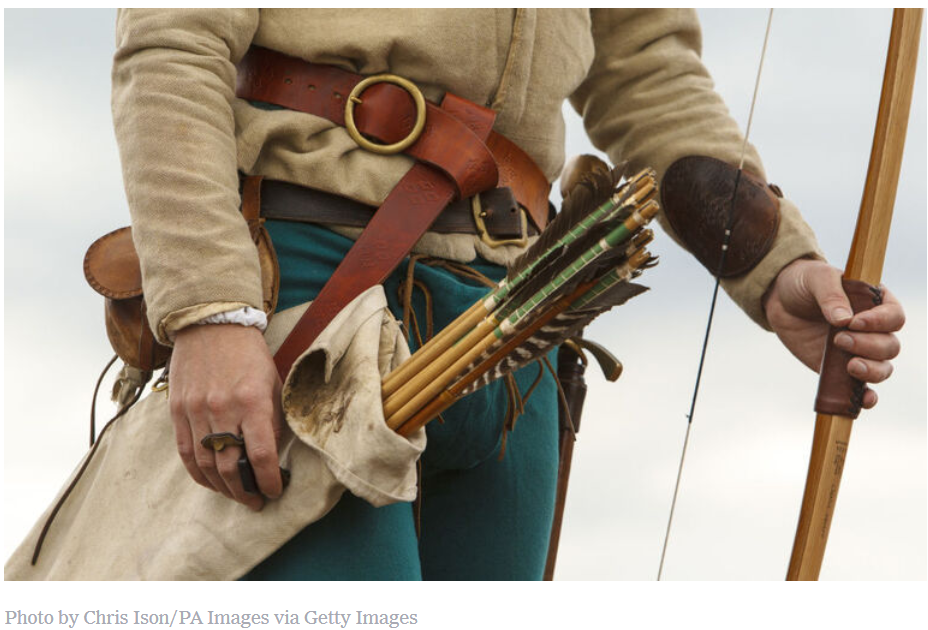
Well, I for one always like a damned—um, darned—good medieval battle…at least, I do from the comfort of my nice modern sofa. No nasty blood and gore for me, and certainly no dreadful screams and horrible deaths with all sorts of innards spilling everywhere. Oh, no, not for my delicate modern self.
So we delicate blossoms of today rely upon what we see on TV and cinema screens…and in books, of course, but it’s the visual aspect with which this amply-illustrated article concerns itself.
Let me say here and now that silver screens do NOT depict the truth. If they did, the audience would soon pass out on the spot. And when it recovered, it would never watch such carnage again. I’m afraid that medieval men would watch in fascinated bemusement to see some dazzling sword-fighting antics on the field. Wonderful to watch and thrilling for audiences, but all Class A1 hogwash.
To begin with it seems you’d never see swords on a battlefield. You’d more likely see bl–dy great battle axes, “maces, morning stars, war hammers, and other bludgeoning weapons”! Good grief. And they didn’t waste precious arrows on the dramatic “rains” of arrows we see so often, flying high and then coming down to wreak havoc on the enemy. Well, you’d see them, but used very judiciously indeed—certainly not over and over. The arrows would have been depleted in double quick time.
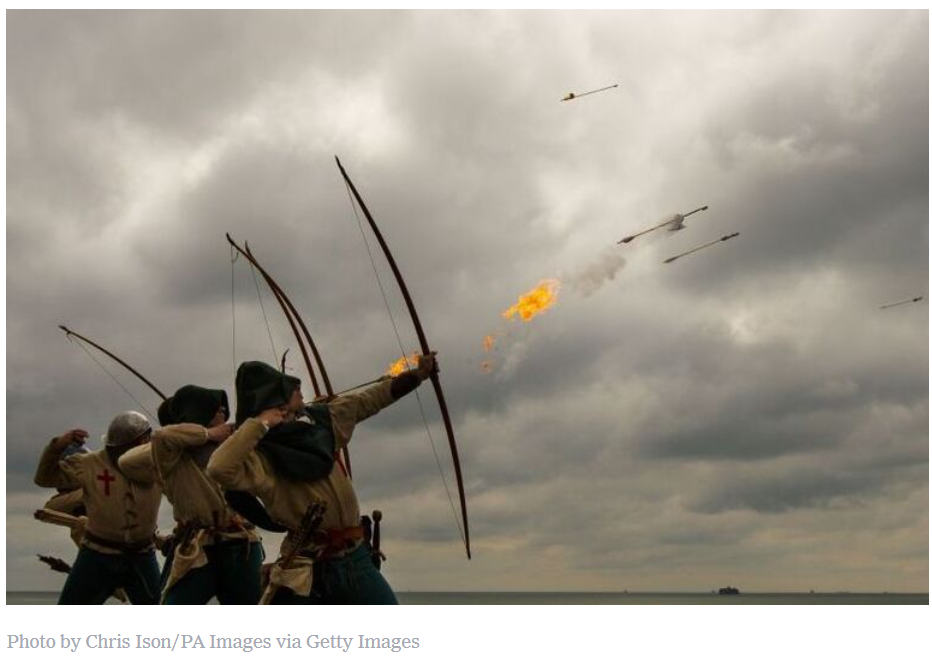
Nor did armies hurl themselves together in a frenzy of fighting and killing—commanders were there to direct it all, just as commanders direct battles today. Oh, and the object wasn’t to kill foreign nobles. Good grief, no! You wanted them alive so you could ransom them for huge sums. That’s where a lot of the rewards came. Kill them and you’ve blown it. But it’s OK to kill the common oiks, aka lowly soldiers. But usually the bulk of the two armies concerned just went their separate ways, back home to resume tending the turnip field.
Sometimes, of course, no matter how high-ranking the man you had at your mercy, he was better off dead. Just think of Richard III. Henry Tudor certainly didn’t want him on the loose. Richard was too sharp and experienced a military commander to lose a rematch. And after Bosworth he’d know exactly who could be trusted and who could not. Beating him under those circumstances would be very tricky indeed, so the Tudor Weasel wanted Richard to be history, in every meaning of the phrase. And unfortunately for us, he got what he wanted.
Anyway, the above article is very interesting indeed, and includes far more than I’ve mentioned above. Believe me, you’ll never watch an on-screen medieval battle in the same light again!


 The New Murrey and Blue blog
Leave a reply to amma19542019 Cancel reply