Correct me if I’m wrong, but something’s wrong here. I quote:
“…The Via Francigena* included two alternative crossings of the Alps, either via Mont Cenis or the pass of Mont Joux (Mons Iovis), and a crossing of the Apennines, usually by the pass known as Mons Bardonis….”
I’m with it so far, but then it goes on:
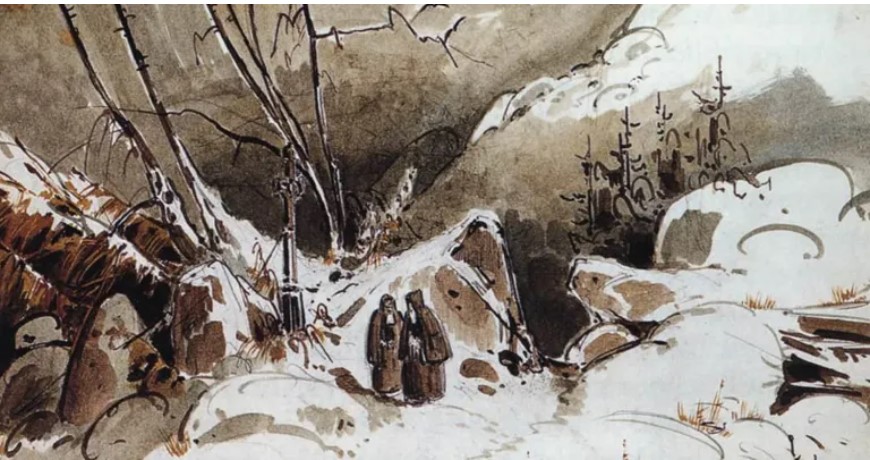
“These high-level routes could often be hazardous: in AD 959 an earlier archbishop of Canterbury, Aelfsige, froze to death while crossing the Alps when on his way to Rome; and in 1077, while returning from Rome over the Mont Cenis pass, King Henry IV of England had to negotiate sheets of ice on which some of his party slipped and fell to their deaths….”
Right…the King of England in 1077 was William I. Henry IV of England reigned from 1399-1413. So who, exactly, negotiated those sheets of ice in 1077? Henry IV, the Holy Roman Emperor, actually.
The above extract is from Google books
You can read about the unfortunate archbishop at this site
* The Via Francigena was the name given to the pilgrim route that commenced in England and went all the way to Rome, crossing over the Alps by way of the Mont Cenis pass in Savoy, between France and Italy. It still exists, and you can read about it here.
 The New Murrey and Blue blog
Leave a comment