With the denizens of Hades gathering to do their worst, here is a horror tale of Sir William Stanley’s final Hallowe’en, when retribution snatches him at last. “Settling the Bosworth Debt” is the story of what happened to William when he was confronted by some terrible truths about Henry Tudor.

Friday, 31 October, 1494, Hallowe’en, the Palace of Westminster
THE LORD CHAMBERLAIN, Sir William Stanley, reined in close to the torchlit entrance of Westminster Hall where a throng of lords and ladies awaited admission, all of them in Hallowe’en costume. Everyone’s breath stood out in clouds. The sky was clear, lit by a million stars but no moon at all. There’d be a frost before dawn. Perhaps there was already in sheltered places.
Behind his mask William’s pale blue eyes reflected the reluctance with which he’d come here tonight. He felt childish and ridiculous in his stag’s head and enormous antlers, with a deerskin dangling against his stocky thighs. He was fifty, not fifteen, for Jesu’s sake. Garbed like this he was even less the elegant courtier he’d always longed to be.
His lips twitched as the strains of minstrel music drifted from within, where the highest nobility of the realm joined in the traditional festivities of the season. This year the occasion was more lavish than usual because tomorrow, All Hallows, King Henry VII’s younger son, three-year-old Prince Henry, was to be created Duke of York. There would follow days of jousting and feasting, which should be a time of enjoyment and indulgence, but the atmosphere wouldn’t match the extravagance of the celebrations, because the court of Henry Tudor had become a place of spies, secrets and suspicion. Few dared to confide to family or friend, for fear of giving themselves away to one of Henry’s hidden army of spies and agents. False accusations were often believed, and all too often imprisonment and death followed.
Henry wasn’t popular and from the outset his reign had been beset by challengers to the crown he stole on Bosworth Field, but now there had come one who posed a far greater danger than any before. This new thorn in Henry’s side went by the unlikely name of Perkin Warbeck and declared himself to be the Duke of York, younger of the little sons of the late King Edward IV. The princes were supposedly murdered in the Tower in 1483 by their uncle Richard III, whom Henry had defeated at Bosworth. But one boy claimed to have survived, calling himself Warbeck, and was coming to claim the throne that was his by right because he was the last living male heir of Edward IV, the first Yorkist king. Warbeck was gaining support all over the realm and if he triumphed the vanquished House of York would return to power….and the hated Tudor would be no more.
It was no coincidence that Henry was granting that all-important ducal title to his own little son, who would be proclaimed the only true and living Duke of York. Thus Warbeck would be labelled clearly as an imposter, but Henry was severely rattled. For months now those who’d been found to have had any connection with Warbeck, no matter how remote, had been plucked secretly, one by one. Arrested in the dead of night, they’d been interrogated and tortured, and some had disappeared forever, but others had been released on bond….their allegiance now doubted by both sides. No one knew for certain who was for Warbeck, or who was loyal to the king. Fear reigned supreme, as indeed it had ever since Henry came to the throne. Because he himself had been a usurper, with little or no just claim to the throne of the last Yorkist king, Richard III. Henry above all others knew that a usurper could overthrow a king.
But William felt safe enough, even though, very secretly indeed, he too had been swayed toward the Warbeck claimant. He believed himself to be indispensable, and that Henry would never suspect the man who had almost single-handedly ensured the victory at Bosworth that killed Richard III and swept Henry to the throne. There was only one other who knew the Lord Chamberlain’s allegiance was wavering, and that was Sir Robert Clifford, who was close to and depended upon by Warbeck. Clifford carried messages to and fro and William didn’t doubt his trustworthiness.
Henry had no tenable blood right to the crown and had won at Bosworth solely because William, supposedly Richard’s supporter, had in the midst of battle suddenly diverted his troops to fight for Henry instead. If it had not been for that pivotal moment it would have been Henry Tudor who lay dead on the ground in Leicestershire. Convinced of Henry’s enduring gratitude, William had seldom failed use the debt to his own advantage, with the result that that he was now one of the richest men in the realm.
He dismounted heavily outside he great hall at Westminster, wishing he hadn’t eaten quite such a hearty dinner, for it lay like a stone in his stomach. The thought of over-spiced shellfish made him feel vaguely nauseous as a groom took charge of his horse. A young redheaded page in green and white royal livery pushed to the fore of the crowd. He carried two lighted lanterns and his dark, almond-shaped eyes shone as he smiled and bowed low. “My Lord Chamberlain?”
“Yes?”
“If you will follow me, my lord. His Grace the King wishes to speak to you alone.” The youth held out one of the lanterns.
But as William accepted, something made him feel suddenly very exposed to the Hallowe’en night and all its demonic influences. It had never happened before, because he wasn’t superstitious, but in those few seconds, as he adjusted his grip upon the lantern, the dreads of the supernatural and the Otherworld seemed to close around him. He pulled himself together. “See the king privately? But I’m supposed to—”
“Please follow me, my lord.” The youth interrupted with another charming smile and led the way into an alley William had never noticed before.
Something felt wrong, and William hung back.
“My lord?” The page turned, his appealingly freckled face caught in the upward light of his lantern.
“What is your name? I don’t know you.”
The page smiled. “They call me Nick. Nick Hobson.”
“Why have I never seen you before?”
“I cannot answer that, my lord, for I have been here for some time. Please follow me, for His Grace is most impatient.” The youth continued determinedly into the alley, his oddly light footsteps almost trotting on the stone flags.
As William followed, he could still hear the carolling and festivities in the hall, but here in this damp, rather dismal place the tendrils of ancient Hallowe’en seemed to float like gossamer in the air. He could almost feel their clammy touch and see their eight-legged creators scattering into the many crevices of the alley wall. Shadows leapt and danced, and for a fanciful moment William almost thought the boy ahead had a horse’s tail, but then he disappeared around a corner, leaving his silvery breath hanging for a heartbeat before it too had gone.
William’s steps faltered. Horse’s tail? Ridiculous! He told himself it was the indigestion from which he now suffered abominably. He loved rich food, but it didn’t always agree with him.
The page waited where the alley gave into a deserted quadrangle. Here the air seemed even colder and the glint of frost shone on the grass. An unlit Hallowe’en bonfire stood in readiness, surrounded by flickering torches. It would be kindled at midnight.
“His Grace awaits you in the tower opposite, my lord.” The page pointed toward a narrow tower that had a small turret at the top. At the foot of the tower was an arched door that was just visible in the torch light.
William gazed across, frowning. There? Why? He’d never even seen that tower before, let alone known Henry Tudor to frequent it. Come to that, he’d never seen the alley or quadrangle before either. Where in God’s own name was he? He thought he knew every nook and cranny of Westminster. “Look, I don’t know what this is about—” he began, but when he turned there was no one there. He lifted his lantern, hoping to see the youth close by, but there was no sign of him. Nick Hobson might never have existed.
An icy finger traced William’s spine, and he could feel his confidence draining. Something was very wrong. But what? The ominous atmosphere of suspicion and conspiracy that pervaded the royal court seemed to have collected here in this uncannily cold place. Again he sensed the closeness of the Otherworld, from where on this night all the vile beings of Satan were supposed to descend to wreak what havoc they could, and to steal and torment any unfortunate Christian souls that fell into their grasp. Was his nemesis among them? It seemed the quadrangle swayed a little, and he closed his eyes. The saints curse his indigestion. “Restore my strength, oh Lord. Spare me this affliction.”
But it wasn’t simply indigestion that tormented him, for guilt was painting dark shadows through his mind. He feared his treachery with Warbeck would become known to Henry, and that the memory of Bosworth would no longer save him. Oh, to turn time back to 22 August 1485, and to have remained loyal to Richard III. But it was too late to accept that Richard had been the rightful king, an approachable man, fair, strong and steady who would never have ordered the murder of his own nephews, legitimate or not.
“How right you are, Stanley.”
William’s heart almost stopped, for he recognised Richard’s voice.
“I was the true king because my brother’s children were baseborn, but no child suffered harm at my hand or command. Shame on all those who have ever thought otherwise.”
William strained to listen more, but silence returned. He breathed out, chiding himself for a gluttonous fool. Richard couldn’t possibly have spoken to him. He drew a long shuddering breath, struggling to steady himself. He’d never indulge in shellfish again. Never.
A prolonged rusty creaking sound carried across the courtyard, and he saw the door at the foot of the tower swing slowly open to reveal the lowermost steps of a spiral staircase that wound up to the turret. There were small windows marking the ascent, and one that was close to the top was suddenly illuminated by a lantern which moved slightly in someone’s grasp. Henry? Who else could it be?
William felt like a mouse about to fall into the pin-sharp claws of a hungry cat. Guilt weighed ever more heavily, and with it faded the remnants of the sense of security that had swept him along since Bosworth. He glanced up at the starlit sky, against which the palace of Westminster and the nearby abbey seemed to sail, as if on a calm ocean. It was a night when there should have been a full moon, when wolves should howl and nameless Hallowe’en creatures prowl, but for now there was only silence and the stars. He couldn’t even hear the masquerade. Everything was calm and serene, but he felt as if the evil beings of this one night were very close now, gathering stealthily, awaiting their moment. Soon he’d hear their predatory shrieks and screams.
Once again the quadrangle seemed to move slightly, as if the ground itself was no longer firm. It made him feel sick, and he hugged himself, hoping to soothe his churning belly. The screech of an owl broke the silence, and his heart almost stopped. It was only a barn owl! He couldn’t credit that he was suddenly prey to superstition. The Otherworld was all nonsense, as were fairies, goblins, satyrs, dragons and unicorns. But as he stood at the edge of this eerie quadrangle, from which the alley appeared to be the only way in and out, he believed in them all, even the god Woden and the Norse trolls.
He fixed his gaze on the tower opposite. There was no escape now, he’d tested fate once too often and it was time to confront the consequences of his many failings and sins. Whatever awaited in that turret tower, he had no option but to bow to its will. With another huge breath, he forced himself to cross the courtyard toward the door. He strove to maintain at least a vestige of calm as he left a trail of footprints on the frosty grass, but in truth he was sick with terror.
The closer he came to the tower, the more he realised it was in a ruinous condition. How could such a decaying building be here in the heart of government? And why would the King of England choose it for a meeting with his Lord Chamberlain. Reaching the foot of the crumbling spiral staircase, he halted, raising his lantern to see as far up as he could. The steps were worn and cracked, and the turret and tower itself had surely deteriorated to the point of being in imminent danger of complete collapse. The glimmer of the other lantern seemed so very high up, and he’d always been afraid of heights.
He held his lantern aloft. Should he call out? No! Sweet Jesu, one didn’t call out to a man like Henry. Better to simply go up there and confront fate. Or was it to be retribution? Slowly and heavily, he made his way up the confines of the staircase. His wide, cumbersome antlers scraped on the wall occasionally and the light of his lantern gave birth to monstrous shadows that leapt and faded as if stalking him. Old cobwebs swathed the way, and he had to brush them aside to pass. How had Henry ascended without having done the same? Then it seemed the steps shifted beneath his tread. And he gasped, trying to steady himself. God in Heaven, was the tower about to fall apart completely? He listened as the stonework crunched slightly before seeming to hold firm again. He’d had dreams like this, where stairs led nowhere and wide gaps appeared over voids across which he had to leap to save himself. But this wasn’t a dream, it was real.
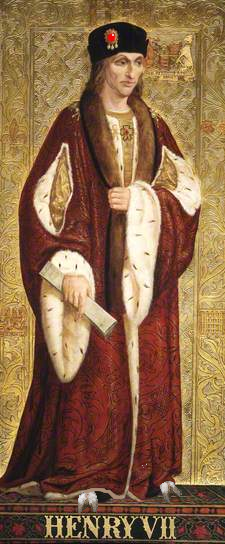
At last he came to the lowest glimmering reach of the other lantern. Yes, it was Henry, his rich chestnut velvet over-robe heavy with ermine and brown fur. Beneath it he wore wine-red velvet and a heavy gold collar of Tudor roses, and his black hat sported what was surely the largest ruby ever found. The ermine and fur shivered in the barely detectable draught from the little window beside him. No Hallowe’en costume for him because he feared to look ridiculous. Beyond the window lay the starlit palace and the silver ribbon of the Thames.
The Tudor king’s eyes, as uneven as the staircase, were hooded and small, his long sandy hair was thinning, and his lips were a narrow, cruel line. He was tall and thin, with limbs that seemed only loosely attached to his body, and although he was only thirty-seven, everything about him seemed much older. Almost as if from a much darker, more ancient past. It was Henry; and yet it wasn’t Henry at all….
William was transfixed. He was in the midst of a terrible nightmare. Deliver me, O Lord. Deliver me.
Eerie shapes moved behind Henry. Was someone—or something—hiding there? No, many more than just one thing, all of them alive and intimidating, squeaking now and then as would rats. Henry gave no sign of being aware of anything, and all William could see were squirming shadows.
Henry leaned forward, his face infernal in the upward glow from both lanterns. “So here you are at last, my lord,” he said softly, lingering on the sibilance.
William was riveted by whatever lurked behind the king. Henry had to know there was something there,. Yet he seemed unaware. Or indifferent. Whatever it was exuded almost tangible malevolence, and the occult spell of Hallowe’en tightened around the Lord Chamberlain. Somehow he found the strength to bow low, only just succeeding in preventing his antlers from catching on Henry’s ermine hem. “I….I came as soon as I received your command, Your Grace.”
The tower shook a little and seemed to rock. William heard the stonework grating, and a small cloud of dust fell. Then, further up toward the turret, he saw two steps fall away, crashing and bouncing as they plunged down inside the tower, leaving a gaping hole where they should have been. The height and instability terrified him. He felt dizzy and had a lunatic urge to hurl himself back down the staircase. He had to brace himself against the stonework to resist the almost imperative impulse.
Even the unseen creatures behind Henry were alarmed, whimpering and squeaking as they milled together against the royal garments. But William could still only see their shadows, not the entities themselves. Were they the rats they sounded so like? Surely if they were, he’d see them as well as their shadows? And there was a larger creature among them, much larger, crouching there like a gargoyle.
“How good of you to honour me with your presence,” Henry observed acidly, apparently as unaware of the tower’s hazards as he was of the creatures nestling and squeaking behind him. “No doubt you’re as confident as ever of receiving preferential treatment because I‘m obligated to you for my crown?”
A dagger seemed to plunge into William’s frantically beating heart. Did Henry know about Warbeck? His mouth ran dry as he bowed again. “No, I assure you, Your Grace! I am your true man, and always will be! I expect no preferential treatment!”
“Liar! You’ve never been true to anything in your miserable life! Except your own advantage.”
William felt the dagger twist cruelly. Henry must have found out about Warbeck! Please let this nightmare be over, and he’d awaken to find himself in bed with his wife!. But he didn’t awaken, he remained there on the spiral staircase, confronting an almost satanic Henry Tudor as the tower around them threatened to disintegrate and send them both to their deaths.
Henry enjoyed his prey’s terror. “I don’t appreciate being reminded of the Bosworth debt. I’ve given you every opportunity to see the error of your ways, but still you persist. You’d have been wiser to show humility from the outset and to have been satisfied with what I granted you. Instead you always want more and the word ‘Bosworth’ seems to follow you around.”
Maybe it wasn’t Warbeck after all. William clutched at the straw of hope. “If I have offended I beseech your forgiveness, Your Grace, for I meant no ill. I vow never to mention….that word….again.” He was careful to keep his gaze upon Henry’s hem, summoning all his strength and courage to evince servility and respect. But dizziness made him want to retch, and control was so slipping away that his very bowels threatened to humiliate him. In this terrifyingly macabre place, he was at Henry’s mercy and had become all that was craven and pathetic.
It even seemed that the pigeons in the turret above were mocking him. And he knew he wasn’t alone with Henry. But he had to hold his nerve. He had to! His guts churned, and his legs felt weak, threatening to give way and pitch him all the way down to the courtyard whether or not he willed it. The step on which he stood jolted slightly, and his hold on his lantern shook so much that the weak light shivered. It was dimmer than before, he thought with even more alarm. Was it about to extinguish?
“Be wary, Sir William, for I do not like ingrates, and that is what you are. I made you steward of Prince Arthur’s household, I have raised you to be my chamberlain and granted you many other things, but you remain dissatisfied.”
“No!”
“But yes. And when I look at you I see a man who betrays kings with ease. Henry VI had you charged with treason, and then you turned on Richard at Bosworth. Loyalty is unknown to you, for you serve only yourself, yet I owe my crown to you. This feigned Warbeck boy has come, pretending to be the Yorkist Duke of York. He is even known as the White Rose. Such impudence I wonder he doesn’t ape the elder boy and call himself Edward V!”
He was found out! William was caught in rigid immobility, watching as a long centipede snaked past Henry’s ermine hem and disappeared into a crack in the stone stair.
Henry continued. “The world knows both boys died in the brief usurpation of Richard III. But now some fascinating little whispers about you have reached my ears…. It would seem you long for a Yorkist king again.” The chilling words dropped ominously into the air.
William fell to his knees, unable to hold himself up. He was a dead man! Clifford! It could only be Clifford! The bastard had played a double game! He’d been Henry’s agent all along! It meant that Warbeck was undone as well! “Please, Your Grace! Whatever you’ve heard, it isn’t true! I implore you not to believe—!”
But Henry’s reptilian tone interrupted. “I’ve had enough of you, Stanley.”
William’s mouth ran dry and his guts seethed, but he kept his gaze fixed upon Henry’s hem. Then he heard a sound that resembled long fingernails dragging on rich cloth, and when he dared to raise his eyes again he saw that four thin claw marks now disturbed the hitherto flawless chestnut velvet pile on Henry’s right shoulder. It could only be the work of the larger creature hiding behind the king.
The frightened squeaking, squabbling noises began again, this time with snuffling and snarling as thing turned upon thing. At last Henry reacted. “Get out!” he snapped, and it wasn’t William to whom he spoke.
Sounding ever more rattish, the invisible beings scrambled to the small window next to Henry. They jostled and squeaked as they all tried to squeeze through together and became wedged. The larger entity tried to squeeze through as well. William could hear its claws on the embrasure. It scratched the smaller things and their squeals reached a crescendo.
Exasperated, Henry treated the invisible mass to a sharp jab of his elbow. So forceful was he that the entire living blockage was ejected into the night. For a second they all shrieked in alarm, but then seemed to recover enough to fly away, their wingtips clapping together like those of pigeons. Rats they certainly were not.
William felt faint as part of the window was dislodged and slipped away to crash on the ground below. Now more frigid air reached in of the two men on the staircase.
But for Henry it was as if nothing had happened. He bestowed another chill smile on William. “Go to the revels now, Sir William, Enjoy what you can of your final Hallowe’en.” His face was ghastly and distorted in the lanternlight. “And don’t even think of making a bolt for freedom. In my clutches you are, and in them you’ll stay. Believe me when I say that I do not intend to be beholden to you for much longer. The debt will soon be settled.”
“But I am faithful, Your Grace! Please believe me.” Tears soaked William’s cheeks. He’d been frightened before, but never, never like this. He was completely unmanned, and ashamed of his own terror. When he needed dignity most, he’d become nothing more than a whimpering buffoon.
“Go.”
“Please, Your Grace.” William grovelled on the steep stairs, longing to kiss Henry’s hem, but not daring.
“Go!”
There was finality in the single word, and William submitted, suddenly so wanting to escape that he almost turned to dash down the staircase. But protocol demanded he retreat with his face toward Henry. One didn’t turn one’s back on the monarch, least of all a monarch like Henry Tudor. The steps juddered a little underfoot as he negotiated them, feeling his way back slowly, one at a time. More dust fell, and one of the steps started to give away, threatening to unbalance him, but it held long enough for him to pass further down. Then it fell, crashing and striking surfaces, taking dust and rubble with it. William strove to descend more quickly, and his antlers knocked the stonework as he almost dropped his fading lantern. Please let him reach the courtyard before the tower disintegrated completely. Then he realised Henry wasn’t following him. Why? He was in danger too!
Trembling so that his teeth rattled, William backed on down the steep, treacherous spiral staircase until the arc of light from Henry’s lantern gradually faded into darkness above him. Only when he could see it no more did he dare to pause. He had to because he was so unnerved that his stomach revolted. He gagged several times and struggled mightily to overcome the waves of nausea. Holy God above, how he wished he’d held to Richard at Bosworth. If it weren’t for that one decision, he’d—
“Oh, the benefit of hindsight, eh, Stanley?”
William froze. Richard seemed to know his every thought.
“You were a fool not to believe me. My brother’s children were baseborn, as you now realise full well. They have only been legitimatised because Tudor had to marry my niece Elizabeth in a show of ending the war. He didn’t want to elevate them to being trueborn, but even a Tudor needs a legitimate queen. You threw me to the hounds at Bosworth, Stanley, and now Henry is going deliver your long-overdue and very just deserts. But he too will pay a price.”
“I regret it! Dear God, I regret!” The words were wrenched from William’s lips, and even as he uttered them he glanced back up the steps, for fear Henry would hear.
“It’s too late now, Stanley. You betrayed me and now you betray Henry. He hates usurpers and he hates traitors. As well he might, being both himself.”
With a choked cry, William turned to stagger on down the darkened steps, at last emerging thankfully into the torchlit courtyard. There he took a huge gulp of the fresh clear air that Henry Tudor had somehow sucked from the spiral staircase.
Some masonry tumbled from the tower, and struck the grass a few feet away, but then the dust settled and all was quiet again. He glanced up at the sky, struggling to find the remnant of composure, but then he heard someone’s tread on the staircase behind him and turned sharply. It had to be Henry! Terrified of another confrontation, William pulled aside and pressed back among the darkest shadows against the tower wall, praying nothing more would fall on him. But there was no time to seek cover away from the danger.
As the footsteps approached, he realised they weren’t human, but sounded more like….hooves. How could that be? Was a deer, sheep or goat somehow trapped on the staircase? Or, worse, a boar. Please, not a white one! A vivid flash of insistent memory illuminated his consciousness, and he saw again the white boar banners of Richard’s final charge at Bosworth.
“Were it not for you, Stanley, I’d have defeated Tudor with that charge.”
William closed his eyes, trying to drive both memory and voice away. Then he became aware that he could only hear two hooves! A pang of primitive alarm pierced him as he cowered in the shadows, his gaze riveted to the open doorway. The hooves drew closer and closer, and paused at the threshold. But there was nothing there! Whatever it was continued across the quadrangle, leaving the marks of two cloven hooves on the frosty grass. As they passed the bonfire it burst into ferocious flames that roared skyward. The hoofprints were obscured by drifting smoke, but William knew they’d gone into the alley.
Whatever it was walked upright. What had only two cloven hooves? A demon? Satan himself? So great was William’s superstitious dread in that second that he sobbed uncontrollably as he cringed against the unsteady stonework. Was he going mad? None of this could be real! And yet…and yet it was Hallowe’en.
“Tudor’s net is closing in, Stanley.”
William was unable to move. Something forced him to look up at the sky, which was no longer clear and starry. Now, at last, Satan’s unspeakable Otherworld creatures spilled down over London and Westminster. He could hear their brutish bleats, barks, howls, whines and whistles. The flapping of thousands of fiendish wings seemed to whir through the night as the harbingers of demonic evil sought Christian souls to carry off to perdition. Even as he looked, a thousand more came tumbling down, mewling, screeching, bickering, biting, spitting and braying. There was diabolism and depravity in every sound, and a stench of corruption that seemed to settle over Westminster like a tangible miasma.
William retched again, and beads of perspiration sprang to his forehead. “Deliver me, Lord! Deliver me!”
Two large black demons, huge living gargoyles, fluttered slowly over the courtyard, and with their arrival the other dread sounds were excluded. Hooved and horned, with forked tails that swung idly to and from, the two gargoyles carried pitchforks and glanced this way and then that. Their black leathery wings flapped almost idly as they drifted from shadow to shadow. William was certain they were looking specifically for him. Had they seen him emerge from the staircase? He fumbled in his purse for his rosary and closed his eyes as he fingered the beads and breathed all the prayers that his frightened mind could recall.
But the gargoyles heard him and turned sharply in his direction.
Richard taunted him. “Here they come, Stanley. Here come Henry’s wicked henchmen….”
It was too much, and William choked back a cry of anguish as he took to his heels across the courtyard.
“You can’t escape, Stanley. Your time is almost up.”
William’s legs felt as heavy as lead as he passed the roaring bonfire. The flames seemed to have a will of their own, reaching out toward him and singeing his costume. But he managed to reach the alley before the demons could catch him. Behind he heard the tower give way at last, crashing down into a huge pile of masonry and rubble. Henry? Was Henry dead? Oh, how William hoped so, for Tudor’s demise would surely be his own salvation. He almost hurtled along the alley’s narrow confines but didn’t dare to stop until he emerged at the other end, where the crowds had now gone into the hall.
There he halted, casting this way and that, unaware that behind him the alley no longer existed. There was only a solid wall. And where the quadrangle and tower had been, there was now nothing at all.
All William could think was of escape. He had to get to Warbeck. It was his only hope! But then he found himself looking into the mocking eyes of Nick Hobson. The page was no longer a youth in royal colours, but was half-man, half horse, an infernal, leering centaur brandishing a spear which he jabbed threateningly in the air.
But even as William recoiled, the black gargoyles descended from overhead, prodding him viciously with their pitchforks. Again he fled, the only way left to him. Into the hall. To his relief the gargoyles didn’t follow, but he knew they’d be waiting for him out there. He was indeed in Henry’s clutches, and in them he’d stay. If Henry still lived. Oh, dared he hope the Tudor had perished when the tower collapsed?
Once inside the hall he drew to one side, striving to evince some semblance of normality. Surely nothing could happen to him here, in front of almost the entire court. He was surrounded by royal entertainments, and a sea of carolling dancers in fanciful costumes, moving among fluttering torches and floor-standing candelabra. Garlands of autumn leaves and branches were strung everywhere and the cinnamon scent of Hallowe’en cakes filled the air. There were mummers, morris dancers, acrobats and minstrels playing for the dancing. Weird costumes were everywhere, and colours and jewels shone. It was all in complete contrast to the frozen atmosphere outside, except….beneath it all there were undercurrents of unease and disaffection on account of the ‘feigned boy’ called Perkin Warbeck.
Suddenly all sound seemed to die away, even though the festivities continued without interruption. He could see the dancers, although they were blurred as they seemed to draw aside into two columns. It was like the parting of the Red Sea, he thought as an empty way, straight and clear, led across the floor. Then he heard a familiar sound as the cloven hooves pattered past him and along the inviting path. Sheer terror made William’s hair stand on end, and then he almost fainted as someone addressed him.
“Is something wrong, Sir William?”
It was John de Vere, 13th Earl of Oxford, as staunch a Lancastrian—and now Tudor supporter—as ever lived. He was William’s age, grizzled from many a battlefield, and still a formidable warrior. He’d been Henry’s principal commander at Bosworth and was also godfather to Henry’s elder son and heir, Prince Arthur. Tonight he sported a white bull costume with brightly gilded horns and more rainbow ribbons than a morris dancer.
William struggled not to recoil from him, for de Vere was an intimate of Henry’s. What did he know? Was he party to the planned destruction of the ‘hero’ of Bosworth? Did he knew of Clifford’s duplicity? He managed to respond. “Wrong? No. No, of course not. I just thought—”
“Yes? Thought what?”
“Can’t you see?” William pointed at the pathway with a shaking finger, but even as he looked it began to fade, and the dancers closed in again, continuing their measure as if nothing had intervened at all.
“See what?” Oxford prompted.
“There….there was a path. The dancers separated into two columns and….” Knowing how mad he sounded, William didn’t finish.
The other’s jaw had dropped. “Eh? How much have you guzzled tonight, Stanley?”
“I’ve had two measures of mead, no more,” William answered stiffly, and untruthfully, for he’d enjoyed a deal of wine with his surfeit of shellfish.
Oxford chuckled. “Well, I suspect there was more than mead in those cups. You’d best take care, Stanley, for Henry doesn’t approve of drunkenness.” He nodded toward the thrones on the dais at the far end of the hall.
William stared, for Henry and his queen, Elizabeth of York, were seated on a dais beneath a golden canopy. But it was impossible for Henry to be here! He’d been in the turret tower, to which there was only one door, and he certainly hadn’t passed before the tower fell. But as William stared he realised Henry’s clothes were different. Yes, he wore the same chestnut brown over-robe with its long brown fur shawl, but beneath it he now wore white and gold trimmed with ermine and an entirely different collar. The claw marks on the over-robe’s right shoulder seemed to have gone, but the hat and brooch were the same. “When did the king return?” he asked.
“Return?” Oxford frowned. “He’s been here all night.” He studied William’s ashen face. “You look as sick as a dog, Stanley, as well you might.”
“What does that mean?”
“Oh, I believe you understand my meaning. You’re a fool, Stanley, and you’ve turned your coat too many times. How gravely your conscience must hang around your neck, so gravely that you now believe what your mind imagines. But your mind is as dishonest as you yourself. Security at court is no longer yours; indeed, your days with Henry are numbered. All the mud is being stirred up from the bottom of the pond, and your name stands out in the rotting murk.”
With a cool smile, Oxford inclined his head and walked on around the busy floor toward the royal dais, his golden bull’s horns shining brightly as he passed one of the many floor-standing candelabra. The king and queen extended a warm welcome to him.
William stared at the little scene. How could Henry be here when he’d been on the turret stairs?
“Oxford’s right, Stanley. You’ve played Judas once too often, and this is your final Hallowe’en.”
“How is Henry here? He’d have had to pass me,” William breathed, “but all that went past were those cloven hooves.”
“Exactly. All that passed you were those cloven hooves. There are two worlds in this hall tonight, as even you must have perceived by now, but only one—the world of evil—has the upper hand.”
As William gazed numbly, Henry met his eyes for a moment. The contact jolted William, as if lightning were about to rend the entire hall.
“You’ll hear those hooves again soon, Stanley. On the sixteenth day of February.”
“What will happen then?” William whispered.
“Your miserable head will be severed from your neck on Tower Hill.”
William cried out in anguished terror, and everyone in the hall halted in astonishment. In the ensuing silence William’s cries echoed around the hammerbeam roof high above. Then he sank to his knees, oblivious to the shocking scene he was creating. “Save me, Richard! Save me!” he implored, stretching out his hands to the empty air in supplication.
“I have no dealings with Satan. You have sown, and now you must reap.”
But only William heard.
Henry enjoyed prolonging his Lord Chamberlain’s agony. It wasn’t until Christmas 1494 that William was arrested on a charge of treason. Between 6 and 7 February 1495 he was brought before the King’s Bench at Westminster Hal, and on 16 February 1495, at Tower Hill, he was beheaded as a traitor. Henry considered the Bosworth debt to have been settled in full.
On 23 November 1499, Perkin Warbeck was hanged at Tyburn, having had a confession tortured from him that he was an imposter after all. Even so, most believed he really had been the Yorkist Duke of York.
But if Henry thought he would now be free of all challenge and obligation, he was wrong. He remained insecure on his stolen throne, haunted and hounded to the end of his days by far darker forces than Sir William Stanley and Perkin Warbeck. Because on that Hallowe’en of 1494 Henry Tudor had sold his soul to the Devil.
Sandra Heath Wilson (viscountessw)
Hallowe’en 2022


 The New Murrey and Blue blog
Leave a reply to jay Cancel reply