
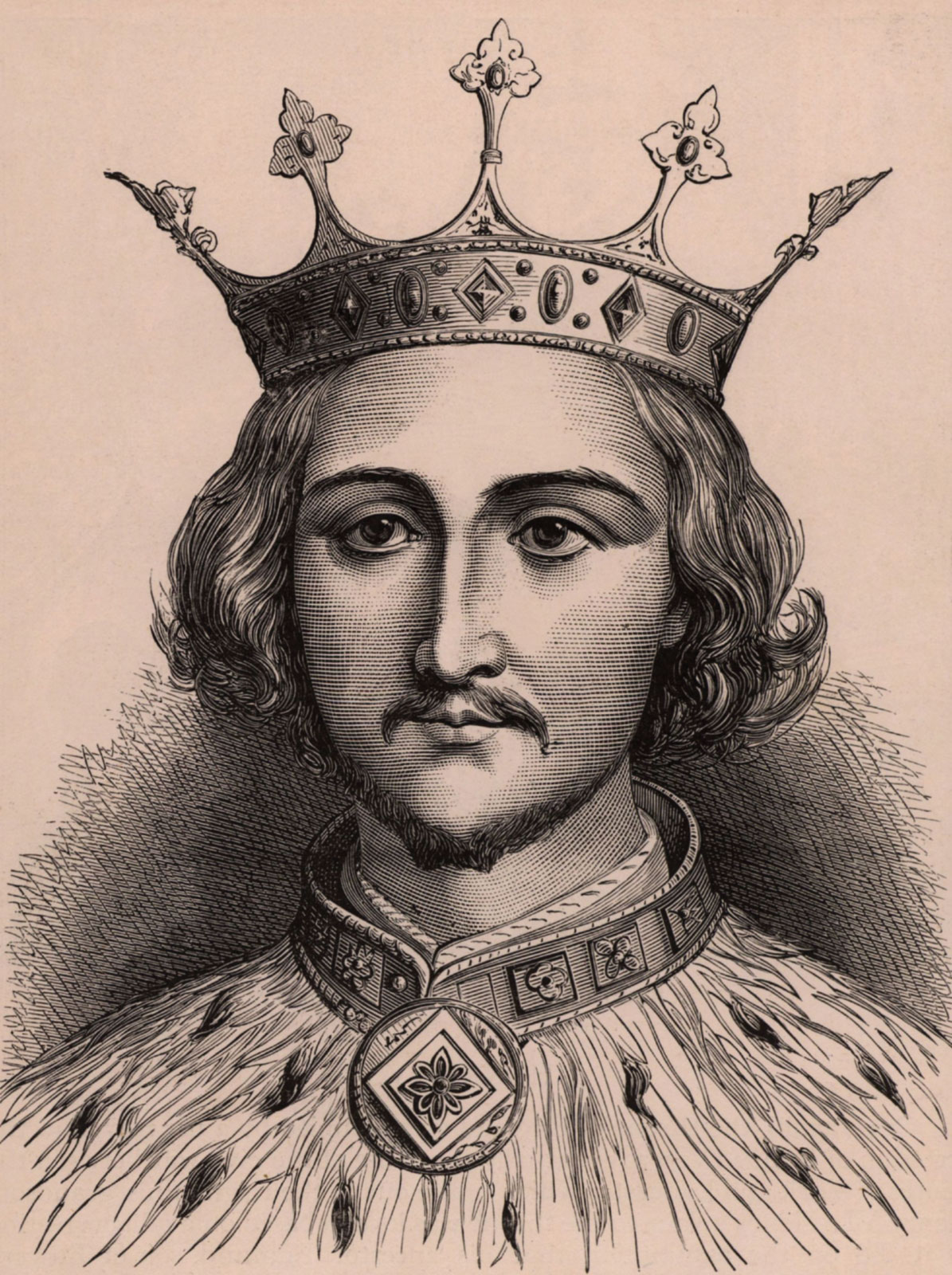
Richard III’s predecessor, Richard II, shares with him the injustice of being maligned through history. In Richard II’s case all we hear that he was a hysterical madman who was rightly removed from his throne (and this world) by his cousin Henry, Duke of Lancaster, who became Henry IV.
All sorts of scenarios are described by eminent historians and biographers, all seemingly aimed at painting a dire picture of Richard. I’m not saying Richard always made the right decisions, because he didn’t, but nor was he quite the figure carried to us through the centuries.
There is a particular incident in 1384 of which you may or may not have heard, that of the Irish Carmelite friar, John Latimer, who warned Richard of a plot against him by his royal uncle, John of Gaunt, Duke of Lancaster (father of Henry IV)

Lancaster wasn’t popular in the land, being rightly or wrongly suspected of always having designs on the throne of his childless nephew, so Richard was a little twitchy about anything concerning him. Richard was justifiably twitchy about another of his three uncles, Thomas of Woodstock, Duke of Gloucester, who seems to have set himself against the king and who was eventually disposed of. The only uncle Richard seems to have trusted was Edmund of Langley, Duke of York.
I only knew the usual (unlikely) story about what happened but have now read an exceedingly interesting paper by L.C. Hector, from the English Historical Review, Volume 69, Number 266, from January 1953, entitled An Alleged Hysterical Outburst of Richard II. Please note the word “alleged”, because for supporters of Richard III it brings to mind such tales as the strawberries and the suddenly withered arm, to which all too many still give credence.
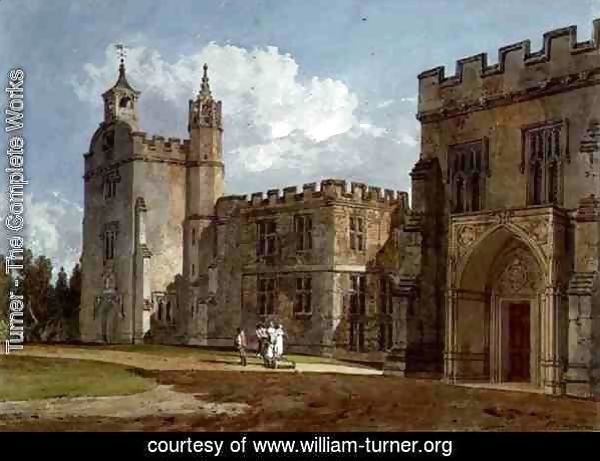
However, I digress from John Latimer. The Parliament that was held in Salisbury is generally recorded as having commenced on 29th April 1384 and risen again during May. One morning after hearing mass in the rooms of Robert de Vere, Earl of Oxford, Richard was approached by the Irish Carmelite celebrant, John Latimer. The friar warned Richard of a plot on his life led by the Duke of Lancaster, which was obviously an unpleasant shock for the king. He had Latimer committed to custody in Salisbury Castle, but on the way a group of nobles and knights (mostly supporters of Lancaster, but not all) hijacked him. They were determined to prove him a liar about Lancaster and make him confess if there was any truth in the plot and if so, who was really behind it. Their actual motives and allegiances can’t be ascertained for certain. However, such awful torture then commenced that it ended with the friar’s dreadful death.
In the meantime, as soon as Latimer had been escorted from the royal presence, it seems that Richard went berserk. Trevelyan says he [Richard] “….burst into hysterical fury, threw his cap and slippers out of the window, and flung himself about the room like a madman….” Armitage-Smith uses more or less the same language, as do Ramsay, Oman and Vickers. Others too, with Vickers adding the strong overlay that such conduct was habitual for Richard. Really? Proof, please?

It seems they have all based their judgement on the Westminster chronicle account of the whole affair, but examination of the printed text of the chronicle (Corpus Christi College, Cambridge, MS. 197, p. 142) reveals something that has been overlooked but which L.C Hector spotted. Before certain words in the account you’ll find the letters a, b and c, which indicate that these passages should be read separately but in sequence. Hector explains that this is a common medieval scribal convention to warn readers of discrepancies. The relevant passages should be read together, not as they appear through the text. This oversight, Hector points out, is an editorial blunder by R. Lumby, the editor of the printed version.
So, bearing in mind that Richard had gone berserk, throwing things from the window and hurling himself around the room in a frenzy, a new translation of the relevant passage in the Chronicle, applying the a, b and c convention, paints a rather different story:-
“….the friar pressed home his attack on the duke of Lancaster, running on with such vehemence that the king gave orders for the duke to be put to death without further delay, but the nobles in attendance on him flatly refused to allow this to happen without further enquiry, declaring that it was wrong for anybody to be condemned unheard. After listening to them, the king, like a sensible man, undertook to act in accordance with their advice. He proceeded to ask the friar whether there was anybody else who was privy to this matter, or whether he alone knew of it. To this the friar replied ‘No, lord la Zouche has full knowledge of the affair; and I am well aware that this thing will be the death of me’. The king went on: ‘Take some parchment and draw up two indented bills containing all the charges you wish to prefer against anybody; hand one to me and keep the other in your possession; and then we shall see what we shall do about this.’ The friar, however, was somewhat disconcerted by the prospect of the duke’s replying to the charges brought against him. He therefore, according to a statement by Sir John Clanvowe, immediately shammed insanity, stripping off his cope and shoes and pitching them out of the window and generally producing the behaviour characteristic of a madman. On seeing this, the king ordered him to be kept in custody….”
So, maybe Richard’s initial knee-jerk reaction to have the duke condemned was hasty and ill-thought, but in my opinion it was knee-jerk. He calmed down pretty quickly and didn’t throw his slippers anywhere. The hysterical frothing-at-the-mouth outburst and clothes-pitching should be applied to the friar!


Leave a comment