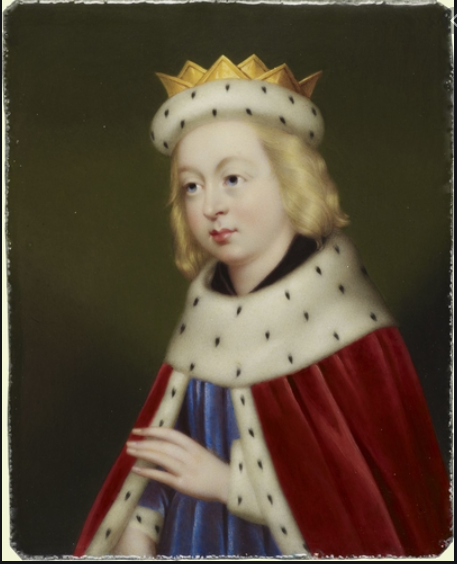
Does anyone know what would happen if a newly succeeding medieval king were too unwell to undergo the rigours of a coronation? Would such a ceremony merely be postponed in the hope of his recovery? What would happen if he didn’t recover, but eventually died still without having had a coronation? Did the omission somehow diminish him?
I know Edward V didn’t have a coronation, although one was certainly planned. Even so he is still referred to as Edward V. But was he king, in every meaning of the word? He was judged to be baseborn and therefore barred from the throne. Then he “disappeared” anyway. So legally, if he’d been king from the moment of the death of his father, Edward IV, he certainly ceased to be when his illegitimacy was revealed.
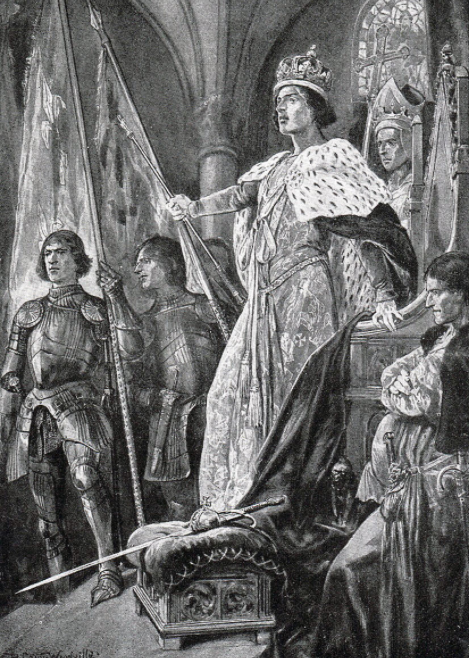
Which brings me back to my first question. What if Edward V had remained legitimate but had been too frail and ill to undertake the toil of a coronation? If he’d then died…would he still have been regarded as the true, beyond-all-shadow-of-doubt king? If he would be so regarded, then it would seem coronations weren’t essential. So why were they apparently so important to every monarch? Simply to have the blessing of the Church? To be anointed with holy oil etc.? To have all the aristocracy present and on its knees? Or to make a show of it all and impress subjects of every persuasion, rich and poor? All of these?
And if Edward V had died childless, presumably we would still have had a King Richard III, just not the same one known to history. Edward’s brother, Richard of Shrewsbury, would be next in line.
Arguments in favour of coronation are that it was to anoint the new king, thus placing him way above everyone else. The holy oil imbued him with powers, including the King’s of Royal Touch, by which he was able to cure sufferers of diseases, including scrofula, which was known as the King’s Evil. A coronation also acknowledged the king as the rightful leader.
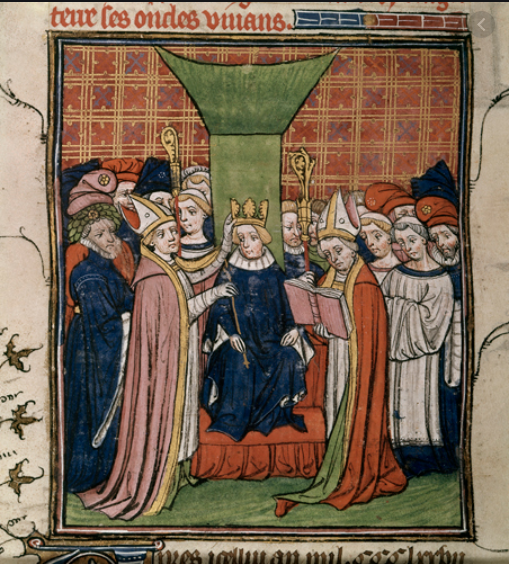
So, once the holy oil had been administered and the archbishop had placed the crown upon the new monarch’s head there was no denying anything. This was the rightful king. Well, unless you were someone like Henry Bolingbroke (Henry IV) or Henry Tudor (Henry VII) who thought it was still OK to kill the king. Clearly the fact of coronations and holy oil didn’t make much difference to them. Well, until it was their own coronation, of course. Oh, that was different. Suddenly they acquired very, very, very traditional views of the sacredness of such ceremony. And both of them spent their reigns on guard for someone to do unto them what they had done unto their predecessors.
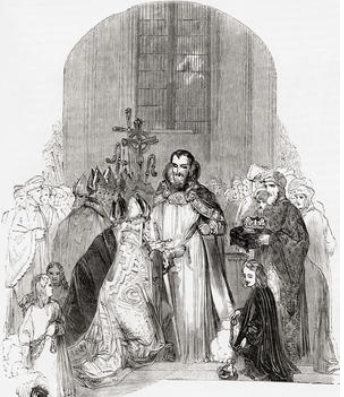
Bolingbroke tried to claim he had the bloodline right to be king, but the fact was that he’d invaded England fully intending to topple Richard II. Which he did. And Richard died mysteriously at Pontefract. Of natural causes? Oh, of course. Perish any other thought. The actual rightful bloodline after Richard’s death was that of the Mortimer Earls of March, who were descended from Lionel of Clarence, the second eldest son of Edward III. Bolingbroke was descended from John of Gaunt, the third eldest and therefore a junior line.
Of course, Tudor tried to get around his crime by pretending his reign dated from the day before Bosworth, thus de-kinging (?) Richard III. He didn’t get away with it. He had to acknowledge that Richard had indeed been the true and anointed king. But Tudor was then recognised as king by Parliamentary statute. Bingo. Job done. Of course, Richard III had also been recognised this way, but shhh. We won’t mention that.
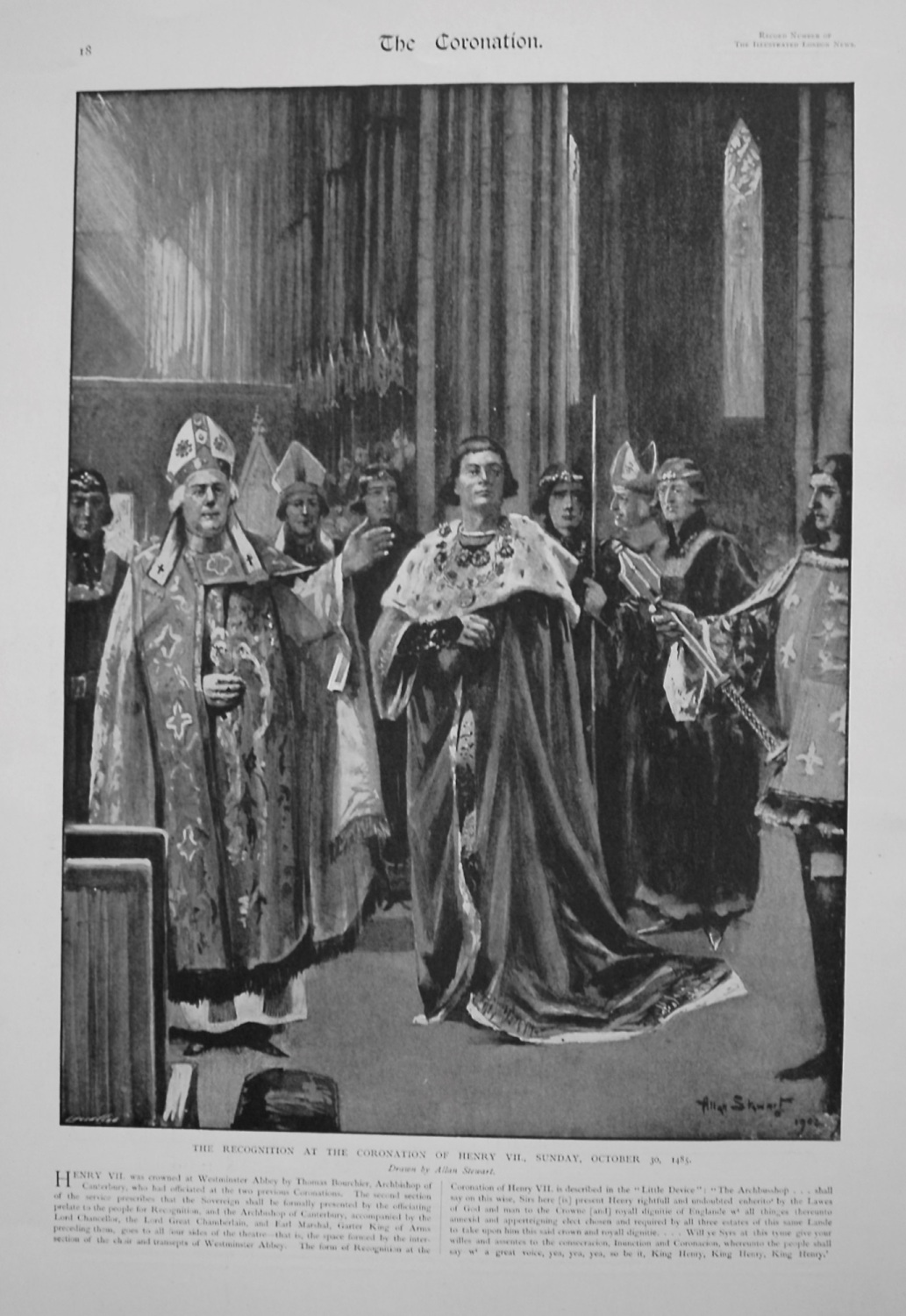
Anyway, all that aside, it would seem that Kings of England (I can’t speak for anywhere else) wanted to be crowned at a proper coronation. They wanted the holy oil drizzled upon them, then be given the orb and sceptre, and have the services of an archbishop to say the ritual words and place the crown on their heads.
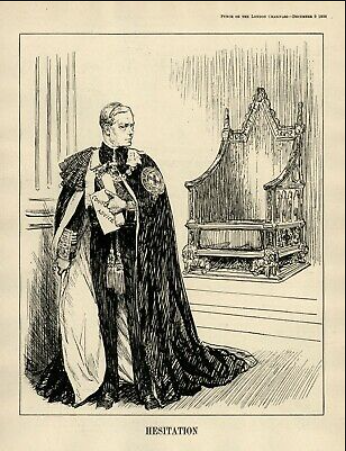
So a king who hadn’t had all this was surely not an absolutely beyond-all-shadow-of-doubt monarch? But in Edward V’s case, it would seem he was. Or so history decrees. I fear I cannot agree. I think the omission of the coronation made him less than a king. The same for Edward VIII centuries later. He was going to be king but vacated his position before a coronation. Arguably, so did Edward V. So they weren’t proper kings. Not in my eyes anyway.


 The New Murrey and Blue blog
Leave a comment