The following passage is taken from RITES OF PASSAGE: Cultures of Transition in the Fourteenth Century, edited by Nicola F. McDonald and W. M. Ormrod
“….to become ‘mature’ (in every sense of the word) demanded the achievement of progeny. And this, of course, is what Edward III and Queen Philippa had done – ultimately, indeed, spectacularly so. Their case emphasizes most particularly the point I am making about the birth of children in the coming to power of youthful kings, for it was precisely the public disclosure of Philippa’s first pregnancy in 1330 that created an effective fracture in Queen Isabella’s assumed powers of regency. It was held imperative that Philippa be crowned before she gave birth (an interesting perspective worthy of discussion in its own right); and her elevation to the full rank of crowned and anointed royal consort inevitably raised issues about the basis on which Isabella herself continued to exercise royal power….”
While reading the above paper, it occurred to me that maybe there was a little more to the delay in Elizabeth of York’s coronation than I at first thought. Granted, the quoted passage concerns an earlier century, and a more youthful king and queen, but I couldn’t help thinking of Elizabeth’s case.
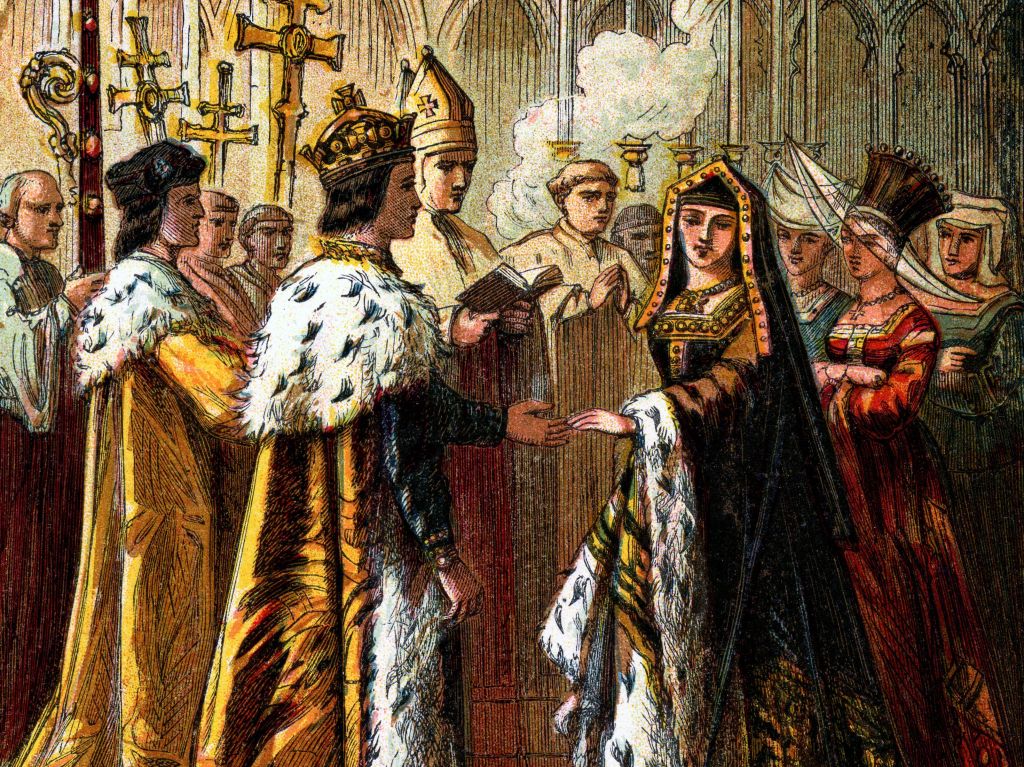
We all know that ultimately Henry VII’s marriage was a successful one, and probably happy, but it wasn’t necessarily like that in the beginning. Setting aside all the whispers that the birth of their son Arthur only eight months after the wedding meant the pair had anticipated their vows, and that Henry was simply loath to give Elizabeth the position she warranted at his side in case it diminished his own claim to the throne, might there have been another reason for the delay? They were married on 18 January 1486, their first son was born on 20 September 1486, and Elizabeth’s coronation took place on 25 November 1487, almost two years after the marriage.
What if the names in the quoted passage were changed, and it referred to Henry, Elizabeth and Margaret Beaufort, a lady who most certainly didn’t want to give any ground whatsoever to her daughter-in-law. What if it wasn’t Henry who was loath to fully acknowledge his Yorkist wife, but his strong, influential, bitterly determined mother, who at that time was undoubtedly the most important woman in the realm?
It seemed to take Henry a very long time to finally stand up to Margaret and take his wife’s side. Was he a hen-pecked son, too timid to overrule his formidable mother? Margaret would obviously be pleased that a son would cement her son’s hoped-for dynasty, but might she also be jittery because the baby enhanced Elizabeth’s standing? Maybe the last thing Margaret would want was Elizabeth’s coronation, in case the new queen turned out to be stronger than expected. Margaret thoroughly enjoyed being queen in all but crown.
I’m not an expert on these things, but after reading this exceedingly interesting paper, I have to wonder if Margaret’s spoon was at work in this particular royal soup. After all, she knew all about usurpation.


 The New Murrey and Blue blog
Leave a reply to Sue Bursztynski (@SueBursztynski) Cancel reply