(don’t bother, it’s traditionalist fare masquerading as funny-ha-ha).
When reading the Yorkshire post I came upon the following sentence: “It’s thought that the white rose was adopted as a symbol in the 14th century, when it was introduced by Edmund of Langley, the first Duke of York and founder of the House of York, a dynasty related to the Plantagenet kings.”
Related to the Plantagenet kings? Well, yes, they were all related, but the implication seems to be that they weren’t Plantagenets themselves. As far as I’m concerned, the House of York was Plantagenet, as was the House of Lancaster. They were two parts of the House of Plantagenet, fighting each other.
But there is a school of thought that considers the true House of Plantagenet to have ended with the death of Richard II, who was, of course, the last king of the senior line of descent. He was the only surviving son of the Black Prince, who was himself the senior son and heir of Edward III, who was in turn the senior son of Edward II, etc. etc. It begins to sound like the Bible, with all the “begats”.
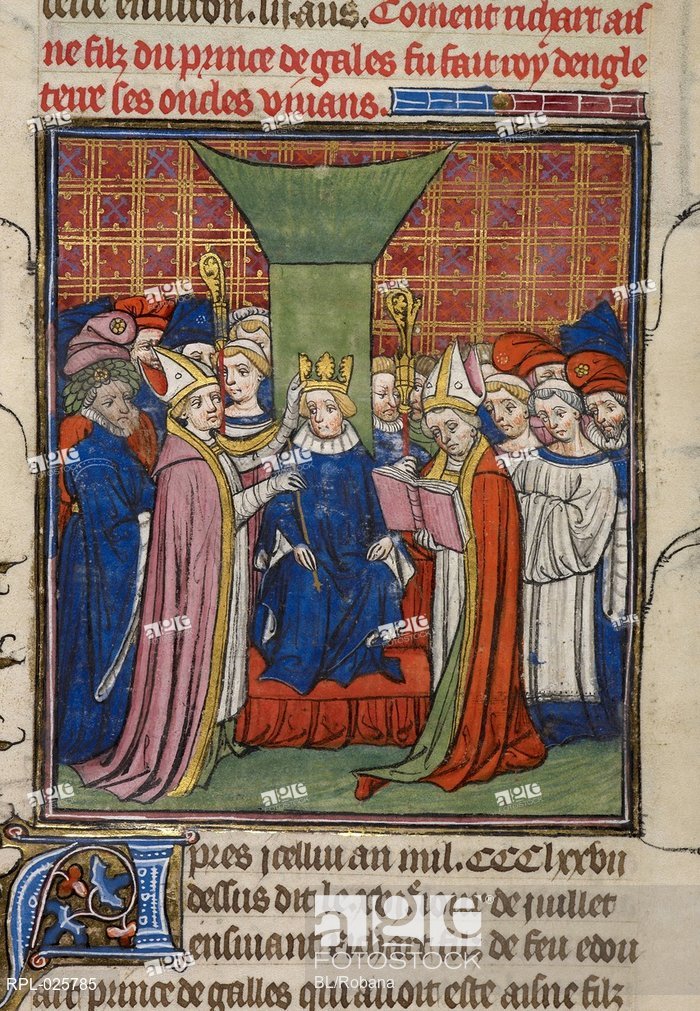
The Black Prince pre-deceased his father, and his brothers startled jostling for control of Richard, who was only a boy at that time. When Richard was married to Anne of Bohemia it was expected that he would produce an heir, thus continuing the senior line. But he and Anne were childless, Cue more jostling from the increasingly ambitious uncles. Especially John of Gaunt, Duke of Lancaster, who out-ambitioned the lot of them. Because he married the elder daughter of the King of Castile, Gaunt thought he had a right to the throne of that land, and demanded that he be addressed as “My Lord of Castile”. Gaunt also wanted the English succession to go to him and his line, should Richard die without issue, and he is believed to have persuaded/cajoled/forced the senile, failing old Edward III into agreeing to an entail that would ensure this. It is also believed that in due course Richard II disposed of this entail.
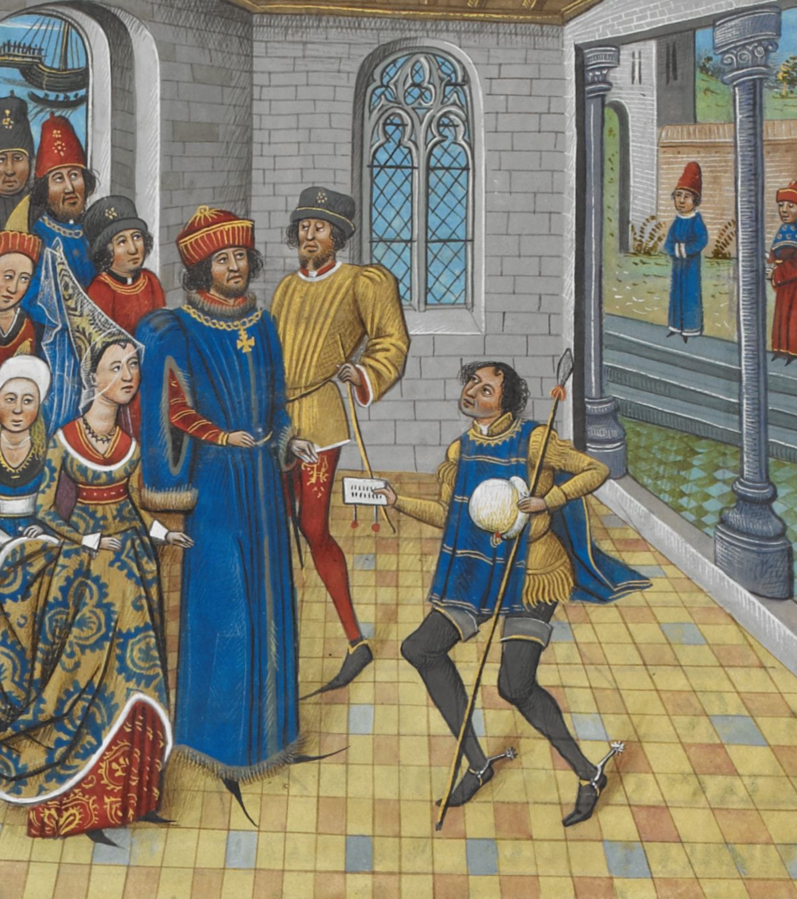
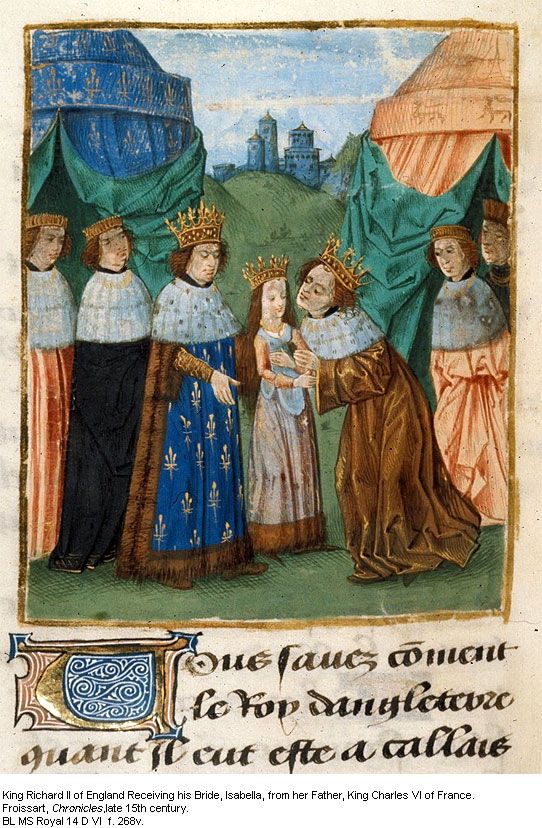
Then Anne of Bohemia died, and instead of taking another wife of a suitable age to have children, Richard married a little girl, Isabella of France. Not a wise move, because it would be years before she’d be considered old enough to consummate the marriage. Richard put peace with France above his own succession.
Richard’s rule was not popular among the nobility, and when Lancaster died, his son Henry Bolingbroke became duke. Well, Richard and Henry had never got on, in fact they loathed the sight of each other (or so it seems to me, even though they were thrown together as boys) and Richard banished Henry into exile (a long story). Richard then confiscated the entire Lancaster inheritance, which was yet another very unwise move, because Henry came back with an army. He caught Richard (whose next exceedingly unwise move had been to go off to Ireland with all his friends – he specialised in being unwise) on the hop, and disposed of him. Henry then usurped the throne as Henry IV. Thus the House of Lancaster took the crown.

Henry IV’s coronation sealed the moment the Plantagenets split, but they all remained Plantagenets. There were plenty of people in England who didn’t believe Henry, descended from Edward III’s third son, had any right to the throne, because there were descendants (the Mortimer Earls of March) from Edward III’s second son, Lionel of Clarence. Lionel had passed away some time before, leaving a daughter. The Mortimers would eventually be blood descendants of Edward III’s fourth son, Edmund of Langley, 1st Duke of York. Therefore the 5th Earl of March, who was a mere child, was deemed to have a stronger claim than Henry IV, who had usurped Richard II’s throne and probably seen to that unhappy king’s murder, and was only descended from Edward III’s third son, John of Gaunt. But slick Henry could easily see off an opponent who was less than ten years old!
And so the rebellious rumbles began and did not go away. They were still around when the House of Tudor eventually held the throne.
But did this dichotomy in the Plantagenet family make Henry IV any less of a Plantagenet than Richard II had been? I think not. They were both grandsons of Edward III as well as being first cousins, I cannot see that Henry suddenly ceased to be a Plantagenet and became solely a Lancastrian. The bloodline remained the same, the difference being that Henry was from Edward III’s third son, whereas Richard had been from the first and senior line.
Then, in due course, Henry IV died and his son Henry V came and went, until his son, Henry VI, a mere baby, ascended the throne. Henry VI reigned a long time, but was a disastrous king, far too weak and impressionable to rule England. He drifted in an out of mental illness, eventually requiring a Protector to be appointed to safeguard the realm. Along came the 3rd Duke of York, who was directly descended from the fourth son of Edward III, but also from the second son, Lionel, Duke of Clarence, through Lionel’s only child, a daughter. It was from her marriage to a Mortimer that in many eyes made the then Earl of March the rightful king when Henry IV usurped the throne. A subsequent marital union between York and March thus gave the 3rd Duke of York a very strong case indeed.
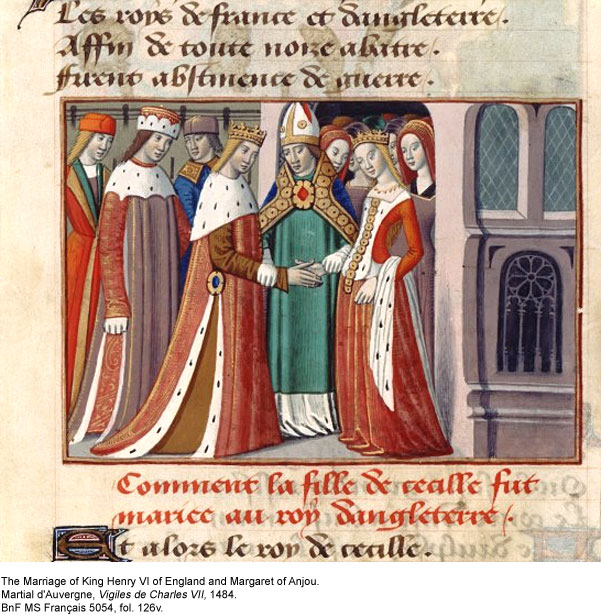
York felt (rightly in my opinion) that he had a better claim to the throne than Henry VI, but his ambitions were thwarted by the convenient (after years of barren marriage to Margaret of Anjou) arrival of Henry VI’s son. It was widely believed that Henry (who had been mentally ill at the time of the child’s conception) was in reality made a cuckold by his wife’s affair with Edmund Beaufort, 2nd Duke of Somerset. Somerset was also descended from John of Gaunt, albeit through an originally illegitimate line, the Beauforts. Perhaps he and Queen Margaret decided he was close enough in blood for it to be OK? Who knows. Perhaps it was just passion.
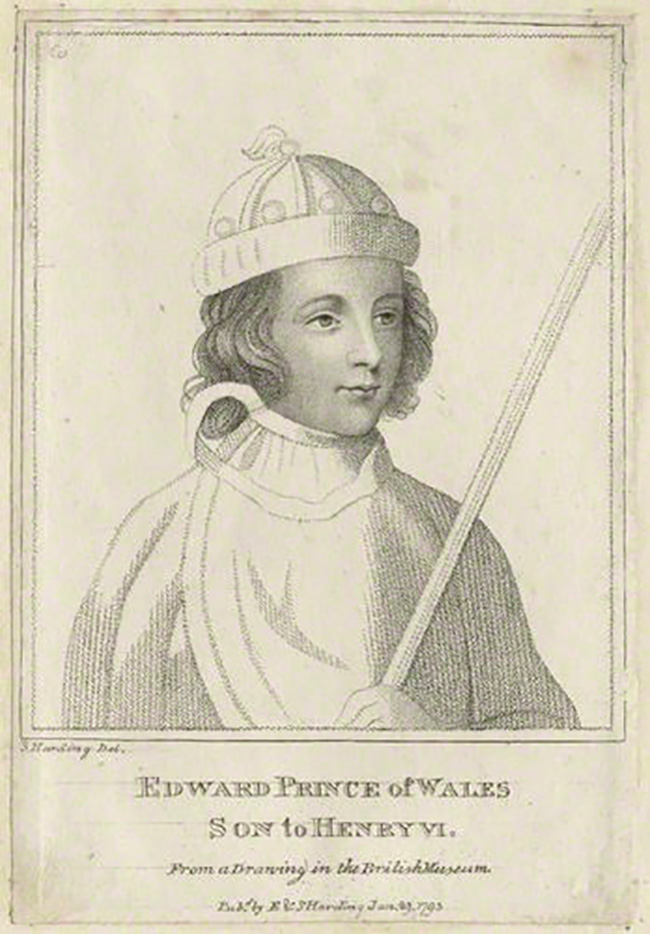
York therefore encountered effective opposition from Margaret, Somerset and others at the Lancastrian court, even though he was better qualified for the crown. Thus he rebelled, and the so-called Wars of the Roses began. You either supported York, or Lancaster, or kept your head down and hoped to survive unnoticed.
The above paragraphs illustrate the very basics of what prompted the Wars of the Roses: the white rose for York and the red rose for Lancaster. We had three Lancastrian kings, then two (three if you count Edward V) Yorkist kings in Edward IV and Richard III.
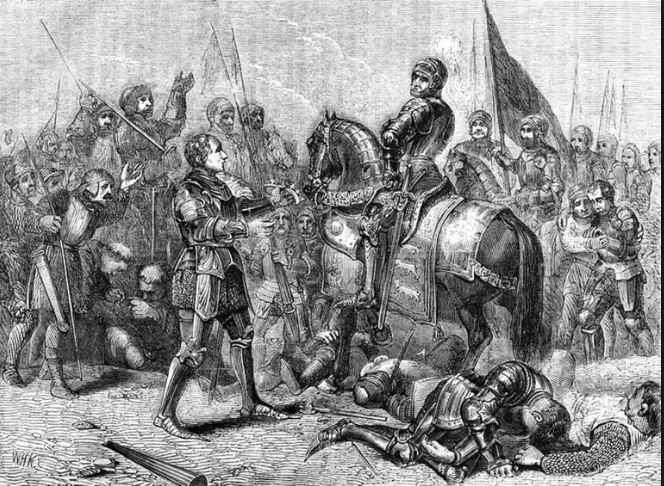
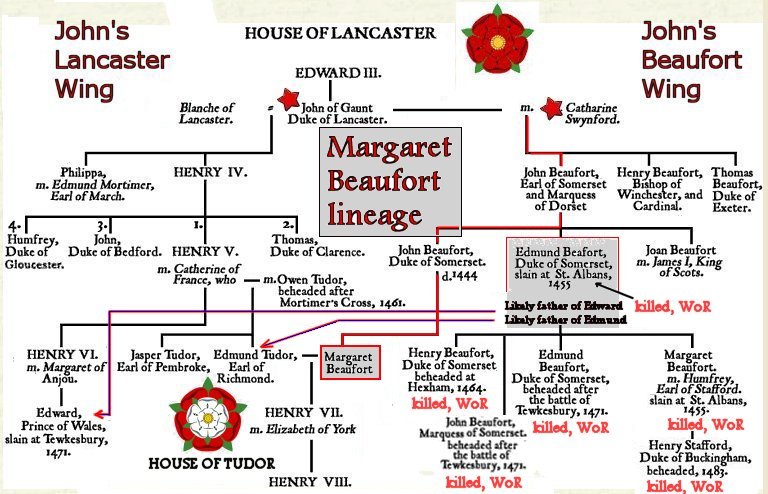
Then came Bosworth, in which Richard III was cruelly betrayed by the Stanleys, who turned traitor mid-battle to support Richard’s opponent, Henry Tudor (Henry VII), whose actual blood claim to the crown of England was dodgy to say the least. Little more than right of conquest. His descent came through the Beauforts, who were the result of John of Gaunt’s extra-marital affair with Katherine Swynford and thus baseborn. Well, Gaunt managed to persuade Richard II to legitimize them, but when their half-brother Henry IV swiped the throne from Richard, he made sure to exclude the Beauforts from any claim to the throne. The line of succession would descend through his offspring, not his half-blood siblings.
This made Henry VII a mere Beaufort through his mother Margaret Beaufort, whose father was John Beaufort, 1st Duke of Somerset, the eldest of Gaunt’s Beaufort brood. But, it is thought Henry VII was probably also a Beaufort on his father’s side. There had been an affair between Henry V’s widow, Catherine of Valois (who died today in 1437), and the self-same Edmund Beaufort (third son of John Beaufort, 1st Duke of Somerset) who was thought to have fathered Henry VI’s son and heir! Edmund was a busy boy between the sheets. I know that posterity has Owen Tudor as Catherine’s only love after the death of Henry V, but Edmund Beaufort is far more likely, as Harriss and Ashdown-Hill , inter alia, both said. It was also thought so at the time, and hasty moves were made in Parliament to regulate remarriages for queens of England. And Catherine’s first son, supposedly by Owen Tudor, was named Edmund. A coincidence? Maybe. Maybe not.
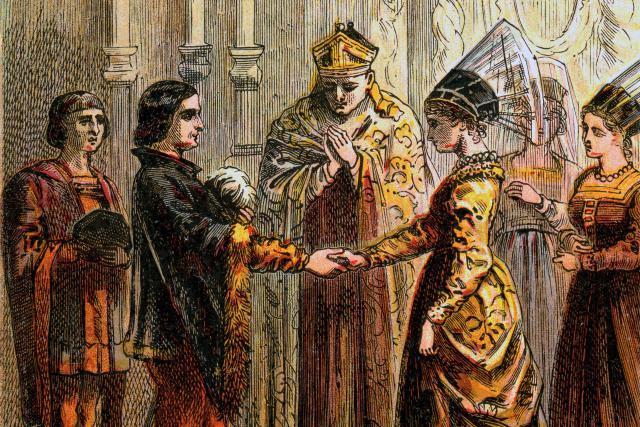
Let’s face it, Henry VII’s probable total descent through the Beauforts wasn’t much to brag about when it came to parking his behind on the throne with any real authority. He was not a Plantagenet, and that particular parking lot was not built on solid, unchallengeable ground. So he married Elizabeth of York, eldest daughter of Edward IV, who was a Plantagenet, and thus managed to make himself more secure on the throne by “uniting” the two warring Plantagenet houses. Not entirely secure, for there were pretenders throughout his reign, but he survived, dropped the pretence of being a Beaufort/Lancastrian, and instead set up the House of Tudor, which gave us a truly charming sequence of monarchs, I think you’ll agree. The only one worth her salt was Elizabeth.
So there you have my version of the bare bones of English Plantagenet history from Richard II to Richard III. To my mind, all the kings (between and including those two) were Plantagenets. They didn’t cease to be Plantagenet and suddenly morph into York or Lancaster. They all claimed direct descent through the many sons of Edward III, and thus to all the Plantagenet and Angevin Kings of England who’d gone before.
Is my reasoning correct? Or do you disagree? Please feel free to comment. To help you sort out all these different monarchs, here is a tree from https://www.britroyals.com/plantagenettree.asp.


 The New Murrey and Blue blog
Leave a comment