An Gof and the Cornish Rebellion 1497
As the early summer sun seared upon Bodmin Moor, sweeping south westwards to Goonhilly Downs , which straddles a swathe of the Lizard Peninsula , the tortured arid landscapes weren’t the only features of 1497 Cornwall, threatening to ignite in a blaze of fiery agitation. In 1337 the great Plantagenet King Edward III decreed his young son (Edward) “Duke of Cornwall”. The relevant Charter recognized that Cornwall , was one of the “remarkable places in our kingdoms”. The Duchy acknowledged Cornwall’s “difference” while maintaining a substantial connection to the dynastic regime . It also took jurisdiction of an earlier institution called the Stannaries, which were re-founded in 1201 during the reign of King John. They offered Cornish tinners (who in 1586 were reported to be “so rough and mutinous , multitude , 10,000 or 12,000 the most strong men in England”! ) licence from the regular system of law. The Stannary Parliament enjoyed considerable authority which could even overrule Westminster laws. However, there was no exemption from the king’s taxes.
By the early 1490s, due to a diminishing annual tin yield, all was not well . Tensions arose when the Council of Prince Arthur, Duke of Cornwall , declared tougher regulations for the tin industry. Subsequently as might have been expected of a maverick spirited people the rules were mostly breached . This show of audacity was swiftly curtailed by an indignant Henry VII who suspended the Cornish Stannary government . Thus the scene was set for an even greater conflict which revolved around the enduring contention of taxation.
Perkin Warbeck, who was a pretender to the English throne had garnered support in Scotland , which had the effect of precipitating additional national taxes to finance military action against his northern allies. John Arundell , Richard Flamank, John Trevenor, and Thomas Erisey, were the tax assessors in Cornwall. Not surprisingly the hard pressed Cornish were soon griping about the unwelcome burden to be foisted on them . The initial expression of blatant insurrection was voiced in the distant parish of St Keverne, situated on the Lizard Peninsula . The poorest were exempted from the tax, and it’s been indicted that a prime motive for the dissenters’ rage was the detested tax collector Sir John Oby. The chief advocates of Cornish disapproval were a tough St Keverne, blacksmith called Michael Joseph , known as An Gof (The Smith) and an articulate Bodmin lawyer , Thomas Flamank ; son of the tax assessor Richard Flamank . Consequently their impassioned rhetoric had the effect of giving rise to an insurgent march towards London. On reaching Wells, in Somerset, they were joined by James Tuchet, “Lord Audley”, who became the commander of the force . By June , the rustic band of brothers were closing on their destination but were to be disappointed as they weren’t reinforced by the previously rebellious men of Kent. Some became disheartened and deserted the cause. The Great Chronicle of London , described a rebel army of 15,000 who were “favoured” by the people of the territories they’d passed through….”but which became reduced to between 9,000 -10,000 when it eventually set up camp at Blackheath.
Tragedy at Blackheath:
The rebel encampment was wisely sited on top of a hill ; the plan being to attack Henry Tudor’s army (whose total number of 25,000 included 8,000 soldiers assembled by Lord Daubeney in readiness for war with Scotland) from the high ground ; however, in reality victory over well equipped troops under experienced leadership by a company of peasants armed with little more than bows, arrows, scythes and pikes would have been a miracle . Thus, on the morning of the 17th of June 1497, the Cornish found their position surrounded by the king’s forces , though Henry, himself with a huge reserve and artillery kept out of danger at St George’s Fields, in the suburbs of London ! Rebel archers were stationed to block entry to their chosen ground via Deptford Bridge ; letting fly with arrows a full yard long , “so strong and mighty a bow the Cornishmen were said to draw” ! Though initially tested , Daubeney broke through with (depending on conflicting sources) reported losses of between 8 to 300. Inexperience told when the Cornish failed to support the archers defending the bridge, offering Royal troops the opportunity to storm across to engage their men who had neither horse nor artillery . Soon , outnumbered and with vastly inferior weapons, the rebellious enterprise, whose slain were put at between 200 and 2,000, which had started out with such burning fervour was over and, by 2pm Henry VII was riding triumphantly through London . The three principal leaders of the rebellion were all captured and executed . An Gof and fellow Cornishman Flamank, were both drawn, hanged and quartered at Tyburn, on the 27th of June 1497 while Audley, their noble associate was beheaded at Tower Hill on the 28th. Their heads were then gibbeted on London Bridge.
So it was that the Cornish Rebellion of 1497 ended in military defeat , yet has since catapulted the names of it’s valiant local heroes to Cornish legendary status. Uncannily the last words of An Gof, are reported as being that he should have “a name perpetual and a fame permanent and immortal” . Thomas Flamank’s were said to be, “Speak the truth and only then can you be free of your chains”.
Other names mentioned as having joined the 1497 uprising are :
John Trevysall from Madron
William Antron from Antron
John Tresynny from Penryn
John Rosewarne from Rosewarne
Ralph Retallack from St Columb
Richard Borlase from St Wenn
Thomas Polgrene from Polgrene
John Allan from Stoke Climsland
William Ham from Stoke Climsland
Fifty priests and 69 women were also involved .
If Henry Tudor thought that the crushing of the Cornish at Blackheath , would discourage them from further insurgence, he was mistaken and, a mere two months later, they were again mobilising ; this time under the leadership of none other than Yorkist pretender Perkin Warbeck, who was proclaimed King Richard IV at Bodmin! A new force, numbering in the region of 6000 men which included members of the minor Cornish gentry marched into Devon, where they laid siege to Exeter, but following hand to hand fighting were repulsed and moved on to Taunton , which was the place where, bewildered and vexed, they were deserted by Warbeck ! Following their surrender some were executed, but the majority were pardoned ; those with material resources having to pay for the privilege .
Henry VII imposed heavy fines on Cornwall, which only served to sustain resentment . However, by 1508 he opted for a change in strategy to gain the allegiance the Cornish, with the Charter of Pardon, which restored the Stannaries.
Article by Max Retallack, a descendent of Thomas Flamank : 2019
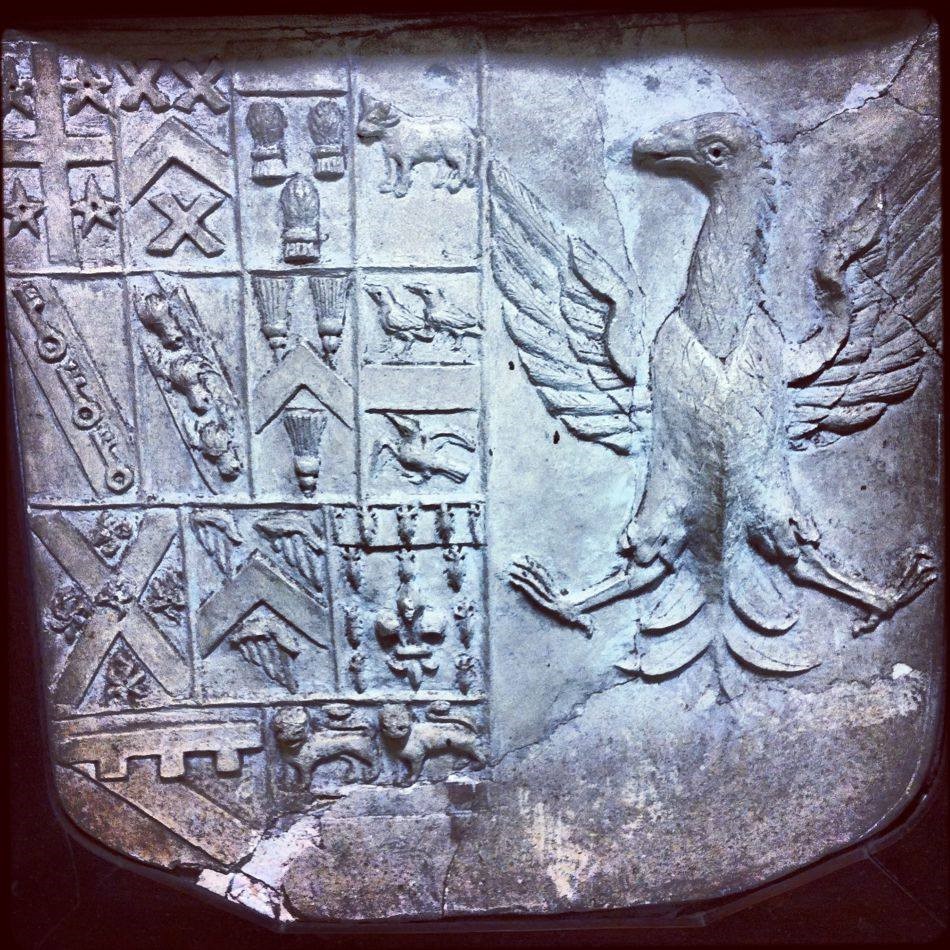 Flamank Coat of Arms : Thomas Flamank was co leader, with Michael Joseph “An Gof “, of the Cornish Rebellion of 1497.
 Statue depicting Cornish 1497 Rebellion leaders Michael Joseph “An Gof” and Thomas Flamank , sited at the entrance of the village of St Keverne, Cornwall, to commemorate the 500th Anniversary of the uprising .

 The New Murrey and Blue blog
Leave a reply to The OTHER MARGARET BEAUFORT – murreyandblue Cancel reply