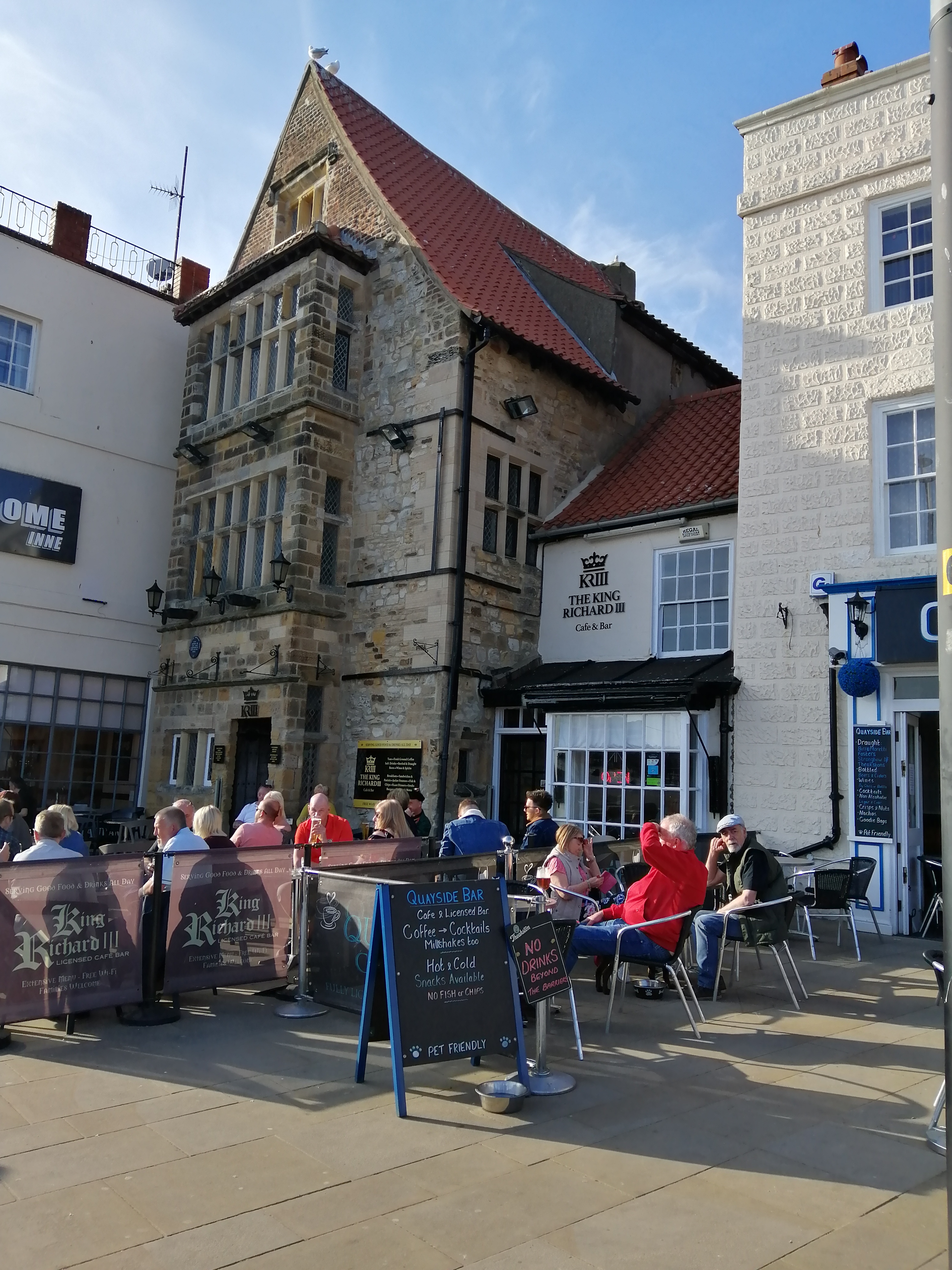
If you visit Scarborough Castle and go down towards the beach from there, turn your head to your right and walk along the seafront opposite the Harbour, and you will notice something singular. Among the shops, cafés and fish-and-chip restaurants, there is a house that stands out because it is the oldest in the area. It is the ‘paradise’ of Ricardians in Scarborough as it is called ‘The King Richard III’ and it is a very well maintained restaurant where you can have a delicious lunch or just a pint, inside the ancient building or outside to enjoy the sun and the sea breeze.
Why was the restaurant named after the last
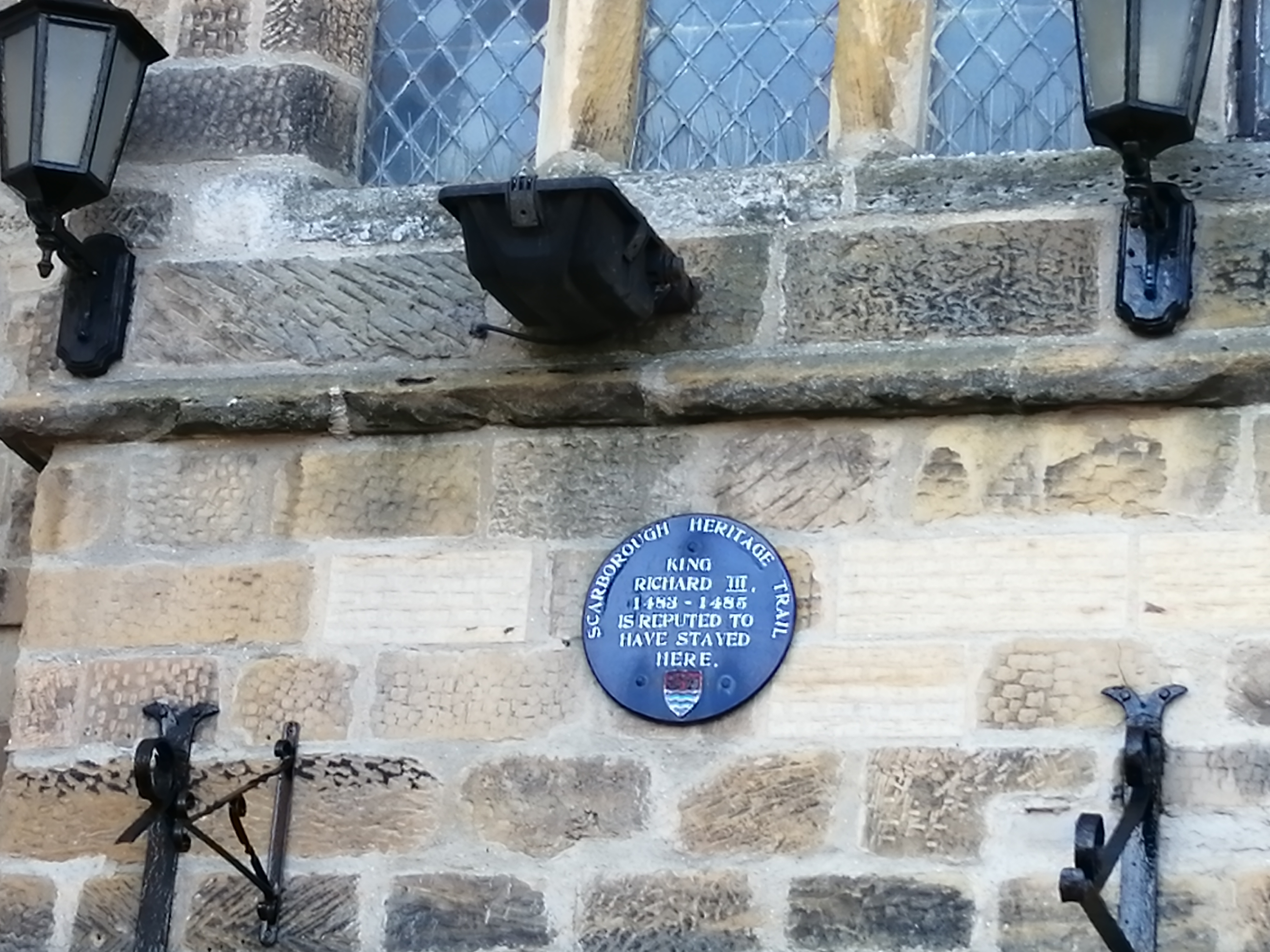
warrior king of the House of York? There is a compelling story that might give people an explanation. In the summer of 1484, Richard III went to Scarborough, apparently for naval business. He loved Scarborough and Yorkshire in general so it is easy to imagine he enjoyed the wonderful view of the bay and the fresh, salty sea air especially after the terrible spring that had taken away his only legitimate son from him. It is said that during his stay in Scarborough, the king had chosen to stay in a house rather than in the castle and he chose the building we can still see today.
The story of the building is very interesting and it is a miracle it is still there, intact, as if no time passed for it. There have been attempts to find out the history of the house from the 15th century till today, but the lack of documentation has made it impossible to trace the owner of the house during Richard’s reign. We know that it was the property of the Tindall family, who had a long history as shipbuilders, but this was in the 17th century. The first owner from the Tindall family was James and, when he died, his son lived in the house with his family. When the Tindalls moved, in 1880, the house became the property of a baker, William Purcell, who baked in the house and after this it became an engineering shop owned by Thomas Varley. The next owner was a certain Mary Forrest who stayed there until 1850. Since then, the house has had other owners, including a certain Mr John Wray, and a picture was taken in 1892 in which the plaque is still visible. There is a sign over the top with the following information: ‘Late Residence of Richard III, May 22nd 1484’.

During the Victorian Age, they had a terrible habit of trying to modernise every ancient building, so the house was completely changed, with the bay windows removed and the stone walls plastered. The house became a grocery shop until 1905. In 1908, the house was acquired by The Seaman’s Mission Institute but, at the same time, the mission started to allow visitors to view the house for an admission fee of 2d. Possibly, this gave the new owner, Mr Booth, the idea to take advantage of the story of the king by transforming the property into a museum in 1914. Unfortunately, just a year later, Mr Booth drowned on the Lusitania and the house was bought by one of his relatives, Mr Burrows. Referring to Mrs Wharton’s drawings, Burrows was able to remove the Victorian plaster and install a replica of the original bay windows, so that the house now looks very similar to the original medieval building. Mrs Wharton’s drawings also show the so-called ‘King’s Bedchamber’ located on the second floor, the furniture inside and the decorated plastered ceiling.
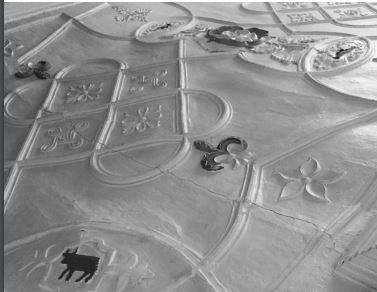
The building’s restoration was not an easy task. It started in 1915 and it was discovered that the building was larger than expected, detached, with a two-storey hall and the extended west-wing. Boarding, plaster and wallpaper were removed and many details came to life including the decorative plasterwork in the ‘King’s Bedchamber’ decorated with a geometrical multi curve and a pattern of square panels with thin ribs. In the centre there is the York Rose, the Arms of Richard III and, at each of the four corners, the bull of the Neville family.

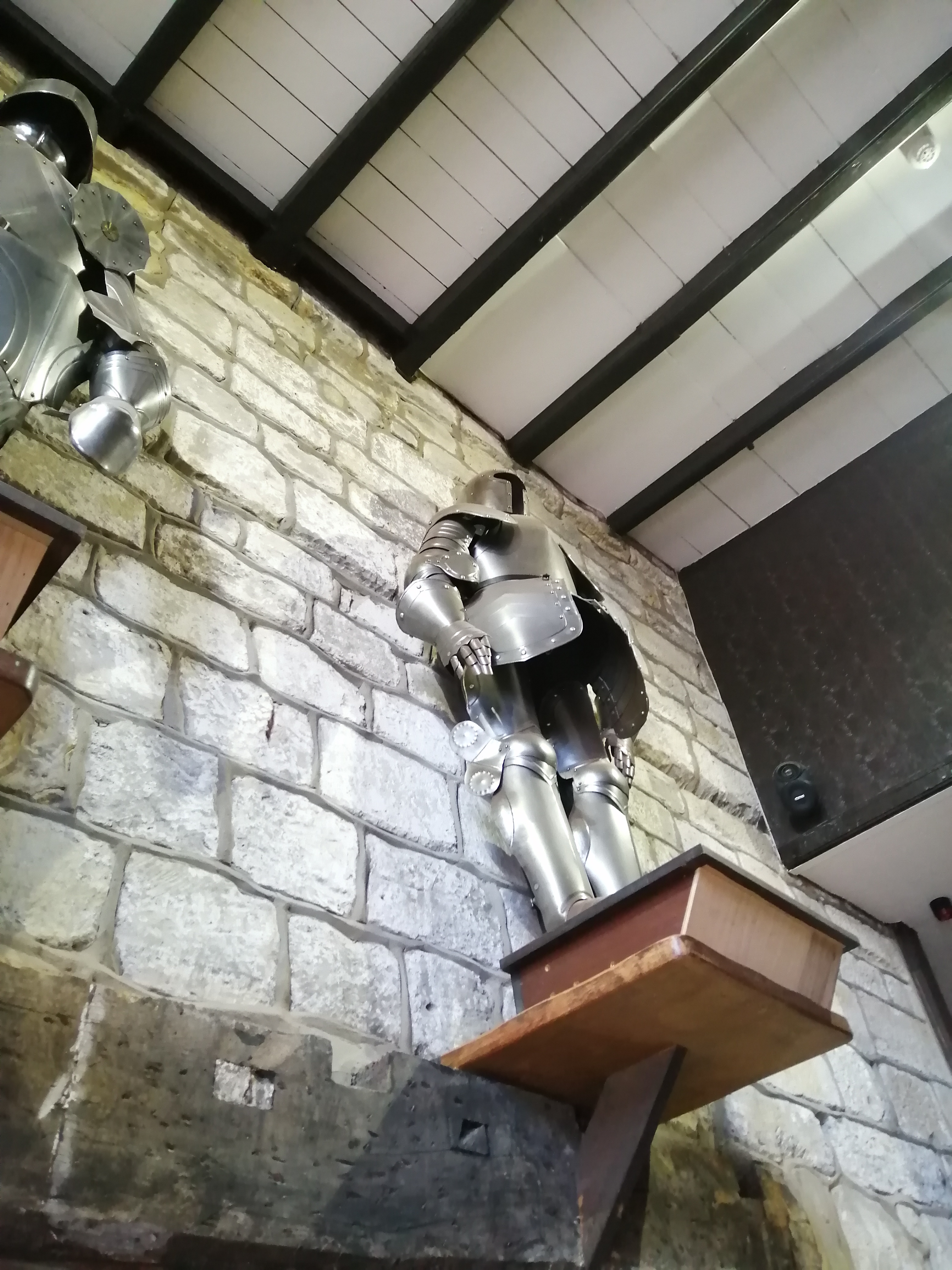
Today, the main hall is named ‘The King’s Hall’ and there is a stained glass with the symbol RIII. It is possible to see two reproductions of War of the Roses suits of armour and a panel in red with the same features as the glass. The King Richard III house is a Grade I listed building.

It is not sure that King Richard stayed in this house because the castle is very close to it, so there shouldn’t have been any reason for the King to sleep in a normal house. Moreover, in the castle, you can see some panels with multiple choice questions. One of these asks: ‘Who was the last owner of the castle?’ and the right answer is, of course, Richard III. Where does the truth lie? My personal opinion is that the King slept in his castle and he possibly had a pint or a glass of wine in the house. One thing is certain; Richard had a particular dedication to the town of Scarborough. Had he survived Bosworth, Scarborough and its surroundings would have become an independent county, as written in a vellum document of his reign but, sadly, fate decided differently.


 The New Murrey and Blue blog
Leave a reply to The delights within the King Richard III restaurant in Scarborough…. – The New Murrey and Blue blog Cancel reply