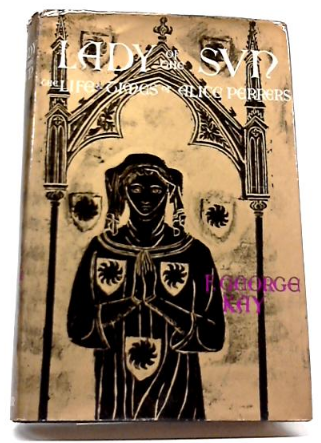
Given her huge notoriety at the time, it’s odd that Edward III’s mistress, Alice Perrers, has (as far as I can ascertain) only garnered one biography. This is Lady of the Sun by F George Kay, 1966 (and seemingly never reprinted). There are no surviving contemporary likenesses of Alice, nor even a description of her. Her birth and death dates are not known, except that her will was dated 20th August 1400. She was buried at an Upminster church which has now disappeared, courtesy of Oliver Cromwell. All of which seems very strange, given her importance at the end of Edward III’s long reign.
The title of the book is due to an event on 9th May 1374, when Edward put his mistress on full, inordinately expensive display. The occasion was a tournament at Smithfield, when Alice, dressed entirely in gold as the Lady of the Sun, was driven through the streets of London on a golden chariot. All the knights and ladies of court were there too, including Edward’s sons and their wives. They all swallowed their fury and displayed fixed smiles.
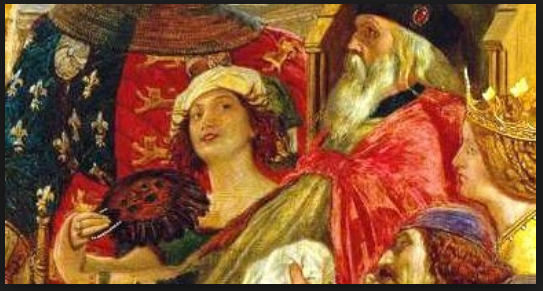
I had great hopes of finding a lot of new information about Alice in Lady of the Sun, and certain incidents in which she was involved, but I fear the hope was vain. It was soon clear why this was the only biography. There is simply not enough known about her, so a lot of the book is just a retelling of the history of England at the time, and in particular Edward III’s marriage to Philippa of Hainault, who had Alice as one of her ladies.
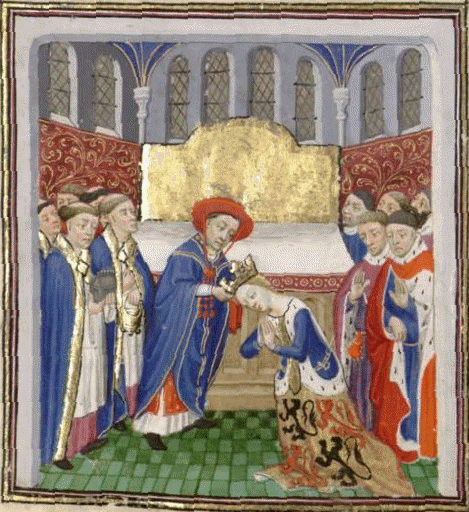
Now that I’m about halfway through the book, I have paused to consider whether it is worth finishing it. I have also paused because of an astonishing attack by F George Kay upon Lionel of Clarence. I confess, I had never found anything before that suggested Lionel was all but a monster—and I’m not talking his height, which was indeed great.
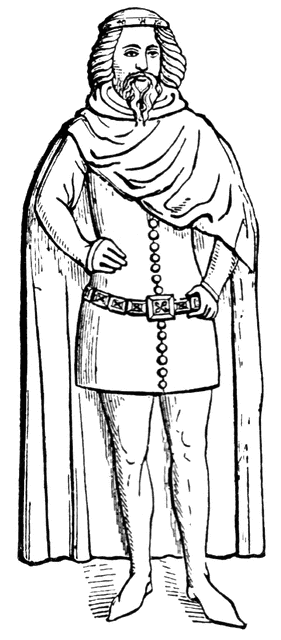
Here is what the author has to say about Lionel:-
“…Lionel was the least attractive of all Philippa’s (the queen) children. He was lazy, cruel and vain. His good looks had ensured from childhood that there was always a woman to spoil him—first his mother and later his wife and various mistresses. King Edward sent Lionel to Ireland in 1361 as Lord Lieutenant. He envisaged his son becoming a sort of vassal king of the country, thereby settling once and for all the troubles of keeping Ireland in order.
“…Lionel personified a type of Englishman who have so regularly in history sown the seeds of hatred among the Irish. He ruled with all the ruthlessness of his elder brother, the Prince of England [Edward of Woodstock—Prince of Wales to most of us!] in the English dominions of France, but without the latter’s chivalry and quirks of generosity.
“…No native Irishman was permitted to approach his person either in the Castle of Dublin or when he moved around the town. He lede the country white with taxes and never appeared without a massive bodyguard, which he permitted to rape and pillage as they wished. They were, indeed, almost forced to loot to maintain themselves. The generous revenues apportioned to Lionel for the maintenance of an armed forced were largely directed into the pockets of his cronies and himself.
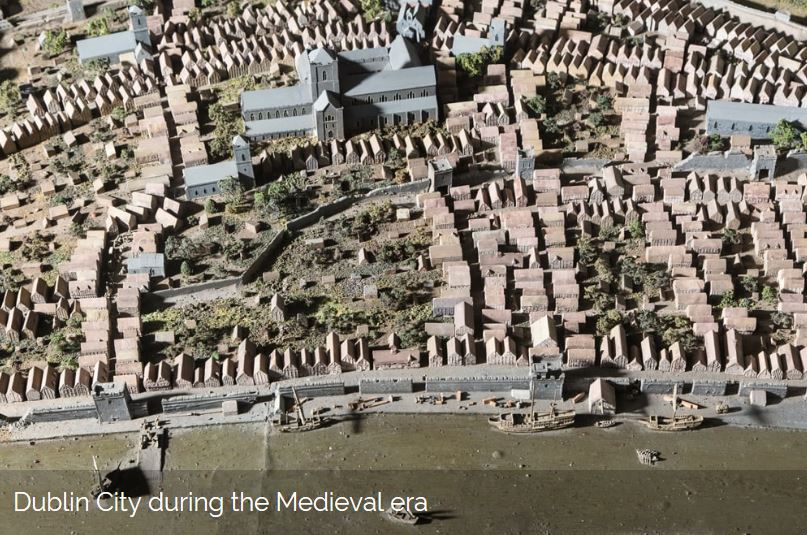
“…The Statute of Kilkenny, passed by a special Parliament held in Ireland, represented Lionel’s most infamous—and fortunately final—act of repression. It prohibited every kind of connexion through marriage, the care of children, or in other ways, between the English and the Irish. It was a policy of complete separation between the rulers and the ruled.
“…Lionel returned home soon afterwards, fearful for his life. His father greeted him with scarce-concealed contempt; his mother, of course, was full of comforting excuses for his disastrous actions…”
Then, a little later:-
“…Nonchalantly Lionel set off to wed his second wife [Violante Visconti]. He left Windsor with a vast and expensive retinue of knights. The Queen and her ladies watched from the great round tower of the castle while the horsemen rode along the banks of the Thames toward London and the Kent coast. Philippa was never to see her son again. He indulged himself in feasting and excessive drinking on a leisurely, spectacular progress across France and married Violante in Milan Cathedral on June 5 [1368 – and maybe it was May 28]. He was dead four months later, having ‘addicted himself overmuch to untimely banquetings’.”
Right.
I have not been able to find out much about F George Kay, except that he was born in 1911 and is now 108. I don’t know his nationality or place of birth, but his other works include books about the Royal Mail and railway locomotives. The covers for the latter books show British locomotives, so I imagine he is British. The F apparently stands for Frederick.
What I do know is that where Lionel of Clarence is concerned, this author comes out with all guns blazing. All I can say is that I’ve never come across Lionel in this light before. Is it true? Well, if so, why has no one else leapt upon it?
As for poor Alice… It is her biography after all. She gets a good press from F George Kay. Her avarice and spite was down to fear and self-protection, and the story of her stealing the rings from the dying Edward’s fingers is just a myth. The general opinion of her affair with Edward is that it commenced when poor Philippa of Hainault was still alive. F George Kay rather glosses this, with the suggestion that it began only after the queen’s death. I don’t know, of course, not having been a fly on the royal bedchamber wall.
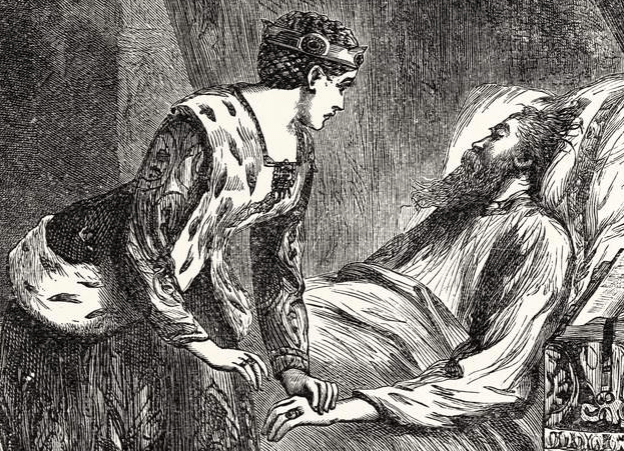
Alice eventually died in obscurity, having been one of those comets that light the sky for a while and then disappear. She certainly made the old king’s last years far happier than he could otherwise have hoped, but it’s sad to think that she might have been with him solely for her own gain. He was fading, a shadow of the great king he had once been, and his mind was beginning to fail him. I do hope she loved him as he deserved.
Alice Perrers has been blackened across the centuries (oh, we Ricardians know about that, do we not?) but whether such condemnation is deserved or not, we may never know.
PS: F George Kay doesn’t like Joan of Kent either. According to him she was ‘a hot-tempered, intolerant snob’. Really? Another first-time-I’ve-read-that moment for me. She always seemed the very opposite to me.

 The New Murrey and Blue blog
Leave a reply to “How does your garden grow, sweet lady?” – murreyandblue Cancel reply