Now that John Ashdown-Hill’s new book (bottom left) on the Tower of London and the “Princes” has been published, we are in a position to know Edward V’s mtDNA, which he would share with his brothers and maternal cousins such as Jane or Henry Pole the Younger. Progress has been made since Moran’s appendix to The Private Life of Edward IV, which detailed potential maternal line relatives who were alive as late as 2016.

Westminster Abbey is, of course, a royal peculiar and it has hitherto proven impossible to obtain permission to access those remains – of whatever number, gender, age, era or species – that purport to be those of Edward IV’s remaining sons in the modern scientific era. They were, however, last asked in 1980 (p.185) and Richard III himself has turned up by this method.

These findings ought to be a game changer and there are more good reasons to be proceed. In 1933, the work of Jeffreys, as of Crick, Watson et al, was wholly unforeseen. Radio carbon dating was also invented after the Second World War.


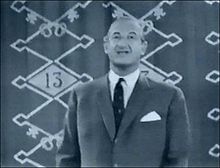
So, with apologies to Michael Miles and Take Your Pick (below right), is it time to “open the box”?


Subscribe to my newsletter

  1. Mixed feelings. If, as we suspect, it’s bronze age bones contained in the urn, it won’t really tell us anything, other than they were put in there to make it “appear” that More and Shakespeare were correct, which would be in Richard’s favour as it would be evidence that it is not them. If it was them on the other hand, even if it could be proved they were killed and how, although it wouldn’t exactly point the finger at Richard, there are many who would foolishly take this as proof that Richard was guilty.

    Liked by 1 person

  2. There’s always the chance that the bones just might be those of Edward V and his brother, which wouldn’t be proof that Richard killed them, but wouldn’t help his case any. Perhaps there should be an attempt at carbon dating first, to determine if it is really necessary to go on with DNA testing. Thus, if the remains are bronze age, or from the time of Charles II, – no need to go on.
    a passing thought – what if the testing reveals one was ‘royal’ and the other was not? That’s possible too, though with longer odds.

    Liked by 1 person

    1. There’s no reason why the two processes couldn’t be done at the same time… Even if the bones were to be released once, the chances of them being released twice would be highly unlikely.

      Like

    2. If there is one set of conforming remains, we may indeed need to resort to radio carbon dating to discern a “Prince” from Henry Pole the Younger – see the “Mythology” for further information.

      Like

  3. […] The first part dealt with the Peasants’ Revolt, which resulted in Simon of Sudbury‘s beheading and Borman travelled to St. Gregory’s in his home town to view the preserved head. She spoke about the animals kept in the various mini-towers and the Royal Mint that coined “Long Cross Pennies”, introduced by Henry III. We saw the Beefeaters, including a retirement party for one, before scholars at Eton and King’s College commemorated their founder, Henry VI, at the “Ceremony of the Lilies and Roses”. Then came the mystery of the “Princes”, as Borman used Domenico Mancini’s correct forename whilst taking him at face value a little too much, although she did note that More was five in 1483 and wrote three decades later to please Henry VIII. The seventeenth century discovery of remains of some sort was mentioned and a new exhibition on the “Princes” was launched, even as counter-evidence has emerged and been clarified. […]

    Like

  4. […] discovery of the “Princes”‘ mtDNA has provided us with the opportunity to test what some people still regard as “evidence” – the remains, of whatever age, […]

    Like

  5. […] of juvenile royal personages, might have been those of the boys in the Tower, particularly now that evidence can prove or disprove the identities of the bones in the […]

    Like

  6. […] of these was “Perkin Warbeck”, who may or may not have been Prince Richard of York, as Ashdown-Hill’s research may answer for us […]

    Like

  7. […] top burial sites, although there is no detail on the supposed “Princes” in that urn, especially now that there is evidence to test the […]

    Like

  8. […] In fact, we at Murrey and Blue have drawn attention to this stasis on several occasions, pointing to: Barrie Williams‘ painstaking research in the Portuguese archives that proved Richard’s remarriage plans soon after Anne Neville’s death, thereby contradicting the hoary old myth about Richard and Elizabeth of York, Marie Barnfield‘s proof that “affinity does not beget affinity” and that Richard and Anne had all the dispensations they required, The conclusive identification of Richard’s remains, which were still under the former Greyfriars and nowhere near the river Soar, through research initiated by John Ashdown-Hill and others, Ashdown-Hill’s work on the pre-contract, restoring Lady Eleanor to her rightful place in history as Edward IV’s legal wife. The evidence adduced by Wroe, Carson, Fields and Lewis, inter alia, suggesting that either or both “Princes” survived beyond 1485 together with Ashdown-Hill’s discovery of their mtDNA. […]

    Like

  9. […] luck that urn will one day fall off its plinth and break – then the contents can be examined properly. What’s the betting that the evidence will reveal (a) Roman remains, or (b) a cow’s […]

    Like

  10. […] but the second half is an invention – because it conveniently fits with the discredited, soon to be disproved, theory of the “Princes”‘ […]

    Like

  11. […] how they might have travelled, or what might have become of them in the longer term: those are separate questions.SOURCESSir Thomas More: ‘The History of King Richard III’ and Selections from the English and […]

    Like

  12. […] A radio carbon date could, of course, rule the carved box in or out–just like it could rule in or out those debatable Bones in the Urn. […]

    Like

  13. […] while it seems the Queen wants awkward bones to be left tucked up in their urn in Westminster Abbey, Prince Charles is more curious about the whole “Princes in the […]

    Like

  14. […] the work of Ashdown-Hill, Carson, Barrie Williams et al since 1984, we are able to assert that the bones can be analysed more scientifically (against Elizabeth Roberts’ mtDNA) and that the […]

    Like

  15. […] heaven’s sake, let us just KNOW what’s in the darned thing! Ricardians already know Richard didn’t do it! […]

    Like

  16. […] present the Duke of Buckingham as a strong contender for involvement in the enduring mystery of the Princes in the Tower (in which she was quite ahead of her time– the damning document that reads they were killed […]

    Like

  17. […] In this instance I refer to St George’s Chapel, Windsor. In this article  you can read all about its history and see some beautiful photographs. The other royal peculiar which immediately leaps to Ricardian minds is, of course, Westminster Abbey…which harbours That Urn. […]

    Like

  18. […] some of these are mutually exclusive but some are compatible. Even before the further evidence turns up, they are better than the fairy tales that have deceived so many […]

    Like

  19. […] Oh, the mysteries that could be solved by the opening of a tomb! Or a certain urn…. […]

    Like

  20. […] Excuse me? Who, exactly, did he murder? His nephews are always waved before us as his victims, but there’s no proof that they died at all, let alone at his savage, bloodied hands. And then there were Clarence’s […]

    Like

  21. […] The myth of the “Princes in the Tower” is about to be turned into an opera. I notice too that their disappearance is immediately described as “one of history’s most notorious unsolved crimes”. What crime? No one knows if there ever was one, let alone that poor old Richard was responsible. It has always seemed to me more likely that Henry VII was the culprit. Still, judgement must be reserved until the outcome of this is there for us to hear and see for ourselves. […]

    Like

  22. […] existed? Had he died or escaped elsewhere, leaving his identity to be exploited? We can at least take one step to confirm or eliminate a […]

    Like

  23. […] the methodology could help solve one of England’s most confounding cold cases: the fate of the two young nephews of Richard III, who was accused of ordering them killed so he could assume the throne in 1483. The […]

    Like

  24. […] Francis Crick was from Weston Favell, where I stayed. […]

    Like

  25. […] my opinion they survived secretly and safely into the Tudor period and kept their heads well down to continue in […]

    Like

  26. […] have That Urn, of course. Charles II believed they were the boys, so it must be true. We have a close-up of […]

    Like

  27. […] I have to add that if there are any bones at Westminster in need of examination, they’re in a certain urn in the Abbey! Who knows, maybe they’ll turn out to be equine as well. They certainly won’t […]

    Like

  28. […]  Neat eh?  If we were to  follow the same trains of thought of those that believe the sons of Edward were murdered in the Tower because they  were last seen alive in the Tower, ergo they must […]

    Like

  29. […] the list still attributes Edward V to Westminster Abbey but there is now evidence that is very likely to point away from […]

    Like

  30. […] are in the urn and whether they are related, which species they are, their sex, age or era. Carbon dating and DNA analysis may eventually answer some of those […]

    Like

  31. […] IIeems to have specialised in “supposed” records. We all know he’s responsible for That Urn, the contents of which are “supposedly” those of Richard III’s nephews. The fact that there […]

    Like

  32. Try my book “Westminster Bones” if you want a credible theory around the court of Charles II and what was an obvious scam. It would never pass muster today.

    Like

  33. […] others who could just as easily have done it. [And had more motive!] There is even a reference to the bones in the urn perhaps not being what they’re supposed to […]

    Like

Leave a reply to Not again: “Britain’s bloody Crown” (3) | murreyandblue Cancel reply