UPDATED POST AT sparkypus.com A Medieval Potpourri https://sparkypus.com/2020/06/17/anne-mortimer-and-richard-of-conisburgh-a-love-match/
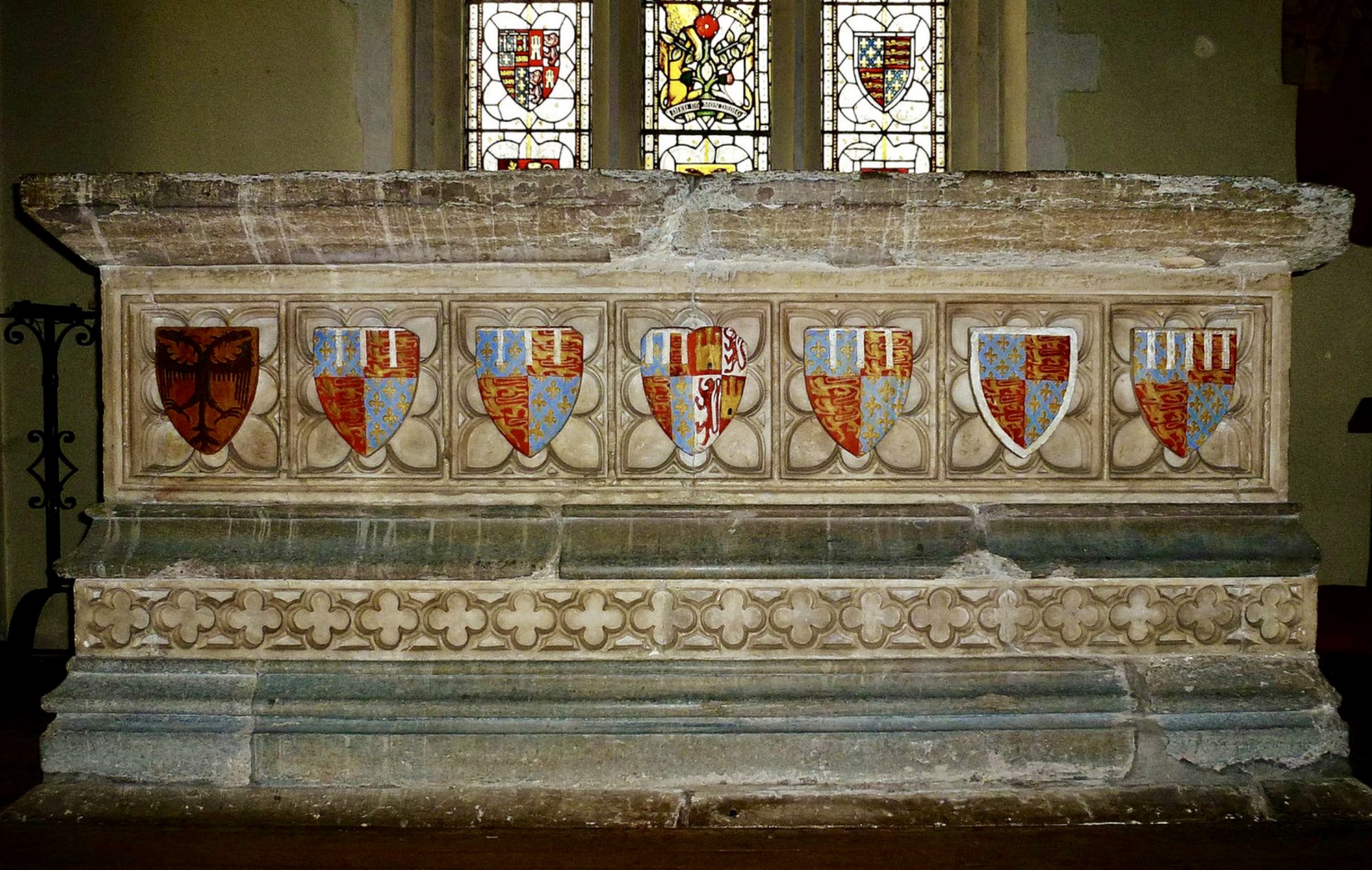
IMG_4798.jpgTHE TOMB THAT  IT IS BELIEVED ANNE MORTIMER SHARES WITH HER IN-LAWS, EDMUND OF LANGLEY AND ISABELLA OF CASTILE…CHURCH OF ALL SAINTS, KINGS LANGLEY

Some time during the month of May 1408 , were married Richard III’s paternal grandparents, Anne Mortimer and Richard of Conisburgh. She was just 16 and he was in his 20s, it being thought that he could have been born circa 1375 but there is some uncertainty about this and it could have been later.  It must have been a love match for it was without parental consent but validated by papal dispensation two years later on the 23 May.   There was certainly no material gains from the marriage for either of them as Anne and her sister, Eleanor, were both living in straitened circumstances and being described as ‘destitute’ on the death of their mother..  Conisburgh was destined to suffer on going cash flow problems being described at the time as ‘the poorest of all the earls’ and struggling to maintain the lifestyle appropriate for his rank (1) when he was promoted to Earl of Cambridge in 1414.

Sadly the marriage was short-lived, Anne dying shortly after giving birth to Richard III’s father, Richard of York on the 22 September 1411 at Conisburgh Castle.  The future was to bring about the execution of Conisburgh as a result of the Southampton plot in 1415 leaving their small son an orphan.

test.jpg

CONISBURGH CASTLE

But I digress , and returning to Anne, it is believed that she was finally reburied once again with her paternal inlaws, Edmund of Langley and Isabella of Castile in All Saints Church, Kings Langley after their original burial place, Convent Chapel, Kings Langley fell into disrepair after the Dissolution of the Monasteries.    In 1877, this tomb and its contents were examined by  Dr George Rolleston.     In a third lead coffin was found the remains of a woman of ‘about’ 30 years old with some of her auburn hair still remaining.  These are believed to have been the remains of Anne Mortimer.

Kings_Langley_Palace_ruins.jpg

Some of the remains of Kings Langley Palace, home to Edmund Langley, are thought to have been incorporated in this old farm building.

Here is a link to an interesting article on  “Anne Mortimer, the forgotten Plantagenet”

1) Richard Duke of York, King by Right p35 Matthew Lewis.


Subscribe to my newsletter

  1. I hope it was a love match, and that they were happy during their short time together. Auburn hair? That colour, and various shades of it, seem to have been prevalent in royal circles. Is that why the gene is still around, and has come to light again in Prince Harry? Sorry, the Duke of Sussex.

    Like

  2. Interesting article, but I wonder why the portrait of Anne of France, Lady of Beaujeu, Duchess of Bourbon and regent of France was included. There is no mention of her in the article and the only thing she has in common with Anne Mortimer is her first name.

    Like

    1. There is no portrait of Anne of France included in my article?

      Like

      1. I can confirm this.

        Like

      2. No, I know – it is in the article you have linked to! Written by someone who takes care to tell us how good an historian he is LOL

        Like

  3. […] Warwick – the man best introduced as The Kingmaker. I have written on the Wars of the Roses, on Richard, Duke of York, and Richard III. Warwick has been a constant presence throughout. I spent some time in an earlier […]

    Like

  4. […] Of course, it may have been a case of John deciding to shut up, just as Edmund of Langley (then Earl of Cambridge, later Duke of York, b. 1341 – d. 1402) had over the birth of Richard of Conisbrough (arguably b. 1375, d. 1415). At the time of conception Edmund too had been abroad (or just setting out on campaign and thus in a different part of the realm from his wife, Isabella of Castile, b.1355, d. 1392), but in his case there had been a tiny window of possibility concerning Richard’s conception. If John was in Europe throughout and Elizabeth stayed in England, there was no such window. But in the case of Richard of Conisbrough there is strong suggestion that John not Edmund was Richard’s father. Edmund certainly ignored Richard in his will, but that often happened to second sons. Everything went to the firstborn, to keep lands/estates together. So Richard’s omission may not signify anything, of course, but if ever a second son grew up impoverished, it was Richard of Conisbrough. […]

    Like

  5. […] it eventually passed to Philippa, wife of Edmund Mortimer, Earl of March, to his son Roger then to Anne Mortimer, the wife of Richard of Cambridge. Her son was, of course, Richard Duke of York, father of Edward […]

    Like

  6. […] Slides 4-5 start from Brian Boru(ma), High King of Ireland and pass through Diarmaid MacMurchada and the Clares to Elizabeth de Burgh, who married Lionel of Antwerp. This leaves slide 6 to show Llewellyn Fawr as an ancestor of the Mortimers via Gwladys Dhu, leading to Anne, Countess of Cambridge. […]

    Like

  7. […] of this evidence must surely be conclusive. Furthermore it is Richard’s paternal grandmother Anne Mortimer through whom the House of York claimed the throne and his Plantagenet male line is less likely to […]

    Like

  8. […] much of their married life at the palace. When they died, they were buried in the Friary, as was Anne Mortimer, the wife of Richard of […]

    Like

  9. […] retained control of her daughters and was in any way involved in the marriage of the elder, Anne, to Richard of […]

    Like

  10. […] of March, are relatively famous. Edmund the 5th Earl, who was involved in the Southampton Plot, and Anne Mortimer who is the ancestress of anyone who is anybody in England – and many others […]

    Like

  11. […] some point, Richard, and his wife, Anne Mortimer, began to live at Conisbrough. This must have been with the agreement of his brother, Edward, the […]

    Like

Leave a reply to A VISIT TO KING’S LANGLEY – murreyandblue Cancel reply